Author: Nathan Campbell

Nathan runs St Eutychus. He loves Jesus. His wife. His daughter. His son. His other daughter. His dog. Coffee. And the Internet. He is the pastor of City South Presbyterian Church, a church in Brisbane, a graduate of Queensland Theological College (M. Div) and the Queensland University of Technology (B. Journ). He spent a significant portion of his pre-ministry-as-a-full-time-job life working in Public Relations, and now loves promoting Jesus in Brisbane and online. He can't believe how great it is that people pay him to talk and think about Jesus. If you'd like to support his writing financially you can do that by giving to his church.

Gary Millar on Preaching OT Narrative (Liveblog)

Gary Millar is back at QTC, and he’s talking us through preaching OT narrative in our preaching lecture today. He’s cool because he knows U2. Well, he knows the Edge’s parents.

Four Obstacles to preaching OT

1. Familiarity – we all think we know what the Old Testament narratives mean – because we’ve been through Sunday School and learnt about the characters and the “moral” lessons of the stories. We’re not so good with the theology of the OT narratives.

For example – Joshua 2 – what is it about?

The majority would say that it’s about the miraculous way in which God saved Rahab, which is an element of the passage – but it’s almost a footnote when compared with the disobedience and ungodliness of the spies – who when entering the promised land head straight to a prostitute, and when given an opportunity to speak about God ask “are you going to save our lives”… the main thrust of the chapter isn’t Rahab, it’s on the spies.

When we come to this narrative, and we realise people know this story, we need to remember that their main focus is going to be on Rahab – because that’s what they’ve been taught.

People already think they know what the Old Testament means.

2. Perceived irrelevance

People think the Old Testament is obscure and obsolete. The only Bible reading that ever got a round of applause at the end of it was Nehemiah chapter 3. It’s a long and boring list of insignificant names. In the context of Nehemiah it’s a crucial chapter. Some people, the nobles, thought they were above the rebuilding of the wall. It has huge implications for the book. But we read it and say “this has got nothing to do with me”… sometimes that can work well, sometimes people sit back and say “there’s no way he can connect this to us today” – which gives us an opportunity.

3. Genre – we don’t know what to do with stories

We treat all these stories like they’re one of Paul’s epistles. The problem is that often OT Narrative is one story – like the book of Ruth – not a series of messages. But when we’re preaching the narrative we break it up into pieces. Chapter 1 of Ruth becomes a story about sad women. Which has nothing to do with the point of the book, which at the end of the book is about preparing for the coming of a Messiah.

4. Time – limited time to prepare, limited time to talk

So what do you do with a story that is really long? The Samuel narrative – from Israel asking for a king, to Saul becoming king, is really long. How do we cover it all? There are two problems – we’re probably not familiar with all the details of the story – how many commentaries are you going to read? Two or three. If you engage with that many, that’s a good week. That’s ok if you’re engaging with a short pericope in the New Testament. You go to 1 Samuel 8-11, and you’ve got sixty pages to read through, and the text is huge. Simply to read it in English takes forever. Handling it from the pulpit is difficult. You could just read it. And your time would be up.

If we followed Haddon Robinson’s approach to preaching narrative, working out the characters etc, not only would we have no time to do anything but preparing our sermons, ministry wise, we’d also never see our families.

So…

Five Simple Rules for Preaching

1. Read what it says, not what you always thought it said.
Example – Daniel 1 – is really not about vegetables. They have a purpose in this story, but they aren’t the purpose. Daniel 1 is about setting up Daniel in the king’s court.

2. Learn to feel with the story

Gary quotes from this article by Roy Clements.

“In this respect we must listen humbly to the criticism that expository preaching has been too wedded to rationalistic modes of interpretation. The intention of God in Scripture is certainly to impart objective knowledge of himself but it goes far beyond that. In addition to informing the mind, God seeks to address the will and the feelings. He may wish to encourage or to warn, to praise or to challenge; he may wish to make us weep, or laugh or frown. The purpose of the imperative ‘rejoice!’ is not just to impart objective knowledge about joy but to make the reader feel joyful!

Any Bible exposition will have failed if it locates the intellectual content of the text, but neglects to communicate the emotional texture in which that content is embedded. Good exposition invites the listener to feel with the text as well as to think about it.”

Look for hints, pregnant pauses, what’s left out, the unexpected, mood markers…

You’ve got to get people into the text. Standing beside Daniel as he prays in Daniel 9. Get them to feel with Daniel. Don’t take them away from the text to make them feel by analogy. We don’t want to manipulate people. How does Daniel feel at the end of the prayer? Desparate. It’s not a model prayer, it’s Daniel’s emotional response to learning that spiritual exile doesn’t end with the physical exile.

The best way to help people to read the Bible properly is to read the Bible properly, and to preach it.

The hardest narrative books to deal with are the longest.

Understand the way stories work – Neb isn’t described as a pompous king, but the way chapter 3 of the book unfolds it’s clear that he’s pretty full of himself just by how many people he surrounds himself with in court. We don’t need subtitles in movies to spell out “this is a pompous man” (Me: we do, however, have musical cues to frame a narrative – perhaps we should put music to the passages in our heads as we work through the story…).

Remember just because something is described doesn’t mean it’s prescribed – so when Nehemiah pulls out everybody’s hair we’re not to make an ethical judgment about hair pulling, we’re to understand the frustration that is driving his actions.

3. Zoom out as far as you need to

Get the whole story – don’t make a sermon out of Joshua 1:6-9 where the young men are told to be courageous. See it as part of the broader story. We underestimate the death of Moses. Joshua’s need to be strong and courageous isn’t about entering the land, so much as dealing with his own people.

Don’t be afraid to preach really big chunks. Genesis 38-50. It’s a long story spelling out one basic principle. That God used the evil acts of Joseph’s brothers for his purposes.

Question:What would you say about drawing ethical principles from the text?

Answer: I don’t have a problem with that. Because they are there. Sometimes they are made very clear from the story. But they’re always the minor point – but we get into problems when we focus on the minor thing rather than the major flow. This is the last resort for busy preachers, minor points are better than no point…

Big picture is important. Understand the driving force behind the narrative.

Question: Isn’t there a problem of reductionism if we reduce a book to a big idea and ignore all the other bits – aren’t we ignoring divine revelation by summing everything up in a big idea and preaching it

I would say that understanding the big idea is paying attention to, and respecting revelation. Which we’ll cover in point 4.

Understand the point of the details that seem odd – like the Levitical laws – where the point might be – it’s really important to take God seriously.

4. Make sure you keep pace with the story

There’s a lot of stuff going on at the start of 2 Samuel, and then you come to 2 Samuel 7. The story has been rolling on, and then bang. You get a massive event. And then you’re back into the chronological “this happened, then this happened” rolling out of the text. We should move at the pace the story does. See how the threads of 1-6 move, preach them. Then because chapter 7 makes a big deal about one event, make it important.

5. Preach the story, not the detail

The message of the text should be the message of the sermon. Get the message of the text right, don’t bring your own agenda or favourite parts of the text into the spotlight. Daniel’s prayer life isn’t the focus of the book of Daniel, it’s about the sovereignty of God and the transition out of exile.

The story of Deborah in Judges isn’t about women in leadership. We have to make sure the main message of the talk is the main message of the narrative.

Question: How much Bible do you read on the Sunday morning?

Answer: We’ll focus on the key “jump out” section, or extracts, with somebody giving the flow of events before and afterwards.

Cocktail Infographics in 3D

You might remember the Engineer’s Guide to Cocktails… well, this is a nicer version.

More here (where you can buy it as a poster). Via FlowingData.

How to be a Ninja using only a T-shirt (and mystical kung-fu powers)

Yes.

Via ChurchCrunch.

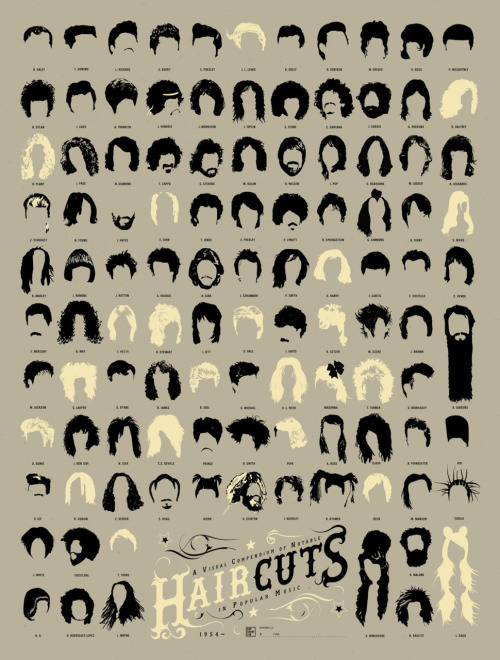
A hair razing event

I was craving steak all day. That’s where it started. You could say my trip to the supermarket to buy eggs for breakfast set the ball rolling, because that’s where I saw them. Two succulent pieces of eye fillet. Just the right sizes. One slightly bigger than the other (I am more than slightly bigger than my wife). Perfect. I had to have them. They became mine.

They sat in the fridge all day. Looking at each other, and their neighbours. The Beans. The Beans too, were destined for the fry pan. With a little butter, and some pepper.

Sometime in the early hours of the evening, you could say they were at sixes and sevens, the minute hand and hour hand that is, the steaks made their way to a dish. Where they met Olive Oil (not to be confused with Popeye’s girlfriend) and Rock Salt. Their demise at the hands (or teeth) of mastication was imminent.

Perhaps I was distracted by the thought of chewing on a delicious piece of barbequed steak, perhaps I was pondering the lack of blogworthy material filtering through my “Publish Now” button. Who can say. All I know is that for a moment, a long moment, between turning on the gas bottle, opening up the valves on the barbeque, and lighting a skewer to stick between the fronds of the grill, I thought “I can smell gas, but it’s airy and open out here, so it shouldn’t be a problem”… thoughts can be so misleading. The faggot alight (well, the skewer, unlike commercial radio I’m ok with using a word that has multiple meanings – because that’s what Dire Straits was singing about. Sticks with jewelry and makeup. Millionaire sticks.). My thoughts turned to introducing flame to gas. Which turned out to be a more volatile proposition than I planned – sending a ball of flame into my face. I shut my eyes. I smelled burning hair. I ducked and dived. Coughed and spluttered. And then went into some sort of shock, before making my way inside to confess my adventures to my wife. Who had been asleep. I surveyed the damage in the bathroom mirror – my previously almost invisible eyebrows were now almost more invisible, if that were possible. My eyelashes were but a shadow of their former selves. And my carefully nonchalant attempt at a beard was now half as substantial – which is to say not very substantial at all, though more stinky. My fringe, slightly puffier than the rest of my hair at the best of times, was now puffier, and shorter by half, than the rest of my hair.

So next time somebody, even if its the little voice inside your head, says “don’t turn the gas on 45 seconds before you light the match” – learn from my mistake. Don’t turn the gas on 45 seconds before you light the match.

Party like a Presbyterian

If there’s one thing Presbyterians like it’s a party.

So if you’re a Presbyterian who likes to party you should get a hold of this slightly awful Christian rap

Here’s a promo video. This is all the sample I needed.

Tumblrweed: 3eanuts

Gary found/posted this gem. 3eanuts. Peanuts cartoons with the third panel removed leaving the characters in some sort of existential crisis where the punchline has no joke. Reminiscent of Garfield minus Garfield, and incredibly brilliant.

Love it.

Orchestral Friday

It’s Friday, Friday, Friday. Which means time for fun, fun, fun. Orchestra style.

Thus says the beard: Women wearing pants, pyjamas, an abomination

Ladies you need to be subjective to your husband or you’re a witch.

Don’t shoot me, I’m just the messenger. Shoot this guy instead (though he looks armed and dangerous).

The Petebox: Human beatbox looping thing

This is clever, and one of my favourite songs. Thanks largely to Fight Club.

Here’s his version of Nirvana’s Lithium.

He promises more regular videos here – and the fun on this one starts about a minute in.

Coffee at the Corner Store Cafe

I know, most of you are already reading my cafe reviews on thebeanstalker.com, right. But I have to point out that if you’re looking for an incredibly cool cafe to hang out at, or to study at, in the Toowong region – then you should most definitely head along to the Corner Store Cafe on Sylvan road.

Here’s my review of the Corner Store on thebeanstalker.com.

That’s a photo of my double shot flat white from yesterday. Because we spent the morning there. The food is also excellent. Try the Beef Dip – a popular Canadian dish, and the Bacon Cheeseburger – a popular everywhere dish.

E-I-E-I Yo(ga): Yoga farmer a bit of a stretch…

Honestly, this could only be worse if this was from some sort of Christian Television program. This guy is seriously creepy.

Via Jesus Needs New PR.

A swordid tale: Taiwan’s last bladesmith

Being a red-blooded male I love swords. Every stick in the backyard had sword potential when I was a wee lad. So because I love swords I am fascinated by this little doco (via a list of seven almost obsolete professions) about Taiwan’s last sword maker.

He made the sword from Crouching Tiger, Hidden Dragon, he seems pretty cool. Check it out.

Religious inkling v religious inking

Chris Eckert is an artist. And a philosopher. Of some sort. Though all artists would like to think they’re philosophers. And I really like this “Auto Ink”

He wanted to represent the truism that the greatest predictor for your religious beliefs is where you live. Which is true. It’s not the only factor, but it is a factor.

So he designed this…

It’s a tattooing machine that will randomly assign you a religion – and you’ll be stuck with it for life, symbolically tattooed on your wrist.

What I’d like to know, is what happens if you want to choose a religion after doing the hard work of thinking about it (what would I know though, my parents are Christian so my compliance was virtually assured). Can you get a second tattoo? Over the top of the first?

Here’s the blurb from the machine’s web page:

“The strongest indication of a person’s religion is geography. You are born into your religion. That doesn’t make it irrelevant or incorrect–religion provides a framework for basic morality that’s very powerful and it gives people a cultural identity that spans borders. I’ve attended mass in Dutch, German, French, and Spanish and I’ve always felt like I belonged. While my personal experience with religion is one of inclusion, a system that unites people from different regions and cultures, the public face of religion is often one of exclusion. Muslim, Christian, and Jewish zealots who know what God wants. More specifically they know what God doesn’t want and apparently God does not want me…or you. This public face of religion is always so certain, self-confident, even arrogant. That anyone could possibly know the “truth” when that truth is randomly assigned at birth is just funny.

Auto Ink is a three axis numerically controlled sculpture. Once the main switch is triggered, the operator is assigned a religion and its corresponding symbol is tattooed onto the persons arm. The operator does not have control over the assigned symbol. It is assigned either randomly or through divine intervention, depending on your personal beliefs.”

It’s provocative and creative. So it’s art. Watch it work.

The “real” Holy Hand Grenade

If only Monty Python knew the truth. Holy hand grenades aka glory bombs actually make people laugh.

Via scotteriology

PETA wants animal inclusive Bible

Let me just start by congratulating PETA for sinking to a new low with the name of their blog. The PETA files. Because we all think animal rights should be associated with child abuse, for the lols.

Then, let me move on to highlighting PETA’s latest ridiculous campaign.

“When PETA heard that the Committee on Bible Translation had revised the New International Version (NIV) of the Christian Bible to use gender-inclusive language, such as replacing “men” with “people,” we thought, wouldn’t it be great if the new NIV showed consideration for female (and male) animals too? So we wrote to the Committee on Bible Translation and asked them to use “he” or “she” rather than “it” to refer to animals in the next edition of the NIV.

“Language matters. Calling an animal ‘it’ denies them something,” PETA Vice President Bruce Friedrich told CNN. “They are beloved by God. They glorify God.”

Since God loves all His creation (and if you’re not convinced of this, try reading Matthew 25:40, Isaiah 11:9, or Luke 6:36), it’s only fitting that humans do the same by showing respect to every living being. Maybe Psalm 50:11 says it best: “I know and am acquainted with all the birds of the mountains, and the wild animals of the field are Mine and are with Me, in My mind.” Perhaps if we change the way we speak about animals, our thinking will follow.”

Here’s the CNN piece referred to in that post

There are some more stupid quotes from PETA in that article, here’s the meat of their argument.

“God’s covenant is with humans and animals. God cares about animals,” Friedrich said. “I would think that’s a rather unanimous opinion among biblical scholars today, where that might not have been the case 200 years ago.”

Now, I’m not sure that PETA has even a rudimentary knowledge of Greek or Hebrew – but they may be interested to learn that their beef is with the languages themselves, not with the Bible translators. Because the languages have male, female, and neuter nouns – and you’d have to bring gender to the table by your own agenda, to suggest that animals are anything other than an it. You’d have to create a bias in the text. Which is exactly what translators shouldn’t be doing.

David Berger, a Hebrew scholar lets them have it on this basis in that CNN article:

“In Hebrew all nouns are gender-specific. So the noun for chair is masculine and the noun for earth is feminine. There’s simply no such thing as a neutral noun,” Berger told CNN. “It’s unusual to have a noun that would indicate the sex of the animal.”

Another scholar, from Baylor University, David Lyle Jeffrey, disagreed with the rest of the nonsense from PETA’s suggestion…

“I agree with their contention that God cares for all of creation,” Jeffrey said. “It is true that we have a responsibility to reflect that affection.

“In gender-inclusive Bible translation the generic terms for humankind, let’s say, are then replaced with an emphasis on he or she. Instead of the generic he, you say he and she. I don’t quite see how that would work with animals,” Jeffery said.

“Do we need to know the gender of the lion Samson slew? What would it give us there?” he said. “You could try to specify that, but you would be doing so entirely inventively if you did. It’s not in the original language. … Nothing is made of it in the story.”

“When you get to the point when you say, ‘Don’t say it, say he or she’ when the text doesn’t, you’re both screwing up the text and missing the main point you addressed.”