Author: Nathan Campbell

Nathan runs St Eutychus. He loves Jesus. His wife. His daughter. His son. His other daughter. His dog. Coffee. And the Internet. He is the pastor of City South Presbyterian Church, a church in Brisbane, a graduate of Queensland Theological College (M. Div) and the Queensland University of Technology (B. Journ). He spent a significant portion of his pre-ministry-as-a-full-time-job life working in Public Relations, and now loves promoting Jesus in Brisbane and online. He can't believe how great it is that people pay him to talk and think about Jesus. If you'd like to support his writing financially you can do that by giving to his church.

For those who fail at spatial orientation

Some people. No, some women, struggle with knowing right from left. It’s true. They seem binarily opposed and permanently fixed relative to one’s eyes and hands. It seems like it should be more than a fifty-fifty bet. But still, they struggle. So now, I present you all, these gloves. May they be a blessing for the female drivers in your household.

Happy Meals? Happy times… a study of burgers over time

J. Kenji Lopez-Alt does cool stuff with food. And he’s just done it again. He set out to debunk a popular myth about McDonalds – the idea that their burgers not decomposing is somehow a damning indictment on their food. How? Well, he cooked some home made burgers and recorded similar results.

Here’s where he describes his experiment, and here are the findings.

His conclusion:

“… the burger doesn’t rot because it’s small size and relatively large surface area help it to lose moisture very fast. Without moisture, there’s no mold or bacterial growth. Of course, that the meat is pretty much sterile to begin with due to the high cooking temperature helps things along as well. It’s not really surprising. Humans have known about this phenomenon for thousands of years. After all, how do you think beef jerky is made?

Now don’t get me wrong—I don’t have a dog in this fight either way. I really couldn’t care less whether or not the McDonald’s burger rotted or didn’t. I don’t often eat their burgers, and will continue to not often eat their burgers. My problem is not with McDonald’s. My problem is with bad science.”

Chalk and Chess

Take your chess game on the road with this chalk chess set.

Sold here, via Gearfuse.

Shirt of the Day: The making of a Pacman Ghost

Ever wondered where those Pacman Ghosts come from? This shirt design (currently up for voting on Threadless) has the answer.

Thrilling News

Dear readers,

Thank you for your patience with my excruciating number of exam related posts in the last two weeks. My fellow students like it, and it helps me to clarify my thoughts.

You will be glad to know that other than a couple of Greek posts I might make in the next day or two, the exam related content is over and done with for another nine months.

I now return you to the regular irregularity that is st-eutychus.com.

Regards,

Nathan

Forewarned is forearmed…

Lest you think the story about a farting boy was the low point of my internet browsing today, think again, there’s a report going round that the off-cuts from circumcision procedures in hospitals around the world (the foreskins – hey, it’s in the Bible so it’s ok to mention here) are being sold for hundreds of dollars a pop to help develop moisturiser. Fancy that? Fancy that! Fancy, that. Three appropriate responses.

The Stir’s Christie Haskell dug deep into the largely hidden industry of baby foreskins. An infant’s foreskin has special cell properties, similar to those found in stem cells. Their versatility means that they can be used to cultivate skin cells.

Because of this, they’re not tossed out with the rest of the medical waste after a birth. Instead, hospitals sell them to companies and institutions for a wide variety of uses. Companies will pay thousands of dollars for a single foreskin.

Some of the strangest purposes they’re put to:

  • Cosmetics: Foreskins are used to make high-end skin creams. The skin products contain fibroblasts grown on the foreskin and harvested from it. One foreskin can be used for decades to produce fancy face cream like the SkinMedica products hawked on Oprah.
  • Skin grafts: In addition to making products for skin, a baby’s foreskin can be turned into a skin graft for a burn victim. Because the cells are extremely flexible, they’re less likely to be rejected. Currently, this technology can be lifesaving in providing a real skin “band aid” to cover an open wound while a burn victim heals. Researchers at Harvard and Tufts are working on advanced skin replacements that use human foreskins.
  • Cosmetic testing: All those cruelty-free cosmetics you buy? Some of them are tested on foreskins. This yields better results, since they’re human skin. And it saves the lives of the rodents your shampoo would otherwise be tested on.

Yeah. From here. Corroborated here (and elsewhere – or it could be some sort of horrible joke)

The things Fox calls news: Boy passes gas on school bus

I think this might be old.

But it doesn’t stop it being a damning indictment on the editorial policies of local branches of Fox News.

Seriously.

“Boy farts on school bus, gets detention” wouldn’t have even been given a run in my school newspaper.

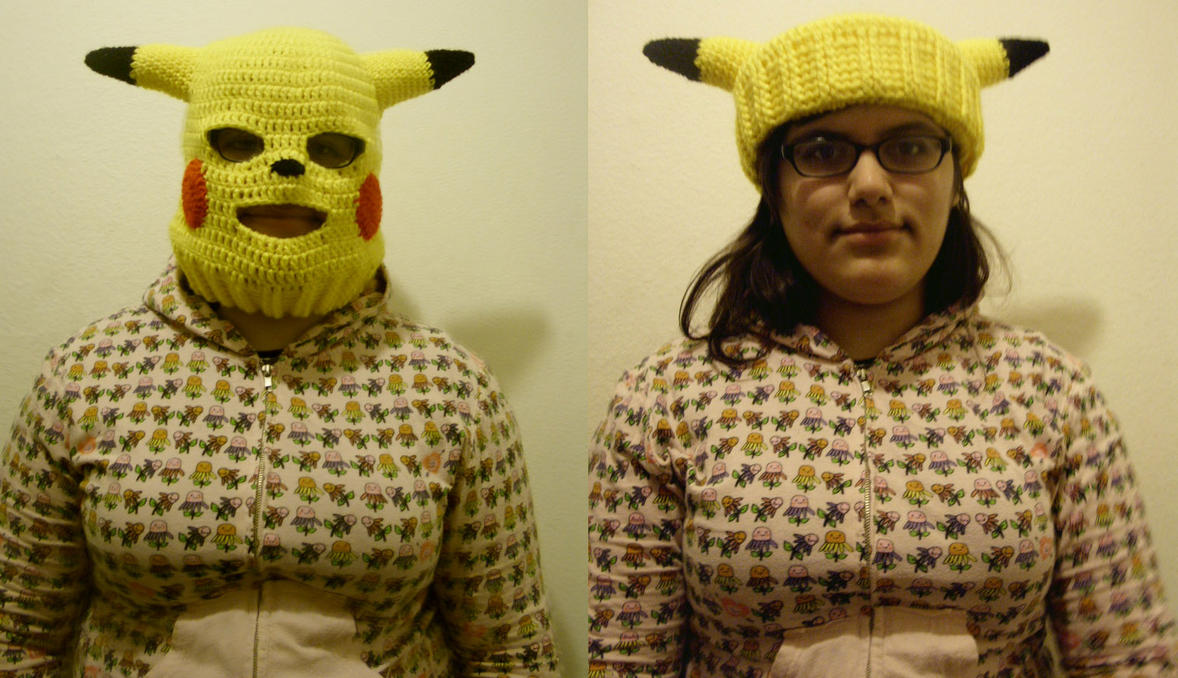
Pikachyou – a balaclava for pokemon wannabes

Rob a bank wearing this. Go on. I dare you. Well, not really. But this would be an interesting “signature” approach to crime.

From DeviantArt.

Old Testament 102: My sample Daniel answer

If there happens to be a question about the meaning of Daniel this is what my answer will look like (though I’ll pad it out with some Bible):

Ask a Christian doomsday cult fanatic what their favourite book of the Bible is, and in the mix with Revelation and Ezekiel will no doubt be the book of Daniel. Daniel is a tale of two halves – the latter half has been widely recognised as apocalyptic in nature – a cryptic condemnation of foreign rulers, and a message of hope for the people of God in the midst of foreign persecution. But what to do with the first half of the book? Chapters 1-6 read like a series of court tales in a foreign land, with enough similarities to a Disney movie to spawn countless retellings in children’s stories in churches around the globe. But could it be that simple?

Short answer, no. Like many stories that appear to be straightforward and geared towards children (Shrek for example) the story contains an undercurrent of harsh and satirical criticism of foreign rule – a mocking of inept kings, with a hopeful note for the people of God. God is in control, despite Israel’s political dilemma.

The identification of Daniel as a Menippean Satire was proposed by Valetta. Valetta identified the fourteen elements of satire from the late (second century) BC period. A recognition that has implications for the dating, and interpretation, of Daniel. Debate in scholarly circles has been largely settled on the question of a sixth century prescriptive dating of the second half of Daniel – while scholars are not ruling out predictive prophecy per say, some, such as Goldingay, note that such a level of detail is not common in Biblical prophecy (though such an assumption seems also to depend on ruling out a single, early, author of Isaiah), other problems presented for a sixth century dating include a series of historical inaccuracies that are best explained if the book is written in the second century with a sixth century setting. The only scholar of note still advocating a sixth century dating is Tremper Longman. Longman’s position sees him advocate a fairly simplistic application of Daniel’s first six chapters, he sees them as stories of bravery under fire, to be imitated by believers facing hostility.

Daniel as satire presents a more robust application – foreign rule is seen to be ridiculous, or worthy of ridicule, in comparison to the greatness of God’s rule. Clues for the satirical reading include the use of the language of the court (Aramaic) for much of the negative presentation of foreign rulers, the refrain “oh king may you live forever” occurring at intervals and incidents where the king is experiencing a particularly humiliating or traumatic time, and the presence of all fourteen elements of the Menippean Satire described by Bahktin. A satirical reading also integrates more comfortably with the apocalyptic undertones of the second half of the book – positioning the whole book as a rebuke of foreign rule designed to inspire hope within the oppressed people of Israel. The satirical take on the king (probably Antiochus IV) softens the target for the deadly blow of chapters 7-13, the prediction of his downfall. The book then contains a united condemnation of foreign rule, a message of judgment, and a message of hope for the oppressed.

Tastes like bacon…

You know how they say that pigs are the animal most closely genetically related to humans based on DNA? No? Well, I may have just made that up. You’ll have to google it…

But it turns out that a taste recognising robot thinks that human flesh tastes like bacon (don’t worry, they didn’t actually feed it a human).

That cute little fella is a robot that is designed to recognise flavours. He’s meant to be used for tasting wine, but Wired tells of a scary moment when somebody put their finger in his mouth:

“The idea is that wineries can tell if a wine is authentic without even opening the bottle, amongst other more obscure uses…like “tell me what this strange grayish lump at the back of my freezer is/was.”

But when some smart aleck reporter placed his hand in the robot’s omnivorous clanking jaw, he was identified as bacon. A cameraman then tried and was identified as prosciutto.”

Life through the lens of Facebook

A cool video, with a few swear words (in text).

OK Go’s latest clipstravaganza: Now with extra toast

OK Go make the best film clips. By a long way. If I had to list the top three film clips of all time they’d have the top three spots… this is amazing.


Last Leaf

OK Go | Myspace Music Videos

How the Internet works

This is a nice, simple, little comic explaining what it is that goes on when you type a web address into your browser. It’s a handy reference for when you have those conversations with a dullard who doesn’t really know what’s going on, but suggests it has something to do with monkeys or magic. Or Monkey Magic.

Via labnol.

Seinfeld and Economics

While I’m on the subject of economics, if you like Seinfeld, and want a crash course in economic principles, then this is the website for you. It uses clips from the sitcom to teach economic principles. Who knew, the show wasn’t about nothing afterall – but about economics.

Here’s an example that teaches you about game theory, and cost-benefit analysis, and dominant strategy.

“George thinks he has been offered a job, but the man offering it to him got interrupted in the middle of the offer, and will be on vacation for the next week. George, unsure whether an offer has actually been extended, decides that his best strategy is to show up. If the job was indeed his, this is the right move. But even if the job is not, he believes that the benefits outweigh the costs. “

The site is called Yada, Yada, Yada, Econ.

Coffeeconomics

It’s more than possible that I have posted this exact infographic previously. But I like it. It’s about coffee. And it is interesting.

From Mint.com.