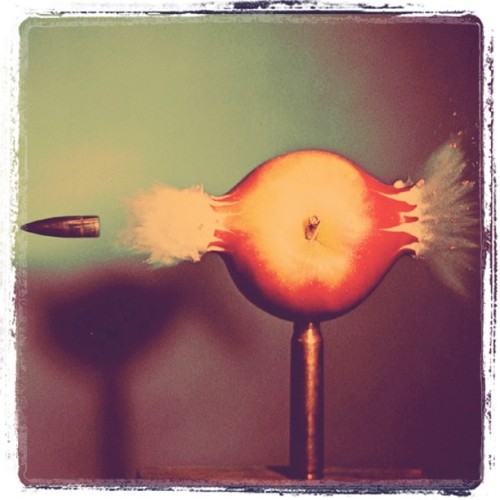
In case you were wondering…
Author: Nathan Campbell
Nathan runs St Eutychus. He loves Jesus. His wife. His daughter. His son. His other daughter. His dog. Coffee. And the Internet. He is the pastor of City South Presbyterian Church, a church in Brisbane, a graduate of Queensland Theological College (M. Div) and the Queensland University of Technology (B. Journ). He spent a significant portion of his pre-ministry-as-a-full-time-job life working in Public Relations, and now loves promoting Jesus in Brisbane and online. He can't believe how great it is that people pay him to talk and think about Jesus. If you'd like to support his writing financially you can do that by giving to his church.
Some inspirational Monday Morning Music
If ever any female lead singer deserved a Madonna Mic – it’s this lady.
The little mid song interlude is pretty special.
I’m a carnivore. Just in case you were thinking about inviting us to dinner…
Slight language warning here…
Thanks to my littlest sister for the link…
Saturday night music: Such Great Heights
I went to a wedding today, it’s number two out of three wedding weekends in a row. They had Iron and Wine’s cover of the Postal Service’s Such Great Heights as one of the songs in the ceremony. It was pretty cool. I like the original too.
Also, YouTube is doing something cool with music videos… Here’s a profile page for songs from The Postal Service.
A day in the life of a Lego Man
There were two moments that I smiled in this video, and one that I chuckled. It’s a nice little ad though…
Manipulation and the fine art of persuasion…
Right. I’ve been meaning to put some thoughts into writing for a few weeks. Doing so now was prompted by a possibly throw away line in the Q&A at the Moore College School of Theology as collated by my friend Kutz. I wasn’t there. But this line resonates with a position I’ve been trying to articulate lately (the line is from Peter Bolt):
“Manipulation can be positive. If you’re doing it to align people to the word of God then it’s a good thing.”
Manipulation and persuasion are essentially seeking to do the same thing – move a person from point a to point b. So what’s the difference? I’ve settled on this distinction…
Persuasion is the transparent act where two parties enter a dialogue with one hoping to move the other from point a to point b.
Manipulation is less transparent and involves one party trying to shift another party from point a to point b, probably without their knowledge.
I’ve settled on this because in my experience if you catch somebody trying to shift your position when they haven’t told you that’s what they’re doing you feel annoyed and accuse them of “manipulating” you, where manipulating is a pejorative. There are heaps of ways to manipulate, and most of them fall outside the classical tools of persuasion – pathos (emotions), logos (facts and words), and ethos (how you act/live). Tools of manipulation tend to involve tugging really hard on one of those threads, where persuasion is a more subtle movement, kind of like a puppeteer with a marionette.
I reckon manipulation is fine. I know we hate it. But it’s a great art, until you get caught. Like pickpocketing, not Oliver Twist style, but like the TV guy who takes your watch while you’re talking to you and then gives it to you later. Manipulation, honest manipulation, probably involves pointing out what you’ve achieved to the person after the fact, so they recognise they’ve moved from point a to point b, but during the process your mark should be a bit like the proverbial frog in a gradually heating pot of water…
This all came up, for me, when I was told I needed to engage a little more with the emotions when I preach (because I’m a pretty rational/stoic type of thinker). So the summaries of the Moore College Lectures on Kutz’s blog have been interesting. I react against this suggestion, not because I think tugging on the emotions is “manipulation” as though that’s a bad thing, but because I think I’m more likely to get caught out if I’m doing something that isn’t within my normal character. I’m all for subtle chord changes, a little bit of emotive muzak in a movie, and all the other little “manipulative” tools – I’m also for putting a bit of emotion into a sermon, like a tear jerking illustration, I’m just against doing it in a way that means I’m likely to get caught.
Persuasion is pretty safe ground, but doing both is potentially more effective, I’m just not sure what that looks like. Most people in the pews are there hoping to be persuaded (or taught), so there’s implied consent there for being “manipulated,” providing your end point is something you’ve implicitly agreed to (essentially the ends identified by Peter Bolt in his quote). It’s a little murkier when it comes to PR and marketing, but manipulation is where the fun is. It’s making ads that are more than just a boring presentation of a product, it’s also harder to do thanks to the Gruen Transfer and market awareness about the tools advertisers employ. Anyway. Those are my thoughts. What are yours?
Barry Duncan: Master palindromist
This is a pretty fascinating piece about a guy who thinks palindromically.
“People who write palindromes are not the kind of people who are going to call attention to themselves. I think they’re very much people who are comfortable being behind the scenes, practicing the invisible craft.”
Turns out that palindrome writing is a relationship killer…
“In order to share some of his writing, he produced a small collection, which he titled Assorted Palindromes and One Song. It wasn’t long before a close friend dubbed it “The Relationship Killer.”
Duncan would send the collection to people he knew and simply never hear from them again. So he began warning people. “I tell people before I give it to them, ‘I give this to people, I never hear from them again.’ And they say, ‘Ha ha ha, that won’t happen.’ And it happens. People think it’s freakish, and don’t even know what to say about it.” And the thing is, he wasn’t looking for affirmation. “I didn’t expect people to say, ‘Oh, I was dazzled!’ All I wanted them to say was ‘I got it in the mail.’They can’t even write and say, ‘Oh, thanks for the thing you sent me.’ I mean, just… nothing. And I think a normal person would’ve thought, you know, this palindrome-writing is not the way to win friends and influence people.”
A Ninja demonstrates his awesome capabilities for St. Eutychus Readers
This guy spins a stick fast, he’s not so great at reading instructions though… I told him to say hello to readers of St. Eutychus.
This video comes courtesy of Fiverr.com, and cost me $5.
I asked him if he’d do a cooking demo for us (because I want to make a TV show called Ninja Chef), but he declined.
Coffee Jerks
This video features snippets from old coffee ads edited to only include the bits where husbands are really nasty to their wives. Jerks.
Vintage coffee ads are typically full of snooty husbands – at some stage the advertising industry shifted from husbands that were nasty to husbands that are incompetent. I can’t tell which is worse.
Via 22 Words.
Tumblrweed: You are not a photographer

I’m not really a photographer. I have a camera and a decent eye – but it takes me about 10 shots of something to be happy with what I’m doing. So I’m kind of a fence sitter here. You Are Not a Photographer takes hideous examples of photography from around the web.
How to make homemade bacon salt
Delicious. Season your food with some home style bacon salt thanks to the Wannabe Chef. This looks amazing.

“Transfer the bacon to a food processor and process until there are only small chunks and a paste begins to form. Add in the sea salt and ground pepper(note: whole peppercorns will not break up in the food processor) and continue to process until the salt breaks up into smaller pieces and mixes with the bacon. Transfer to an airtight jar and keep in the refrigerator when not using.”
Via Lifehacker.
Tumblrweed: Mastergram
Mastergram takes properly artistic “masterpiece” photos and treats them with Instagram filters.
So this…

Becomes this…