Corrugated tie

If you’ve ever been in a situation where you’ve wanted to join a bit of a bluegrass jam but haven’t had the requisite instrument – buy this washboard (complete with thimbles) tie and wear it everywhere.

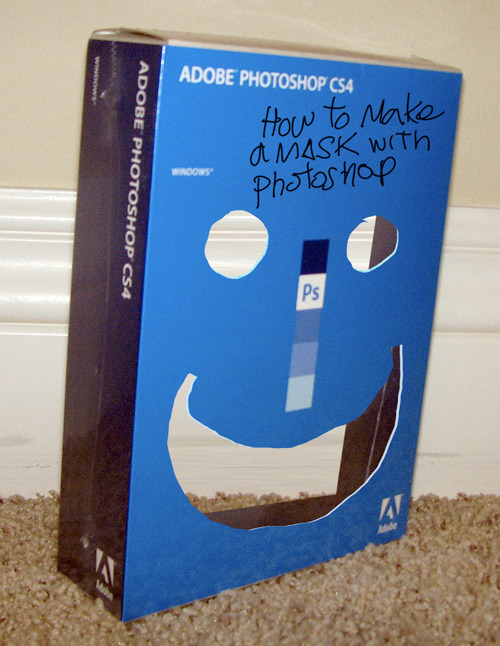
Almost free photoshop mask

This is only funny if you use Photoshop. Which I do.

From here.

Just a spoon full of pain

This movie contains some language and the contents may be disturbing. But I watched the whole thing. And it made me laugh.

Weapons of mosquito destruction

Mosquitoes are dangerous. They carry all sorts of nasty tropical diseases. You should kill them. You should overkill them.

Here’s a nifty little mosquito killing contraption made from common household items.

From here.

Distraction kills

The internet can be full of dangerous distractions. You have been warned.

From here.

A wee bit of physics

I spent a couple of days trying to decide whether to post this picture. My mum said it was ok.

Via Reddit.

We’re thru

While being technically acceptable the use of the word “thru” really annoys me. And this sign vandal.

Virtual billboards

Streetview is cool right? For the luddites (who are unlikely to be reading a blog) it’s Google map’s feature where you can actually experience moving along certain streets because they sent a car that looks like this out into the wild to take photographs.

These photographs have been built into maps. Making it much easier to stalk people or check out the neighbourhood you are thinking about living in.

Google is great at turning things like this into money. So Make is reporting that Google has patented technology that will allow them to turn billboards in their street view photographs into spaces for adwords. If these adwords are location based this will be a fantastic tool for geographically specific advertising.

Hell’s bells

My friend Mike is a minister in Rockhampton. He made the local news today for being generally awesome. You can read the story here.

Hell, the pizza chain, created a stir in Brisbane this week which led to a story in the Rockhampton paper, which Mike commented on online, this comment led to an interview, and a great story. Featuring this little gospel presentation that simultaneously showed that Christians are a bit normal.

This is a great example of how churches should be using the media. I thought I had written a post on that before, but I can’t find it. So I’ll write it today.

Ordained eight years ago, Reverend O’Connor said he did not find Hell Pizza offensive, irreligious or blasphemous.

“I find it amusing and would probably use it for sermon illustration,” he said.

“Christianity is not about rules and regulations, it’s about having a relationship with Jesus.”

Reverend O’Connor said St Andrews was a growing church with a number of young adults among the congregation.

“It’s important to interact with cultures that surround us, not standing back and labelling everything as evil.

“I’m just a normal bloke who likes having a beer, watching the footy and who loves Jesus,” he said.

“Hell is a real place, but it’s unhelpful for Christians to be jumping up and down about a pizza shop. We’re on about Jesus, not about being anti-everything,” he said.

In praise of hot wives

Dear person who writes their online profiles mindful that your wife reads it,

We get it. You love your wife. You think she’s hot. That’s why you got married.

The rest of us may be inclined to disagree. We may believe that our own wife is hotter.

The fact that you need to reassure yourself that your wife is hot is great. But it comes across as, umm, a bit overstated.

Regards,
Nathan.

You might be wondering why I’m posting this. Well, I was trawling the archives of the Stuff Christian Culture Likes and came across this post. It’s one of my favourites.

Here’s Stephy’s take:

Fortunately, Christian hotness standards are not quite the same as conventional (secular) hotness standards. Value is supposed to be placed on the person rather than on appearance. Even so, hotness is still a valuable commodity even in Christian culture. The public declaration of a spouse’s hotness is a lovely gesture, but can become disquieting when expressed so frequently and fervently. It can begin to sound as if they are trying to convince themselves of something. Could thou protest too much?

My absolute favourite part though, and the part that makes this utterly postworthy, is if you do a bit of a phrase search on Twitter (I can’t guarantee that the results you get will be the same and/or safe for work/your holiness) you get a bunch of people talking about their hot wives. And a startling percentage are Christians. From my quick profile check of the people at this link I would say that close to 80% of the people using the phrase on Twitter either define themselves as Christians in their little description or tweet regularly about the Bible.

How odd.

For the record, I think my wife is hot – but seriously – I don’t need to tell you that.

A silver wining

Climate change had to have a benefit somewhere… and I’ve found it.

“The consequences of warming are already detectable in wine quality, as shown by Duchêne and Schneider (2005), with a gradual increase in the potential alcohol levels at harvest for Riesling in Alsace of nearly 2% volume in the last 30 years. On a worldwide scale, for 25 of the 30 analysed regions, increasing trends of vintage ratings (average rise of 13.3 points on a 100-point scale for every 1°C warmer during the growing season), with lower vintage-to-vintage variation, has been established (Jones, 2005).”

Here’s the study (pdf).

Via BoingBoing

Man pens mathematical theory of singleness, gets girlfriend

You can get a PhD writing about just about anything these days. But applying an obscure mathematical theory about the probability of the existence of alien life to the question of your own singleness would appear to be about the limit. Surely.

But that’s what Peter Backus did. He took the Drake Equation – a mathematical analysis of the chance that alien life exists – to decide that there were only about 26 girls who would make appropriate partners for him in all of the United Kingdom.

The Drake Equation (penned in 1961 by Dr. Frank Drake) says N = R* x Fp x Ne x Fi x Fc x L. I’m not sure what that means, but it found that there could be 10,000 civilizations in our galaxy.

The Backus iteration of the Drake equation had the following findings:

His equation looked at the total number of women in the country, then narrowed it down using relevant factors including the number of women in London; the number of “age-appropriate” women (those aged between 24-34); women with a college degree; and those who Backus would find physically attractive.

In the paper Backus summarized that on a given night out in London there is a 0.0000034 percent chance of meeting a woman that meets his criteria and who is also interested in him. That makes his odds of finding a girlfriend only about 100 times better than finding an alien.

You can read his thesis here (pdf).

In a random turn of events he now has a girlfriend who meets all his criteria.

Warranted Belief

Mikey keeps posting quotes from this philosopher guy Al Plantinga (wiki). It turns out the book he’s quoting from – Warranted Christian Belief – is available in its entirety online. And free.

Might be worth a read if, like me, you keep getting in over your head in philosophical arguments with atheists. It’ll save you reaching out for the succor offered by a quick Google. And it’ll give you an intelligent “scholar” to quote…

Here’s a (long) quote on historical criticism – particularly on why it’s hard to argue with people who presuppose that the miraculous accounts in the Bible are mythical because they are miraculous, and why this shouldn’t be convincing:

The Troeltschian scripture scholar accepts Troeltsch’s principles for historical research, under an interpretation according to which they rule out the occurrence of miracles and the divine inspiration of the Bible (along with the corollary that the latter enjoys the sort of unity accruing to a book that has one principal author). But then it is not at all surprising that the Troeltschian tends to come up with conclusions wildly at variance with those accepted by the traditional Christian. As Gilkey says, “Suddenly a vast panoply of divine deeds and events recorded in scripture are no longer regarded as having actually happened.” Now if (instead of tendentious claims about our inability to do otherwise) the Troeltschian offered some good reasons to think that, in fact, these Troeltschian principles are true, then traditional Christians would have to pay attention; then they might be obliged to take the skeptical claims of historical critics seriously. Troeltschians, however, apparently don’t offer any such good reasons. They simply declare that nowadays we can’t think in any other way, or (following Harvey) that it is immoral to believe in, for example, Christ’s resurrection on other than historical grounds.

Neither of these is remotely persuasive as a reason for modifying traditional Christian belief in the light of Troeltschian results. As for the first, of course, the traditional Christian knows that it is quite false: she herself and many of her friends nowadays (and hundreds of millions of others) do think in precisely that proscribed way. And as far as the implicit claims for the superiority of these Troeltschian ways of thinking go, she won’t be impressed by them unless some decent arguments of one sort or another are forthcoming, or some other good reason for adopting that opinion is presented. The mere claim that this is what many contemporary experts think will not and should not intimidate her.

Overthinking box office figures

I’ve recently discovered “Overthinking It” a brilliant blog specialising in over analysis of pop culture.

They don’t like Avatar much over there (and I must confess I still haven’t seen it).

But they make a good point about how unfair it is to measure movies by box office spend:

In 1997, I paid $7 to see Titanic.

In 2009, I paid $15 to see Avatar.

Even adjusted for inflation, this is insane.

I tend to like densely populated places, so these were both fairly high prices for movie tickets at the time, and location isn’t a major contributor toward the change in ticket price. Yes, I saw Avatar in 3D, but the 3D is there specifically to raise the price of the ticket, not because of the higher costs. It’s price inflation disguised as a “value-add.” For the sake of box office numbers, that doesn’t really matter, now does it?

Furthermore, according to the World Bank:

In 1997, combined global gross domestic product was $30.1 trillion in nominal terms.

In 2008 (the latest year of available data), it was $60.6 trillion.

So, between Titanic and Avatar, the price of my ticket more than doubled, and the size of the global economy also more than doubled. Talk about a fair fight.

But, to offer a little more insight, from the same source:

In 1997, the gross domestic product of China in dollar terms was $953 billion.

In 2008, it was $4.33 trillion.

That’s an increase of 354%.

15 steps to better procrastination

People often ask me how I have so much time to blog, or can justify the time I spend doing so.

The truth is, I’m a procrastinator. Right now I have a newsletter to send out and a booking form to build. But there is no deadline pressure. Not for another hour or so. So I need to fill the time with meaninglessness in order to create that pressure. Sure, I have a to do list filled with other meaningless tasks and I could create the deadline pressure by creating a faux deadline. But then I’d finish earlier and have nothing to do.

Steve Kryger has produced a list of 15 tips to help you not to procrastinate, (H/T DaveMiers.com). I’m going to be counterproductive. Here are 15 tips to guide your efforts in procrastination.

How to procrastinate while feeling productive

  1. Read some articles about how to do what you’re doing better – Consider this professional development and research. At the same time. Also click through to any other links you find that seem interesting.
  2. Tidy your desk – This one is also on Steve’s list – but I use it to avoid doing the jobs I am avoiding doing. And who knows what you might discover going through your physical inbox and your files. Maybe there’ll be another task that you can procrastinate on.
  3. Write a really long list of things to do to achieve your goal, and then your next four or five goals – Lists just feel so productive. And they make your tasks much more concrete. This helps you to avoid doing them.
  4. Learn how to write your goals in other languages – Constant learning is the best way to avoid constant doing.
  5. Visit Facebook, Twitter and MySpace – Ask your friends how to achieve your goals better. Their advice could save you valuable minutes in the long term.
  6. Participate in community – While you’re on Facebook check out your friend’s photos and comment on their walls. It is all about community.
  7. Have a quick game of Tetris – It really gets the creative juices flowing.
  8. Blog – Write a post about “how to” solve your issue quoting your friends and the articles you read.
  9. Comment elsewhere – Encourage other people to write more stuff that helps you. This is like a self fulfilling prophecy of procrastination. The more stuff there is to read through in order to find what you’re after the less time you need to spend doing stuff. Increase the noise to signal ratio. That way when you find something relevant it’s a real triumph.
  10. Engage with differing ideas – Find something online you disagree with and get in an argument.
  11. Get amongst real people – Walk around the office and play a prank on somebody.
  12. Spend 80% of your time developing efficiencies – This is my own personal 80/20 rule. Everybody loves an 80/20 rule. It justifies spending less time doing stuff.  The more time you spend thinking about how you do work the less time you actually have to spend doing it.
  13. Make sure the job still needs doing – Procrastination is a filter to avoid doing unnecessary tasks. Not doing unnecessary tasks is much more efficient than doing them and finding out they weren’t needed. If nobody has noticed that you haven’t done the thing you were asked to do, it probably didn’t need doing.
  14. Make sure the deadline still stands – Perhaps the job wasn’t as important as it first seemed. If that’s the case put it down the list and start procrastinating about something else.
  15. Delegate – Ask someone else (preferably a known procrastinator) to produce an integral part of your work. Then their lack of progress is a perfect excuse for your lack of progress.

Enjoy. This should provide eight or nine spare hours in the work day.

Bonus tip:  Subscribe to hundreds of blogs (including mine (subscription link)) in Google Reader. And make sure you have no unread posts before you start the day.