
Tag: habitats

The Automating-Automobile City (and the machine church)

C.S Lewis would hate the machine church.

Because the machine church is, fundamentally, a product of the car — and an imagination shaped by mechanics — though it is increasingly becoming a product of the screen.

In De Descriptione Temporum, his inaugural public lecture at Cambridge, Lewis noted that the image of the machine “potent in all our minds, reigns almost without rival,” and that this especially brought with it the idea that the old should not be conserved but superseded with the ‘new’ or the innovative and that “our assumption that everything is provisional and soon to be superseded, that the attainment of goods we have never yet had, rather than the defence and conservation of those we have already, is the cardinal business of life” would be the thing that would most shock people who lived before the age of the machine.

In Surprised By Joy, published in 1955, Lewis reflected, at one point on the automobile. He wrote about being glad that his father didn’t have a car, but sometimes family friends would take him for drives to far off places:

“This meant that all these distant objects could be visited just enough to clothe them with memories and not impossible desires, while yet they remained ordinarily as inaccessible as the Moon.

The deadly power of rushing about wherever I pleased had not been given me. I measure distances by the standard of man, man walking on his two feet, not by the standard of the internal combustion engine. I had not been allowed to deflower the very idea of distance…”

And then…

“The truest and most horrible claim made for modern transport is that it “annihilates space.” It does. It annihilates one of the most glorious gifts we have been given. It is a vile inflation which lowers the value of distance, so that a modern boy travels a hundred miles with less sense of liberation and pilgrimage and adventure than his grandfather got from traveling ten. Of course if a man hates space and wants it to be annihilated, that is another matter. Why not creep into his coffin at once? There is little enough space there.”

The idea that the car annihilates space is something you might get your head around if you imagine the limits imposed on travel by having to use one’s own feet, or a bike, or a horse — the car suddenly makes bit distances less imposing — but also makes it significantly easier not to be embedded in a place; a village, or community.

In a letter to his friend Bede Griffiths, in 1946, Lewis had also commented on the way the radio and newspaper had a similar impact in terms of pulling people from the limits of local life and our ability to pay attention to our local neighbours.

“It is one of the evils of rapid diffusion of news that the sorrows of all the world come to us every morning. I think each village was meant to feel pity for its own sick and poor whom it can help and I doubt if it is the duty of any private person to fix his mind on ills which he cannot help.”

C.S Lewis loved limits, embodied life at a human scale and human pace.

He didn’t like cars, or ‘the machine’ because of their impact on our experience and understanding of what it means to be human.

Humans, as creatures, are limited — without technology — to occupying one little patch of ground and moving from patch of ground to patch of ground quite slowly. We, via our senses, have the ability to know what’s going on in the general area we’re occupying unless some time passes and information can be brought from elsewhere in various forms; now, to borrow a phrase, we’re subject to everything, everywhere, all at once — our attention can be on matters on the other side of the globe almost as they happen. And the car was a step towards this present.

Jacques Ellul, in The Technological Society (1954) expressed similar sentiments, but in this case about the plane. His point is that as we introduce changes to our experience of the world that change our habitat, something about us changes through this process.

“Technique has penetrated the deepest recesses of the human being. The machine tends not only to create a new human environment, but also to modify man’s very essence. The milieu in which he lives is no longer his. He must adapt himself, as though the world were new, to a universe for which he was not created. He was made to go six kilometers an hour, and he goes a thousand. He was made to eat when he was hungry and to sleep when he was sleepy; instead, he obeys a clock. He was made to have contact with living things, and he lives in a world of stone. He was created with a certain essential unity, and he is fragmented by all the forces of the modern world.”

Paul Kingsnorth, whose Against The Machine is still the primary conversation partner for this series, draws a pretty direct line between Ellul’s capital-T “technique” and what he calls the machine. But the idea here is that when our experiences of the world are mediated by machines, this fundamentally changes both the ‘experience’ where the machine is added, and us.

Cars significantly altered the landscape — literally — and metaphorically. They, after the railway, changed the architecture of how and where we live, how cities were designed, and so how we spent time and gathered with others.

The way we organised our lives — our housing — our villages, towns, cities and suburbs was profoundly altered by the rise of various machines.

You can trace some of the automation of life back to the communal clock in the village, which had people working ‘like clockwork.’ There’s a whole rabbit-hole we could go down about how clocks cause secularisation, but… rather than diving head first, I’ll just suggest that change — including changes wrought on our humanity — don’t just happen as a product of ‘ideas’ but also through the deliberate or accidental things we do that shift our environment, or our embodied experience of time and space, which then massage us. Habitats shape habits. Habits are a type of liturgy, or worship. Habitats are a product of how we structure our physical spaces — our architecture and artefacts (like technology). Media ecologist Marshall McLuhan wrote:

“During the Middle Ages the communal clock extended by the bell permitted high coordination of the energies of small communities. In the Renaissance the clock combined with the uniform respectability of the new typography to extend the power of social organization almost to a national scale. By the nineteenth century it had provided a technology of cohesion that was inseparable from industry and transport, enabling an entire metropolis to act almost as an automaton.” — McLuhan

The city became like a robot; coordinating human behaviour so we acted like robots. Machines. Mechanisms in a giant clockwork city.

The clock, the factory — clockwork mechanised production lines — the industrial age, the steam engine, the telegraph, and then the automobile radically reshaped our relationship to space and the architecture of our lives; each embedding the machine more and more into our psyche and practices.  

In Understanding Media (1964) hands down one of the most prophetic commentaries on technology from the 20th century — Marshall McLuhan hammers home the way small technological innovations create big changes to our humanity — where the media is the massage (not just the message). He wanted us to notice the way technology wrought these changes; not so much because he thought they were negative — but because they could be, and if we never noticed we would assume things are good and natural, when in fact they are artificially directed by those who profit — or by happenstance, without intention.

He points out, for example, that the medieval landscape — physically, and in terms of the social dynamics of power — were radically altered by the invention of a stirrup — which meant an armoured knight could be saddled as a powerhouse, and that the power of the wheel was only truly harnessed with the development of a system of harness and collar that allowed horses to carry much larger carriages, leading to “the development of wagons with pivoted front axles and brakes” by “the middle of the thirteenth century.”

This technology had massive impacts on town life; peasants could live in cities and work in fields. Horse power became the metaphor or measure of the machine. Horse drawn ‘public transport’ changed the game; housing could be developed out of sight of shops and factories; having such technologies in use, and in the imagination, meant the railroad was a natural development when steam engines could produce more ‘horse power’ — housing estates sprang up around train stations; the suburbs were born; shops and community spaces were built around these hubs. Where once a church would be built in the ‘town square’ at the centre of urban life, the suburb decentralised, creating suburban churches. Then came the car, which, McLuhan says “dissolved this grouping and ended the pedestrian, or human, scale of the suburb.”

In his account of the development of the city and suburb around the car, McLuhan says machine-created cities ‘fragmented’ pastoral life; the ‘wheel and road’ made centralised life possible by creating access to geographic margins — like a hub and spokes. He predicted a decentralising chain through ‘electronic media’ —think of how we can now ‘telecommute’, or work from home (thanks Zoom and Covid, and see the current discussions around working from home because of fuel prices). He said:

“All electric forms whatsoever have a decentralising effect, cutting across the older mechanical patterns like a bagpipe in a symphony.”

In a future post I’ll track a decentralising development of ‘electronic church’ against the previous ‘car church’ with the machine church paradigm…

McLuhan, a bit like Lewis, sees the ‘expansion’ of our embodied life by car, and then electronically — and the ‘gain in power’ over space where we “extend our bodies” as an explosion of “the inner unity of our beings into explicit fragments,” an annihilation, if you will, and documented a “growing uneasiness about the degree to which cars have become the real population of our cities, with a resulting loss of human scale, both in power and in distance.” As a result of this unease, and observing a shift in technology — he predicted in 1964, a global village where people would work and shop electronically.

“If the motorist is technologically and economically far superior to the armored knight, it may be that electric changes in technology are about to dismount him and return us to the pedestrian scale. “Going to work” may be only a transitory phase, like “going shopping.” The grocery interests have long foreseen the possibility of shopping by two-way TV, or video-telephone.

William M. Freeman, writing for The New York Times Service (Tuesday, October 15, 1963), reports that there will certainly be “a decided transition from today’s distribution vehicles… Mrs. Customer will be able to tune in on various stores. Her credit identification will be picked up automatically via television. Items in full and faithful colouring will be viewed. Distance will hold no problem, since by the end of the century the consumer will be able to make direct television connections regardless of how many miles are involved.”

So. He was right. Since he was prescient on that front, let’s sit for a minute with a couple more of his observations that got him to these conclusions.

McLuhan pointed out that the automobile both ‘democratised’ — levelling out the middle and upper classes through shared access to locations (including for holidays), and ‘standardised,’ he quoted an American author, John Keats (not the poet) who wrote, in The Insolent Chariots (1958), “where one automobile can go, all other automobiles do go, and wherever the automobile goes, the automobile version of civilization surely follows.” McLuhan points out that this dynamic goes back to “the assembly line,” which produces “standardised culture” where “The car is a superb piece of uniform, standardized mechanism,” that “gave to the democratic cavalier his horse and armor and haughty insolence in one package, transmogrifying the knight into a misguided missile.” He says when the car was ‘new’ it “broke up family life,” it “separated work and domicile as never before,” it “ exploded each city into a dozen suburbs, and then extended many of the forms of urban life along the highways until the open road seemed to become non-stop cities,” creating “asphalt jungles,” and causing “40,000 square miles of green and pleasant land to be cemented over.”

They paved paradise, and put up a parking lot.

The car “refashioned all of the spaces that unite and separate” humans — including churches — and would keep doing so until “the electronic successors to the car” turn up. The risk of this electronic form, for McLuhan, was a greater annihilation of space and time through further extending our reach; it’s interesting how much an extension of reach annihilates and fragments. Reach might not be the best name for an attempt to create communities that humanise…

“What the town planners call “the human scale” in discussing ideal urban spaces is equally unrelated to these electric forms. Our electric extensions of ourselves simply by-pass space and time, and create problems of human involvement and organization for which there is no precedent. We may yet yearn for the simple days of the automobile and the superhighway.”

One of the people McLuhan was listening to who expressed the ‘uneasiness’ around the car was philosopher Lewis Mumford. Mumford also gets a fair run in Against The Machine; a prophet to the prophets, if you will.

In The Highway and the City (1963), Mumford explores the how the car physically reshaped cities in Europe after World War II. He called the motorcar a “corrosive” influence bringing “mobility to the countryside” but “congestion,” “frustration,” and “a threat of stagnation and blight, to the city…” The car was taking over. He spoke of his “grim experience,” or observation that “the more facilities are provided for the motorcar, the more cars appear…” and warned that city planners were reluctant to act even though cars make “city life first unendurable and finally impossible.”

He identified four steps to tackle this takeover — and I don’t know if you’ve tracked the politicisation of the debate around ‘walkable cities’ (see for eg this piece, or this one)— but I suspect there’s one side who love automobiles and what they do for individual expression (who don’t think particularly collectively) who would resist these as woke nonsense from the 1960s…

His steps were: “the vigorous restoration and improvement of public transportation,” replanning neighbourhoods to encourage pedestrian movement and restrict the automobile, the restriction of large cars from the city and design of small battery-powered cars using “electric batteries of an efficient type still to be invented” for town use (remember, this is the 1960s), and a decentralising of places of industry, business and administrative workplaces to “outlying subcenters” to deal with “swollen tides of one way traffic” at peak hour.

His love for small cars is interesting; cause he saw his fellow Americans loving ‘bigger’ as ‘better’ and this push as a push towards human scale cars “sized to the human frame, not to the human ego.” I wonder if we applied this same thinking to church size — fitting ‘frames’ not ‘egos’ what would happen…

These were “palliatives” because in the age of automobilisation, people believed in “the right to have access to every building in the city by private motorcar,” which he saw as “the right to destroy the city,” coupled with the “habitual sacrifice” of the special values of the city to “the function of motor transportation, as during the nineteenth century they were sacrificed to the railroad and the factory.”

Mumford observes a similar dynamic to Lewis — while the car has shaped the architecture of cities, he described a “larger order” that had historically shaped our human experience. First, he saw “nature” as a force; a kind of natural law — perhaps shaped by a creator — but the ‘cumulative process of history’ and the ‘human psyche’ as other parts of a dynamic; he believed the developments he described were us turning our backs on these sources “in the name of mechanical progress, for the sake of purely quantitative production, mechanical efficiency, bureaucratic order” which in turn sterilised architecture and the “life that it should sustain and elevate.” He said:

“An age that worships the machine and seeks only those goods that the machine provides, in ever larger amounts, at ever rising profits, actually has lost contact with reality, and in the next moment or the next generation may translate its general denial of life into one last savage gesture of nuclear extermination. Within the context of organic order and human purpose, our whole technology has still potentially a large part to play; but much of the riches of modern tecnhics will remain unusable until the organic functions and human purposes, rather than mechanical processes, dominate.”

Perhaps this means a return to a human scale — and a different understanding of being human than the one that comes from the metaphor of the machine, shaped by life in the machine city.

Kingsnorth notes that only 12 percent of the population lived in towns or cities in 1900, but by 2050 nearly 70% of humans will. This is a staggeringly fast cultural change that those of us who are born into the conclusion, where our ‘social imaginary’ is designed to reinforce the status quo and normalise it, will simply take as the natural way of things. But no, for Kingsnorth:

“A city is, at its heart, just such a ‘relentless collective assault’ on the way that humans have lived for 99 percent of their history; and, maybe more importantly, a collective assault on other forms of life. This is especially true of the modern megacity, with its tens of millions of inhabitants, which bears about as much resemblance to an ancient city as a Reaper drone does to a longbow. The sheer scale of the modern urban conglomeration is mind-boggling, and entirely irreversible.”

“A giant city is a kind of micro-empire: it cannot exist without enclosing and harvesting lands and peoples elsewhere to provide for its own growth. One of the great myths of the city is that we go there to individuate—to ‘find ourselves’. It might be more accurate to say that the city removes our agency, deskills us, and toys with us at its leisure. A city’s inhabitants are dependents: they have neither the space, the skills, the time nor the inclination to fend for themselves. A city dweller exists to serve the city.”

He digs into some Mumford, to articulate a vision — from Plato — of a ‘human scale’ city.

“As so often, this is a question of scale. Plato, according to Mumford, ‘limited the size of his ideal city to the number of citizens who might be addressed by a single voice’. Everyone should be within hailing distance of that voice in order to ensure human-scale living. Some ancient cities were indeed built on almost this scale, at least initially. There are towns, and city centres, across Europe and Asia today which are beautifully organised, stunning to look at and in some cases thrilling to visit or live in.”

“This is the modern Machine city: global in scale and ambition, bland, homogenised and empty at its heart. Plato’s ideal city, and the real cities of the pre-modern period, were a combination, sometimes uneasy, sometimes harmonious, of ambition and aim. They were religious centres, cultural hubs, marketplaces, dwelling places, loci of power. The twenty-first century city exists mainly for one purpose: profit. Everything that exists there, from schools to art galleries to concert halls to government buildings, is pointed towards this end. You can judge a culture, I think, by its tallest buildings; what it chooses to reach towards is a reflection of its soul and purpose. The tallest buildings in a modern city are not cathedrals, temples, or even palaces: they are skyscrapers, which are homes to banks, finance houses and global corporations.”

Some of the machine-church impulse is to compete with these skyscrapers — to be ‘just like’ the significant buildings in our city, and reclaim the space the cathedral tower once held in the skyline.

The possibility of the Plato-sized city is lost — fuelled, in part — by the car — but this does not mean we should not aim for ‘human scale’ communities within the city, resisting some of the impulses of the machine, if, indeed they are massaging us towards particular sub-human ends. We can create Plato-sized, human-scaled, churches. Only, the machine — and the car — work against us.

Kingsnorth also says:

“The pre-modern city and the contemporary metropolis are different not just in scale, but in essence. The city itself ‘becomes consumable, indeed expendable: the container must change as rapidly as its content. The latter imperative undermines a main function of the city as an agent of human continuity. The living memory of the city, which once bound together generations and centuries, disappears: its inhabitants live in a self-annihilating moment-to-moment continuum.”

This is the phenomenon Lewis described — both the annihilation of the things that make us human (limits because we are embodied and located in time and place) and the myth of the machine. That newness and innovation — so we consume more — has become our organising ‘myth’.

What if the city — and its architecture and patterns — don’t just exist to serve cars — our machines — but to form us into cogs that perpetuate the demands of the city itself; the machine? And what if our churches, as communities of formation, imitate the city — even down to our use of technologies — in ways that serve to form us to these same ends?

For many, the technological changes that have shaped modern cities (and houses) and modern life — and the modern church — seem inevitable and almost natural, and if not natural, ‘good’ — but, what if there is a sort of animating impulse behind the ‘machine’ as Kingsnorth describes it that is, at its heart, dehumanising — and, spiritually, a function of the ‘powers and principalities’ that seek to deform us, capitalising on greed; pushing us beyond our creaturely limits and so away from our creator where we want to be ‘like gods’ just like the Serpent promised in the Garden?

Look. This is a lot of words — but — useful, perhaps — and applicable to how churches have been planned and constructed around ‘machines’ and values of ‘the machine-as-entity’, without really doing the ‘human’ work. Here’s the immediate example Mumford gives:

“An organic approach will handle, with equal dexterity, but with greater freedom of choice, every kind of function: it will not automatically reject daylight in favour of a facile mechanical substitute, or fresh air, renovated by vegetation, for a purely mechanical system of modifying the air. But neither will it turn banks into frivolous glass-enclosed pleasure palaces, office building entrances into cathedrals, or churches into airport terminals. On the contrary, purpose and function will provide an organic criterion of form at every stage of the design process; and in the end this will produce, not merely an aesthetic variety and exuberance that are now almost unknown, but even mechanical economies that have been flouted by our compulsive overcommitment to the machine.”

Our compulsive overcommitment to the machine has shaped our cities, our lives, and our churches — in the next two posts I’ll pick up the way we have been massaged by the motorcar in our understanding of our self, and then track the way that the modern machine church — the megachurch — the church for the city — is historically the product of the car, to the extent that I have a theory that a church community will always grow to the size of its car park.

But, while you wait — and with these comments from Mumford about architectured transience that serves the machine… In a sermon series I posted up a while back, on ‘Being Human’, I wrote about the philosopher Marc Auge’s definition of ‘non-places’ — transient architecture with a standardised feel that people ‘move through’ rather than ‘belonging in’ — and about how the black-box church, designed for ‘artificial light’ and screens is a ‘non-place.’ In that sermon I used the example of how our church met in various ‘black boxes’ for our first five years — a theatre, and a rented megachurch — as ‘ideal spaces’ for the kind of service we were creating; and how our mothership painted its interior black and put up blackout curtains.

I think Mumford would say this is a function of a ‘machine’ approach to architecture that reveals our “compulsive overcommitment to the machine,” and that maybe an organic, human scaled approach built on counter formation — planting gardens and building houses in Babylon — is a pathway to resistance.

We’ll track this thread in a follow up post after first exploring the way the “auto” — the Greek word for self — “mobile” fuels a certain view of the self.
What might a ‘Christian aesthetic’ look like? And why bother?

Late last year I was listening to the podcast Cultivated (one of my favourites), and about halfway through this episode the panelists started talking about what a ‘Christian aesthetic’ might look like.

“That makes me think of a question that I’ve been thinking about a lot, that I’d love to talk about and explore, is: what would a Christian aesthetic look like, if you go beyond the content level, which is often how we talk about these things, right? Something is Christian if it tells a story from the Bible, or has a Christian theme or message. Protestants are prone to that kind of word/propositional orientation anyway, less than Catholics, who are oriented more towards the visual. What would it look like to think about an aesthetic, a form, that’s ‘Christian’, certainly in architecture there are certain forms or styles that we could point to and say ‘that’s a  ‘Christian’ aesthetic,’ that’s a form that has been created and has always been associated with Christianity …” — Brett McCracken, Cultivated Podcast

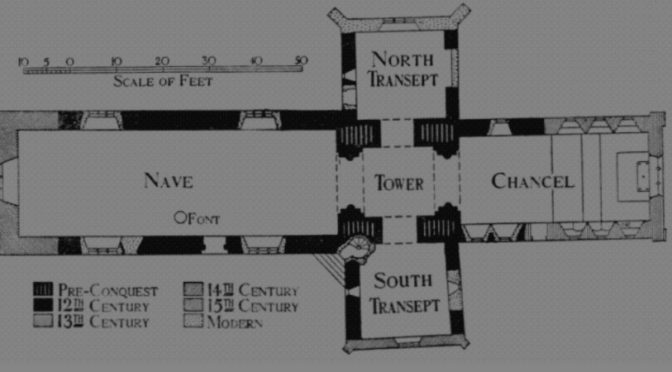
It’s been something of an ‘earworm’ or a ‘brainworm’ for me since, coupled with my love of the idea that when Christians did start building their own buildings, they incorporated the cross into the floor plan, and put the highest point of the ceiling above the intersection, so that the space itself represented the story of the Gospel, and that Jesus death serves as the bridge between earth and heavens, that will ultimately bring heaven to earth. That’s a ‘certain’ sort of form — a provision of a habitat that helps us embody the Christian story from the ground up (though for most of us, who are architecturally illiterate, and textually literate, this sort of thing might be meaningless — greater actual literacy is not a reason to be illiterate when it comes to aesthetic stuff though). I love that idea — while also pondering if the very decision to own public buildings, rather than meeting in homes, was a good move (aesthetically or ‘formally’). I say this having been pastoring a church for four years that has now met in a rented public theatre, an empty ‘box-like’ room, and now a church auditorium with all the modern bells, whistles, screens and lighting — each ‘space’ has shaped the life and experiences of our community and our gatherings in profound ways.

The Cultivated conversation explores questions of form, or a Christian ‘aesthetic’ when it comes to Christians making art, I’m interested in considering what it looks like to ask these forms in our architecture — our use of space both public and private, and social architecture. How we create a ‘stage’ or a habitat where we embody the Gospel story as ‘characters’ and form habits.

One of the ‘modernist’ assumptions that ends up shaping ethics (how we live) is that we are consumers in a machine-like environment, that things have utility, which led to a corresponding rise in utilitarian ethics and pragmatism, and through all this, we Christians in our modernist framework have tended towards making pragmatic rather than aesthetic choices about space (and even art). Here’s a cracking quote from Karen Swallow Prior, from that same Cultivated podcast episode.

“We’ve inherited a lot from the Victorian age and we don’t even realise it. We often don’t even distinguish between Victorianism and Biblical Christianity. And one of them is utilitarianism. And so we have undue emphasis on the idea that things must be useful, that they must have a purpose, in order to be valuable, of course, you know, when we apply that to human lives we know what that results in, but I think that’s part of what makes us uneasy with art, that, you know, as Oscar Wilde said, ‘all art is utterly useless’ right, and what he meant by that is it’s just there to be enjoyed, it doesn’t have to fulfil a purpose, which of course is a sort of a purpose. Modern Christianity is uncomfortable with something that is just there to be enjoyed and take pleasure in… we think we have to be on mission all the time and fulfil some sort of purpose” — Karen Swallow Prior, Cultivated Podcast

Here’s the thing though; art does ‘serve a purpose’ — it is part of the ‘backcloth’ of life, part of the ‘environment’ we live in or the habitat we inhabit, art-as-artefacts are part of what forms a ‘culture’, and so art shapes our seeing of the world both directly as we engage with it, and subtly (by being part of our ‘environment’). And if we bring in my favourite academic discipline — media ecology — and one of its maxims: the medium is the message, then we start to see that forms do inherently communicate something along with content. To keep ‘ecology’ on the table — think about the relationship between the words ‘habitat’ and ‘habit’. If we want to be creatures of habit — those who habitually live out the Christian story because we are formed as characters within God’s story — not our own consumer-driven stories with us as the hero, but as disciples — maybe we should consider our habitats — how we structure and design space, including what it looks and feels like — an application of a ‘Christian aesthetic’ to how and where we meet and live…

I’ve been challenged to re-imagine how we approach church as Aussies who believe the Bible is the word of God, and that the Gospel is the story of Jesus arriving in this world as the king who conquers sin, satan, and death and who launches a kingdom — his people, to live a life, for eternity (but starting now) where these enemies have been destroyed, so that we’re free from their grip, and he is victorious.

I’m struck by how many of our practices as Christians are adopted from a modernist world with modernist assumptions — a couple in particular, that the world is ‘disenchanted’ (thanks Charles Taylor) and that we are simply ‘brains on a stick’ who need logic and facts to make good ‘rational’ decisions (thanks James K.A Smith). I’m simultaneously struck by the way this adoption of a ‘modernist framework’ as ‘the Christian frame’ has us reeling because we now live in a post-modern, post-Christian, environment and our practices aren’t keeping people (humanly speaking) or persuading people, and how much this framework has shaped our understanding of making disciples or Christian formation, and in this post, I’m particularly considering how that approach to formation has de-emphasised embodiment, and so de-emphasised our ‘environment’ and the arts. So that the idea of a ‘Christian aesthetic’ seems a bit wanky — we’ve lost a sense of deliberately Christian architecture or art, whether within the life of the church or in the witness of the church to the world (or both).

“I want there to be a place for evangelistic art, really, really, really good evangelistic art. I want there to be a place for art that has very obvious utility. I don’t have a problem with that. But once you get in the field of the Terence Mallicks, and he’s making a movie about creation, and dinosaurs, and trees and light. You’re asking yourself a really important theological question: How does God perceive light, and sound, and texture, and scent? Because that’s what he’s talking about. Because if we have a theological way to frame God’s care of those things in creation, then Terrence Mallick is a profoundly Christian artist…” — David Taylor, Cultivated Podcast

We reformed evangelicals in reacting against worldly idolatry of beauty (too high a view of creation), and the way we’ve seen that play out in the Catholic Church with its iconography and expensive cathedrals, have tended to over-correct, adopting and almost ‘dis-embodied’ approach to life in the world — so we think less about space, and place, and beauty than other streams of Christianity (including the Pentecostal stream, who have a different ‘frame’ but, perhaps, are more likely to uncritically adopt the forms that are popular in our world).

There’s been a recent pushback against modernity (and post-modernity) by people who realise we’ve been breathing the air for so long that it has become normal — that perhaps, to quote another podcast I’ve listened to quite a bit lately — Mark Sayers in This Cultural Moment — we’ve been colonised by our culture, rather than ‘colonising our culture’ with the Gospel. Sayers argues you should understand the west in three eras — pre-Christian, Christian, and post-Christian; that missionaries have often come from the ‘second culture’ — one shaped by the Gospel into the pre-Christian world (think Africa, or the world the early church operated in), and that the ‘third culture’ — the ‘post-Christian’ culture lives off the fruits of Christianity but ‘wants the kingdom, without the king’ — it has moved on to a new story about what human flourishing looks like.  In episode 2, After discussing Leslie Newbigin’s return from the mission field in India to ‘post-modern’ England, and his realisation that the ground had shifted such that the west is now a post-Christian mission field, not “Christian” or “pre-Christian.” Sayers talks about some of the misfires of the early ‘missional’ church (including his early attempts at a missional church), which adopted secular forms, or aesthetics, to shape the teaching of the content of the Christian story. He said his question was: “how do you do a kind of church that incarnates into the culture of my friends?”

“Gen-X culture was hitting… post-modern culture was hitting… so the question was how do we incarnate into post-modern or Gen-X culture. I planted this congregation. We didn’t have singing. We didn’t have sermons. It was conversation, you know, clips from the Simpsons, we didn’t have a “front”… I was very much influenced by some of the alternative worship stuff that was happening in the UK. It was an attempt to use the cultural forms, it was the framework of missiology, but there was a thing that I missed was that there was an assumption that if you did this and you just did mission, then it would re-energise Christians, it would bring alive their faith, it would bring the church back to its core purpose… the model then of the three cultures is the idea that the third culture is not a ‘pre-Christian culture’… it’s not a return back to culture one, we’re turning to culture three… what it is, is a culture that is defining itself against Christianity, wants some of the fruits of Christianity whether it knows it or not, consciously, and therefore has a corrosive and caustic effect. The science of missiology taught people in Christian culture not to colonise people in culture one, when they’re communicating the Gospel to them, but what I realised was happening was that when I was in culture two incarnating and using cultural forms to speak to culture three, a post-Christian culture, that it was colonising us.”

John Mark Comer, the co-host of This Cultural Moment, sums this up as ‘you go out with the Gospel of Jesus, and instead of influence, you are influenced. Instead of shaping, you are shaped.” You uncritically take on the aesthetics of the world, and they start to shape how you see the world.

James K.A Smith puts it this way, in a series of paragraphs from chapter 3 of his book You Are What You Love: The Spiritual Power of Habit:

“In our desire to embed the gospel content into forms that are attractional, accessible, and not off-putting, we look around for contemporary cultural forms that are more familiar. Instead of asking contemporary seekers and Christians to inhabit old, stodgy medieval practices that are foreign and strange, we re-tool worship by adopting contemporary practices that can be easily entered precisely because they are so familiar… confident of the form/content distinction, we believe we can distill the gospel content and embed it in these new forms…” — James K.A Smith, You Are What You Love

He says this ends up with us saying “come meet Jesus in the sanctified experience of a coffee shop; come hear the gospel in a place that should feel familiar because we’ve modelled it after the mall”…

“”Forms” are not just neutral containers or discardable conduits for a message… what are embraced as merely fresh forms are in fact practices that are already oriented to a certain telos, a tacit vision of the good life.”

“When we believe that worship is about formation, we will begin to appreciate why ‘form’ matters. The practices we submit ourselves to in Christian worship are God’s way of rehabituating our loves towards the kingdom, so we need to be intentional about the story that is carried in those practices. By the form of worship, I mean two things: (1) the overall narrative arc of a service of Christian worship and (2) the concrete, received practices that constitute the elements of that enacted narrative.”

“Only worship that is oriented by the Biblical story and suffused with the Spirit will be a counterformative practice that can undo the habituation of rival, secular liturgies.” — James K.A Smith, You Are What You Love

Sayers and Smith are essentially pointing to the same truth, through different (though related) paradigms. If our forms or aesthetics are predominantly derived from the world around us (not that this is always terrible) there is a risk that we will be shaped by the world, rather than the forms or aesthetics that are predominantly derived from our story, and the practices of Jesus and teachings of the New Testament. Both Smith and Sayers/Comer land in the same place — spiritual habits — or ‘disciplines,’ shaped by the Gospel story, which include coming to terms with our embodiment as the key for transformation. Smith, for mine, leans too heavily into the medieval practices that developed as the church moved into ‘institution’

Now. I’ve written quite a bit about where I depart from Smith’s proposed embodiment of these insights (that I love), I think he ultimately picks the medieval, or pre-enlightenment (or Augustinian), church as a particular point in time disconnected from our modernist assumptions so that its practices will be counter-formative… while I think much older (pre-Constantine) practices of the New Testament and early church — forms and practices specifically developed in the Christian story — are both more disconnected from modernism, and from Christendom and its ‘forms’ — such the backdrop is more like ours, and the practices Christians adopted against that backdrop are more likely to be helpfully counter-formative for us. It’s not that everything between then and now is wrong, or that we shouldn’t be progressing in our telling of the story of God working through history to bring about his kingdom, it’s just that I’m not sure the practices produced by Christians when we were in the cultural ascendency are the ones we should pin ourselves to when trying to rehabituate and rehabilitate the church. I’m not sure it’s enough to say our post-Christian inclination to adopt the forms of our culture wasn’t at the heart of the church when it built cathedrals that looked a lot like castles (Solomon had a similar issue here); even though I’m prepared to cede that the medieval church, at times, might have had a less sinister approach to aesthetics and practices than it did when Luther kickstarted the Reformation (using popular forms from outside the church), and Calvin adopted a particular sort of iconoclasm that went far beyond doing away with inappropriate and idolatrous aesthetic practices. Anybody trying to learn from history inevitably goes back into the annals to find some point where they think the church departed from a faithful model, and to find faithful counter-examples; this is inevitably an inexact science built around drawing analogies (see Dreher and the Benedict Option for another example of this phenomenon).

I think we’ve often made the distinction Smith points to between form and content when it comes to the Gospel — being flexible on form and firm on the Gospel as an expression of the sort of ‘contextualisation’ Paul writes about in 1 Corinthians 9. And it’s not that we shouldn’t play with expressing the Gospel in different forms — that’s part of being human and forms being cultural expressions — but I do wonder if we’ve been deliberate enough in developing a particularly Christian culture, or forms, or aesthetic that might pair with the Gospel content as we adapt our engagement with a variety of cultures so that our ‘medium’ and ‘message’ work together to disrupt and challenge idolatrous status quos (which are often packaged aesthetically). I wonder if we’ve created a universal flexibility on forms without grappling with the idea that ‘the medium is the message’ — and without critically asking what forms or mediums undermine our preaching and living of the counter-cultural, subversive, aspect of the Gospel.

Social architecture and how the habitat of the home shaped a new habit for the early church

Paul is able to both understand and embody a culture and challenge it in the way he does so — it’s what I think he does in Athens — and to do it in a way that doesn’t challenge the way we Christians operate in our own spaces, where he’s one of the architects (divinely inspired) of a radically different aesthetic, or form. A totally new use of space that is utterly subversive.

Paul’s treatment of eating immediately after he talks about his adaptability in 1 Corinthians 9 is interesting. Eating with people is a ‘form’ now (see anthropologist Mary Douglas’ fascinating essay ‘Deciphering a Meal’) and was a ‘form’ that had a particular meaning in the ancient world in both Jewish and Graeco-Roman culture. There are ancient records from the Roman world observing the dining habits of the Jewish people.

Living in their peculiar exclusiveness, and having neither their food, nor their libations, nor their sacrifices in common with men.” – Philostratus, Life of Apollonius V.33

“They sit apart at meals, they sleep apart…” – Tacitus, Histories 5.5.2

The Jews had a particular practice — not becoming impure by eating with gentiles. This form had a meaning — the Jews saw this as something of an aesthetic practice, a thing that made their eating more beautiful (and this is apart from the dining program aligned with their calendar of festivals).

The Romans had their own forms, or aesthetic, when it came to dining, Pliny the Younger describes a meal around the table of an acquaintance (and again, there’s a certain sort of ‘physical space’ required for this, and an ‘aesthetic’ created by that space, check out the adjectives attached to the content).

“I happened to be dining with a man, though no particular friend of his, whose elegant economy, as he called it, seemed to me a sort of stingy extravagance. The best dishes were in front of himself and a select few, and cheap scraps of food put before the rest of the company… One lot was intended for himself, and for us, another for his lesser friends (all his friends are graded), and the third for his and our freedmen.” — Pliny the Younger, Letters, 2.6

Paul takes that form and, with Jesus, talks about three particular forms — eating at ‘the table of demons’ (1 Corinthians 10:18-21), eating with non-Christians in their homes as an act of love and mission (1 Corinthians 10:27-33), and eating together as the church (1 Corinthians 11:17-34). The act of eating together as a church required a particular sort of space — a home, organised in a particular sort of way that created a form — and this form might be part of a sort of aesthetic framework that transcends time and place.

What he describes in chapter 11 is a new and subversive form of eating; a new aesthetic; where people of different ethnic backgrounds and social class were to meet together around a table as equals, united as one by and in Jesus. This unity was a certain sort of aesthetic. A beautiful, embodied, picture of the Gospel. Part of a Christian aesthetic must grapple with the idea that as ‘images’ we humans are a certain sort of divine art (we are God’s handiwork, ala Ephesians 2). Part of our forms will include the way we inhabit space together. This form of eating together communicated the message — and it still does. What we eat — the content — around that form might change from culture to culture, across time and space (apart from the bread and wine), but the habit of gathering around a table might actually be at the heart of a Christian use of space — our social architecture in our public spaces and our homes. It creates, or assumes, a certain sort of habitat.

Sketching an aesthetic for Christian habitats — homes and church owned buildings

Let me unpack this a bit specifically as it relates to aesthetics and our how our ‘habitats’ shape our habits and our character, and how we might shape our ‘form’ or aesthetic, or architecture, in a way that is both adaptive to different cultures, or ethnicities, while simultaneously challenging where those cultures or ethnicities are affected by sin.

What would happen if we designed our spaces — be it home or church owned buildings — with some attention paid to architecture not just for utility’s sake, but with an eye to how aesthetics at a level not simply of ‘content’ (eg obvious pictures, or the colour of the carpet)  but also of ‘form’ — in such a way that the form helps us inhabit and retell the story of the Bible in such a way that it shapes our habits. We already do a bit of this when it comes to acoustics, and the ability for people to move through various stages of a church gathering in a functional sense (that supports the ‘habituation’ of good things). I was struck by something one of the pastors of the church whose venue we hire said about how deliberately they’ve designed their facility so that the space for the ‘service’ (the auditorium) is the same size as the space for eating and talking together as a community (the cafe area). It’s a great facility with an eye to a certain sort of aesthetic and attention to detail I’m not used to in the Presbyterian scene… but part of me wonders how much artificial lighting, smoke machines, and big speakers form the backbone of a Christian aesthetic (I’m not opposed to the idea that the development of technology is part of humanity’s role in God’s story, see John Dyer’s book From the Garden to the City for a nice balanced account of this). I’m also struck by how a poorly designed house (like ours) in terms of living, kitchen, and dining, space limits our ability to participate in the sort of eating together that happens in the early church; and my dreams about an ideal home or ‘church building’ are concepts with a certain sort of ‘social architecture’ underpinning them.

I’m not naively suggesting that this sort of focus on space or ‘the aesthetic’ will magically transform us — that we’re exclusively products of our environment such that the right habitat will automatically fix our nature; and I’m totally aware of our tendency to idolatry — that our default response to beauty is to objectify it and seek to make it our own — but I feel like instead of cultivating an appropriate approach to beauty, or aesthetics, to counteract our sinful hearts, we’ve uncritically adopted an almost negative view of beauty and baptised that as ‘utilitarian’ and so we’ve treated this as the Christian norm.

Here are some of my early thoughts, or ‘sketches’ about some elements (a certain sort of ‘content’ geared towards the ‘aesthetic’) and ‘forms’ (a certain sort of delivery of that content) that might be part of how we structure our spaces to be both beautiful and formative habitats that orient our habits around the story of the Bible as they act as spaces that help re-tell that story…

  1. Light and life.
    Natural light. I’ve been pondering how often we have church in dark rooms (for the purposes of projection and managing lighting), where there’s something from start to finish in the Christian story about God being ‘light and life’ — and some part of that is him being the creator of light. There’s something to the idea that the introduction of electric lighting has ‘deformed’ us in all sorts of ways (including the way the screens of our smart devices do things to our eyes and brains when, prior to their development, we’d have been sleeping). The use and availability of light shapes our practices. The Gospel is a movement from darkness to light, and we’re not meant to fear it. Do our spaces communicate something else, even if subliminally? Is projection (and lighting) a case of harnessing this good gift from God?
  2. Water.
    There’s something about how there are rivers running through the garden in the beginning, and the end, of the story (and, for instance, in Psalm 23) — and that it’s involved in baptism, that means some sort of refreshing, flowing, presence of life-giving water works nicely in telling the story. Plus, you know, that stuff about Jesus at the well and him being living water…
  3. Trees and fruit.
    The trees in the garden are a picture of God’s provision and hospitality, fruit his initial gift of miraculously sweet, juicy and sustaining produce (both on normal trees and the tree of life), which is also a metaphor for the ‘good’ or ‘flourishing life’ for Christians (think the parable of the sower, the ‘true vine’, the fruit of the Spirit). Tree imagery also features prominently in the design of the fittings for the tabernacle and temple, Ezekiel’s vision of the new creation, and the new creation described in Revelation 21-22. And of course, there’s the tree at the heart of the Christian story — the cross. I’m struck by how churches in the past put lots of emphasis on flowers, and how little I thought of that at the time, but how an experience of stepping in to a sort of ‘oasis’ when you gather with Christians — a space trying to capture something of the gardens at the beginning, middle (Gethsemane) and end of the Christian story might help the idea that we are an alternative kingdom — and this might spill out into a world (an environment) desperately in need of a better picture of relating to the natural world. I love the idea of a massive table laden with fruit being part of our experience of eating together — a recognition that for all our technological processing of food to make it more convenient and desirable (with sugars and fats), we can’t compete with what’s on offer in nature.
  4. Table/feasting.
    God shows hospitality to his first image bearing priestly people — with a garden full of good things to eat, and then Israel, his renewed image bearing priestly people are promised a ‘land flowing with milk and honey’; Israel marks its story with feasting (and fasting), with festivals tied to its life together. Sharing the passover, in particular, was a chance for the retelling of their story of creation/salvation through Egypt — and for Christians that’s the feast that became the first Lord’s Supper. I can’t help but feel we’ve been a bit reductionist and utilitarian with a move to individualised portions handed out during a service, formalising the ‘teaching function’ of the meal to what the priestly-pastor says during the carefully ‘demarcated’ time in our week, rather than this being something to do whenever we eat together. There’s an aesthetic element to the reduction of this practice (or its re-imagination). When Robyn and I have spoken about how we’d redesign our home, particular with hospitality being at the heart of our ministry philosophy, I’ve had this romantic idea of the kitchen and dining room being at the literal centre of our house, in a way that communicates something and also sets our rhythms for family (and guest-as-family) life together. We already have an obscenely big table that doesn’t really fit in the space allocated, but this is tucked in the back corner of the house. If the early church meeting in houses was a deliberate sociological and aesthetic practice — where our group identity and character were shaped by architecture — maybe we should consider how much our church buildings should take the shape of houses rather than auditoriums, concert halls, or whatever other space we uncritically adopt; or if we do start running spaces that look like public meeting halls, how we make them truly public not just big private spaces outside the home for us to use in ways that mirror the use of other private spaces that aren’t homes…
  5. The Cross.
    I do love the idea of the ‘cruciform’ church even as I’m subtly challenging the approach to space that began around the time we Christians moved out of homes and into cathedrals… but something of the ugliness of the cross and the utility it represented for the Roman empire being subverted and made beautiful in Jesus’ death is compelling to me in some way, and something about the reminder that at the heart of all the beauty in the world God chose this ugliness to shame our worldliness and to build something new needs to be at the heart of our theological approach to ‘aesthetics’ — if there’s no sense that the cross has challenged and overturned our appreciation of and use of beauty and creation then we’re trying to run ‘creation’ and ‘redemption’ as two separate poles in our framework rather than grappling with how those poles come together in Jesus’ death and resurrection. I’m not entirely sure what this looks like, but part of our thinking must surely be asking ‘how does this experience of beauty prompt me to sacrifice my desire to grasp hold of beauty for myself by connecting me to its maker and redeemer?’ Maybe it’s that things are sweeter without the fear of death and decay — the promise that ‘all things will be made new’ — and part of an ‘aesthetic’ is the reminder that even the good things we have now are not yet perfected.
  6. Gold.
    This one has been historically controversial because churches have lined themselves with expensive gold while neglecting the poor; but there’s something in the way gold is threaded from being ‘good’ around the garden (Genesis 2:11-12), to plundered from Egypt, to used for the tabernacle, priestly vestments, and the golden calf — then in the gifts laid before Jesus, and prominently featured in the new creation. There’s an aesthetic quality to Gold — an inherent beauty — that explains its value, and there is something to an appropriate not using gold for our own ends but to glorify God that expresses a refusal to try to serve both God and money. I’m not suggesting that our use of ‘gold’ — aesthetically — be at the expense of the poor, or in any way idolatrous; in fact if the poor aren’t being included and welcomed into our ‘richness’ then we’re doing it wrong (and maybe that’s part of the historical issues with the church and wealth). I wonder if somehow it’s more about the way that gold reflects the light than about it being exceptionally valuable, and there are plenty of gold coloured things that aren’t made of gold. I’m also sympathetic to the idea that gold serves as something of a metaphor for the inherent goodness of creation, that can be used to glorify God or idols. I have some thoughts about how this might be approached aesthetically, in both church and home, that doesn’t require much more than a trip to Kmart.
  7. White.
    Part of a tendency towards dark colours in buildings has been a focus on a certain sort of aesthetic, but I wonder how much we’ve balanced light and dark in our approach. There’s a bit to be said for the idea that being ‘clothed in white’ is a bold and stark statement in a world where mess is everywhere, and as much as gold might be part of our aesthetic because of how it reflects and amplifies light, white does this too.

Exactly what ‘forms’ these different elements take could vary greatly, and so my sense is that an approach to the ‘aesthetic’ is descriptive rather than a one size fits all ‘prescriptivity’ — which means the quote from the podcast I opened with, the idea that part of an historic definition of a particularly Christian aesthetic is that people might say “that’s a form that has been created and has always been associated with Christianity” is maybe not where I’m landing with this — and these forms aren’t distinctively Christian, you’ll find them in modern architecture, in Kmart, and in my favourite cafes. The extent that these are elements of a “Christian aesthetic” and not simply ‘beautiful’ is caught up with how the form/content stuff plays out in each place, and our creative intent as we carve out spaces that carry this aesthetic… but to want this to always be explicit is to fall into a certain sort of utilitarianism that kills art. Perhaps the thing that actually does away with the ‘Christian’ part of a ‘Christian aesthetic’ is when these things that are inherently beautiful are co-opted for idolatry or the service of self, not God. Part of a Christian aesthetic is recognising that Christians don’t have exclusive access to knowing what is beautiful in our world; we all innately recognise beauty. The problem with our use of worldly beauty or aesthetics has often been that it’s derivative, that we’ve simply tried to imitate cultural forms common around us, rather than creating our own cultural forms within our cultures built from our story. What we do have is the ability to connect what is true and beautiful to its source, God, and see it as the backcloth to his story — the redemption and renewal of the world in and through Jesus.