Tag: how to read the bible

How to Read the Bible — Reading the New Testament as (modern) Christians

This series of posts was first a series of sermons I preached at City South Presbyterian and Coorparoo Presbyterian in mid 2026. You can, if it is your preferred medium, watch the video recording of this sermon here (Vimeo), or listen to the audio recording here (Spotify link).

I want you to bring me a coat next week.  Or a cinnamon scroll. Scripture commands it. 

When you come, bring the cloak that I left with Carpus at Troas, and my scrolls, especially the parchments.

2 Timothy 4:13

You can tell this is stupid, right, but why? 

How are we reading the Bible to decide these words don’t apply to us —  while others do?

Skimming 2 Timothy 4, where Paul begins by picturing himself standing before God, and charging Timothy to preach the word — this “charge” was used in my ordination — we can see how that applies to modern church life, and we apply it (2 Timothy 4:1).

Paul has just said the Scriptures make people wise for salvation through faith in Jesus, and God-breathed; inspired; and useful for teaching, rebuking and correcting (2 Timothy 3:15-17). Now he’s telling Timothy to do this work, with the Scriptures by preaching — in season and out of season (2 Timothy 4:2). 

We can map this onto life in our community where we are also inspired and shaped by God’s word as people speak it…

And Paul says do this cause some people will do the opposite; finding false teachers for their own desires (2 Timothy 4:3). Who peddle myths that will turn people’s heads from the Gospel (2 Timothy 4:4-5). Timothy is to keep his head; even if it means suffering as he does his duties as a servant (2 Timothy 4:4-5). 

Again, we can see a throughline to our time; and our church.

Paul says look at me; my example — I am being poured out; almost exhausted — I have finished the race (2 Timothy 4:6-7). I have kept my eyes on the prize — the crown given by Jesus to everyone who sticks with him (2 Timothy 4:8)… 

We stick with Jesus. We get a crown. Timothy takes up the baton in the relay; and, generations later, we have joined the race.

But then this gear change. It all gets so human and specific.  Come quickly. I am alone (2 Timothy 4:9-10). Bring my coat (2 Timothy 4:13). This instruction about a coat — it’s this reminder this is a letter; we are reading someone else’s mail.

New Testament letters are called ‘epistles’ — this word is built on the Greek for sent; and it shares a root with ‘apostles’; this is a useful analogy, because ancient letters were understood as a kind of substitute for a person’s presence.

About a third of the New Testament comes to us in this form. And they have all got very ‘human’ bits like this; it’s clear these words about a coat are not to us. They are personal. They remind us we are outsiders to the situations and relationships these New Testament letters come from. But they are still part of our Scriptures; they were not dropped off as this letter was received and circulated as God’s word.

And these personal bits could make the text feel more distant and less applicable; but they can do the opposite if we use them as a lens to read the whole letter; to picture the shape of the community; the church, who are writing, receiving, reflecting on and circulating these letters along with the Old Testament Scriptures; imagining the 3D “incarnated” humanity of the inspired community through what these letters describe and do amongst that community.

Reading the letters through the lens of these human bits has a payoff for how we read the trickiest bits; we are going to take a look at where Paul says he doesn’t permit a woman to teach in 1 Timothy 2, after we look at some nuts and bolts.

We have stacks of letters from the Roman world, so know things about their structure — or genre — and New Testament epistles follow this formula. Picking up Andy Judd’s book on genre again… First, he points out this bit about the coat should make us pause and check our assumptions about how letters work ‘for us’…

“Extremely specific instructions like 2 Timothy 4:13 remind us to pause and consider our assumptions about how the genre of New Testament epistle works…”

Andrew Judd, Modern Genre Theory

Andy’s big point is that genres help us not just see what words say, but what they do when they are put in a form, and looking at the formula these letters follow is an important step before we apply them to our lives now.

…genres are about more than what’s written on the page; they’re about who is trying to achieve what with the piece of paper.

Andrew Judd, Modern Genre Theory

So. An ancient letter conventionally opens by establishing the relationship between sender and receiver. Paul — an apostle of Jesus — is writing to Timothy — his dear son (2 Timothy 1:1-2). This is followed — especially in Paul’s letters — by thanksgiving. In the epistles this looks like Paul bringing the other person, or church, ‘before God’s throne’ in prayer; so God is part of the relationship.

…Paul usually finds something distinctively Christian to thank God for…

Andrew Judd, Modern Genre Theory

Here he thanks God for Timothy, and longs to see him to be filled with joy (2 Timothy 1:3-4).

The body of the letter doesn’t have to be an essay with one big idea, it can cover all sorts of stuff ‘in the relationship’ — and can be like a kind of scrapbook holding other types of writing.

…The letter genre allows for a rather wide-ranging and free-flowing discussion of a variety of topics…

Andrew Judd, Modern Genre Theory

They can also include mini-essays, or examples of ancient rhetoric or persuasion; there is evidence Paul occasionally structures his letters using these forms, and that he sometimes uses overarching metaphors to tie a bunch of ideas together.

Somewhere in the body, an ancient letter has this thing called the parenesis; this is where the writer gets to the point of why they are writing; and what they want the receiver to do.

…This is where the writer tells us what to do, attempting to influence how we think, feel, or act…

Andrew Judd, Modern Genre Theory

Working this out can unlock why a letter has been sent, and helps us make sense of the big picture; and of how to apply it.

So, in 2 Timothy, Paul — the spiritual dad — wants Timothy to follow in his footsteps; guarding the ‘good deposit,’ keeping the ‘pattern of sound teaching’ — that he learned (2 Timothy 1:13-14). Not following the false teachers (2 Timothy 3:14). He keeps coming back to this idea, before ‘charging’ him with doing it (2 Timothy 4:1-2).

And ancient letters close by reaffirming the relationship, and with a bit of situational small talk, or ‘family news’ — which is where we get the coat, and the visit, before winter (2 Timothy 4:9, 13, 21).

…a good closing reaffirms the interpersonal dynamic of the situation, often including a farewell or health wish…

Andrew Judd, Modern Genre Theory

So that is the form; and figuring out the ‘parenesis’ — the purpose of the letter — is helpful for how we weigh up bits of the content and their meaning and application then and now.

The other part of working out how to apply these letters is seeing what we can construct about the context or situation ‘behind’ the letter. At times the content will be specific about the context; winter coming is a straightfoward background situation behind Paul’s request for his coat (2 Timothy 4:9, 13, 21). Other times it’s harder.

Is there a specific situation Paul is addressing where he says a woman isn’t to teach or have authority?  Are these words like his specific timely request for a coat — particular to the relationship and circumstances… Or are they general and binding?

A woman should learn in quietness and full submission. I do not permit a woman to teach or to assume authority over a man; she must be quiet.

1 Timothy 2:11-12

How would we tell the difference?

I want to suggest neglecting the end bits of Paul’s letters — the human relationships and situation behind the text, and described in the text — has led to us projecting this verse onto any structure we create, or reading our structures back into these words; but bringing the ancient network of relationships from the end of the letter into 3D in our imaginations, as we engage with Paul’s letters as things written into a situation — might give us a different picture of what Paul is saying.

But we need to do a little more technical work first on how we recreate the ‘background’ situation. 

Reading any letter is like listening to one side of a conversation; there is a situation behind every letter where the author wants to be present in letter form. Sometimes — like with Corinthians — this is a conversation happening in correspondence (1 Corinthians 7:1). But often we are left trying to reconstruct the other half by looking at the side we have; which is called mirror reading. 

There are lots of scholarly rules for mirror reading, but it’s easy for us to fill in the blanks by making stuff up;  turning small historical facts into huge explanatory ideas, and this kind of speculation is great for PhDs or book deals… Or sermons… 

We do have some data though — whether that is information in the letters — like quotes, or when people or ideas are named — and we have got the book of Acts; but historical work can also be part of giving us a ‘3D’ lay of the land. 

But, our ‘mirror images’ can get in the way of carefully reading the text as ‘literature’ — paying attention to genre, and a good “boomerang test” of the genre (see the post on reading as literature) — where we recognise these letters are a type of writing that have a purpose ‘contained’ in the writing themselves, that might break what some people imagine in the mirror.

If the image doesn’t match with the purpose of the text, the image is probably wrong. 

This will all make a bit of sense if we look at how it works with Paul’s letters to Timothy. Let us reconstruct the world a bit using the data we have.

The ‘relational’ picture is pretty clear — in both letters, Paul calls Timothy his true and dear son (1 Timothy 1:2; 2 Timothy 1:2).

They met in Acts 16 in Lystra, and from there he joins Paul’s team (Acts 16:1).

They travel together, and go from Corinth to Ephesus with Priscilla and Aquila. Timothy and Paul sail off, then, eventually, head back to Ephesus, where Paul hits some massive opposition over the economic impact of the Gospel (Acts 18:19, 21; Acts 19:1, 23-24). 

Ephesus is famous for its idol temples; its craftsmen get rich on making metal idols of the god Artemis. Paul says these gods are hollow, and a local silversmith named Demetrius realises Paul’s teaching — that idols are not real — will send them broke, and he leads a riot against Paul (Acts 19:26-29). A local Jewish guy, Alexander, is brought out to speak; probably to make a distinction between Paul’s Gospel and Judaism (Acts 19:33)… And people start chanting “great is Artemis of the Ephesians” for 2 hours (Acts 19:34). It’s a riot.

Paul makes his last visit to near Ephesus in Acts 20; and this is the last time Timothy is mentioned in Acts (Acts 20:4). It appears from 1 Timothy; this is where Paul leaves him to keep false teaching out of the church (1 Timothy 1:3).

The cult of Artemis had women as priests; and some people use this as an image in the mirror — their idea — not without reason — is that Ephesus was home to a first century feminist movement that was women led and anti-marriage, that that this has infiltrated the church, and this is what Paul is asking Timothy to correct.

Another bit of speculation — more ‘from the text’ — is Alexander from Acts is the Alexander who comes up twice in Timothy; that maybe he converted after the riot, but then became one of the false teachers; who Paul ‘hands over to Satan’ (1 Timothy 1:20), and who is a deceiving hypocrite (1 Timothy 4:1-2). And that this is the guy Alexander the metalworker in 2 Timothy (2 Timothy 4:14-15). I think it’s likely it’s the same guy in both letters, but it’s a guess that he is the guy from Acts (Acts 19:33). 

We know what metalworkers in Ephesus make; idols — so this false teaching that makes people rich could be folks in Ephesus trying to have a foot in both camps; and Alexander who was in the church is now like his fellow metalworker, Demetrius. Timothy is there because this false teaching — speculation — whatever it is, is preventing the advance of God’s work, which is by faith (1 Timothy 1:4).

Now — this ancient and translated text — this phrase is the οἰκονομίαν Θεοῦ (oikonomian theou) — oiko means ‘household’ and ‘nomia’ means ‘rule,’ and this is the root of our English word “economy” (1 Timothy 1:4).

This false teaching that makes people rich is pulling people away from God’s new economy.

So here’s my thesis about the parenesis of the first letter which I reckon extends into the second — a boomerang to try out and see what comes back — Paul says he is writing so Timothy will know how people should live in God’s household; his ‘oikos’ — the church of the living God (1 Timothy 3:14-15). 

I am writing you these instructions so that,if I am delayed, you will know how people ought to conduct themselves in God’s household, which is the church of the living God

1 Timothy 3:14-15

He is writing to establish a pattern of relationships — not in church structures and leadership in an institution — but in a new kind of household (a household was more than a biological family); a household or ‘economy’ different to those in the first century Roman empire; and in Ephesus. And, ultimately, different to those in 21st century Australia…

This life together has a shape to relationships and a script that comes from the Scriptures.  Timothy has been entrusted with protecting it by preaching the Scriptures; bringing them to life in the community to shape a different economy; this new pattern of relationships. And we see this economy at work in the relationships Paul describes in his letters — and at the end of his letters.  Here is where I think we can project our picture of modern church life — an event on a Sunday where one bloke, ‘charged with preaching’ gives a sermon — back onto the text; but the text invites us to picture a network of people living as family, and speaking in quite different structures and dynamics.

Let’s do some work on 1 Timothy 2; these are translated words, and you need to know the Greek words for woman and wife are the same; same for man and husband, so context determines how we translate them; whether it’s “a woman” or “a wife” might not make heaps of difference if you are a woman, but I think it should say wife and husband (1 Timothy 2:11-12).

Some see one specific woman in the mirror here; an Artemis-emboldened female priestess causing trouble in the Ephesian church; so the Paul who wants ‘that coat’ wants ‘that woman’ not to teach.  I think that reconstruction has too much mirror, not enough letter — because Paul appeals to Genesis here, in a way that brings out some kind of general principle for the household of God (1 Timothy 2:13).

In the household of God, restored in Christ — the answer is not wives ruling and directing husbands, like priestesses of Artemis, but a new kind of pattern (Genesis 3:16; 1 Timothy 2:12).

The Greek word ‘authority’ here — αὐθεντεῖν (authentein) — is only used here; it’s never something permitted for men, husbands, or church leaders. Outside the New Testament it’s used for a kind of dominance that is consistent with its roots which mean ‘self-arm’; this pattern doesn’t fit God’s economy (1 Timothy 2:12).

Paul has already said — in the same chapter — the church should live “quiet lives” (1 Timothy 2:2), so, whether Paul has one woman in view, or is just talking about a pattern; this pattern, or the word ‘quiet’ is actually for everyone, and doesn’t mean silence (1 Timothy 2:12).

And in his second letter, Paul is going to name Timothy’s grandma Lois, and mother Eunice, as the origin of his faith; and he points out that Timothy learned the Gospel not just from him, but from infancy.

I am reminded of your sincere faith, which first lived in your grandmother Lois and in your mother Eunice and, I am persuaded, now lives in you also.

2 Timothy 1:4

…continue in what you have learned and have become convinced of, because you know those from whom you learned it,and how from infancy you have known the Holy Scriptures…

2 Timothy 3:14-15

This is how the household of God works. Mums, and in Timothy’s case, his spiritual dad, teaching the household the Gospel in this new economy of every day life. Now Timothy has a role to play passing this on; standing against false teaching (1 Timothy 1:3-4), and teaching the word the way it was taught to him (2 Timothy 4:2).

Having the purpose — that Paul is giving instructions for the shape of the household of God (1 Timothy 3:14-15), and the context — both the opposition and idolatry of Ephesus — and the relational context described in the letters — in view as we picture these instructions and functions, and see how they are embedded in Paul’s purpose is quite helpful.

Paul’s example is a contrast to self-interested lovers of the world who live in other economies; he has faithfully run the race; been poured out as a living sacrifice (2 Timothy 4:6-7), because he is keeping his eyes on what is valuable in God’s economy; not worldly rewards, and he is passing on responsibility in the ‘family business’ to his ‘son in the faith’ (2 Timothy 4:8).

Paul wants to see Timothy again; but these words will sit with Timothy — and then the church — to say ‘hanging on is worth it.’ Do not sell out. Paul is ready for Timothy to come see him — winter is coming; he feels alone — deserted — he is leaning in to the reality of Timothy’s love for him as part of God’s family (2 Timothy 4:9-10). And also giving an update on where other people in the family are at — Luke is there, Mark should come too… Bring my coat, and scrolls (2 Timothy 4:11-13). Paul might have been alone in his first trial in Rome (2 Timothy 4:16), but he is like Daniel — protected form the mouth of the lion of this empire; his 4D view of reality is guiding him — and he trusts his church family will give flesh to this spiritual reality of God’s family by being there; even being there to bring him his warm coat for winter (2 Timothy 4:17).

These bits at the end — we can picture them in 3D; but they also create a web of connections, a kind of social map of life together in the household of God — that overlays the letters of the New Testament and the story of the church in Acts; which, as we see it, helps us imagine how we are connected to this family tree and the shape of its life… As we read their mail.

This helps us picture a new household where husbands and wives — men and women — all the members are invited into this new economy; gospeling each other in these new relationships ‘beside’ one another, rather than ruling or dominating; to advance God’s family not their bank balance.

We have maybe focused too much on what women can’t do in our structures; and not enough on how our structures; out community — might look like this one, the household in Ephesus, and the network in the early church…

Paul says greet Priscilla and Aquila — a couple of parents of the church who are presently based in Ephesus, and mentions Erastus, who is in Corinth (2 Timothy 4:19-20). Erastus is a high ranking public servant in Corinth; who was there with Timothy and Paul while Romans was being written (Romans 16:21, 23)… That’s where Paul first met Priscilla and Aquilla; they had come from Rome when Claudius kicked them out (Acts 18:1-2). We saw how they went to Ephesus with Paul and Timothy; and they are there hosting a church in their house when Paul writes 1 Corinthians (1 Corinthians 16:19). They are back home in Rome, presumably hosting the church there by the time Paul writes Romans from Corinth (Romans 16:3-4).

When Paul names them here; these are folks Timothy knows — husband and wife — who model leading the household of God together.

We read badly if we rob these letters of their humanity; these words of their life; and we can build all sorts of structures on top of this picture, obscuring the shape of life behind the words.

We read well by keeping their humanity; reading right to the end, so the relationships in this new economy frame the way we understand these words; and that they are written to make us wise for salvation as those brought into this family to hold on to these words and be shaped by them together (2 Timothy 3:15).

They remind us that the New Testament — God’s word — emerges from and shapes loving, connected, communities — an economy — God’s household brought to life and inspired by God’s word as we are made wise for salvation in Jesus; creating the kind of community where a son in the faith will travel across an empire to bring his spiritual dad his cloak for the winter (2 Timothy 4:13, 21). And face death with him, as they serve Jesus together eyes fixed on the prize (2 Timothy 4:8).

How to Read the Bible — Reading the Old Testament as (gentile) Christians

This series of posts was first a series of sermons I preached at City South Presbyterian and Coorparoo Presbyterian in mid 2026. You can, if it is your preferred medium, watch the video recording of this sermon here (Vimeo), or listen to the audio recording here (Spotify link).

The story of David and Goliath is a Sunday School classic. If you’re my vintage, you might even have had these David and Goliath toys.

How should we read this classic story?

What is its moral or meaning?

Should we grab five smooth stones to kill the giants in our lives?

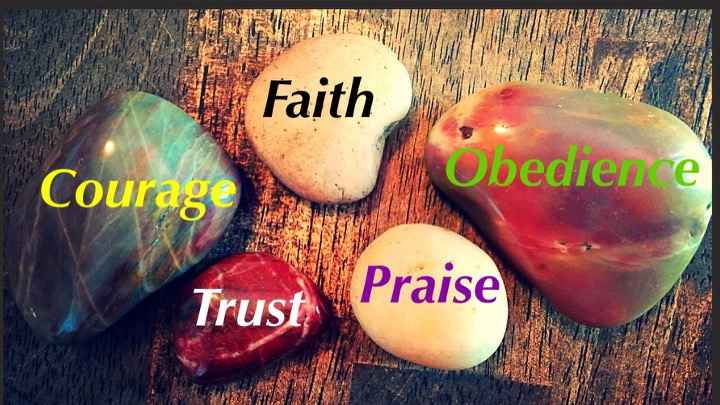
I looked online. One site reckons our five stones are faith, courage, trust, praise, and obedience, and we should carry them wherever we go (1 Samuel 17:40).

Another says David’s victory teaches that God can defeat any of the giants in our lives; fear, depression, financial issues, doubt. And that when we are tested we should stand up.

From the story of David and Goliath, we can learn that the God we serve is capable of defeating any of the giants in our lives—fear, depression, financial issues, doubts of faith—if we know Him and His nature well enough to step out in faith…

When we are tested by these trials, we can, in the power of the Lord, stand up against any giant, trusting our Savior to win the victory.

GotQuestions.org

MinistrytoYouth.com says David uses his skills from previous trials to battle the real giant, so we should do the same.

Bottom Line: ​​David used his skills from previous trials to trust that God would help him defeat the real giant. We can do the same in our lives.

MinistryToYouth.com

This idea it’s about honing our skills away from the battle so when the giants turn up we are ready to rock fits with the thesis of Malcolm Gladwell’s book David and Goliath.

He reckons we have made the story about small beating big; but it’s actually about innovation beating the establishment…

“Goliath was expecting—a warrior like himself to come forward for hand-to-hand combat. It never occurred to him that the battle would be fought on anything other than those terms, and he prepared accordingly.”

Malcolm Gladwell, David and Goliath

Goliath being stuck in his ways — only prepared to take on someone just like him — he is armed and armoured for a sword fight, not for a killer wielding a sling — a recognised ranged weapon in Israel (Judges 20:16). A study by a modern military expert found a stone slung from 35 metres would hit its target at a speed of 34 metres per second; it was like bringing a gun to a sword fight.

“Slinging took an extraordinary amount of skill and practice. But in experienced hands, the sling was a devastating weapon.

…a typical-size stone hurled by an expert slinger at a distance of thirty-five meters would have hit Goliath’s head with a velocity of thirty-four meters per second…”

— Malcolm Gladwell, David and Goliath

Also, Gladwell reckons Goliath was probably almost blind — that his size was a result of a medical condition that also impacts the nerves in the eyes; and there are some clues in the text, cause David only has one staff, and Goliath asks ‘why are you coming at me with sticks…’

…one of the common side effects of acromegaly is vision problems. Pituitary tumors can grow to the point where they compress the nerves leading to the eyes…

Malcolm Gladwell, David and Goliath

He is blind, while David sees clearly and takes down the blind with his skills and speed. So the moral is “clear eyes, full heart, can’t lose…” Or “innovate to win.” But all these readings position us as David in the story; inviting us to learn from his perspective and his experience — and his heart… But is this how we should read the Bible (1 Samuel 17:43)?

In this post we are bringing together our nuts and bolts from the previous posts to read this story.

We have seen how all Scriptures are inspired by God — useful for equipping us and making us wise for salvation in Jesus — inspiring us.

And also incarnated — coming through a human process of writing, editing, receiving and reflecting in community; so the Law, the Prophets and the Writings become a library of interconnected literature; which is fulfilled in Jesus; and that is our interpretive guide. We saw how this fulfilment happens in a bunch of ways; whether we read ‘christocentrically’ and read Jesus back into the text, or christotelically — understanding the text works in the community of humans — Israel — through their history in a way that climaxes in the story of Jesus, the Son of David and Son of God.

We considered that if Jesus is the word made flesh who reveals God’s glory; and the way God now reveals himself, who is the exact representation of his glorious being (2 Timothy 3:16; 2 Timothy 3:16-17; 2 Timothy 3:15; Luke 24:44; John 1:14; Hebrews 1:1-2; Hebrews 1:3). Then looked at Vanhoozer’s ‘transfigural hermeneutic,’ and the Spirit’s role as we read might be to bring us face to face with Jesus like on the mountain of the transfiguration… So we contemplate his glory; which is how we are transformed (2 Corinthians 3:18).

“Transfigural interpretation stands for the whole hermeneutical process of glorifying the biblical letter for the sake of the reader’s glorification.”

Kevin J. Vanhoozer, Mere Christian Hermeneutics

We saw how the Bible is ancient and translated — but timeless — coming in foreign languages and cultures, with different orientations to the universe.

And that we are tempted to reduce the Bible to 2D; words on a page, but when we try to inhabit and contemplate the text in 3D; noticing architecture or geography or rituals, we can join ancient readers who saw 3D reality overlaid with a spiritual dimension — which we called 4D.

Then we looked at how the Bible is literature, where the authors use forms and convensions — genres — so their texts have a recognised function we should be aware of as readers, so we should ‘give it a throw’ to see what it does, not just read what it says, and how this symbolic 4D stuff might help us see our world.

I am going to tell you the David and Goliath story with a bit of a run-up; and a few editorial comments.

1 Samuel is filed in that bit of the Old Testament library called ‘the Prophets’ — and it reflects on the Law, and other Prophets also reflect on it…

Our story begins in Judges; Israel is settling in the promised land, and they start having issues with a violent neighbour; the Philistines; who are left by God as a test. God raises up Judges, like this guy Shamgar, to stand against them.

By the end of Judges, the narrator has pointed out a couple of times there is no king in Israel, and everyone does as they see fit… Literally “what is right in their own eyes.” This is a throwback to the serpent’s promise that eating the fruit would open their eyes, so they would know good and evil themselves (Judges 3:1, 3; Judges 3:31; Judges 21:25; Genesis 3:5).

A lady named Hannah promises she will devote a son she prays for “to God,” then, when she has Samuel, she does this with a song about God lifting up the humble and bringing down the mighty.

Samuel’s mentor is a priest named Eli; he is going blind, and turning a blind eye to his corrupt sons. God tells Samuel Eli’s sons will die, and he will take over; Samuel passes on this news to Eli, who says “God will do what is right in his eyes…”

When Eli hears the Philistines have killed his sons and captured the ark of the covenant, he keels over (1 Samuel 1:11; 1 Samuel 2:7-8; 1 Samuel 3:2; 1 Samuel 3:18; 1 Samuel 4:17; 1 Samuel 4:18).

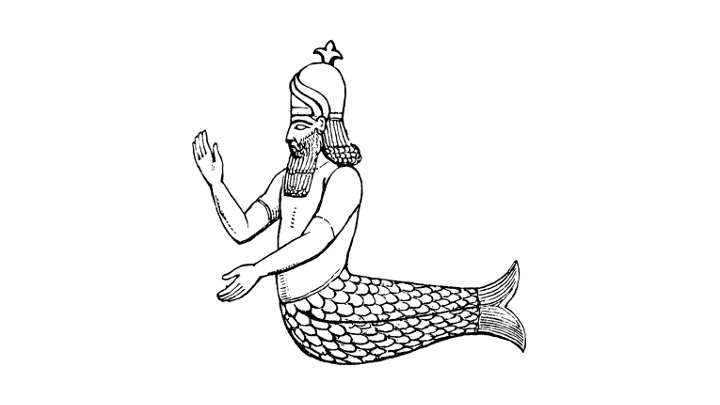
The Philistines take the ark into Dagon’s temple; Dagon is sometimes represented as a half-man half-scaley thing.

His statue topples onto its belly; and its head falls off… They ark is taken to Gath; Goliath’s home city; where it brings death and destruction until they send it home to Israel (1 Samuel 5:2; 1 Samuel 5:4; 1 Samuel 5:8; 1 Samuel 5:9).

Years pass, there is still no king in Israel, but people come to Samuel, cause his own sons are ratbags, to ask for a king like the nations. Samuel is angry. He quotes Deuteronomy, warning them a king will take and take and take.

They are rejecting God as their king, so when they turn to him, he told them so…

They insist; they want a king who will lead them in battle; like the warrior kings of the nations; the giants — the Nimrods — so Samuel anoints Saul, who is very tall. So tall we are told twice. He is the king Israel wanted (1 Samuel 8:5; 1 Samuel 8:11, 13, 14, 15, 16, 17; 1 Samuel 8:18; 1 Samuel 8:19-20; 1 Samuel 9:2; 1 Samuel 9:23; 1 Samuel 12:12-13).

But tall Saul is a disappointment; he was small in his own eyes, raised up by God, then did his own thing, so God rejects him as king. Samuel is sad; he liked Saul. God sends him to a farming family with a bunch of tall brothers, to anoint someone else (1 Samuel 15:17; 1 Samuel 15:26; 1 Samuel 16:1).

Do not consider his appearance or his height, for I have rejected him. The Lord does not look at the things people look at. People look at the outward appearance, but the Lord looks at the heart.”

1 Samuel 16:7

God tells Samuel not to consider their appearance — God looks at the heart not the height — and picks the youngest, David; a short king.

David is anointed — messiahed in Hebrew — and led by God’s Spirit, while God’s Spirit departs Saul and he becomes haunted by an evil spirit from God. David is brought to Saul to calm him with his singing; Saul likes him so much he makes him an armour bearer; which makes their interaction in the next chapter pretty odd (1 Samuel 16:11; 1 Samuel 16:13; 1 Samuel 16:14; 1 Samuel 16:21).

This story sets us up to read the Goliath story — the eyes matter; God’s perspective matters; he doesn’t bless lofty heights or power; he raises the lowly, and brings the tall down — like with Dagon.

Now we are at the main event; the start of the chapter sets the scene; geography matters.

The Philistines are gathered for war near a city called Sokoh, which Joshua tells us is at the western boundary of Judah’s territory — that is David’s tribe — the Philistine city of Gath is close to this boundary.

They are at Ephes Dammim — which is a provocative Hebrew name. Ephes means boundary — and Dammim is the plural of blood — dam — it’s the boundary of bloodshed; in a valley — the valley of blood; this highly contested militarised zone.

The two armies are camped on mountaintops facing each other — this is the Hebrew word for mountain — it’s actually used twice in the Hebrew to paint the picture; there is this valley of bloodshed between them.

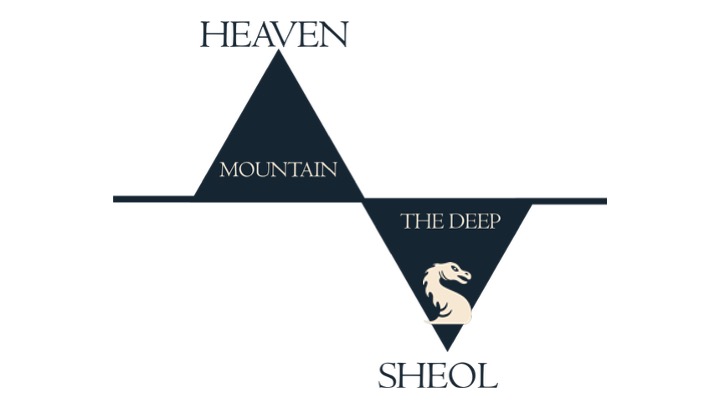
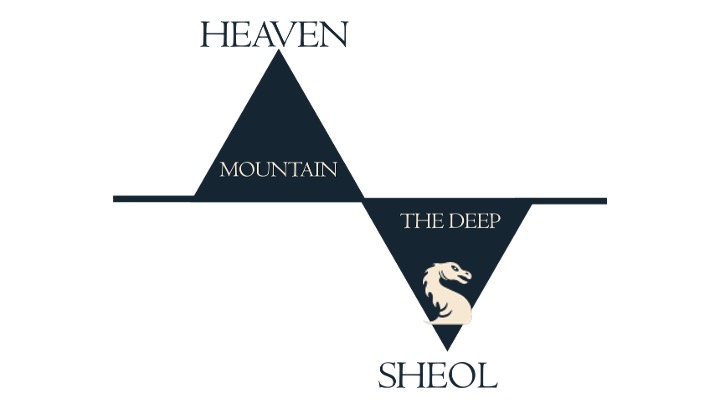
In our “cosmic geography” — mountains are significant; they are heaven meets earth places where people would build temples, or altars to worship gods… Valleys are significant too; down towards the grave.

Which mountain is going to win (1 Samuel 17:1; Joshua 15:20, 33-35; 1 Samuel 17:2; 1 Samuel 17:3)?

A champion — the literal Hebrew here is a “man who stands in the middle,” comes towards the other camp, into the valley of blood between the mountains. He is from Gath — where the ark went.

He is very tall. A man mountain — a giant. His height is measured in cubits.

Cubits are used to measure boats and buildings and furniture and distances — the only other time they have linked to a tall person it’s Og, King of Bashan, where it’s actually his bed.

Og is a Rephaite — a giant — who, via the Anakites, is connected to the Nephilim. Later on, Goliath’s brother and these other giants are called sons of Rapha.

Goliath the giant comes down his mountain, into a valley of blood, as a man-in-the-middle representing the Philistines and their gods; he is bronze from tip to toe — and scaly — a walking serpent. And he is covered in bronze.

Bronze helmet… Scaly bronze armour. Bronze greaves. Bronze spear.

The Hebrew word for bronze, nacashet is almost identical in Hebrew to serpent; nacash; like the one in Genesis 3.

And he wears ‘scale’ armour.

This word “scale” is only used elsewhere for fish scales; and sea serpent scales…

Scaly Dagon should probably be in our mind too.

This geography, this man in the middle, and his presentation invite us to see something 4D happening in the story as a violent power opposes God’s people, and insults his name.

Goliath throws out a challenge; naming tall Saul — the king who is meant to fight their battles; he is Israelite man-in-the-middle to fight.

But Saul hides in his tent. He and the nation are dismayed. This challenge goes on for 40 days. Everyone is afraid and shrinking back. Except David. He says do not lose heart; I will be the man in the middle. He has been on the farm; he is a shepherd. He has killed lions and bears, no tigers, oh my… So this giant will be no trouble. Linking their paws to Goliath’s hands has a bit of Daniel and Revelation to it… He is a beast.

David trusts God. Saul tries to dress David in his own bronze — serpenty — tall-king armour and helmet; David says “no”, I am not used to that. Unlike Goliath — and tall Saul… He doesn’t cosplay as a serpent. He dresses like a shepherd. Grabbing his staff, and five smooth stones which he puts in his shepherd’s pouch — and walking into the valley of blood. Trusting the Lord, his shepherd to lead him through the valley. Goliath sees — or maybe he can’t — he despises him; he asks “am I a dog” and maybe the answer is “no, you are a snake…” He curses David, threatening to feed him to the birds and beasts.

God’s annointed responds; you come from your mountain with spear and sword; I come in the name of the Lord Almighty, the God of armies — you defy him, but he will deliver you to me, and I will feed you and your army — to the wild animals and bird. So it’s clear God wins the battle.

You come against me with sword and spear and javelin, but I come against you in the name of the Lord Almighty, the God of the armies of Israel, whom you have defied.  This day the Lord will deliver you into my hands, and I’ll strike you down and cut off your head. This very day I will give the carcasses of the Philistine army to the birds and the wild animals, and the whole world will know that there is a God in Israel.  All those gathered here will know that it is not by sword or spear that the Lord saves; for the battle is the Lord’s, and he will give all of you into our hands.”

1 Samuel 17:45–47

Later Prophets meditate on this story as they describe God destroying violent powers who oppose him. Isaiah views these nations as Leviathan — a giant serpent — a sea monster — who God will slay to gather people from their land (Isaiah 27:1; Isaiah 27:12). Ezekiel describes these Egypt’s pharaoh as a giant sea monster; scaly — same word — who will be left on the ground as food for the beasts of the earth and the birds (Ezekiel 29:3-5) — same Hebrew phrase. David — the Messiah — and his battle with Goliath — a giant serpenty man-in-the middle — is a type scene for God judging violent empires of death (1 Samuel 17:44).

David runs towards Goliath, the giant serpent man in the middle, in the valley of blood, between two armies and their mountains (1 Samuel 17:48). Sling whirling, his stone crushes the serpent-man’s head; he falls face down on the ground. Beaten without a sword. His head is removed. Now. Picture Dagon. It’s the same Hebrew words.

Reaching into his bag and taking out a stone, he slung it and struck the Philistine on the forehead. The stone sank into his forehead, and he fell facedown on the ground. So David triumphed over the Philistine with a sling and a stone; without a sword in his hand he struck down the Philistine and killed him. David ran and stood over him. He took hold of the Philistine’s sword and drew it from the sheath. After he killed him, he cut off his head with the sword.

1 Samuel 17:49–51

But also picture Genesis 3; God’s promise that the cursed serpent would end on its belly (Genesis 3:14).

“And I will put enmity between you and the woman, and between your offspring and hers; he will crush your head, and you will strike his heel.”

Genesis 3:15

The serpent “striking the heel” of God’s human offspring, who would crush its head.

Goliath the snake has his head crushed.

And now the Philistines are scared; they run for Gath, but their bodies are also left on the ground; like their God and their champion. And Saul sees this, but doesn’t recognise his armour bearer, David.

I think we are meant to see him not seeing; overlooking David like Goliath did (1 Samuel 17:51-55). There is an epilogue, where tall Saul ends up defeated on a battlefield; and his bronze armour and head are taken to the temple of Dagon (1 Chronicles 10:10)…

After Saul’s fall, David also becomes a taker; he stays home when kings go to war; and he will see, desire, and take Bathsheba like she is an object — this is the same words as with the corrupt sons of God who, in the story, create the giant champions of the nations (2 Samuel 11:2, 4; Genesis 6:2).

But the David and Goliath story is presented and interpreted by the Prophets as a Messiah slaying a serpent-giant in a 4D way; anticipating a man in the middle; a courageous Messiah from David’s family, who God will use to bring down the high and mighty powers of violent empires aligned with the forces of darkness.

This story in Samuel has a genre; it sits in Israel’s library as history told with a theological purpose; and — when you compare it to Chronicles; it seems the purpose of legitimising David’s family line as the line of promise; the serpent crushing line of kings. The family tree Jesus is born into — as the Son of David, and the ultimate serpent crusher.

So how do we read this story?

Here is this week’s nuts and bolts… Most of us read the Old Testament as Gentiles — and we have to remember this.

The implications are most obvious when we read the Israel’s laws; Gentiles were never under the Law, Jesus doesn’t put us under the law.

In Acts, some are saying the Gentiles must be circumcised, and keep the Law — but the apostles say no; they are just to avoid idol food, sexual immorality and drinking blood — so they can eat with their Jewish church family (Acts 15:5, 9). But it’s also true of texts in the Prophets; they do not just give us moral lessons; they are fulfilled in Jesus; and even if we were looking for a moral, we are not Israelites.

We are too quick to place ourselves in David’s shoes — asking what our stones are, or how to face giants — and forget to see Jesus occupying the shoes of the Messiah. Jesus going out to the valley of blood — or the place of the skull — as the man in the middle who faces down not just a short-sighted giant cosplaying as a serpent, but the real thing; the forces of evil and sin and death.

These are the giants we all face; and we are held captive on a mountain with God’s enemies in a way that results in death by a dark spiritual force. We are the Philistines; we are positioned in Goliath’s shoes; cosplaying as serpents — or in the army lined up on that mountain behind him; or the one he represents… Satan — the accuser — is a bad middle man.

There is another word for middle-man — mediator — Satan is a mediator between humans and death; who leads us to do what is right in our own eyes and away from life with God; through kings and powers, and things that look glorious and desirable… We do not need five smooth stones; we need a different middle man to face him; not to destroy those on the mountain behind him, but to liberate us. And so we have Jesus — who doesn’t slay the monster sling and stones, or sword, but with a cross and by his blood.

 And having disarmed the powers and authorities, he made a public spectacle of them, triumphing over them by the cross.

Colossians 2:15

Without Jesus we would find ourselves face down, headless and dead. Like Dagon — like Goliath — like the Philistines — like Saul — like Leviathan in Ezekiel — Jesus brings us to life.

This is how Paul puts it in Ephesians — which is a handy guide to remembering our position as we see the story of the the Old Testament fulfilled. He says ‘you’ — distinguishing between ‘we’ and ‘us’ Jewish Christians and Gentile Christians — you were dead in sin, under the rule of the powers of death — the ruler of the kingdom of the air — the serpent… Who is still at work in those who are disobedient; the Goliaths; the kingdoms opposed to God’s kingdom and rule…

As for you, you were dead in your transgressions and sins,in which you used to live when you followed the ways of this world and of the ruler of the kingdom of the air, the spirit who is now at work in those who are disobedient.

Ephesians 2:1–2

We have been made alive; raised and seated with him; moved from one mountain to the other.

God, who is rich in mercy, made us alive with Christ even when we were dead in transgressions—it is by grace you have been saved.And God raised us up with Christ and seated us with him in the heavenly realms in Christ Jesus…

Ephesians 2:4–6

But we Gentiles were “uncircumcised” like Goliath — separated from Christ; excluded from citizenship and the covenants; the promises of God, and participation in the life of his people… We were ruled by Dagons; standing behind Goliaths…

Therefore, remember that formerly you who are Gentiles by birth and called “uncircumcised… you were separate from Christ, excluded from citizenship in Israel and foreigners to the covenants of the promise… But now in Christ Jesus you who once were far away have been brought near by the blood of Christ.

Ephesians 2:11-13

We were far away — but now, Jesus Christ — the Messiah — who stands in the middle — has brought us near — not with a sword; not a sling — but through his death; his blood.

Jesus has reclaimed the Gentiles from those mountains opposed to God and brought us into his people; his family — into union with him.

Reading the David and Goliath story as Christians means seeing it pointing to this moment when God would bring people home from the nations — those mountains and armies — through his anointed king, as he defeats the serpent — with the surprise that he turns his enemies into his family — and that is us.

This story is not about picking up five smooth stones; but picking our man in the middle; our mediator who leads us through the battle.

There might be other moral messages to be gleaned, about courage and trusting God — and innovation and formation — and we do join a spiritual battle; dressed in the armour of God — against the serpent, and these powers; the spiritual forces of evil who shape kingdoms opposed to God…

This metaphorical or metaphysical armour all points us to towards the victory of Jesus (Ephesians 6:11-18), who disarms these powers; death, the Serpent, and the cosplay serpents ‘middle men’ who lead us towards death; our mediator leads us to life as he triumphs through the cross.

Stop trusting blind giants and stand behind him as sheep following the good shepherd king, who leads us through the valley of blood and into life with our Father, forever.

How to Read the Bible — As Literature

This series of posts was first a series of sermons I preached at City South Presbyterian and Coorparoo Presbyterian in mid 2026. You can, if it is your preferred medium, watch the video recording of this sermon here (Vimeo), or listen to the audio recording here (Spotify link).

There is a way of reading the Bible where Red Bull gives you wings.

Tim LaHaye wrote the Left Behind series; you might have read them, or seen the movies.

His golden rule of interpreting the Bible was:

“When the plain sense of Scripture makes common sense, seek no other sense…take every word at its primary, ordinary, usual, literal meaning.”

Tim LaHaye

The way this works — for him — is to read bits of the Bible others see as symbolic; where there are numbers and visuals, and take them very literally; which leads to interesting places when it comes to the book of Revelation.

I’ll unpack the Red Bull thing, but we can read the Bible as 100 percent truth while also recognising this is embedded in literature; and our job is not just to read it literally, but literarily; to ask what sort of writing we are reading.

Our nuts and bolts this time around is called ‘literary criticism,’ or ‘form criticism’ — we are looking genre, and why it matters.

Genre is a way of describing the forms words are put in; the formulas or structures we use.

This book by Aussie Bible scholar Andy Judd is a great intro on genre and the Bible, which we are drawing on here.

The Bible is a library of literature featuring stacks of genres — different books, and even bits within books — stories, songs, laws, and vivid symbols.

And every one of these forms is a choice and author has made. And this isn’t just a choice about form — it’s a choice of function. Different genres do different things.

…genres are about more than what’s written on the page; they’re about who is trying to achieve what with the piece of paper.

Andrew Judd, Modern Genre Theory

If I want to do things with words, there are some times literal, ready made, forms — like, when I conduct a marriage, I fill out some paperwork, other people will read it, and the marriage will be ‘official’.

Other people use forms or formulas to do things too. Council-issued parking tickets have a form we understand. So do no parking signs. These forms do things.

We also know they do not do other things; we should not treat a parking ticket as a love letter or a marriage certificate.

And, when we read the Bible we can’t just look at the words and ignore the form — asking what they say — cause the form, or genre, comes with a function, so we have to ask what this does.

We are not always told the genre of a text; and ancient texts are more like each other, than like modern texts.

Andy suggests a boomerang test for trying out genres, and working out what a text is meant to do; where we try different ideas and see what comes back.

Take up your guess about the kind of genre your text falls into, give it a throw, see what comes back. If the payoffs suggest it doesn’t work, try again.

Andrew Judd, Modern Genre Theory

Tim LaHaye’s rule makes assumptions about genre; that words mostly have a common sense, literal meaning. Let’s boomerang test his approach.

LaHaye’s Left Behind books are novels — this is a genre; but they are novels that are models of his understanding of writing; they are quite ‘literal’ while also being fiction.

In fancy theological terms, his books are about eschatology.

They tell a story about the end of the world he wants people to take seriously. You might also have heard the word apocalypse and think that is a word about the end of the world — but it’s not; that is a genre, which gets its name from the opening line of the book of Revelation (Revelation 1:1). This word is actually the Greek word apocalypse; which literally means revelation or unveiling; the genre is named after this, but originates in Jewish literary tradition — both in and outside the Bible.

Because he reads Revelation literally; LaHaye holds a theological position called premillenialism; which gets its name from what Revelation 20; this millenium — this thousand year period where Satan is bound and Jesus rules with his people.

He seized the dragon, that ancient serpent, who is the devil, or Satan, and bound him for a thousand years… They came to life and reigned with Christ a thousand years. (Revelation 20:2, 4)

Christians debate when this thousand years is; if it’s literal or symbolic; and what it symbolises.

So you get premillenialists who believe it has not happened yet; that Jesus will return and then this thousand years kicks off.

Postmillenialists who believe it has happened, and we live in this millenium now.

Amillenialists, who believe it’s all symbolic so there is no thousand years.

Folks called preterists — who believe all this stuff is written about Rome destroying the temple in AD 70 as a sign of God’s judgment on the nation of Israel for crucifiying Jesus.

And, millenials — people like me, born between 1981 and 1996… but we’re different.

Your position here is a sign of how you read the text; and this is ultimately — whether you know it or not — about what genre you think it is.

How we read the text; and “the millenium” shapes how we see the world, and the political or ethical positions we embrace. This is part of the boomerang.

Pre-millenials might find themselves looking for signs, or doing things to prepare for or hasten the return of Jesus as the fulfilment of prophecy, while some post-millenials work at transforming the world; discipling the nations under Christ’s rule and God’s law; hoping to end the age and launch the new creation.

Some read Revelation 17:9 and talk about capturing the seven mountains of our cultural and political order.

“This calls for a mind with wisdom: the seven heads are seven mountains on which the woman is seated” — Revelation 17:9

This vision drives Christian Nationalism — and some support for Trump — in the U.S.

”Finally we have a president that understands the seven mountains of cultural influence…”

Charlie Kirk, 2020

And — count the mountains — this Christian Nationalist conference here in Australia too.

But this symbolic reading misses how Rome was famously built on seven mountains; so the poet Virgil describes the god Mars saying “behold my son” Romulus, founding Rome with its seven hills.

Behold, my son, under his command glorious Rome will match earth’s power and heaven’s will, and encircle seven hills with a single wall, happy in her race of men

Virgil, The Aeneid VI, 1st century BC

One issue with seeing an apocalypse as describing the end of the world; eschatology — not the ends of the world — its purpose — is if the end has not happened, the text is about us, or the future; not the past.

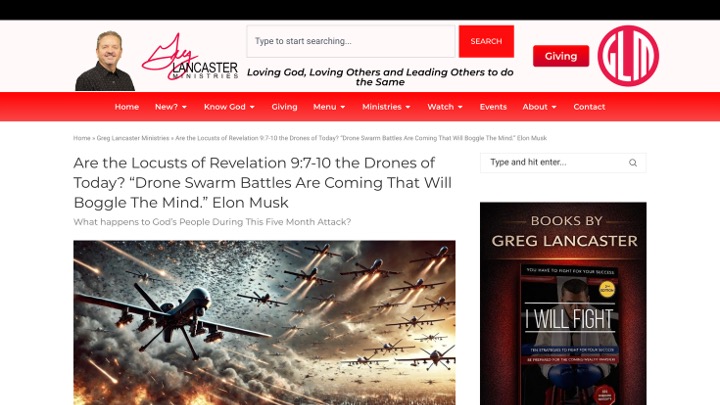
So ‘battle locusts’ in Revelation (Revelation 9:2-3) are identified as combat drones — things totally removed from the human world of the author and audience of the text.

There is a legit way to use the text as a lens — 4D glasses — and see drones and wars as a continuation of the beastly kingdoms of the world; but we are not reading well if when we decode these words, we take them out of the hands of the first readers. Or, take up the challenge of fulfilling them; launching the thousand years when we are taken up to heaven with Jesus — getting our wings.

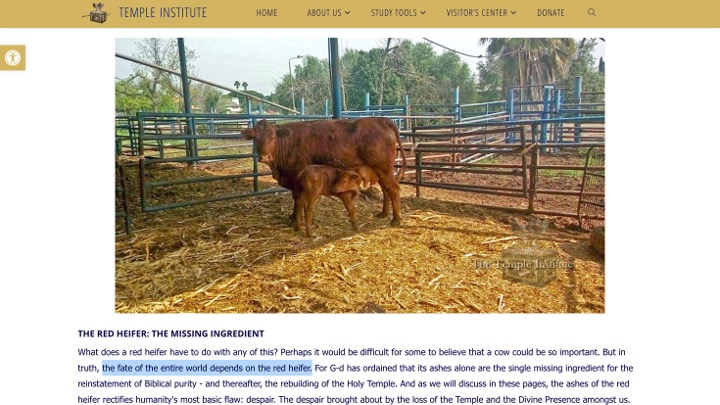
Some folks in Texas believe Jesus’ ‘millenium reign’ or ultimate return requires the building of a Third Temple in Jerusalem. So, they have been breeding perfectly Red Bulls.

Teaming up with some folks in Israel, who believe their Messiah will come for the first time when this happens.

Zechariah prophecies a new temple being built as people come from far away (Zechariah 6:15). The law requires an umblemished red heifer (Numbers 19:1-2), whose ashes are mixed with water to cleanse people, places, and things (Numbers 19:9).

Here is the boomerang coming back — with devastating political consequences in the Middle East.

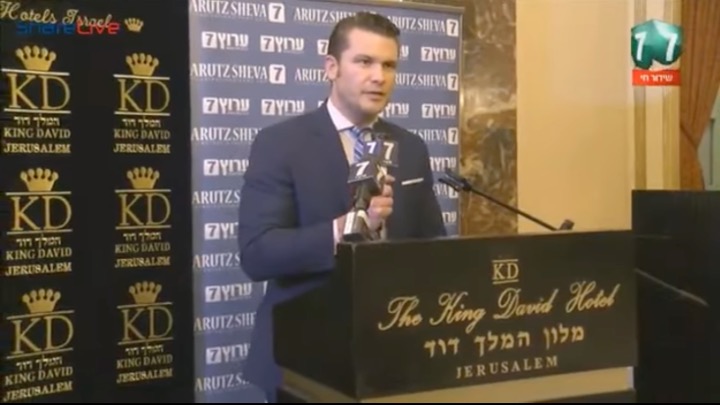
In 2018, before becoming “Secretary of War” for Trump, Pete Hegseth spoke in Jerusalem about his hope of a Third Temple being built.

“There’s no reason why the miracle of the re-establishment of the temple on the Temple Mount is not possible.”

Pete Hegseth, 2018 (now US Secretary of War)

Texan cattle breeders have recently sent five red cows to Jerusalem to be assessed.

Temple mountain in Jerusalem is now home to the Al-Aqsa mosque.

These red cows were a red-rag to a bull. In a speech justifying the October 7 terror attacks — the “Al Aqsa Flood” — Hamas said the plan to knock down the mosque and build a temple was their motivation — and these red heifers were their proof.

“They did not hide their intentions of establishing their alleged Temple upon the ruins of the site of our Prophet Muhammad’s night journey, peace be upon him. They brought the red heifers to burn them, and to scatter the water of their ashes as a practical declaration of demolishing Al-Aqsa and building the Temple.”

Mohammed al-Deif, Hamas

The current horrific violence in the Middle East is linked to Christians reading Revelation literally.

That is some boomerang.

It’s either a sign the reading is on the wrong track; or that the end is near.

This could have been avoided by reading these texts as a different kind of literature.

A different reading isn’t compromise; or watering down the text — but grappling with how texts work. LaHaye’s principles are not how ancient humans thought about writing; or how the genre of apocalypse works.

Genre matters for the whole Bible; not just with apocalypses; from page 1 — reading Genesis beside other ancient creation stories and their functions; to Revelation — the Bible is written the way it is to do something, not just say something.

But our readings today are both apocalyptic; they are from a genre that has certain forms that people can play with to do new things — for parody or satire — but that only works if we know their form, and function.

Apocalypses share a formula; they tell a story of a revealing encounter — a journey or vision — usually led by an otherworldly being; inviting someone to see differently.

So… Daniel 7 is a vision in a dream (Daniel 7:1), while Revelation is a series of these visions for John — the one in chapter 20 begins in chapter 17, with an angelic tour guide showing John a bunch of stuff (Revelation 17:3; 20:1).

These encounters involve vivid symbolic imagery. Daniel sees these four beasts (Daniel 7:3). John has already seen a dragon — who we are told is Satan (Revelation 12:3, 9). And these beasts from the sea and land — who serve the dragon (Daniel 7:3; Revelation 13:1, 11).

In Daniel, the beasts run wild until the Ancient of Days crushes them (Daniel 7:22).

In John, both the dragon and beasts are destroyed in fire (Revelation 20:10).

These texts warp space and time; they take humans into heavenly realities, and their descriptions of the end of the world — eschatology — are an invitation to see where trajectories in the present are headed; inviting people to live towards different ends. Their symbolism — even of the end — unveils or reveal things about the author’s present; especially where it’s dangerous to speak plainly. Both Daniel and Revelation follow this form.

Daniel is troubled by these visions, and gets an explanation — which explains things for those reading the text as the events it describes are happening around them (Daniel 7:14-15). These beasts are four human kingdoms (Daniel 7:16-18). Daniel takes Israel’s experience in Babylon — and, in our reading — extrapolates and describes Israel’s experience under other empires — the Medes, Persians, Greeks, and perhaps nodding towards Rome; promising a Son of Man will enter heaven, and rule a kingdom that will last forever; beastly kingdoms will fall, his won’t.

“In my vision at night I looked, and there before me was one like a son of man, coming with the clouds of heaven. He approached the Ancient of Days and was led into his presence.” He was given authority, glory and sovereign power; all nations and peoples of every language worshiped him. His dominion is an everlasting dominion that will not pass away, and his kingdom is one that will never be destroyed.(Daniel 7:13-14)

In another vision, Daniel describes an abomination that causes desolation (Daniel 9:27).

One Maccabees, a Jewish source from between Daniel and Jesus reckons this happens when the Greek king Antiochus Epiphanes installs an image of himself in Israel’s temple…

On the fifteenth day of the month Kislev, in the year one hundred and forty-five, the king erected the desolating abomination upon the altar of burnt offerings, and in the surrounding cities of Judah they built pagan altars.

1 Maccabees 1:54

Jesus links to a more shocking event — I think the ‘destruction of his body, the temple’ — but others see it as the destruction of the temple in AD 70 — or an event we are still waiting for (Matthew 24:15-16).

He is talking about the coming of the Son of Man — where Daniel saw him entering the throne of heaven (Matthew 24:27). The catch for the literal folks looking to the future, is they take all this literally, except when Jesus says this will happen in his generation.

Truly I tell you, this generation will certainly not pass away until all these things have happened

— Matthew 24:34

What is the function of Daniel’s genre when we see it applied to political empires and these sorts of events in present and near future of his readers?

Andy’s book gives a handy guide to an apocalypse; they pull back the curtain; using descriptions of unseen realities to say true things about the physical world, and spiritual realities.

It is all about pulling back the curtain, often through dreams or visions, on the unseen spiritual realities determining human destiny.

Andrew Judd, Modern Genre Theory

They expose the pretension and even the spirit of rebellion behind these powers in a way that invites people they hurt to find meaning and hope amidst their distress.

To experience an apocalypse is to peer behind the curtain of history – to see through the pretension of unstoppable human powers and grasp reality as it truly is.

Andrew Judd, Modern Genre Theory

So Daniel, for example, is giving assurance to God’s people ruled by a series of violent regimes, that it will work out; that they are not ultimate, but God will vindicate them, so they should faithfully worship him, and live differently — like Daniel.

Daniel is providing assurance of an eschatological vindication for oppressed people

Andrew Judd, Modern Genre Theory

An apocalypse is spiritual resistance literature designed to cultivate fruitful faithfulness and hope in God.

Let’s try this boomerang out for Revelation — which picks up where Daniel leaves off; but after the Son of Man is enthroned in heaven.

It turns the 4D glasses onto Rome; a new beastly empire (built on seven mountains) — so we also see any empires like — where God’s people are being persecuted or facing the temptation to worship the culture’s gods and conform — as beastly.

It doesn’t just picture Rome as a beast following a dragon — it pulls the curtain back and says look at heaven and see the Son of Man ruling with the Ancient of Days; worship them; do not side with devilish powers.

This is how he starts his apocalypse from Jesus…

The revelation from Jesus Christ, which God gave him to show his servants what must soon take place

— Revelation 1:1

This could also be of Jesus — the unveiling of Jesus. For God’s servants — to show what will soon take place — not ‘what will take place in 2,000 years’ — but a picture that has meaning in their situation, if they see reality unveiled.

He calls Jesus the Son of Man (Daniel 7:13; Revelation 1:13). But also pictures Jesus as being like the Ancient of Days in Daniel 7 — with radiant white hair (Daniel 7:9; Revelation 1:14), and like this figure Daniel meets in a later vision… eyes blazing with fire (Daniel 10:6; Revelation 1:14), bronze feet (Daniel 10:6; Revelation 1:15), and a voice of rushing waters (Daniel 10:6; Revelation 1:15). This melting pot of images deliberately links his content and form to Daniel; which also connects the function of his writing. John is bringing all this together — and — seeing Jesus like he saw him at the transfiguration; face shining like the sun (Revelation 1:16).

John keeps fixing our eyes on this vision of Jesus; so despite the other images — the beastly machinations of the Empire chewing up and consuming human lives — especially God’s people, he wants us to see Jesus reigning and bringing justice.

The bad guys do not win.

This imagery is there right before our reading; Jesus — the dragon slayer who is named Faithful and True; whose eyes are blazing fire; who is named the Word of God… with a sword-mouth; who takes the beast, and the kings with it who want to go to war, and… He wins.

I saw heaven standing open and there before me was a white horse, whose rider is called Faithful and True. With justice he judges and wages war. His eyes are like blazing fire, and on his head are many crowns. He is dressed in a robe dipped in blood, and his name is the Word of God. Coming out of his mouth is a sharp sword

Then I saw the beast and the kings of the earth and their armies gathered together to wage war against the rider on the horse and his army. But the beast was captured… (Revelation 19:11-15, 19-20)

The genre John uses calls people to live with hope; to keep trusting God; no matter how powerful the violent empires look, or how compelling their gods — and achieves this purpose for its first readers… and for us.

An apocalypse is like a set of 4D glasses to help us peer into heaven; to see the world — and even to properly read God’s word. Revelation is full of intertextual references to the Old and New Testament; it is reflecting and refining and integrating imagery from the whole story; by bringing together this data — these references, and allusions, and images — Revelation invites us to see the whole Bible as apocalyptic — a text given by God to unveil heavenly realities and call his people to be faithful in the midst of systems opposed to him that tempt and persecute.

The Genesis story reveals that Babylon’s stories and gods are hollow and destructive.

The prophets, like Daniel expose these empires and their worship as beastly.

The Gospels unveil Jesus as the ultimate son of God; not Caesar…

Now. You might disagree — you can definitely be a Christian and think LaHaye is right; or have a different view of the thousand years and Jesus’ rule and return.

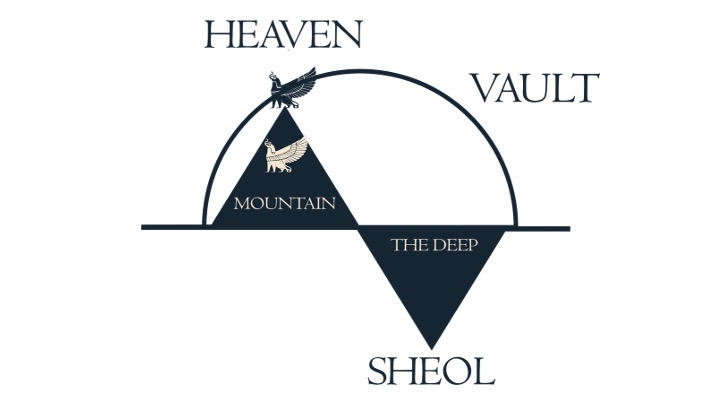
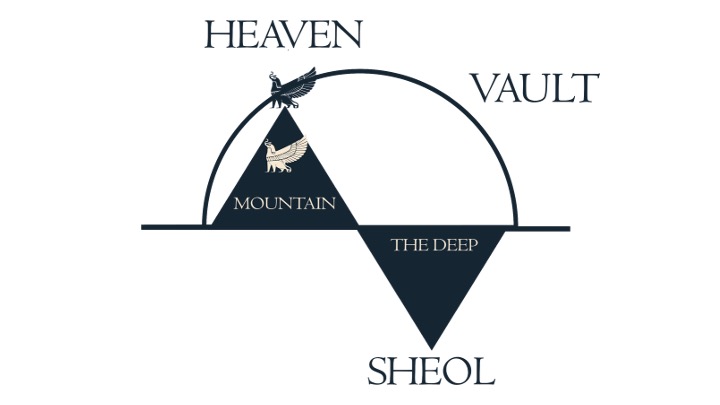
But we intuitively know genre matters; we know there is no crystal vault in the sky separating heaven and earth; you can’t get to heaven in a rocket ship. We know if we drill down deep we won’t find a fiery pit full of demon ghosts.

We know genre matters, and that words can be true literarily not literally.

The genre — the form and formulas that shape every text — are part of how God speaks through humans to achieve his purposes; to keep us out of other kingdoms, and pull us towards an encounter with the glorious Jesus.

Genre matters with parking tickets and love letters, and it matters with every book of the Bible, and how we read has consequences.

One guy in Texas obsessed with Red Bulls can throw his boomerang and an evil regime will use it to justify a terror attack — now, geopolitics in the Middle East are more complicated than just Red Bulls; but politics and empire are always theological; always driven by a view of the end of the world and the ends of the world; and Christianity has a real impact.

Reading the text right was life and death for an Israelite in Babylon — or under Greek rule; or a Christian in first century Rome facing the choice of whether to bow down and worship Caesar, or stick with Jesus. Revelation is part of the Bible’s explanation for why people will choose the wealth and power of a violent empire; why they will crush and kill and destroy — cause of the sinister power behind the throne, and how it invites us into a different story to live towards different ends.

Let’s boomerang test this. We do not need to claim seven mountains, or build a new temple, or breed Red Bulls.

Zechariah is clear — God’s Messiah — the Branch of the family of David — builds the temple of the Lord and sits on the throne as a priest.

‘Here is the man whose name is the Branch, and he will branch out from his place and build the temple of the Lord.’ It is he who will build the temple of the Lord, and he will be clothed with majesty and will sit and rule on his throne. And he will be a priest on his throne

— Zechariah 6:12-13

Jesus doesn’t need water with bulls’ ashes; he makes purification by his blood; so his Spirit can dwell within his people.

And — here is my millenial card on the table — the new age begins; the Son of Man reigns, and the temple in Jerusalem is replaced, when the curtain tears, and God’s Spirit descends on and dwells in the church; so we are the living temple.

The destruction of the temple in AD 70 is a sign God is done with that spot — but also a sign the Son of Man is reigning in heaven; like Jesus promised, and John sees.

The thousand years tell us beastly empires do not last forever; those who choose them end with them; they might look like a path to prosperity or power or life — but they are a dead end. It’s the vision of Jesus reigning that holds us fast as empires rage, and the dragon thrashes about. Defeated.

Jesus already wins.

He reclaims the mountains and — as we saw last week — calls people from those powers and principalities; those mountainy empires.

We do not have to look for signs, or fulfil prophecies, or breed Red Bulls — in every moment we are called to look to the glory of Jesus, and then look at the world.

To not be tempted by beastly powers who rule now, but be ruled by Jesus; becoming a faithful resistance; living a fruitful alternative vision of life amidst death cause we peer into heaven, where Jesus reigns — and see the end and ends of the earth.

This isn’t just about the politics of empire — or how we participate in politics; it’s about the way I live in my relationships; in my work; in my home — an apocalypse teaches us there are ‘4D’ spiritual stakes in every moment; and to live in reality seeing Jesus as the victorious king who wins by dying and rising — being faithful to God — so that when we see him this way, we can faithfully die to our grasping selves and the kingdoms we build; and take up our cross daily, trusting that it will work out in the end; that we too will be raised up.

That is a boomerang that works for me, and I hope, for you.

How to Read the Bible — Reading in 4D

This series of posts was first a series of sermons I preached at City South Presbyterian and Coorparoo Presbyterian in mid 2026. You can, if it is your preferred medium, watch the video recording of this sermon here (Vimeo), or listen to the audio recording here (Spotify link).

3D movies were the next big thing… Until 4D.

If you head to a 4D movie, your seat will move, there will be fog and lightning and wind and smells…

We are reading the Bible in 3D… Or 4D today.

This image would be 3D… If you had 3D glasses.

We’re getting straight into our nuts and bolts — looking at how the Bible is not just words on a page; but an immersive experience where we are invited to see, or imaginatively dwell in the world of the text, by acting the story out with our bodies.

Gordon Wenham — one of my favourite Old Testament scholars — suggested we have flattened communication with God, through the Bible, into ‘just words;’ a two-way conversation; reading and praying. This is our 2D model…

“For a long time Christians have imagined that communication between God and man is essentially verbal, merely a matter of words…

God speaks to man through the prophets or through the Bible: man replies in prayer. We view communication with God as a sort of two-way radio.”

But God does not restrict himself to words, he uses ritual such as sacraments: ritual is more like colour TV than radio. Ideas are made visible…

Gordon Wenham

And this is a problem, because, by his words and in his word — God creates a 3D world, and a way of life in for human bodies — including rituals, like the sacraments, which make ideas visible in the spaces, places, and geography they are set in. Engaging the text in 3D requires some imagination; an openness to being pulled into the text, rather than pulling the text on the page apart.

This will require imagination and sensitivity, but I think would be worth the effort…

Gordon Wenham

This is part of jumping from English to Hebrew; from the modern model of reality to the ancient.

Our Western minds love facts; we live in a material world some have described as disenchanted; closed off to the supernatural; but this was not how ancient authors or readers saw.

We are going to read paying attention to how 3D places have spiritual — 4D — significance; to what some call “cosmic geography.”

The events of the Bible happened on the map; not a 2D map, but a landscape with mountains and valleys and water and sky; and the settings matter; they have meaning.

In the beginning God created the heavens and the earth. Now the earth was formless and empty, darkness was over the surface of the deep

Genesis 1:1–2

The very beginning of the Bible presents a map to us; inviting us not just to think about physical space — earth — but the overlap of spiritual space — heaven — with the sky.

The ancient imagination sees the sky in 4D — same with bodies of water; like the deep; which is home to “tannin;” sea monsters. (Genesis 1:21).

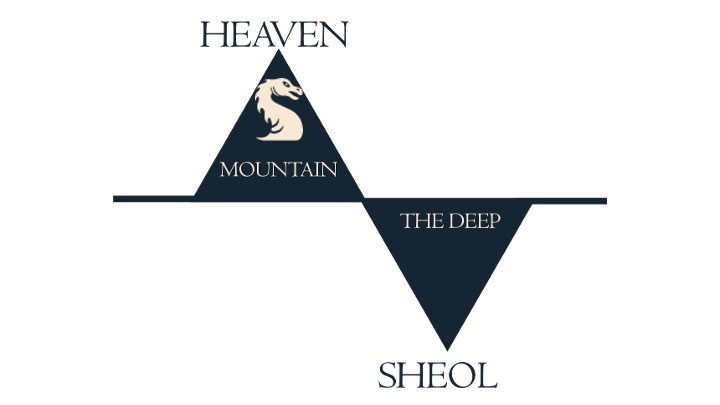
This map of reality sets us up to see moving upwards as moving upwards as moving towards heaven — mountains matter — while moving down into a valley or water is moving towards the realm of death.

Ezekiel tells us the Garden of Eden is on a mountain — Genesis 2 hints at this as it describes rivers of life flowing down into other regions…

And a serpent invades, leading people to grasp the fruit of the tree of knowledge (Genesis 3:6), so they are sent down the mountain, and the way up is guarded by heavenly gatekeepers (Genesis 3:24).

This 4D story of disconnection from heaven is reinforced in the 3D spaces — the tabernacle and temple, that are described in the text, and are at the heart of Israel’s rituals, where they act out being excluded from the Holy of Holies, where God rules from his heavenly throne; pictured in the ark and its cherubim.

When the Bible gives architectural plans for 3D spaces, these teach a story about the cosmos as people follow the plans, building and interacting in those spaces.We do not have the spaces, but we have the plans, and can picture them the way ancient readers would…

Like the first century AD Jewish historian Josephus, who says the floor plan ‘imitates the system of the world,’ so the place behind the curtain is heaven.

Now the room within those pillars was the Most Holy Place: but the rest of the room was the Tabernacle, this was open for the Priests. However this proportion of the measures of the Tabernacle proved to be an imitation of the system of the world. For that third part thereof which was within the four pillars, to which the Priests were not admitted, is, as it were, an Heaven, peculiar to God. But the space of the twenty cubits, is, as it were, sea and land, on which men live: and so this part is peculiar to the Priests only.

Josephus, Antiquities

While the curtain — with its colours, and embroided cherubim and stars — is also a micro-cosmos — an image of spiritual, 4D, reality.

It was a Babylonian curtain… a kind of image of the universe… This curtain had also embroidered upon it all that was mystical in the heavens…

Josephus, The Jewish Wars

The tabernacle travels from Mount Sinai to Mount Zion, where a permanent house — the Temple — is built using the same floorplan.

This 3D space built on the 3D mountaintop place taught God’s people about the 4D reality of heaven and earth; complete with cherubim guarding the barrier between realms.

Picture this as we read our story in Genesis 6; where these sons of God ‘saw’ human women were pleasing to the eye, and they took them…

…the sons of God saw that the daughters of man were attractive. And they took as their wives any they chose.
The Nephilim were on the earth in those days, and also afterward, when the sons of God came in to the daughters of man and they bore children to them. These were the mighty men who were of old, the men of renown.

Genesis 6:2, 4

These are the same words as when Eve saw the beautiful fruit and took it; it’s a fall story for heavenly beings; happening in 4D as heaven and earth come together. It creates these beings called Nephilim; these children of gods — ‘heroes of old’ — literally mighty men of name; they are gibborim in Hebrew — that is plural — the same word is used for Nimrod, he is a gibbor — (Genesis 6:4; Genesis 10:8).
He builds Babylon… (Genesis 10:8, 10). And we get the story of the construction of the tower of Babel — Babylon — in chapter 11. This city built on the plain of Shinar (Genesis 11:2), with a tower linking heaven and earth, so the humans ‘make a name’… Gibbors of name.

“Come, let us build ourselves a city, with a tower that reaches to the heavens, so that we may make a name for ourselves; otherwise we will be scattered over the face of the whole earth.”

Genesis 11:4

There are 4D parallels here back to the sons of God’s heavenly fall. Those sons of God come down to earth from heaven, creating these mighty warriors of name — like Nimrod — who leads humans from earth to heaven as they build a man-made mountain to make a name.

But between these stories there is the flood, which was meant to wipe out the Nephilim who are linked to the earth being filled with violence (Genesis 6:11–12); in the flood God opens the vault so the waters of earth and heaven separated re-combine and everything is de-created except Noah and co (Genesis 7:11), who land on a mountain and restart (Genesis 8:4).

So what is with Nimrod the gibbor?

He is maybe part of a giant problem involving Nephilim-like folks after the flood. As Israel are moving from Sinai to Zion — Moses sends spies into the land, who report it’s inhabited by giants; Anakim who are descendants of the Nephilim (Numbers 13:33).

There are more giants; more Anakites aka the Rephaites… (Deuteronomy 2:11). Their king is a giant named Og of Bashan — his bed is 9 cubits — 13 feet — long. (Deuteronomy 3:11). We will look at Goliath in a couple of weeks — but David and his merry men go head-to-head with a bunch of giants, including Goliath’s brother, they are descendants of Rapha, “Rephaim” (2 Samuel 21:16, 19, 22).

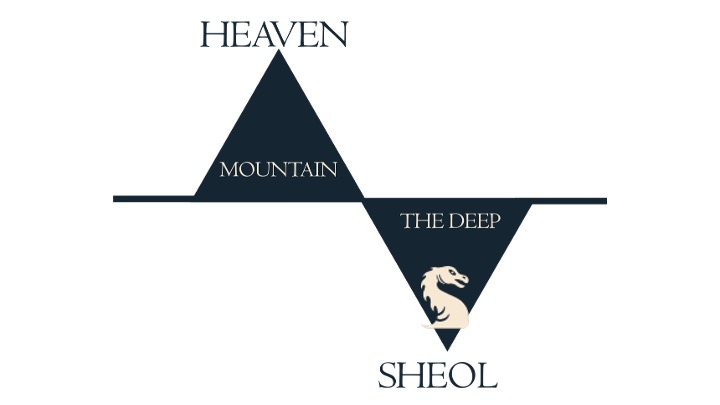
This word Rapha has got two separate dictionary entries; one says giant and the other ghost — whether they are linked is debated. I reckon they are — cause when Isaiah uses the word about ghosts, these Rapha are in the realm of the dead — Sheol (Isaiah 14:9). Picture our map.

Isaiah says they are the dead leaders of the world; probably guys like Nimrod and Og the giant — not nepo-babies, but nepho-babies (Isaiah 14:9). Isaiah says Israel has been ruled by these lords, but these children of cosmic rebellion against God are dead; their Rapha do not rise (Isaiah 26:13–14). God wiped them out (Isaiah 26:14). Let me tell you this story.

The rebellious sons of God are the origin story of giant, violent warrior kings of the nations; the kinds who call themselves images of God, who rule the nations who oppose God’s people, and tempt God’s people to worship. But Isaiah says ‘do not worship these giants, they are ghosts in Sheol, which is where they will take you.’

Then Israel is exiled because the gods of these nations become Israel’s gods, their kings become like the nation’s kings (and so the nation’s kings become Israel’s kings); the violent attempts to bring heaven and earth together displayed in Babylon lures Israel in; but their path ends down in the grave, not up in the sky.

Here is where we bring back some more nuts and bolts to see how Deuteronomy 32 gives us a 4D map of this… In the NIV it says the Most High gave the nations their inheritance; dividing mankind (Deuteronomy 32:8), literally the sons of Adam — setting up their boundaries — the scattering he did at Babel… according to the number of the sons of Israel (Deuteronomy 32:8).
When the Most High gave the nations their inheritance, when he divided all the sons of Adam, he set up boundaries for the peoples according to the number of the sons of Israel.
For the Lord’s portion is his people, Jacob his allotted inheritance.

Deuteronomy 32:8–9

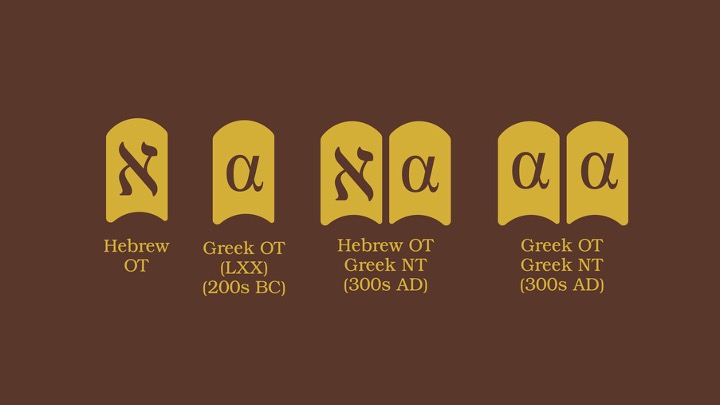
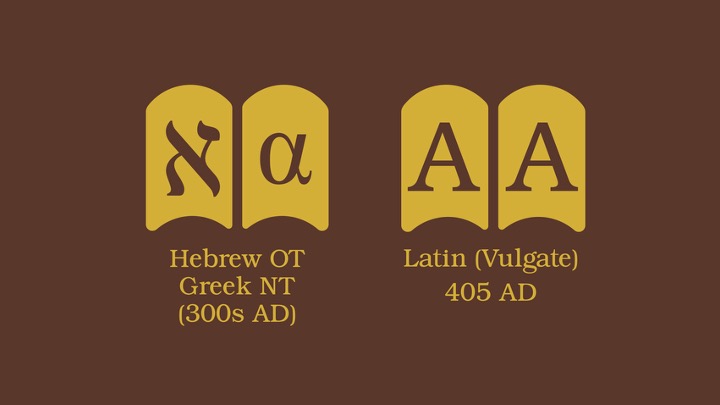
But remember textual criticism — from part one — and the Dead Sea Scrolls; and the Greek translation of the Old Testament.

The NIV and other translations say sons of Israel here and the Masoretic Hebrew from the medieval age says “sons of Israel.” But. Earlier Greek translations say either angels of God or sons of God… And Hebrew manuscripts from the Dead Sea Scrolls — the writings used by a Jewish sect located outside Jerusalem — say sons of God…

When the Most High gave the nations their inheritance, when he divided all the sons of Adam, he set up boundaries for the peoples according to the number of the sons of God.
For the Lord’s portion is his people, Jacob his allotted inheritance.

Deuteronomy 32:8–9

The ESV follows this translation. And, if it’s right and the LXX and other manuscripts are right, when God divided up the sons of Adam into nations, he did it according to the number of sons of God; heavenly beings like those in Genesis 6, while keeping Israel — Jacob — for himself.

So, what is the original?

The “sons of God” text thing fits with Psalm 82, where the Most High God — (Deuteronomy 32:8; Psalm 82:6)

God presides in the great assembly; he renders judgment among the “gods”
“I said, ‘You are “gods”; you are all sons of the Most High.’ But you will die like mere mortals; you will fall like every other ruler.”

Psalm 82:1, 6–7

God — literally Elohim — judges an assembly of other gods Elohim — (Psalm 82:1), who are called sons of God, but told they will die like mortals; perhaps becoming ghosts like their giant children.

And it fits with a source; a kind of 4D map, the book of Enoch, that isn’t in our Bibles, but is a source quoted by New Testament writers…

And the angels, the children of the heaven, saw and lusted after them, and said to one another: ‘Come, let us choose us wives from among the children of men and beget us children.’

Enoch 6:2–3

It’s a commentary on Genesis 6 and the sons of God; it uses the Greek word angels.

And again the Lord said to Raphael: ‘Bind Azazel hand and foot, and cast him into the darkness: and make an opening in the desert, which is in Dudael, and cast him therein.

Enoch 10:4–5

They lead humans into violence, and God binds them and casts them into darkness in a grave in the wilderness;

And place upon him rough and jagged rocks, and cover him with darkness, and let him abide there forever, and cover his face that he may not see light

Enoch 10:5–7

Covered forever, until they are hoiked into an abyss of fire, with their followers.

In those days they shall be led off to the abyss of fire: and to the torment and the prison in which they shall be confined forever.

And whosoever shall be condemned and destroyed will from thenceforth be bound together with them to the end of all generations.

Enoch 10:13–15

If that sounds familiar it’s cause Jude and Peter quote Enoch; Jude calls him the seventh after Adam, then quotes this bit… (Jude 1:14). Compare:
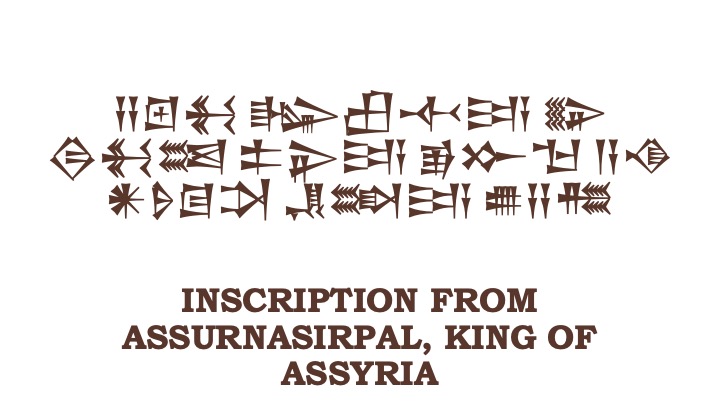
“See, the Lord is coming with thousands upon thousands of his holy onesto judge everyone, and to convict all of them of all”

Jude 1:14

“And behold! He cometh with ten thousands of His holy ones. To execute judgement upon all…”
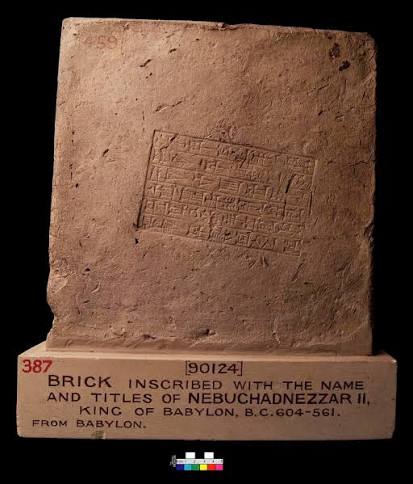
Enoch 1:9

Peter talks about Jesus preaching to dead spirits from the time of Noah (1 Peter 3:18), and God punishing fallen angels… (2 Peter 2:4–5), and Revelation describes a fiery end for rebellious spiritual beings in league with the serpent (Revelation 20:10) — both draw on this picture from Enoch.

Enoch connects the two meanings of Rapha a bit; these spirits of dead rebels become demons — evil spirits — who come up from Sheol to afflict, destroy and attack humans.

And now, the giants, who are produced from the spirits and flesh, shall be called evil spirits upon the earth, and on the earth shall be their dwelling. Evil spirits have proceeded from their bodies…

And the spirits of the giants afflict, oppress, destroy, attack, do battle, and work destruction on the earth, and cause trouble…

Enoch 15:8–9, 11

The book of Enoch describes these sons of God landing on Mount Hermon.

And they were in all two hundred; who descended in the days of Jared on the summit of Mount Hermon…

Enoch 6:6

Rebellion on a mountaintop…

Let’s tie some Old Testament threads together; Og the giant king of Bashan rules Mount Hermon (Joshua 12:4–6); Bashan is the land of ghost giants — Rephaim — and Hermon is the highest mountain in the region (Deuteronomy 3:13).

There’s a Psalm about this mountain of Bashan being jealous of Zion, because God chose it. This Psalm also promises God will bring people out of captivity from Bashan, and the depths of the ocean. The mountain and the deep…

Mount Bashan, majestic mountain, Mount Bashan, rugged mountain, why gaze in envy, you rugged mountain, at the mountain where God chooses to reign, where the Lord himself will dwell forever?
The Lord says, “I will bring them from Bashan; I will bring them from the depths of the sea…”

Psalm 68:15–16, 22

Jewish folks in the first century had this story of Mount Hermon being where the rebel sons of God launched their heaven-meets-earth program — birthing giants, ghosts, demons and violent god-kings of the nations; where those nations were ruled by these powers and principalities after Babel. It would be cool if Mount Hermon showed up in the New Testament…

Hey?

Let’s set the scene for a 4D reading of the transfiguration.

At Caesarea Philipi Jesus asks “Who do people say the Son of Man is?” Peter answers “You are the Messiah” — the Son of God… This son of Adam is the Son of God. Jesus says Peter — you rock — and on this rock I will build my church, and the gates of Hades won’t overcome it (Matthew 16:13, 16, 18)… Hades is the Greek for Sheol; the gates of Hades won’t open up so death overcomes life; they won’t prevent Jesus bringing heaven and earth together in his kingdom.

Josephus says Caesara Philippi got it’s name cause Caesar gave the region to one of Herod’s sons, who built a temple for Caesar at Panium — named after the goat god Pan.

And when Caesar had further bestowed upon him another additional country, he built there also a temple of white marble, hard by the fountains of Jordan: the place is called Panium…

Josephus, Wars 1.404

Caesarea Philippi is at the base of a huge mountain; and features this cave, with a kind of bottomless pit of water, immeasurably deep…

…where is a top of a mountain that is raised to an immense height, and at its side, beneath, or at its bottom, a dark cave opens itself within which there is a horrible precipice, that descends abruptly to a vast depth; it contains a mighty quantity of water, which is immovable and when anybody lets down anything to measure the depth of the earth beneath the water, no length of cord is sufficient to reach it…

Josephus, Wars 1.405

It’s called Pan’s grotto; where people make sacrifices sending stuff through the water to the underworld… Interesting place for Jesus to talk about the gates of Hades… (Matthew 16:18).

Just plot this water pit on this map as we go…

This is where Jesus says the Son of Man will be a human who enters the Father’s glory; with his angels — people will see him entering heaven on God’s terms; it’s a kind of Babel; or a reverse of sons of God coming down.

For the Son of Man is going to come in his Father’s glory with his angels… Truly I tell you, some who are standing here will not taste death before they see the Son of Man coming in his kingdom.

Matthew 16:27–28

Then — Matthew mentions no change in location, just that six days later Jesus takes Peter, James and John up a high mountain (Matthew 17:1) — want to guess what the mountain at Caesarea Philippi is called?

Mount Hermon.

The mountain where serpenty rebellion occurs from heaven, to lead humans away from God… under these powers.

And he was transfigured before them, and his face shone like the sun, and his clothes became white as light.
He was still speaking when, behold, a bright cloud overshadowed them, and a voice from the cloud said, “This is my beloved Son, with whom I am well pleased; listen to him.”

Matthew 17:2, 5

This is where Jesus is transfigured, so the disciples see him in 4D — gloriously uncovered as a heavenly human straight out of Old Testament visions… where God’s voice booms from the clouds of heaven — like at Sinai — imagine the 4D cinema experience… saying “This is my Son.”

Jesus the Son of God and Son of Man who will bring heaven and earth together — restoring the nations under God’s rule is revealed; on this mountain; reclaiming the territory for the Most High.

He comes down the mountain and there is this kid who keeps falling into fire or water — maybe the gates of Hades are beckoning — (Matthew 17:15) And Jesus rebukes this demon — maybe a Rapha-ghost — and restores this boy (Matthew 17:18).

Then — with Hermon in the background he says prayer doesn’t just drive out demons, it moves mountains — specifically “this mountain”: the jealous Mount Bashan, where God will gather people back to himself, and from the deep. Jesus is going to call people back from darkness; from the rule of these nations and the powers behind them. People will no longer be held captive to demons or powers — the stuff associated with Mount Bashan or Mount Hermon…

“Because of your little faith. For truly, I say to you, if you have faith like a grain of mustard seed, you will say to this mountain, ‘Move from here to there,’ and it will move, and nothing will be impossible for you.”

Matthew 17:20

And, again, he foreshadows his death as where this will happen (Matthew 17:22–23).

When Jesus quotes Psalm 22 — ‘my God, my God, why have you forsaken me’ — from the cross; this Psalm pictures Israel’s Messiah being attacked by ‘strong bulls of Bashan’ and lions — beastly pictures of rebellion; trusting God to rescue him from the lions and bulls.

My God, my God, why have you forsaken me?
Many bulls surround me; strong bulls of Bashan encircle me. Roaring lions that tear their prey open their mouths wide against me.
Rescue me from the mouth of the lions; save me from the horns of the wild oxen.

Psalm 22:1, 12–13, 21

And the transfiguration — on the mountain — reveals Jesus as the Son of God — who, through the cross, brings people home to God; anticipating when Jesus will stand on a mountain (Matthew 28:16), and say all authority has been given to me, sending his disciples into all the nations to baptise people into God’s life; gathering us from Bashan and the deep; so the gates of Hades won’t prevail; Sheol has lost its grip. (Psalm 68:22)

“All authority in heaven and on earth has been given to me. Therefore go and make disciples of all nations…”

Matthew 28:18–19

If we put on our 4D glasses we find this thread through the New Testament.

In Athens Paul says God distributed the nations (Acts 17:26), but we are all God’s children and should stop worshipping other gods (Acts 17:29), cause God overlooked this, but now calls all people to repent (Acts 17:30). Reversing that Deuteronomy 32 ‘distribution’ of the nations.

In Ephesians, Paul writes about ‘us’ or ‘we’ the chosen inheritance of God — Israel — adopted as his children… (Ephesians 1:4–5) And then a ‘you’ — the Gentiles — who are rescued from the power of the serpent and included in Christ; given an inheritance; receiving the Holy Spirit; brought into 4D life with God (Ephesians 1:13–14). He says ‘you Gentiles were excluded’ (Ephesians 2:11–12) — now included (Ephesians 2:19).

He even uses the map of reality in the temple floor plan to make the point — once Gentiles were separated by a dividing wall of hostility (Ephesians 2:14); now we are included as bricks in the temple; members of God’s household (Ephesians 2:21–22); adopted as heirs so that in this mystery (Ephesians 3:6). God is making his victory known to the powers and principalities; that divine court room.

His intent was that now, through the church, the manifold wisdom of God should be made known to the rulers and authorities in the heavenly realms,according to his eternal purpose that he accomplished in Christ Jesus our Lord.

Ephesians 3:10–11

Paul even quotes Psalm 68 — the one about Bashan — when he says Jesus is taking people as captive to give us as gifts to each other (Psalm 68:18; Ephesians 4:8–9).

In Revelation, John pictures Jesus in heaven as he saw him on the mountain top.

“His face was like the sun shining in all its brilliance.”

Revelation 1:16

And then sees God’s throne atop a crystal sea (Revelation 4:6); the vault. He sees God destroying the powers who align with the serpent — and the serpent (Revelation 20:10) — and the deep and Hades — Sheol — death itself — before creating a new mountain where heaven and earth meet and the sea — no deep; no barrier, so humans can dwell with God in a new garden city; on a new mountain.

The sea gave up the dead that were in it, and death and Hades gave up the dead that were in them, and each person was judged according to what they had done. Then death and Hades were thrown into the lake of fire.


Then I saw “a new heaven and a new earth,” for the first heaven and the first earth had passed away, and there was no longer any sea.

And he carried me away in the Spirit to a mountain great and high, and showed me the Holy City, Jerusalem, coming down out of heaven from God.

Revelation 20:13–14; 21:1, 10

Turning this…

Into this…

When we read in 4D we are tracking this thread.

You might feel like reading in 3D — or 4D — needs special glasses… that this is special knowledge only mystical, professionaly, priestly types can reveal… And that is a real risk. But all of us need guides in a foreign land.

We don’t know Greek or Hebrew so we are guided by translators already.

Maybe we need map translators not just word translators.

But also, this isn’t new.

Jude names Enoch. It’s ‘in the Bible’…

It’s possible that guides from our time — committed to disenchantment — have led us away from this reality; flattening the map; pointing us at words not the world they create; away from the mountains.

We modern readers flatten the Bible into 2D cause we are committed to the idea that comprehension is about getting the right answer; the facts.

Shifting from 2D to 4D shifts us from comprehending and certainty to contemplation. Away from analysis of words to a humble, inquisitive, imaginative curiousity…

Even if some of this wild stuff is speculative; sitting and thinking about the imagery and the vision it creates and not knowing the answers, or admitting we do not know, or we are confused so we reflect and wrestle more takes us into a richer conversation with the God we are too tempted to domesticate and explain.

Even if we have been reading the Bible our whole lives — most of you longer than me — this is a posture that cultivates wisdom, not just knowledge.

We can picture this reorientation as moving away from grasping the fruit of the tree of knowledge using our own power for ourselves, to sitting and examining the beauty of the tree God made, and his word about what it’s for, so that contemplation itself is a gift from God that grows us — and we get to enjoy this sort of contemplation of glorious things for eternity.

This sort of reading involves a different lens; and we might need to act some of it out in our bodies — and we might need guides who will take us from 2D to 4D.

Here are three suggestions.

First, this is how people through church history and outside the west view the world. It’s only disorienting for us moderns who have turned the vault into a closed dome; shutting ourselves off from the heavens. Guides from outside our time and place can help.

Second, I’ve drawn lots of this from an Old Testament scholar named Mike Heiser; his work is disputed; he spent his career writing and podcasting about this stuff; and he might have been wrong about plenty, but he is a good example of taking the Bible seriously, while seeing differently.

Third, C.S. Lewis is less controversial, mostly cause we have domesticated him; turning him into a ‘safe’ Lion… He is not safe, but he is good.

His metaphor for seeing differently is to picture yourself in a dark tool shed; a sunbeam shining through a crack.

When you look at the beam you can see it lighting up specks of dust, and that it’s “the most striking thing” inside the shed.

Our 2D readings are like this.

Lewis invites us to stand in the beam and look along it; picture looking along the beam out the hole; seeing green leaves on trees, and further — the sun — a bigger reality than the shed. Looking at the beam and looking along the beam are different experiences…

But once we start looking along the beam, it changes how we see the shed; or life on earth, so, like Lewis says elsewhere…

I believe in Christianity as I believe that the sun has risen: not only because I see it, but because by it I see everything else.

C.S. Lewis

If we can — by God’s Spirit — see the world through radiant glory of the transfigured Jesus on the mountain top; as he invites us out of darkness and into his wonderful light — reclaiming us from ground once held by rebellious powers — as the eyes of our hearts are opened and his word helps us see the world this way, it changes everything.

How to Read the Bible — As Ancient and Translated but Timeless

This series of posts was first a series of sermons I preached at City South Presbyterian and Coorparoo Presbyterian in mid 2026. You can, if it is your preferred medium, watch the video recording of this sermon here (Vimeo), or listen to the audio recording here (Spotify link).

Have you heard Eskimos have 50 words for snow?

This is used to support a disputed theory that our thinking is limited to the words in our language called “linguistic determinism” (it turns out we also think in images and through experiences). But, while debunking this theory, scholars have discovered ways language orients us to the world.

The Kuuk Thaayorre (cook thai-oar) people of North Queensland have been big here.

They do not use ‘self-oriented’ descriptions of space — like ‘left’ or ‘right’ — no matter which way they are facing they talk about east or west, and think of time moving east to west, and instead of saying ‘how are you going’ they say ‘where are you going’… and it turns out they have incredible spatial awareness. This is an example of how language helps us know where we are; mapping out reality; and making sense of it all…

I wonder if you can make sense of these words. This is the Hebrew of Bereshit 1:26; that is Hebrew for “in the beginning.”

וַיֹּ֣אמֶר אֱלֹהִ֔ים נַֽעֲשֶׂ֥ה אָדָ֛ם בְּצַלְמֵ֖נוּ כִּדְמוּתֵ֑נוּ וְיִרְדּוּ֩ בִדְגַ֨ת הַיָּ֜ם וּבְע֣וֹף הַשָּׁמַ֗יִם וּבַבְּהֵמָה֙ וּבְכׇל־הָאָ֔רֶץ וּבְכׇל־הָרֶ֖מֶשׂ הָֽרֹמֵ֥שׂ עַל־הָאָֽרֶץ׃

Genesis 1:26

Or these ones — the Greek of Pros Kolasseis — Colossians 1:15…

ὅς ἐστιν εἰκὼν τοῦ θεοῦ τοῦ ἀοράτου, πρωτότοκος πάσης κτίσεως

Colossians 1:15

When we translate and read these words from ancient Hebrew and Greek into English we are also making a jump across time — and across ways of being oriented to the world; and sometimes we need a map.

When we read the words of the Bible they are ancient, timeless, and translated.

For our nuts and bolts we are considering translation — how we get our English Bibles — and how to understand ancient words.

The Old Testament is written in Hebrew, with a bit of Aramaic, which shares an alphabet and some vocabulary.

About 200 years before Jesus it was translated and read in Greek, the LXX.

The New Testament is written in a form of Greek called Koine…

In the early church, by about 300AD, people are working with both Hebrew and Greek texts — and we have got Greek Bibles collated in book form from this time.

The Roman Empire splits into the Greek speaking East, and Latin speaking West in 395AD, and ten years later a guy named Jerome translates the Greek and Hebrew into a Latin version called the Vulage.

The Latin speaking Catholic Church embraces this, while the Eastern Orthodox church uses Greek. Languages in the Western half of the empire fragment, so Latin is mostly used by royalty and clergy, but not the ‘common language’ of the people.

About 1,000 years later, this guy Wycliffe translates the Bible into English.

The Latin-speaking church hated this so much that after he died, they declared him a heretic, dug him up and burned him… 100 years later, Jan Hus translated the Bible into Czech; he was burned at the stake.

This was not just because they translated the words; their translations allowed them to be critical of the church in the language of the people. Both Wycliffe and Hus translated from the Vulgate.

This set the scene for Martin Luther; who translated the Bible into German in the 1500s, and used the printing press to get the Bible, and his criticisms of the church, into the hands of the common person. He translated from the authoritative Hebrew Old Testament — the Masoretic Text, which was circulated from around the 7th century — that is AD — and Luther a Greek New Testament put together by a Catholic contemporary, Erasmus.

100 years later the Reformation had gained political traction in England, and the King James Version — also translated from the Hebrew and Greek — was released.

Almost all modern translations are working from the original languages; differences are not so much about the source material — text criticism stuff, when decisions are made on those issues they are usually footnoted; the differences are about translation philosophies; translations are built on this spectrum from formal to dynamic equivalent.

The formal side can be clunky and literal. The dynamic tries to capture the meaning of words, even some of the style.

The ESV is on one end of this spectrum, the NIV is on the other…

Translating is tricky.

Hebrew and Greek structure sentences differently to English, and there are less words in their vocabulary, which gives more room for wordplay and double meanings, and words have a broader range of possible meanings than English, where we are so specific.

Hebrew and Greek have tens of thousands of words, while English has more than 170,000 words.

Translators do an incredible job getting the word of God into our hands so we do not have to learn Hebrew and Greek to read it…

But. Translation always involves interpretation; and cause English is familiar to those of us who think in English, sometimes we can domesticate the Bible; imposing our orientation onto it, or we can be guided by or reoriented by translation decisions, and the layers of meaning that build up as the church talks about words and concepts, that move us away from the ancient meaning and to read well, sometimes we have to dig away these layers to get back to the text.

To show what I mean we are going to do what is called a word study together on the word image.

Let us make mankind in our image, in our likeness
The Son is the image of the invisible God

Genesis 1:26; Colossians 1:15

We are made in the image and likeness of God.

Jesus is the image of the invisible God — or rather we are tselem Elohim, and Jesus is the eikon Theou.

When the Old Testament is translated into Greek, this word tselem is translated into eikon — which is used in Genesis — actually the Greek name for the book, and Colossians.

When it is translated into Latin, Image of God is “imaginem Dei” — or imago Dei.

This meme landed in my feed recently.

It says “it’s a key doctrinal belief that humans are created in the image of God” — we “reflect his character in unique ways, through rational thought, moral awareness, rational capacity, and dominion over creation” and “every person you encounter,” regardless of their status or identity, carries this imprint which is why human life is sacred and worthy of dignity.”

Now whether you think “imago Dei” or “Image of God” this is probably what you think, right? But — this is an example of layers of meaning — both the integration of biblical ideas, and the way language moves beyond the ancient meaning over time.

The Deity beholds and hears all things, and searches all things out: you too have the power of apprehension of things by means of sight and hearing, and the understanding that inquires into things and searches them out.

Gregory of Nyssa, On the Making of Man, 379AD

So, this guy Gregory of Nyssa wrote a Greek book about the nature of humans in 379AD; he said because God sees, hears, and knows and we do too; the essence of the eikon is in this rational capacity.

“It is clear, therefore, that intellectual creatures alone, properly speaking, are made to God’s image.”

Aquinas, Summa Theologia, 1260s AD

Plenty of people write about imago Dei; maybe the most influential is Thomas Aquinas, in the 1200s, who also saw it being our intellect.

These are major authorities shaping the Catholic tradition, so in Vatican II — in a Latin document titled ‘Gauium Et Spes’ — Joy and Hope — this section — “On the Dignity of the Human Person,” and chapter “On humanity as the image of God,” says authentic freedom is the sign of the divine image; especially to know and choose right from wrong — intellect, freedom, dignity — this is basically the meme right?

“True freedom, however, is an exceptional sign of the divine image in the human person.”

Man achieves such dignity when, emancipating himself from all captivity to passion, he pursues his goal in a spontaneous choice of what is good

Vatican II, Gaudium et Spes

But is this what a tselem is in Genesis?

There are rich truths in the meme, and these traditions, and thousands of years of reflection on the imago Dei in Greek, and Latin — in church tradition, but church traditions can add these layers; and we do not just have tradition or doctrines, we can look at the way words are used through the story of the Bible in their original languages — we will call this internal intertextuality — and across the ancient world — external intertextuality.

Translators are not typically being intertextual like this; they are working to make a sentence make sense within its meaning unit; they are not as literary or intertextual as the authors of the Bible. Let me show you this with two famous stories you might think are unrelated.

First — Noah — the earth is full of violence and evil; God chooses Noah to build a floating box; an ark — from trees and tar — to preserve life (Genesis 6:14), so God’s people can be fruitful and multiply. Noah’s family are saved through the waters (Genesis 9:1).

Second — Moses — God’s people are fruitfully multiplying in Egypt, and Pharaoh fills the earth with violence; killing babies (Exodus 1:7); but Moses’ mum puts him in a box — a basket, made of reeds and tar — to preserve his life on the water, so God’s people can be fruitful (Exodus 2:3).

You might think I am forcing the links here; but the same Hebrew word is used for ark and basket; but this literary link is lost in translation cause they are literally a boat and basket.

Anyway. Let us look at tselem…

The writer of Genesis develops our picture of a tselem — an image of God — by zooming in to God breathing into a dust shape to make it live (Genesis 2:7), in this garden in Eden (Genesis 2:8), where there is water flowing from the Tigris and Euphrates (Genesis 2:14).

When Adam had lived 130 years, he had a son in his own likeness, in his own image; and he named him Seth.

“Whoever sheds human blood, by humans shall their blood be shed; for in the image of God has God made mankind.

Genesis 5:3; 9:6

Tselem is used two more times in Genesis — Genesis 5 throws back to the beginning in order to tell us Adam makes a son; his own image, in his likeness — part of being an image is being offspring… Then the tselem Elohim idea is used, after the flood, where God prohibits taking human life, cause it is sacred.

Once of rats and tumors (1 Samuel 6:5), but mostly for idol statues — in Numbers (Numbers 33:52), 2 Kings (2 Kings 11:18), and Ezekiel (Ezekiel 7:20). Which is interesting given Israel is commanded not to make or worship idols of other humans, or any form they are made to rule over (Deuteronomy 4:16–18), this is the first two commandments (Deuteronomy 5:8–9)… and these laws use language from Genesis 1; part of the idea is that the living God has made his own living statues to represent him — and worshipping dead statues — being ruled by them — makes us dead.

Here is where we go intertextual elsewhere — in part 1 we looked briefly at the Dead Sea Scrolls; these jars of Jewish manuscripts in Greek and Hebrew that help us understand how contemporaries of Jesus read the Scriptures.

Archaeologists have also found a treasure trove of stone inscriptions — book tablets — from Israel’s ancient neighbours, Babylon and Assyria — mostly written in Akkadian; a language with a different alphabet, that often has similar sounding words — these tablets are from the library of an Assyrian king named Ashurbanipal.

In one tablet Ashurbanipal — boasts like Solomon, about “learning wisdom”; mastering reading and writing so he could read Akkadian — he “had the joy of reading inscriptions on stone from before the time of the flood…”

‘I Ashur-bani-pal, within the palace, learned the wisdom of Nebo, the entire art of writing on clay tablets of every kind. I made myself master of the various kinds of writing. . .

I read the beautiful clay tablets from Sumer and the Akkadian writing, which is hard to master. I had the joy of reading inscriptions on stone from the time before the flood.’

Ashurbanipal inscription

There is an Akkadian flood story called the Gilgamesh Epic.

I asked if you could read Hebrew…

How about Akkadian cuneiform?

What about when it is translated into our alphabet? This is an inscription about Assurnasirpal — king 200 years before Library guy.

ṣalam šarrūtišu ina dmūt pānišu epušma ana dNinurta ušziz

Inscription from Assurnasirpal, King of Assyria

It uses the words salam and damut; related to the Hebrew words tselem and demut — image and likeness… The king boasts he made an image of his kingship in the likeness of his face, installing it in his God’s temple.

“I made an image of my kingship in the likeness of my face and erected it for Ninurta, my lord.”

Inscription from Assurnasirpal, King of Assyria

Throughout the ancient world kings would make idol statues of themselves and put them in temples — and act as guardians of these statues, only the king was the image of God. Eventually, as you encountered these statues in temples, you would worship them too. There are lots of overlaps between these sources and the Bible; and they are helpful guides for understanding what words mean; this overlap in language and stories makes sense…

Abram — the father of Israel is called out of Ur of the Chaldeans — that is Babylon — we should expect these cultures to share stories and words (Genesis 11:27–28); and these same stories and words — and images — become the basis of Israel’s temptation to worship the gods and god-kings of the nations that lead them to exile in Babylon; where, again, Babylon’s stories and images of God compete for their hearts.

When a sky above had not (yet even) been mentioned, (And) the name of firm ground below had not [yet even] been thought of…

Enuma Elish

The tablet library contained a Babylonian creation story — the Enuma Elish — about the creation of the heavens and earth. Consider how this text compares or contrasts to Genesis 1.

“In the beginning God created the heavens and the earth. Now the earth was formless and empty, darkness was over the surface of the deep, and the Spirit of God was hovering over the waters.”

— Genesis 1:1-2.

(When) only primeval Apsu, their begetter, And Mummu and Tiamat—she who gave birth to them all— Were mingling their waters in one

Enuma Elish

Apsu is the deep; Tiamat was a ‘sea-goddess of chaos’. The Enuma Elish continues. But in Babylon’s story, their god-king, Marduk creates through violence; making humans from the blood and bone of dead gods (including Tiamat), not in their likeness, to rule, but to serve the gods. Babylonian kings are then become images of Marduk.

Genesis says, “Let us make mankind in our image, in our likeness, so that they may rule…” (Genesis 1:26).

The Enuma Elish says:

Blood I will mass and cause bones to be, I will establish a savage, “man” shall be his name. Verily, savage-man I will create.

He shall be charged with the service of the gods, That they might be at ease!

Enuma Elish

Then it tells the story of the building of Babylon.

Build Babylon, ​the task you have sought. Let bricks for it be moulded, and raise the shrine!”

They raised the peak of Esagil… They built the lofty temple tower…

Be-l seated the gods, his fathers, at the banquet. In the lofty shrine which they had built for his dwelling…

Enuma Elish

The Enuma Elish describes Babylon being built with moulded bricks, a lofty temple tower reaching the sky; that is what Esagil means — so the gods could party. Genesis describes people making bricks (Genesis 11:3) to build the lofty tower of Babylon (Genesis 11:4)… and this power play being frustrated by Israel’s God (Genesis 11:8–9).

There are plenty of Babylonian kings who like bricks and building projects — none more than Nebuchadnezzar; a fan of the Enuma Elish, who built big temple towers, in Babylon, with bricks stamped with his name… And who Daniel describes building a giant tselem — this time in Aramaic; on the plains of Babylon (Daniel 3:1), that he commands people of all languages to bow before and worship — he is trying to reverse the scattering at Babel (Daniel 3:4–5).

“I added to the palace and raised it as high as a mountain with bitumen and baked brick…”

Nebuchadnezzar, Brick Inscription

There are also inscriptions describing rituals for giving life to images of God — selems.

We meet Library Guy’s grandfather, Sennacherib, and his father, Esarhaddon in 2 Kings, a couple of generations before Nebuchadnezzar takes Judah into exile (2 Kings 19:37)… Sennacherib trashed Babylon’s temples and statues — so, Esarhaddon set about restoring the deity’s presence to these images through rituals described in these inscriptions.

…the wisdom which Ashur and Marduk entrusted to me when they made me aware of the renewal of the the statue of the great gods…

Esarhaddon inscription

Esarhaddon claims Marduk chose him to restore them — the selems of the gods —

I processed with joy before him. I brought him joyfully into the heart of Babylon, the city of their honour. Into the orchards, among the canals and parterres of the temple

Esarhaddon inscription

He parades the selem into a temple orchard in the heart of Babylon; where it is renewed through these rituals.

…they entered by means of the office of the apkallu, mouth washing, mouth opening, washing and purification, before the stars of heaven.

Esarhaddon inscription

We have stone tablets outlining these rituals — by we I mean ‘the British Museum’ — water is brought from the pure spring — from the Tigris and Euphrates (remember Genesis 2)…

Water of the Apsû, brought from the midst of Eridu, water of the Tigris, water of the Euphrates, brought from a pure place…

Mis Pi ritual

Into this pure orchard where water flows — sounds like Eden —

…in the garden of the canal of the pure orchard build a bīt rimki. Bring him out to the canal of the pure orchard…

Mis Pi ritual

And the statue’s mouth is purified and opened, to eat and speak; as they say ‘this selem is made by the gods’. They are cleansed, restored, and repositioned to work as ‘images of god’…

This is the statue that Ninkura, Ninagal, Kusibanda, Ninildu, (and) Ninzadim made.

Mis Pi ritual

The Genesis 2 story sounds like the inversion of this; God making a living image by opening its mouth and nose.

Now. Here’s a couple of warnings — people go crazy with these connections; scholars describe this as parallelomania… and the guy who coined this label calls it a “disease”…

It seems to me that we are at a junction when biblical scholarship should recognise parallelomania for the disease that it is.

Samuel Sandmel, “Parallelomania,” 1962

And Robert Alter — an expert in both Hebrew and literature who has translated a beautiful version of the Old Testament, and written about the art of biblical narrative and the art of translation; he worries we can obsess about borrowed Akkadian words and miss the artistic Hebrew story…

“Bible scholars spent all their time hunting down Akkadian loanwords hidden in the text, but they didn’t know how to read a story…”

Robert Alter

And — especially as Christians, we do not want to miss how the big story is fulfilled in Jesus.

Which is all to say rather than ‘rationality’, an ancient reader of Genesis are going to see God forming living statues — tselems — that are male and female, where a statue is formed and made alive in an orchard where the waters of the Tigris and Euphrates bubble up from the ground as quite different to the picture of violent male kings who claim to be gods.

So it is not these kings who are God’s representative children; but all humans are made to represent God and rule, and fruitfully pass this on in his family.

They will read this embedded in a story that warns about worshipping breathless statues — those made by these kings — that make us dead; in contrast to the stories and inscriptions of Babylon and Assyria.

Let us track the shift from tselem to eikon… there is a text included in the Greek Old Testament, and in the Apocrypha — but not our Bibles — which Paul seems to use in Romans 1 — called the Wisdom of Solomon.

…for God created us for incorruption
and made us in the image of his own eternity…

Wisdom of Solomon 2:23

For the idea of making idols was the beginning of sexual immorality,
and the invention of them was the corruption of life, for they did not exist from the beginning,

Wisdom of Solomon 14:12–13

After tracking threads through the Prophets and Psalms, this text describes the making of eikons as the root of human corruption… This is very Romans 1…

Then the ungodly custom, grown strong with time, was kept as a law,
and at the command of monarchs carved images were worshiped.

Wisdom of Solomon 14:16

And it follows this thread through history from kings making carved images to be worshipped, to people making images of these kings to honour them from a distance… flattering them.

When people could not honour monarchs in their presence, since they lived at a distance,
they imagined their appearance far away and made a visible image of the king whom they honoured…

…so that by their zeal they might flatter the absent one as though present.

Wisdom of Solomon 14:17

Then the ambition of the artisan impelled even those who did not know the king to intensify their worship. For he, perhaps wishing to please his ruler, skillfully forced the likeness to take more beautiful form…

Until honour became worship…

…and the multitude, attracted by the charm of his work, now regarded as an object of worship the one whom shortly before they had honoured as a human.

Wisdom of Solomon 14:18–29

With misspent toil, these workers form a futile god from the same clay— these mortals who were made of earth a short time before and after a little while go to the earth from which all mortals are taken. But the workers are not concerned that mortals are destined to die or that their life is brief, but they compete with workers in gold and silver and imitate workers in copper, and they count it a glorious thing to mold counterfeit gods.

Wisdom of Solomon 15:8–9

These eikons — whether of gods or kings — are counterfeit gods. We would never see a pastor championing a gold-coated image of a political ruler to ‘honour them’ would we… This is fine.

Nothing could go wrong… There’s nothing in what this pastor from the U.S said that resonates with that ancient document…

This statue was not created for worship. It was created as a symbol of resilience, patriotism, courage, and gratitude. It was created to honour a man…

Pastor Mark Burns

When Jesus is born, Roman Caesars are following the game plan; making images of themselves, installing them in temples; being called gods and sons of God.

“His image was placed among the gods, and he had an altar dedicated with the inscription to the genius of Julius …”

Suetonius, Life of the Caesars

…the birthday of the god Augustus was the beginning of the good tidings for the world that came by reason of him…

Priene inscription

Mark opens, “The beginning of the good news about Jesus the Messiah, the Son of God…” (Mark 1:1).

The New Testament authors are very conscious of how icons are tied to worship not just politics.

That is what is going on with the coins featuring Caesar’s icon and inscription, where Jesus says give God what has got his image on it…

Whose image is this? And whose inscription?”
“Caesar’s,” they replied.
Then he said to them, “So give back to Caesar what is Caesar’s, and to God what is God’s.”

Matthew 22:20–21

And it is there at Jesus’ trial and crucifixion; he is under Roman law, for claiming to be king — the son of God — as Israel’s leaders bend the knee to Caesar’s image: “Anyone who claims to be a king opposes Caesar” and “We have no king but Caesar” (John 19:12, 15).

These are pictures of two kingdoms; two images of God — going head to head.

The cross being contrasted with the sword of Rome. Caesar’s statues being compared with the living image of the God of the Bible.

So Colossians tells the big story of the Bible — and the gospel — as a culmination of the story of images of God; revealing what a true human is restored and re-made for; when we are restored from captivity and darkness.

Paul says God has filled the church with the knowledge of his will that comes from the Spirit (Colossians 1:9); made us alive with his breath so we can be fruitful (Colossians 1:10), while the “Son is the image of the invisible God” in whom all things were created; that he is the “head of the body, the church” and that “all God’s fulness dwells in him” (Colossians 1:12-16)… in chapter 3 he will say we are renewed images of God (Colossians 3:9–10).

He says we have been repositioned, out of the kingdom of darkness, into God’s presence as his children in the kingdom of light (Colossians 1:13-14). Repositioned. Redeemed. Restored as image bearers. Revivified by the ‘breath’ or Spirit of God in our bodies.

Think of the ancient king restoring a desecrated image…

As our sins are forgiven and we are purified so we can dwell with God again, and represent him; following the template we see in Jesus, the eikon of the invisible God.

Jesus is the one who actually shows us who God is; the radiance of his glory; the word made flesh — the firstborn — there is that sonship idea again — and also the ruler and the representative of what God is like…

He is not just like God though; all things were created in him, through him, and for him; and our image bearing is not separate to him but through being united to him, living as his body. We are reconciled to God cleansed through his blood shed on the cross. Brought from exile into Eden-like proximity — before God’s face — restored, and repositioned (Colossians 1:22).

The image of God isn’t just about dignity and rationality — it is about relationship and function. It is eradicated through idolatry, which leads to exile and death, and restored through Jesus, our king, who cleanses us and leads us through the valley, into the temple of God’s presence, and who by God’s Spirit, restores our souls — recreating us to live as God’s children who dwell in his house forever. This calls us from the lure of other images of power, into something glorious and life-giving.

We do not need the Ancient background for this message to be timeless; but, when we remember the Bible is translated and look under the surface, it is rich.

How to Read the Bible — As fulfilled in Jesus

This series of posts was first a series of sermons I preached at City South Presbyterian and Coorparoo Presbyterian in mid 2026. You can, if it is your preferred medium, watch the video recording of this sermon here (Vimeo), or listen to the audio recording here (Spotify link).

Someone at church asked if this series would explain ‘why we cover the whole Bible every week…’

This is the post.

The Bible contains lots of words. Around 730,000 in the NIV or 757000 in the ESV.

We can do more than count them, we can analyse how frequently words are used; after the ands and thes — lord, king, and son are up there.

Image Source.

Source: Bible Word cloud tool

We can visualise which words are used most in the Bible, or its individual books — noticing how how Father — 208, and God — 224 — are the most common word in Genesis.

Is frequency meaningful?

How do we get from data — words — to meaning?

Imagine you have got a shopping list of ingredients. Are the items and their quantity meaningful themselves?

They become more meaningful arranged in a recipe; instructions to combine them into something new…

Thanks to recipe blogs — we know stories are what really makes meaning.

And a cake is most meaningful when it’s enjoyed in relationship as a “birthday cake”…

When we read the Bible we can look for meaning in the ingredients, the words, or the recipe — sentences, passages or books — and miss the story, or forget to eat the cake.

We want to have our cake and eat it too.

The Bible is not just ingredients — words — to analyse, or sentences to diagram… Its words come in this hyperlinked, multi-scroll collection connected by 63,799 cross references.

If you remove the filler words — ands and buts — ten percent of words are hyperlinked. And Jesus says these hyperlinked words tell one story.

“How foolish you are, and how slow to believe all that the prophets have spoken!Did not the Messiah have to suffer these things and then enter his glory?” And beginning with Moses and all the Prophets, he explained to them what was said in all the Scriptures concerning himself.

Luke 24:25–27

He tells his friends they should have read the words of the Prophets saying the Messiah had to suffer ‘these things’ — the cross — then enter his glory. And ‘beginning with Moses’ and all the Prophets, he explains what all the Scriptures say about him.

Then, he says fulfilled everything written about him in the Law, the Prophets, and the Psalms; the Jewish Scriptures: the Tanak — the Torah, Prophets, and Writings, though it’s interesting he says Psalms not Writings. Jesus opens their minds so they can understand the Scriptures… he unveils this meaning (Luke 24:44-47). Jesus claims the Scriptures are about and fulfilled in him — specifically that he would suffer and rise; so forgiveness of sins comes — through this story — the gospel — to the whole world.

Notice he is fulfilling everything written about him, not saying every word is about him; an important distinction; we do not have to jump to Jesus from every word or moment…

But these words of Jesus are a guide for reading the Scriptures; our job is to work out how a fully human, fully divine, text is fulfiled in him.

Which is where our nuts and bolts come in.

Today we are looking at hermeneutics — the word for finding the message in a text.

This is harder than it sounds. Especially treating it as fully human; embedded in and emerging from the lives of real humans. There is an art seeing the text fulfilled in Jesus without eradicating the meaning of the words in their time; so their humanity enriches our reading.

Some hermeneutical methods deliberately erase humans — whether that is the post-modern idea of “the death of the author,” where readers make our own meanings — or ancient approaches importing the idea from Plato that human stuff is dirty, so we should strip it away to find the spiritual, figurative, meaning; treating the Bible as God’s timeless word. You might see problems with that — context, right — but modern — or modernist — ways of reading can do the same thing.

Our default is probably a thing called the historical-grammatical method — the idea words have specific meaning, connected to their context — in a sentence, and in history — solving a sentence is like a science; there are rules.

But these rules are new; and the text is old. Mostly we are guessing or reconstructing the historical world of the author and the readers; and we see words and the world differently to pre-modern people, who were way more comfortable with supernatural and symbolic meanings, so even in the Bible, writers make connections from older texts symbolically, or through what is called typology, that we wouldn’t.

Our modernist rules reinforce a natural rather than supernatural reading of the text, that is outside the human approach of the authors.

Ok — onto this principle from Jesus that the right reading of the Old Testament involves seeing it fulfilled by him (Luke 24:44).

Scholars debate how this works — including a tension between reading christocentricly or christotelicly.

Again, big words — Christocentric readings look for Jesus on every page of the Scriptures; reading the end back into the start — and, as an observation — seem more likely to connect words or phrases to Jesus as divinely intended, in ways the humans involved might not have… The ‘true’ reading is the one that helps you see Jesus.

So — you will go from Samson’s improvised weaponisation of a donkey’s jawbone (Judges 15:15) — or where he saves God’s people with his arms outstretched, while dying — to the improvised weapon of the cross and Jesus’ outstretched arms (Judges 16:29–30)… This preaches well — It’s better than asking what the donkey jawbone in your life you can use to slay your enemies (Judges 15:15). But it erases the way the Judges depicts super-flawed figures spiraling towards darkness; because there is no king (Judges 16:6).

Christotelic is from the Greek word ‘telos’ — ‘fulfilment’ or end — Christotelic readings follow the way God authors history and the narrative arc of the Bible from the start to bring everything to fullness in Jesus, its end.

Stories in the Old Testament can be events that lead to the climactic moment that are not just types or shadows; and can reveal the hopes and expectations — and tensions — that are answered by Jesus.

Christotelic readers will describe a first reading tracking with the humans, and then read a ‘second time’ knowing how God fulfills it, noticing how the New Testament authors use the old. It’s worth observing that different types of Old Testament writing, and different things in Israel’s history have different types of fulfilment; fulfilling a Law is different to fulfilling the meaning of a sacrifice or holy space, which is different to fulfilling a prophecy.

Our hermeneutic of fulfilment in Jesus needs to be flexible enough to recognise different texts — and that all the information we have about those other bits also comes to us embedded in a narrative; a curated, organised collection of writings; not just random ingredients, or a cookbook — but as literature; that, to quote the Bible Project: “is a unified story that leads to Jesus.”

There is another big question around the relationship between what is called biblical theology and what is called systematic theology.

Biblical theology is the idea of paying attention to the narrative shape of the Bible; connected to God’s work in history, we interpret a passage asking where it is in the big story.

Systematic theology is the idea the Bible reveals big truths on topics like who God is, and that we should collect all those ideas and read the Bible through this lens. At its best it weighs up words on where they are in the narrative, at its worst, it flattens the story and treats anything said about an issue as equal; or it reads philosophical ideas — even good ones — from the position of the reader into the text — like Greek philosophy, or humanism, or inclusivity.

Biblical Theology asks “what time is it”; Systematic theology emphasises timelessness. Do we read the words shaped according to our system, or doctrine, or have the story build our system? The relationship between these two fields is complex; especially when people are always working to understand the texts better, while doctrines tend to remain fixed in different traditions.

Kevin Vanhoozer’s book Mere Hermeneutics tries to resolve this complexity. He is big on how words do not just say things, they do things; and the idea we are not just meant to look at the ingredients, or even the recipe, but the intended purpose of the words; we are meant to enjoy the cake; that the purpose or telos of the text isn’t just within the text, but what it’s meant to do to us; the community of people shaped by the text.

So, back to the words of Jesus — the telos of the Scriptures isn’t just to tell a story about his death and glorification, but for this story to transform us

The Scriptures are not just ‘christotelic’ — pointing us to Jesus, but crucitelic — pointing to the crucifixion; and cruciforming — persuading us to take up our cross to follow Jesus (Luke 24:26, 46).

They are doxatelic — the Greek word for glory, pointing us to his glory, and doxaforming; inviting us into his glory as we are raised and seated with him (Luke 24:26, 46).

Whether we read words ‘christocentricly’ or ‘christotelicly’ doesn’t matter if the words are not achieving their purpose in us.

Vanhoozer suggests a transfigural interpretation; built from the story of the transfiguration — where Jesus is revealed as both fully human and radiantly divine.

…transfigural interpretation attends to the letter of the text in order to discern in it the light of Christ…

Kevin J. Vanhoozer, Mere Christian Hermeneutics

He reckons our hermeneutical process is to see the biblical letter in a glorified way that brings us face to face with Jesus for our glorification.

Transfigural interpretation stands for the whole hermeneutical process of glorifying the biblical letter for the sake of the reader’s glorification.

Kevin J. Vanhoozer, Mere Christian Hermeneutics

In the last two weeks we have seen an analogy between the written word, and Jesus the ‘word made flesh who reveals God’s glory’ (John 1:14), as the ‘radiant image of God’ — his Son (Hebrews 1:3).

The transfiguration — where Jesus takes his disciples up a mountain and his shining glory is revealed — vividly displays Jesus’ two natures; fully divine and fully human; as he stands with Moses — representing the Law, and Elijah — representing the Prophets — who have both previously encountered the glorious presence of God on mountaintops — and is called God’s Son (Luke 9:28–35).

We are seeing a snapshot of the the fulfilment of scriptures; what happens when God’s Spirit unveils their meaning; bringing us into an encounter with the glory of God revealed in the face of his Son — his word. If our reading of the Scriptures isn’t bringing us into the glory of Jesus — the crucified Messiah — illuminated through the work of the Spirit, we are not eating the cake, we are playing with eggs and flour.

A couple of New Testament passages support this… Paul draws an analogy between Moses shining face being veiled after his mountain-top transfiguration (2 Corinthians 3:13), and the Old Testament being veiled to readers without the Spirit — until Jesus opens our minds — now it’s unveiled for us, so — we now in these Scriptures — come face to face with Jesus’ glory, up the mountain, becoming transformed as God’s Spirit works through his word to reveal Jesus to us. We read the Bible as human words inspired by God expecting the Spirit to transfigure them, so we experience them as heavenly words brought to life by the Spirit, to transfigure us… To transform us into the image of Jesus in ever increasing glory.

But their minds were made dull, for to this day the same veil remains when the old covenant is read. It has not been removed, because only in Christ is it taken away. Even to this day when Moses is read, a veil covers their hearts.


But whenever anyone turns to the Lord, the veil is taken away.
And we all, who with unveiled faces contemplate the Lord’s glory, are being transformed into his image with ever-increasing glory, which comes from the Lord, who is the Spirit.

2 Corinthians 3:14–16, 18

Peter describes the transfiguration as God’s glory being shone on Jesus, as God declared “This is my Son, whom I love, with whom I am well pleased…” A quote from Psalm 2; which we will pick up in a minute (2 Peter 1:17) — while they were on the sacred mountain (2 Peter 1:18). He pivots from the shining transfiguration to the Prophets whose words are like a light shining to enlighten our hearts (2 Peter 1:19); the Spirit was bringing this light; inspiring their pens, to illuminate our hearts — as they wrote words from God, for this purpose (2 Peter 1:21).

Here’s three ways this shapes the way we read the Bible…

First, the Law, the Prophets and the Psalms are collections of writing that emerge through Israel’s story, and are hyperlinked to each other. The Prophets and Psalms reflect on the Law as God relates to Israel through history, and inspires this writing. If you are a reader sitting at the point of Israel’s history where they have all been compiled and composed; you are never just reading the Law; you read the Law with the language and imagery and interpretation of the Prophets in your ears — with the words of the Psalms on your lips as your songbook. These Writings are brought together in the life of a word-shaped community, and they shape each other. Jumping straight from the Law — or the Prophets — to Jesus — misses this rich dynamic; the way the words are received along the way. Old Testament readers did not read these texts in isolation in their time, and neither should we, reading from where we sit, after their fulfilment.

Second, the sermons recorded in the New Testament — including in Luke part 2 — Acts — interpret the Scriptures this way. There are 15 sermons in Acts, give or take… All of them draw from multiple texts from the Law, the Prophets, or the Psalms — except Paul’s sermon to Greek philosophers in Athens, where he quotes their poets; there he begins with creation, and his logic on idolatry comes straight out of the Prophets and Psalms.

In Acts 13, Paul arrives heads to the synagogue — the scripture-reading community — in Pisidian Antioch (Acts 13:14). They read the Law and the Prophets, then invite Paul to speak… (Acts 13:15). He begins with Torah; the Exodus story (Acts 13:17) — moves to the Prophets —Israel’s desire for a king (Acts 13:20–21), David — hinting at God’s promise for a Messiah from the line of Jesse (Acts 13:22); and says this story leads to Jesus (Acts 13:23); quoting Psalm 2 to announce it’s been fulfilled by Jesus being “raised up”… (Acts 13:32–33). Law. Prophets. Psalms. Fulfilled — a model sermon.

What God promised our ancestors he has fulfilled for us, their children, by raising up Jesus. As it is written in the second Psalm: “‘You are my son; today I have become your father.’

Acts 13:32–33

The book of Hebrews — which many think is a sermon script — is soaked in the Scriptures; it quotes or alludes to the Law around 20 times, the Prophets around 15 times, and the Writings and Psalms 30 times; building out its picture of God speaking through these sources, but now speaking through Jesus — the radiant example of his being (Hebrews 1:1–2), through this living and active word (Hebrews 4:12).

If the Scriptures are this hyperlinked collection, and the New Testament models how to read them — this is how we should read too. Not by breaking a passage into dry ingredients — its words or components — line by line; but connecting words in this unified story fulfilled in Jesus, with this purpose of being transformed; transfigured; glorified; as God reveals himself to us in his word; his glorious Son who radiates with his presence.

Third — it’s rich.

Let us test it out — bringing our three weeks of work, and this heremeneutic to Psalm 2 — which is quoted at Jesus’ baptism, the transfiguration, in Paul’s sermon, and in Hebrews 1… It’s also a pivotal Psalm in the deliberate structuring of the Psalms as a five-part book. We noticed how this structure emerges in Israel’s history last week… but this is a handy visual.

Source: I can’t actually remember where I found this. Will attribute it when I locate it…

Here are some big picture implications of this structure.

They are deeply connected to David, the annointed Messiah — almost half of the 150 Psalms are titled ‘of David’ — the book is collated and sung after David has failed, and the throne is empty, so they are an invitation to reflect on God’s promises through the Prophets that a forever king would come from David’s line. There are songs where the Messiah cries out as he suffers (Psalm 22:1–2). Songs yearning to be shepherded into God’s house, like an anointed lamb (Psalm 23:5–6), followed by the question “who can ascend God’s mountain”… into his presence. Someone with a pure heart… (Psalm 24:3–4)

There are songs about exile in Babylon; remembering this mountain (Psalm 137:1), picturing exiles singing songs of Zion — presumably other Psalms… (Psalm 137:3) This song book is with them through exile (Psalm 137:4) — songs asking how long God will keep punishing his people; having them surrounded by enemies (Psalm 80:4), that wait for a Messiah; a Son of man to be raised up… (Psalm 80:16–17)

The hinge Psalms between books are important. Psalm 89 — the end of book 3 — recalls the promises about David’s line (Psalm 89:3–4), but notes God has turned his back; the kingship failed; the crown is in the dust (Psalm 89:38–39); and the song asks God to remember (Psalm 89:46, 47). The mood shifts in Book 4; Psalm 90 is a Psalm of Moses; a throwback to the Law (Psalm 90:1). The book still asks how long (Psalm 90:13), but turns from failed human kings to a series of Psalms declaring God reigns; he is pictured robed in majesty; enthroned… (Psalm 93:1–2), ruling Israel and the nations (Psalm 96:10) — the whole earth (Psalm 97:1); from the heavens… (Psalm 99:1). Book 4 ends trusting God will save — gathering his people back to his mountain; where they will praise him (Psalm 106:47).

Book Five begins with this return (Psalm 107:2–3); and expresses hope God will enthrone another figure; a Messiah (Psalm 110:1); who will rule from Zion; his mountain (Psalm 110:2). Book Five features these Psalms of ascent people sang while climbing Zion; heading to the temple; longing to enter God’s glorious presence with this Messiah enthroned (Psalm 121:1). Then a series of Psalms of David where a suffering Messiah is crying out to God (Psalm 143:7). The book closes with five songs of praise (Psalm 146–150); the God of the mountain — Zion — reigning forever… (Psalm 146:10)

When you sing these songs; or read this book after exile, it creates this image of a suffering king; but also God enthroning a king with glory, bringing his people back to dwell on the mountain of the Lord. But, there is no king on the throne; the Psalms are waiting for fulfilment. Psalms 1 and 2 work as a prologue for this reading; depicting this king. Psalm 1, which we read a couple of weeks ago — describes a blessed one (Psalm 1:1), who delights in God’s word; meditating on it day and night (Psalm 1:2); They are a fruitful Eden person — an image of God (Psalm 1:3) — the Law instructs God’s king to dwell on God’s word like this; writing their own copy, keeping it with them always (Deuteronomy 17:18, 19).

Psalm 2 pictures the nations raging against God and his anointed — his Messiah (Psalm 2:2) — this king is installed on God’s mountain; Zion (Psalm 2:6). God’s Son. Words echoed in Jesus’ baptism; at the transfiguration and as Hebrews describes him enthroned in glory (Psalm 2:7).

The kings of the earth rise up
    and the rulers band together
    against the Lord and against his anointed
“I have installed my king
    on Zion, my holy mountain.”
I will proclaim the Lord’s decree:
He said to me, “You are my son…”

Psalm 2:2, 6–7

When Jesus says he fulfils the Psalms this is what he means.

When we read and sing these songs, we picture Jesus glorified and exalted as the king who suffered and is glorified; enthroned, reigning beside God; inviting us to ascend the mountain — singing these songs — entering his glorious presence; by his Spirit; to become transfigured — radiant — as we encounter him and respond with praise.

The task of reading Scripture is not just about analysing the ingredients — or recipe — in them, our king says “let them eat cake;” he invites us to come to him and to taste and see that he is good and glorious.

How to Read the Bible — The Incarnate Word

This series of posts was first a series of sermons I preached at City South Presbyterian and Coorparoo Presbyterian in mid 2026. You can, if it is your preferred medium, watch the video recording of this sermon here (Vimeo), or listen to the audio recording here (Spotify link).

Last year Donald Trump launched his ‘Walk of Fame’ — portraits of past presidents — ultimately — to throw shade at Joe Biden, whose portrait is an autopen.

Trump’s mad, because he reckons whenever a robot signed, Biden’s signature should not count as his word.

The Scriptures are God-breathed — inspired — and they do speak to us (2 Timothy 3:16). But if we pick them up as though they’re divine dictation directly speaking to us — we reduce the human authors of the Bible to God’s autopens; robots producing words disconnected from their own humanity.

We read the Bible best when we remember it’s from God through humans and human processes for human readers — like those Luke describes in our reading.

Luke has written an account — like many others — probably including Mark and Matthew — taking these, and accounts from other eyewitnesses who he calls “servants of the word” — researching, collecting sources, and carefully crafting an orderly account.

He does all this for an original human audience; Theophilus — a human reader — whose name means lover of God — he could be a symbolic “every person” — but Luke chooses to present his account to a named person for a specific purpose — so Theophilus — and other readers — can know the certainty of what they have heard (Luke 1:1-4).

And though both Luke and Theophilus are Gentile names, Luke also tells he is writing about the fulfilment of another source — the Old Testament. At the end of his book he records Jesus saying the law, the Psalms, and the Prophets — the Old Testament — are fulfilled in him, because they are written about him (Luke 24:44).

Luke is not an autopen — he is involved — and there are humans like Luke involved in composing, compiling every page of the Scriptures. They are put together and passed on for particular readers, in particular times and places — the Scriptures are fully human — while also being profoundly and fully divine.

God is speaking “various times in various ways,” working towards ultimately revealing himself in Jesus — his Son — who was there before the beginning and everything is in the end… both the Scriptures and creation are fulfilled in him (Hebrews 1:1-2).

This idea of the humanity of the Scriptures will take us to some interesting places over the next few weeks — but it is not new or novel, or outside the Reformed tradition. In fact, two original reformers provide some helpful foundations for this morning.

First — John Calvin’s whole theological framework is built on God needing to bridge the gap between his infinite nature and our finite humanity, including in how he reveals himself. He calls this accommodation.

“Because our weakness does not attain to His exalted state, the description of Him that is given to us must be accommodated to our capacity so that we may understand it… Such forms of speaking do not so much express clearly what God is like as accommodate the knowledge of him to our slight capacity… He has accommodated Himself to men’s capacity, which is varied and changeable.”

— John Calvin, Institutes

And it includes how God reveals himself through his word by using humans, using human words to describe concepts in ways human minds comprehend; factoring in our limitations as little brains embodied in little bodies in various times and places, with limited knowledge about the world.

So, writing about Genesis and how the moon does not actually give light, and the “modern astronomers” of his day — he is a contemporary of Copernicus — understood the motion of planets differently, Calvin says Moses was not writing to Calvin’s contemporaries — but to his own, in a popular style, to common people of his day, drawing on their framework; God’s word being accommodated — adapted — to their humanity, through their humanity.

Our second big idea from a reformer is this one from Martin Luther — who observed that the Scriptures are the word of God put into letters — just like Jesus is the word of God put into humanity.

“The Holy Scriptures are the Word of God, written and (as I might say) spelled out and set forth in letters, just as Christ is the eternal Word of God veiled in the human nature…”

— Martin Luther, Commentary on Psalm 22

Last chapter we explored how the inspiration of God’s word is similar to his breath and word creating in the beginning, and the re-inspiration of humans, by the Spirit, through Jesus.

This time our heavy-lifting theological word is incarnation. We can think of the Bible as God ‘incarnating’ his words through humans, so we understand it as fully divine and fully human — just like Jesus.

This is expressed in the way the writer of Hebrews compares God’s speech through humans to his speech in Jesus (Hebrews 1:1-2)— and how John describes Jesus as God’s word made flesh (John 1:1, 14).

If you eradicate either Jesus’ divinity or humanity rather than holding them together you create big messes and lose fundamental truths — and it is the same if we see the Bible as just human, or as just divine, with the humans as autopens. God reveals himself through these human words and human processes — through people who write, receive, edit and adapt words as God worked in their history, and inspired them by his Spirit.

The Scriptures contain references to the processes that produce these words; we are going to look at some of these. This is a different kind of Bible reading where we will look at the medium, not the message — the seams and threads rather than the garment — this morning, the medium is our message.

Before we dig in, we are going to do some nuts and bolts — some technical stuff.

Last time we looked at textual criticism — the way ancient manuscripts are compared to work out what wording is most accurate and original. This time we are going to look at how people handle the idea the Bible has sources and what is called a ‘compositional history.’

There is an assumption in some scholarship that the original sources are the truest thing and everything else is ‘redacted’ — like when the government edits files before release, or changes them — with an agenda, so to find the true original we have to strip away these edits. This is called source criticism. It is helpful to know this stuff because it comes up in books written about the Bible.

We are going to get our heads around this using cutlery.

Imagine the Old Testament as a fork. We know what a fork is for — but was there a primitive fork from the land before tine? That is funny cause the prongs of a fork are called a tine.

Turns out ancient forks had two.

Some scholars picture the Scriptures — even books within them — coming together over time; from one prong to four, as writers react and respond; as they become more enlightened, or encounter foreign ideas so edit, or even rewrite bits later in Israel’s history. There is some evidence for some of this where vocabulary from languages outside of Israel, from later cultures, creeps in to some books.

Others see the Old Testament as full of competing traditions within the community fighting over who is in charge — so sources from different groups with different concerns — and different names for God — are cut and pasted together in ways they reckon are unsophisticated, so it is like one community had these two prongs, and another a different two, and one three — and maybe nobody wanted four; and you pick your favourite tradition to be the authentic one — usually based on who had the power, and who did not.

Source critics want to figure out who did the editing — and want to uncover the ‘authentic’ fork under the layers of human editing.

These views still crop up, but have become less popular — especially because Hebrew experts — Christian and Jewish — and literary scholars rather than engineering types — have point out the artistry uniting the final form of Scriptures — the bits source critics loved to pick apart, like seams, and the repetition — these folks see as deliberate design decisions; where patterns and cross-references reflect careful choices by authors and editors through Israel’s history.

If we are not autopen people, the Scriptures themselves invite us to see the text we have as the product of humans preserving and passing on written words by deliberate decisions through history, at times imposed by limitations of the medium.

The Scriptures were scrolls made of perishable material, that could only hold a limited number of words. The words had to be passed on, generation to generation, over thousands of years, through major political upheavals and conflicts as Israel’s story unfolded. Words that did not do anything for the community did not survive; while the Scriptures were a living document within the life of God’s community — growing as their story grew.

The humans putting the Scriptures together regularly refer to their sources. Search for ‘Book of the’ on Biblegateway, or the Hebrew word Sepher — the word for scroll — and you will get references to scrolls that become Scripture, and more than twenty other documents — sources — from Israel’s history.

These references reveal a human process; giving a picture not just of authors, but editors who work like Luke — polishing, rewriting, or adapting older sources, including or excluding information — or adding to centralised scrolls according to their purposes over time. This process of editing begins with Moses — he writes thousands of years after the Eden story, and five hundred years after God called Abram out of Babylon. He made editorial selections from oral and written sources, and his own encounters with God.

Where Genesis recounts the ‘genealogy of Adam’ (Genesis 5:1), it is literally “the scroll” — he is quoting a pre-existing written source.

Moses also writes — in Exodus — a scroll to be remembered; especially by Joshua (Exodus 17:14). The account of the wilderness wanderings of Numbers includes a description of geography from the scroll of the wars of Yahweh — a source we no longer have (Numbers 21:13-14).

By the end of Deuteronomy, Moses writes about ‘this scroll of the law’ whether that is just Deuteronomy, or his scrolls that begin with Genesis — the Torah (Deuteronomy 30:10, 31:26). It is to be kept with the ark, which holds the ten commandments, as a living word at the heart of the community.

And in Joshua the book, Joshua the man is told to keep this scroll — from Moses — on his lips (Joshua 1:8). Joshua refers to a book of Jashar (Joshua 10:13), which also comes up in 2 Samuel — that seems to be a living collection of songs and oracles, edited around these events (2 Samuel 1:17-18).

Eventually Joshua is recorded in a scroll adding to the scroll of the law — the story of Israel renewing their covenant with God; for us their words are recorded in Joshua, not the Torah (Joshua 24:25-26).

In the accounts of Israel and Judah’s kings in 1 Kings to 2 Chronicles — there are constant references to other records of the kings of Israel, or Judah — probably centralised official documents (1 Kings 14:19, 29), and other specific scrolls like the annals of Solomon (1 Kings 11:41).

Chronicles opens with an updated genealogy from Adam to the exile, recorded from these sources (1 Chronicles 9:1), and also mentions the scroll of Isaiah the prophet in that same set of records (2 Chronicles 32:32). And — there are other sources named using different Hebrew words — the records of Samuel, Nathan and Gad (1 Chronicles 29:29) — or Shemiah, and Iddo (2 Chronicles 12:15).

With the prophets — the scroll of Jeremiah describes Jeremiah dictating — probably the scroll of Jeremiah — to Baruch (Jeremiah 36:4). And, in the book of Daniel, Daniel is exiled in Babylon — under Darius the Mede — reading Jeremiah as Scriptures — actually this word “scroll” that he has in Babylon. Daniel is in a scroll reflecting on a scroll that describes the writing of that scroll… that is all very meta (Daniel 9:1-2).

After exile, in Nehemiah, there is a list of names of Levites — folks who can work in a new temple — drawing on records from the time of Darius the Persian — probably a different Darius — and other books of the annals (Nehemiah 12:22-23).

As well as these sources, there are editorial seams through the texts stitching passages within scrolls, and then linking scrolls together. One ‘seam’ people notice is the two creation accounts placed together in Genesis 1 and 2. There are others, like the way the start and end of scrolls in the Torah are linked — So Moses is outside the tent at the beginning of Leviticus (Leviticus 1:1)… Situated at Sinai at its end (Leviticus 27:34) — And then inside the tent in Sinai at the start of Numbers (Numbers 1:1).

Or, there is the way the Psalms are organised into five books, each ending with a formula where God is praised and the people say Amen (Psalms 41:13, 71:19, 89:52, 106:48) — until book five, which ends with five Psalms where the last words are “Praise the Lord” (Psalms 146:10, 147:20, 148:14, 149:9, 150:6). The ordering of Psalms within the book is deliberate design, organising songs from across Israel’s history, so the structure tells a story.

This pattern of drawing on various texts — adding, expanding — selecting what to record because it will fit — for human purposes and human audiences located in a time and place continues in the New Testament.

We saw it in Luke (Luke 1:1-2). John tells us he picked stories to tell so readers will believe Jesus is Israel’s promised Messiah who gives life (John 20:30-31) — he says the world could not fit all the books if he recorded them all (John 21:25).

There are source critics of the New Testament too. Matthew, Mark and Luke are so similar they get called the Synoptics — a mashup of the Greek word syn — together — and optics — they share a view — and are probably sources for each other.

Source critics — looking for the original sayings of Jesus — search for a missing source they call ‘Q’. People with more literary sensitivity recognise these human authors make distinct and deliberate decisions — drawing on sources and selecting stories — even reordering events — for different audiences.

So John has Jesus overturning the tables in the temple in chapter two (John 2:15) — while the synoptics put it at the crucifixion (Matthew 21:12). This is not a contradiction; it is a decision.

Authors of the Bible are open about the human processes and purposes shaping their texts and their decisions. These texts are then received and circulated cause the community recognises them as credible and inspired.

If we embrace that both divine inspiration and incarnation through humans works across this human process, then God’s word — the final form of this collection of texts — are reflected, refined and reflected on. It is this profoundly rich and intertextual multi-scroll collection woven together with seams and threads, into something beautiful and coherent.

This graphic charts sixty-three thousand, seven hundred ninety-nine cross references across the span of the Bible — thousands of moments where inspired humans connect their words to other parts of God’s story; a rich tapestry of human reflection and artistry, inspired by the one authoring his story to be fulfilled in Jesus; who is both the model for God’s accommodating incarnate revelation of himself, and the fulfilment of revelation.

Here are some implications of this for how we read the Bible.

First, the Bible is not merely human — but it is fully human. The seams and processes we have observed challenge the idea it is merely divine; God’s word directly to me through an autopen. It is fully divine — inspired — and fully human — incarnate.

The humanity of Scriptures is not embarrassing to God or us, but something we can embrace, enjoy and get excited about. The Scriptures are produced by careful design and reflection by generations of people who lived and breathed by these words.

If we think we are finding internal contradictions, thousands of years later — or seeing an evolution from primitive to sophisticated, or searching for lost sources, we are missing that we are receiving the outcome of their work; words selected and handed down with a purpose. Noticing seams and sources; the work of inspired editors, not just authors does not undermine God’s word; these observations — for example, meditating on the shape of the Psalms — is rewarding.

Second — God accommodates and incarnates to reveal himself through humans in their time, helps frame our expectations of the Scriptures in our times. Ancient Scriptures — including prophecies — do not have to be about modern issues or political moments.

We should remember the first human Theophilus before we turn up as modern ‘lovers of God’ — not eradicating their humanity; paying attention to their context, before applying Scripture to ours. This is not to say God’s timeless words can’t speak in timely ways; but they had to speak in timely ways then.

Recognising God speaks through their humanity, to their moment, might bring a bit of humility about our own — that we are not superior just because we are modern. Reading these ancient words — the product of thousands of years of inspired contemplation — with humility and curiosity — can provide perspective on our moment, and our shared humanity.

Finally, the Bible is fully God’s word, but the humans involved are not autopens. Neither are we.

Enjoying the humanity of God’s word helps us be humans of God’s word — humans like John, or Luke — or the servants of the word he mentions. We are how God puts his signature on this moment — and we are not autopens.

As we dwell in the inspired and incarnate word about the inspiring and incarnate word; becoming humans inspired by his Spirit; united to Jesus as his body; incarnate in our world — our lives and the words of life we speak and write are how God accommodates himself to our time, through us.

How to Read the Bible — The Inspired and Inspiring Word of God

This series of posts was first a series of sermons I preached at City South Presbyterian and Coorparoo Presbyterian in mid 2026. You can, if it is your preferred medium, watch the video recording of this sermon here (Vimeo), or listen to the audio recording here (Spotify link).

Are you a fan of the inspirational Bible verse?

Old School — in cross-stitches — or printed posters hung on the back of the toilet door?

Or — Inspo 2.0 — daily Bible verses like this on Instagram.

Biblehub.com even lets you generate your own inspo — so you could share this — which sounds great and comes from the Bible — but is the words of Satan. Which highlights a bit of a problem with reading the Bible this way.

My Bible app — YouVersion — interesting name — lets you click for a verse related to your present circumstances, where you can find ready-made graphics.

The Bible is inspirational.

But is this how to read the Bible for inspiration?

In this series we are going to build a bit of a toolkit for reading the Bible — starting with the familiar and moving towards some slightly more challenging concepts. This week our foundational idea is that the Bible is God’s Word — which is why we read it. This means we come to it as though God is speaking, so our job is to listen and respond, not as authorities, but as though he is the Author. So we want to work out what he is trying to say and trying to achieve.

Here is this chapter’s big claim: God is trying to inspire us. So if we are not inspired, we are not reading it right. One of the ways to test if the Bible is God’s Word involves letting it inspire us — testing it on its own terms, seeing if it is life-giving, not just analysing it as words on a page.

So let us dig in. This is one of those verses that might become a poster.

All Scripture is God-breathed and is useful for teaching, rebuking, correcting and training in righteousness, so that the servant of God may be thoroughly equipped for every good work.

— 2 Timothy 3:16-17

We will take the second bit first — what does God-breathed mean?

And then the first bit — where Scripture is the words breathed by God. Or — you might say — inspired by him.

You might have heard people talk about the Bible being the inspired word of God — not just the inspiring word of God — this doctrine comes from this verse.

The Bible is God-breathed.

God inspired.

Have you ever thought about where the word inspired comes from? It is about breath. Its origin goes back to the Latin word spirare, which means ‘to breathe’, and the ‘in’ is — well — in.

While to expire is to die. To breathe out.

Spirare is also related to the Latin word for spirit — spiritus — which works nicely with the Bible, where God’s word is spoken, written, and animated by his Spirit — given life and breath.

Spoken words are ‘animated’ by our breath. Try emptying your lungs, then shouting without breathing in again. Words are carried into the world — given life — by breath — just as our breath gives our bodies life — inspired.

This relationship between spirit or breath and word and inspiration is there on page one of the Bible. In Genesis 1:2-3, God’s Spirit — or breath — hovers — filled with potential, and then he speaks. Creation is God-breathed — inspired, then filled with life.

And then humans — who are blessed and told to fill the earth with life (Genesis 1:28) — when the camera zooms in on God making a living image, he breathes the breath of life into dust, inspiring it — filling it with life.

Then the Lord God formed a man from the dust of the ground and breathed into his nostrils the breath of life, and the man became a living being.

Genesis 2:7

The creation story is the paradigm for understanding God’s Word and life in God’s world — it is inspired by his inspired breath.

In the Genesis story, not being inspired can be about disobedience (Genesis 2:16-17), or twisting God’s words — like the serpent saying ‘Did God really say’ then saying something he does not (Genesis 3:1).

Or like adding extra rules — like Eve — God did not say ‘do not touch it’, just ‘do not eat it’ (Genesis 2:17, Genesis 3:3).

Or it can involve missing the point — there are two trees in the middle of the garden, and God only says they cannot eat from one of them. The humans have missed the best bit; the life-giving bit about eating from the tree of life and enjoying life with God, so they choose death. ‘He must not be allowed to reach out his hand and take also from the tree of life and eat, and live forever’ (Genesis 3:22).

This was the point — right — they were meant to enjoy life with God, inspired by him — listening to his inspiring word.

This story frames how we understand God’s Word — we will see that in our psalm — God’s word inspires when we plant ourselves in it, with him — and we expire when we read it wrong.

This story is written by humans — in a text — showing inspiration comes from God.

The claim our reading makes is this text was also inspired; breathed by God.

There is a link between Spirit, Word and human image that starts in the beginning and culminates in Jesus, God’s Word made flesh who speaks as God.

We are going to look at the humanity of the Bible next time — how God incarnates his word in and through humans. But here we are looking at this idea of inspiration — that these are God’s words — that there is a link between how we think of God acting in creation and redemption, and in how he reveals himself to us through what Hebrews calls his living and active word.

For the word of God is alive and active. Sharper than any double-edged sword, it penetrates even to dividing soul and spirit, joints and marrow; it judges the thoughts and attitudes of the heart.

Hebrews 4:12

And this inspiration comes through his Word-made-flesh, Jesus.

In the beginning was the Word, and the Word was with God, and the Word was God. The Word became flesh and made his dwelling among us.

John 1:1, 14

Who comes baptising with the Spirit (John 1:33); who breathes his Spirit into humans (John 20:21-22); as though we are the dry bones from Ezekiel, waiting to be inspired not just by breath, but by God’s Holy Spirit — his eternal, divine, life (Ezekiel 37:4-5, 14).

The Scriptures — breathed by God — are our invitation into life. They are inspired so we might be inspired, filled with God’s life. This is their purpose from page one to the end. This is the big idea here: for us to be image-bearers who represent God — who are inspired by his Spirit — given life — God’s Word also gives us life. It is inspired so we might be inspired. All Scripture is God-breathed.

But what are the Scriptures?

Through this series we are going to look at some technical stuff — nuts and bolts — to help us read the Bible. And today we are going to do a bit of history to understand how our book — or app — gets into our hands.

The Scriptures are not just written by inspired people but recognised by inspired people as words inspired by God. Inspiration is at work in both reading and receiving through a process within the community of God’s people.

Even though we now recognise his words as Scripture — in the New Testament — when Paul writes ‘all Scripture’, he is picturing the Jewish Scriptures — what we call the Old Testament. It is not clear which books are included for Paul; that is still being established in first century Judaism, and it takes a while for the Church to figure out too. Different Christian traditions — Catholic, Orthodox and Protestant have different answers.

For Protestants, our Bible is a collection of 66 books.

The Catholics recognise 7 additional books in the ‘Deuterocanon’ — plus extended editions of Daniel and Esther.

Various Orthodox traditions rename some and add more — the Ethiopian Orthodox Bible has 81 books.

Our Presbyterian tradition says these books ‘are not inspired’, have ‘no authority’, and should only be used like other human writings.

The books commonly called Apocrypha, not being of divine inspiration, are no part of the Canon of Scripture; and therefore are of no authority in the Church of God, nor to be any otherwise approved, or made use of, than other human writings.

Westminster Confession, 1.3

Now — I think human writings are actually super useful for understanding human thinking and the world Jesus appears in — the language and imagination and framework the authors of the New Testament draw on, and even quote.

Anyway, here is where we get more technical. Any Scriptures we have are a product of communities copying earlier manuscripts — generation by generation, because paper — or papyrus — does not last forever — and neither do scrolls made of silver.

The Old Testament Scriptures are also a product of human authors writing down spoken traditions, and copying and editing earlier documents as their history unfolds.

At one point, the ‘written Scriptures’ were kept in the Temple. 2 Kings refers to this moment where the ‘book of the law is’ rediscovered during repairs of the temple (2 Kings 22:8), so it is reintroduced into the life of the community.

This is Scripture written about Scripture — which reveals something of the process. This account is recorded after the destruction of the Temple at the end of 2 Kings (2 Kings 25:9).

Your average Jewish citizen exiled in Babylon did not have the whole Book of the Law. They may have been literate and written inspirational bits down. It is more likely they memorised and discussed God’s word in community gatherings — or that they heard a prophet speak.

At some point, after exile, the law and this history are being copied and circulated and recognised. There is a group, or person, responsible for collating, compiling and editing words into a coherent big story spanning from Genesis to 2 Kings — they make connections and making editorial notes. This phrase ‘to this day’ occurs about 50 times, about place names or practices — we do not know which day or days these words are written from, but a handful of them are in 2 Kings, which is finished after the last events it records (the Southern kingdom’s exile to Babylon). The last ‘to this day’ is about how the Northern Kingdom — who were exiled to Assyria — are perpetually idolatrous.

The reflections of the editor give a bit of a picture of their purposes as they compile and decide what is recorded and recognised. Other Old Testament writers, writing alongside these history books — the Prophets, or song writers in the Psalms — often reflect on or quote bits from these texts, so we get a picture of them inspiring the community as the story unfolds.

We do not have original manuscripts of any of these books. We have copies and fragments that show they were recognised and circulated. The number of copies from different times and places reflects their recognition in communities of God’s people. As archaeologists dig up new very old copies or fragments, if there are differences in wording — scholars do what is called textual criticism to work out which words are more reliable — older, more original, or more recognised by communities. There are so many texts circulated so widely that we can be very confident the words we have are accurate — and they get more accurate over time.

But here is our big textual criticism question as we think about what Paul pictured when he said ‘all scripture’ — that explains why different traditions have different Bibles. The Hebrew manuscripts we have tend to be more recent than manuscripts of the Greek translation of the Old Testament. There is question of whether Paul and other New Testament authors picture Greek or Hebrew documents when they say ‘the Scriptures’ — or quote from them — it is probably both.

Through Israel’s history, the language they speak and write changes — from Hebrew to Aramaic — so big chunks of Daniel and Ezra are in Aramaic — and when Alexander the Great conquers the region, Greek becomes the common language.

There is a legend — from this 2nd century BC ‘Letter of Aristeas’ — that the Great Library of Alexandria commissioned a translation of the Old Testament, and 72 scholars took 72 days to produce identical translations, so this translation is called the Septuagint or LXX — roman numerals for 70. It is more likely this letter is propaganda promoting the Old Testament to the Greek world, and the translation probably just happens naturally as faithful Jewish Bible readers wanted the Scriptures in their language — and started writing other books in Greek too, that are part of the LXX — and the Catholic and Orthodox Bibles.

The New Testament writers, who speak and write Greek seem to quote Greek phrasing of the Old Testament, rather than the Hebrew. While the Hebrew documents we use in our translations, the Masoretic Text, was compiled a long time after Jesus — we do have older Hebrew manuscripts that are used in textual criticism for that text.

You might have heard of the Dead Sea Scrolls — a library of Greek and Hebrew manuscripts of Old Testament books and other writings found in clay jars in caves — from the Qumran community, a Jewish group from the time of Jesus.

Even with these manuscripts, whether in Greek or Hebrew, there is no document in any language, with a table of contents for the Jewish Scriptures before Jesus saying which books are part of a collection called ‘Scripture,’ and which are not. The Scriptures were a collection of books reflecting and referring to each other, that were recognised over time as having authority as God’s Word. In the Jewish schema, as it developed after the exile, the Scriptures came in categories — the law — or Torah — Genesis to Deuteronomy, the Prophets, and the Writings.

Jesus sums up the Scriptures this way in Luke (Luke 24:44) — and this is how Jewish collations of the Scriptures tend to organise the books over time as a table of contents develops.

In the Hebrew language tradition, the Old Testament ends with 2 Chronicles — where the last word is about exile ending and God’s people being sent to rebuild (2 Chronicles 36:23). The Greek tradition — translated into Latin in the early church and in our table of contents — ends with Malachi, whose last words are about a new Elijah, who will bring a day of the Lord with salvation and judgment (Malachi 4:5-6).

The New Testament is formed through a similar process. Documents were written and circulated amongst the people of God — and some were ‘canonised’ — recognised as sacred and inspired — because they were connected to an apostle, consistent with each other and the Old Testament, and copied and circulated in the Church. Peter writes about Paul’s writing (2 Peter 3:15) and, though he disses him, compares his words to the other Scriptures — the Old Testament — mentioning that Paul’s letters contain some things that are hard to understand, which unstable people distort as they do the other Scriptures (2 Peter 3:16). So now the Church includes Paul’s words in ‘all Scriptures’.

And while lots of documents could have been included — the major traditions — Catholic, Orthodox, and Protestant — all recognise the same New Testament. This recognition happened over a hundred years, as documents were copied and circulated around the early Church — an often underground network in the Roman empire — a community of living people shaped by God’s living and active Word; inspired to follow a crucified king in the midst of the crucifying empire.

These words inspired a different way of life which ultimately turned the empire upside down. The words that give life were the words passed on — and, like the Old Testament — these were words that pointed to life through the living Word; words about the one who gives life — by laying down his life and then by giving us God’s Spirit to inspire us.

So — why have we looked at these nuts and bolts?

First, because when we say the Bible is God-breathed we do not just mean dictated as though God’s word drops from heaven on stone tablets. It comes through inspired humans and is recognised by inspired humans so that it animates the community of God’s people.

Second, seeing this helps us know how to read the Scriptures. If we want to read and recognise God’s inspired and inspiring word, consistent with this process, we would have to treat it as though it is alive and inspiring.

For the word of God is alive and active. Sharper than any double-edged sword, it penetrates even to dividing soul and spirit, joints and marrow; it judges the thoughts and attitudes of the heart.

Hebrews 4:12

Take these two images from Hebrews. If the Bible is living and active, we are probably not meant to approach the Bible like scientists dispassionately dissecting a lion, where we only understand it by pulling it apart — so that it dies.

We want to watch it move and breathe and do things.

And if it is sharper than a two-edged sword — made for cutting — we probably will not understand it breaking it into a parts diagram.

It is made for cutting — not others out there — but for cutting away the parts of ourselves — penetrating our soul and spirit, cutting away the dead bits inconsistent with God’s image — with Jesus — in us — as individuals and a community.

So we should read it so it inspires us — as the community of God, for the things Paul says it is useful for.

And how from infancy you have known the Holy Scriptures, which are able to make you wise for salvation through faith in Christ Jesus.

2 Timothy 3:15

Timothy has been instructed in the Scriptures since he was a toddler, so knows they make us wise for salvation — this is not just about knowing or believing. Wisdom is enacted; it is a way of life.

Blessed is the one who does not walk in step with the wicked, or stand in the way that sinners take, or sit in the company of mockers; but whose delight is in the law of the Lord, and who meditates on his law day and night. That person is like a tree planted by streams of water, which yields its fruit in season and whose leaf does not wither—whatever they do prospers.

Psalm 1:1-3

This is the picture in Psalm 1 — where the blessed, fruitful life — comes from not sitting or standing or walking with other voices — shaped by the serpent, or idols — these lead to expiration. Inspiration comes from being planted in God’s word — the ‘law’ — Israel’s Scriptures when the Psalm is written, including Genesis. Life is found meditating, delighting and applying God’s word — not pulling it apart, but using it for life; seeking inspiration — seeking to be God-breathed humans listening to God-breathed words.

This person is like a fruitful tree planted by water (Genesis 2:8, 10) — like the trees in Eden, planted by water — including the tree of life.

Humans animated — inspired — restored — filled with God’s life — this is what salvation is. And these fruitful, inspired humans give life to the world. And Paul says this is what the God-breathed Scriptures do — through Jesus Christ — the living Word — who gives us God’s life; his Spirit, in fulfilment of the Scriptures.

God’s word is useful as it inspires. We should wield it to teach, to correct, to rebuke, to train in righteousness — to equip us for the work God created us for — fruitfulness.

We can test whether it is inspirational by looking at Jesus, at history, at the lives of the inspired community — and our own life — asking ‘does this work’ — does this inspire me; does it give life to me and through me producing goodness and fruitfulness? And if it is not — you might not be reading it right.

God’s word — fulfilled in God’s Word made flesh — is a tree of life; inspired to inspire; to recreate us as those filled with God’s Spirit, so through us he might inspire others.