This series of posts was first a series of sermons I preached at City South Presbyterian and Coorparoo Presbyterian in mid 2026. You can, if it is your preferred medium, watch the video recording of this sermon here (Vimeo), or listen to the audio recording here (Spotify link).
Last year Donald Trump launched his ‘Walk of Fame’ — portraits of past presidents — ultimately — to throw shade at Joe Biden, whose portrait is an autopen.
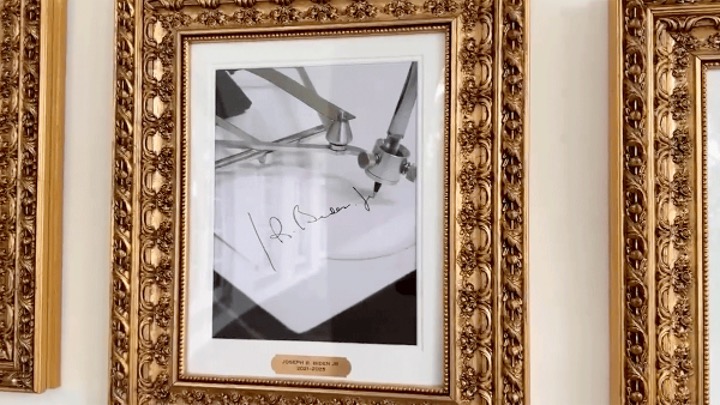
Trump’s mad, because he reckons whenever a robot signed, Biden’s signature should not count as his word.
The Scriptures are God-breathed — inspired — and they do speak to us (2 Timothy 3:16). But if we pick them up as though they’re divine dictation directly speaking to us — we reduce the human authors of the Bible to God’s autopens; robots producing words disconnected from their own humanity.
We read the Bible best when we remember it’s from God through humans and human processes for human readers — like those Luke describes in our reading.
Luke has written an account — like many others — probably including Mark and Matthew — taking these, and accounts from other eyewitnesses who he calls “servants of the word” — researching, collecting sources, and carefully crafting an orderly account.
He does all this for an original human audience; Theophilus — a human reader — whose name means lover of God — he could be a symbolic “every person” — but Luke chooses to present his account to a named person for a specific purpose — so Theophilus — and other readers — can know the certainty of what they have heard (Luke 1:1-4).
And though both Luke and Theophilus are Gentile names, Luke also tells he is writing about the fulfilment of another source — the Old Testament. At the end of his book he records Jesus saying the law, the Psalms, and the Prophets — the Old Testament — are fulfilled in him, because they are written about him (Luke 24:44).
Luke is not an autopen — he is involved — and there are humans like Luke involved in composing, compiling every page of the Scriptures. They are put together and passed on for particular readers, in particular times and places — the Scriptures are fully human — while also being profoundly and fully divine.
God is speaking “various times in various ways,” working towards ultimately revealing himself in Jesus — his Son — who was there before the beginning and everything is in the end… both the Scriptures and creation are fulfilled in him (Hebrews 1:1-2).
This idea of the humanity of the Scriptures will take us to some interesting places over the next few weeks — but it is not new or novel, or outside the Reformed tradition. In fact, two original reformers provide some helpful foundations for this morning.
First — John Calvin’s whole theological framework is built on God needing to bridge the gap between his infinite nature and our finite humanity, including in how he reveals himself. He calls this accommodation.
“Because our weakness does not attain to His exalted state, the description of Him that is given to us must be accommodated to our capacity so that we may understand it… Such forms of speaking do not so much express clearly what God is like as accommodate the knowledge of him to our slight capacity… He has accommodated Himself to men’s capacity, which is varied and changeable.”
— John Calvin, Institutes
And it includes how God reveals himself through his word by using humans, using human words to describe concepts in ways human minds comprehend; factoring in our limitations as little brains embodied in little bodies in various times and places, with limited knowledge about the world.
So, writing about Genesis and how the moon does not actually give light, and the “modern astronomers” of his day — he is a contemporary of Copernicus — understood the motion of planets differently, Calvin says Moses was not writing to Calvin’s contemporaries — but to his own, in a popular style, to common people of his day, drawing on their framework; God’s word being accommodated — adapted — to their humanity, through their humanity.
Our second big idea from a reformer is this one from Martin Luther — who observed that the Scriptures are the word of God put into letters — just like Jesus is the word of God put into humanity.
“The Holy Scriptures are the Word of God, written and (as I might say) spelled out and set forth in letters, just as Christ is the eternal Word of God veiled in the human nature…”
— Martin Luther, Commentary on Psalm 22
Last chapter we explored how the inspiration of God’s word is similar to his breath and word creating in the beginning, and the re-inspiration of humans, by the Spirit, through Jesus.
This time our heavy-lifting theological word is incarnation. We can think of the Bible as God ‘incarnating’ his words through humans, so we understand it as fully divine and fully human — just like Jesus.
This is expressed in the way the writer of Hebrews compares God’s speech through humans to his speech in Jesus (Hebrews 1:1-2)— and how John describes Jesus as God’s word made flesh (John 1:1, 14).
If you eradicate either Jesus’ divinity or humanity rather than holding them together you create big messes and lose fundamental truths — and it is the same if we see the Bible as just human, or as just divine, with the humans as autopens. God reveals himself through these human words and human processes — through people who write, receive, edit and adapt words as God worked in their history, and inspired them by his Spirit.
The Scriptures contain references to the processes that produce these words; we are going to look at some of these. This is a different kind of Bible reading where we will look at the medium, not the message — the seams and threads rather than the garment — this morning, the medium is our message.
Before we dig in, we are going to do some nuts and bolts — some technical stuff.

Last time we looked at textual criticism — the way ancient manuscripts are compared to work out what wording is most accurate and original. This time we are going to look at how people handle the idea the Bible has sources and what is called a ‘compositional history.’
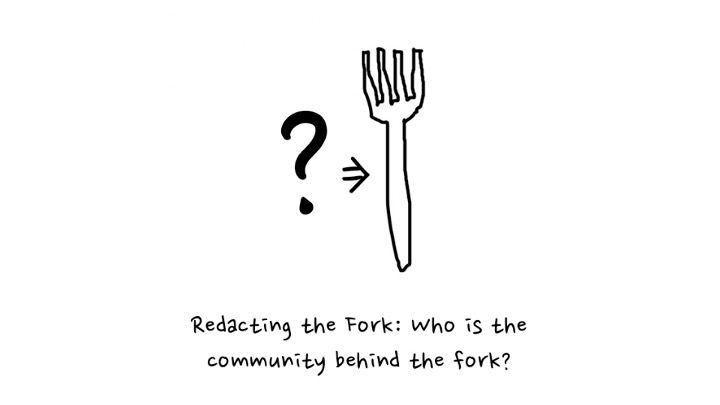
There is an assumption in some scholarship that the original sources are the truest thing and everything else is ‘redacted’ — like when the government edits files before release, or changes them — with an agenda, so to find the true original we have to strip away these edits. This is called source criticism. It is helpful to know this stuff because it comes up in books written about the Bible.
We are going to get our heads around this using cutlery.
Imagine the Old Testament as a fork. We know what a fork is for — but was there a primitive fork from the land before tine? That is funny cause the prongs of a fork are called a tine.
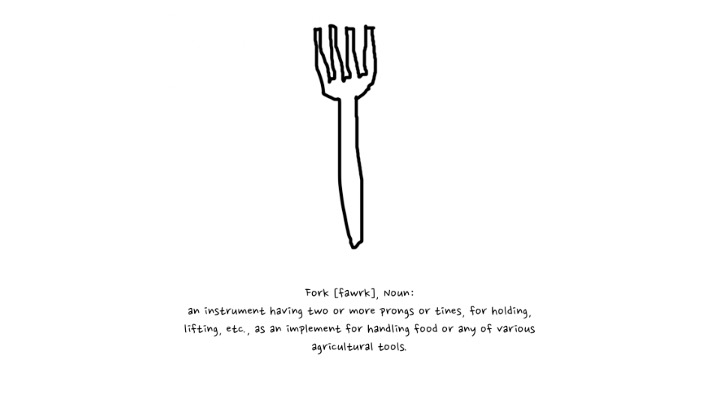
Turns out ancient forks had two.
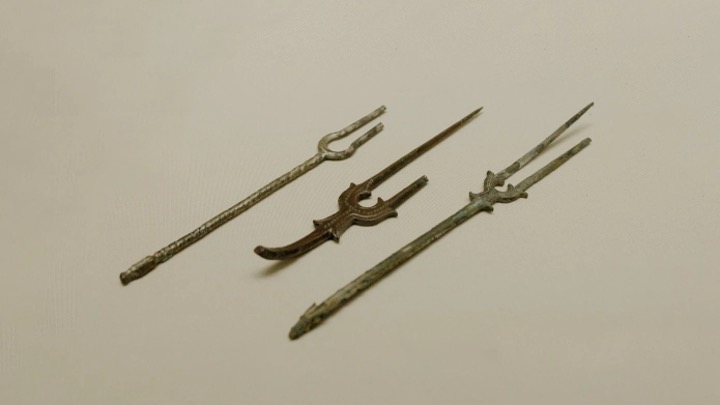
Some scholars picture the Scriptures — even books within them — coming together over time; from one prong to four, as writers react and respond; as they become more enlightened, or encounter foreign ideas so edit, or even rewrite bits later in Israel’s history. There is some evidence for some of this where vocabulary from languages outside of Israel, from later cultures, creeps in to some books.
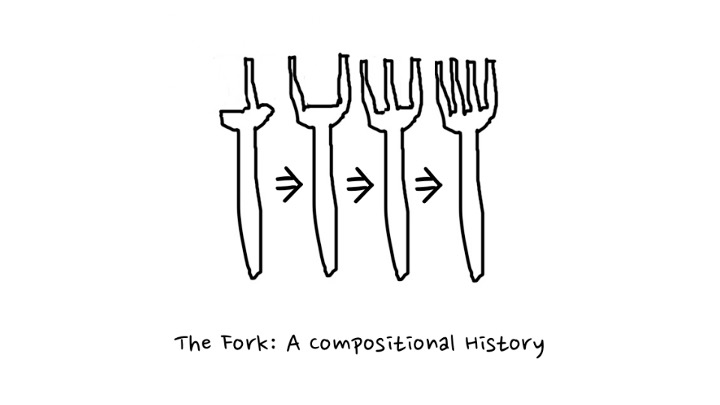
Others see the Old Testament as full of competing traditions within the community fighting over who is in charge — so sources from different groups with different concerns — and different names for God — are cut and pasted together in ways they reckon are unsophisticated, so it is like one community had these two prongs, and another a different two, and one three — and maybe nobody wanted four; and you pick your favourite tradition to be the authentic one — usually based on who had the power, and who did not.
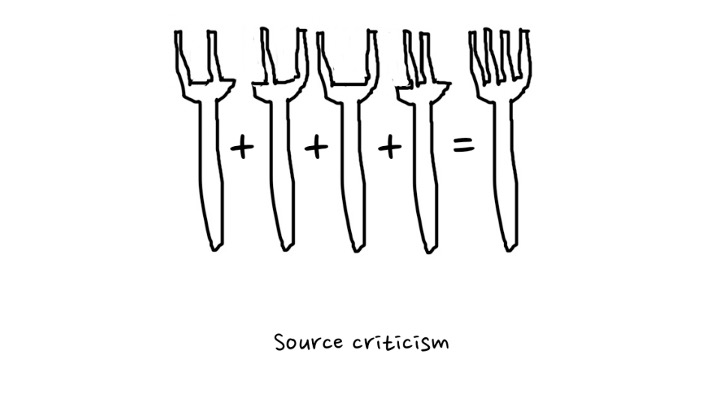
Source critics want to figure out who did the editing — and want to uncover the ‘authentic’ fork under the layers of human editing.
These views still crop up, but have become less popular — especially because Hebrew experts — Christian and Jewish — and literary scholars rather than engineering types — have point out the artistry uniting the final form of Scriptures — the bits source critics loved to pick apart, like seams, and the repetition — these folks see as deliberate design decisions; where patterns and cross-references reflect careful choices by authors and editors through Israel’s history.
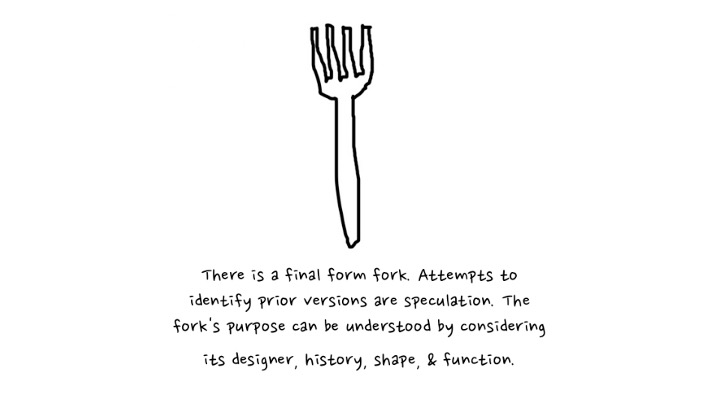
If we are not autopen people, the Scriptures themselves invite us to see the text we have as the product of humans preserving and passing on written words by deliberate decisions through history, at times imposed by limitations of the medium.
The Scriptures were scrolls made of perishable material, that could only hold a limited number of words. The words had to be passed on, generation to generation, over thousands of years, through major political upheavals and conflicts as Israel’s story unfolded. Words that did not do anything for the community did not survive; while the Scriptures were a living document within the life of God’s community — growing as their story grew.
The humans putting the Scriptures together regularly refer to their sources. Search for ‘Book of the’ on Biblegateway, or the Hebrew word Sepher — the word for scroll — and you will get references to scrolls that become Scripture, and more than twenty other documents — sources — from Israel’s history.
These references reveal a human process; giving a picture not just of authors, but editors who work like Luke — polishing, rewriting, or adapting older sources, including or excluding information — or adding to centralised scrolls according to their purposes over time. This process of editing begins with Moses — he writes thousands of years after the Eden story, and five hundred years after God called Abram out of Babylon. He made editorial selections from oral and written sources, and his own encounters with God.
Where Genesis recounts the ‘genealogy of Adam’ (Genesis 5:1), it is literally “the scroll” — he is quoting a pre-existing written source.
Moses also writes — in Exodus — a scroll to be remembered; especially by Joshua (Exodus 17:14). The account of the wilderness wanderings of Numbers includes a description of geography from the scroll of the wars of Yahweh — a source we no longer have (Numbers 21:13-14).
By the end of Deuteronomy, Moses writes about ‘this scroll of the law’ whether that is just Deuteronomy, or his scrolls that begin with Genesis — the Torah (Deuteronomy 30:10, 31:26). It is to be kept with the ark, which holds the ten commandments, as a living word at the heart of the community.
And in Joshua the book, Joshua the man is told to keep this scroll — from Moses — on his lips (Joshua 1:8). Joshua refers to a book of Jashar (Joshua 10:13), which also comes up in 2 Samuel — that seems to be a living collection of songs and oracles, edited around these events (2 Samuel 1:17-18).
Eventually Joshua is recorded in a scroll adding to the scroll of the law — the story of Israel renewing their covenant with God; for us their words are recorded in Joshua, not the Torah (Joshua 24:25-26).
In the accounts of Israel and Judah’s kings in 1 Kings to 2 Chronicles — there are constant references to other records of the kings of Israel, or Judah — probably centralised official documents (1 Kings 14:19, 29), and other specific scrolls like the annals of Solomon (1 Kings 11:41).
Chronicles opens with an updated genealogy from Adam to the exile, recorded from these sources (1 Chronicles 9:1), and also mentions the scroll of Isaiah the prophet in that same set of records (2 Chronicles 32:32). And — there are other sources named using different Hebrew words — the records of Samuel, Nathan and Gad (1 Chronicles 29:29) — or Shemiah, and Iddo (2 Chronicles 12:15).
With the prophets — the scroll of Jeremiah describes Jeremiah dictating — probably the scroll of Jeremiah — to Baruch (Jeremiah 36:4). And, in the book of Daniel, Daniel is exiled in Babylon — under Darius the Mede — reading Jeremiah as Scriptures — actually this word “scroll” that he has in Babylon. Daniel is in a scroll reflecting on a scroll that describes the writing of that scroll… that is all very meta (Daniel 9:1-2).
After exile, in Nehemiah, there is a list of names of Levites — folks who can work in a new temple — drawing on records from the time of Darius the Persian — probably a different Darius — and other books of the annals (Nehemiah 12:22-23).
As well as these sources, there are editorial seams through the texts stitching passages within scrolls, and then linking scrolls together. One ‘seam’ people notice is the two creation accounts placed together in Genesis 1 and 2. There are others, like the way the start and end of scrolls in the Torah are linked — So Moses is outside the tent at the beginning of Leviticus (Leviticus 1:1)… Situated at Sinai at its end (Leviticus 27:34) — And then inside the tent in Sinai at the start of Numbers (Numbers 1:1).
Or, there is the way the Psalms are organised into five books, each ending with a formula where God is praised and the people say Amen (Psalms 41:13, 71:19, 89:52, 106:48) — until book five, which ends with five Psalms where the last words are “Praise the Lord” (Psalms 146:10, 147:20, 148:14, 149:9, 150:6). The ordering of Psalms within the book is deliberate design, organising songs from across Israel’s history, so the structure tells a story.
This pattern of drawing on various texts — adding, expanding — selecting what to record because it will fit — for human purposes and human audiences located in a time and place continues in the New Testament.
We saw it in Luke (Luke 1:1-2). John tells us he picked stories to tell so readers will believe Jesus is Israel’s promised Messiah who gives life (John 20:30-31) — he says the world could not fit all the books if he recorded them all (John 21:25).
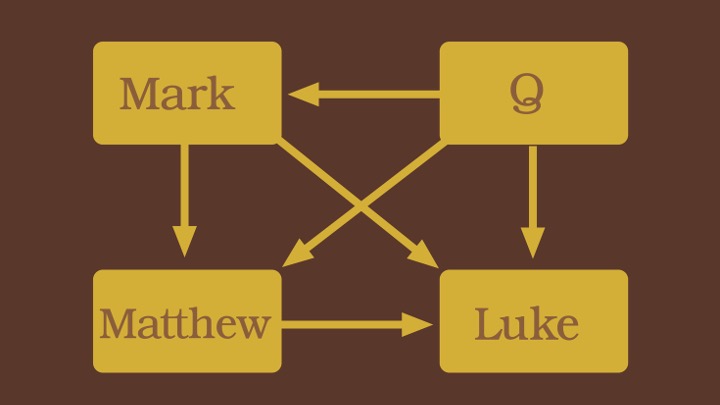
There are source critics of the New Testament too. Matthew, Mark and Luke are so similar they get called the Synoptics — a mashup of the Greek word syn — together — and optics — they share a view — and are probably sources for each other.
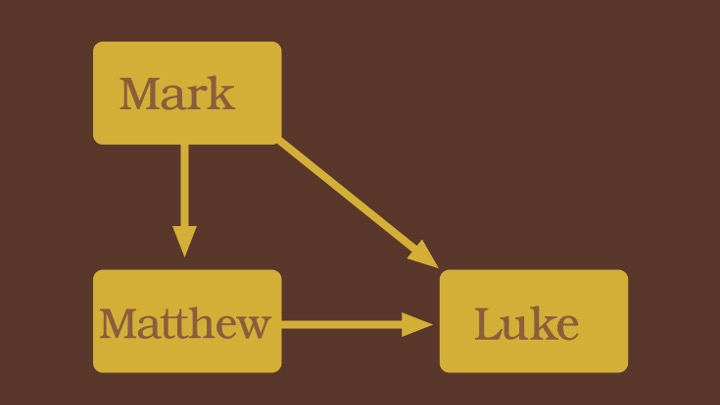
Source critics — looking for the original sayings of Jesus — search for a missing source they call ‘Q’. People with more literary sensitivity recognise these human authors make distinct and deliberate decisions — drawing on sources and selecting stories — even reordering events — for different audiences.
So John has Jesus overturning the tables in the temple in chapter two (John 2:15) — while the synoptics put it at the crucifixion (Matthew 21:12). This is not a contradiction; it is a decision.
Authors of the Bible are open about the human processes and purposes shaping their texts and their decisions. These texts are then received and circulated cause the community recognises them as credible and inspired.
If we embrace that both divine inspiration and incarnation through humans works across this human process, then God’s word — the final form of this collection of texts — are reflected, refined and reflected on. It is this profoundly rich and intertextual multi-scroll collection woven together with seams and threads, into something beautiful and coherent.
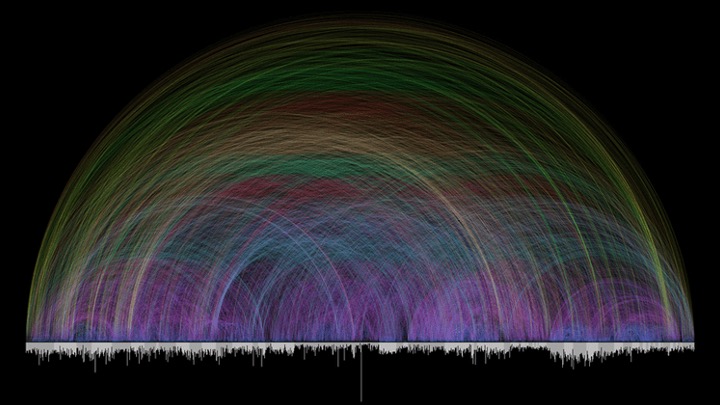
This graphic charts sixty-three thousand, seven hundred ninety-nine cross references across the span of the Bible — thousands of moments where inspired humans connect their words to other parts of God’s story; a rich tapestry of human reflection and artistry, inspired by the one authoring his story to be fulfilled in Jesus; who is both the model for God’s accommodating incarnate revelation of himself, and the fulfilment of revelation.
Here are some implications of this for how we read the Bible.
First, the Bible is not merely human — but it is fully human. The seams and processes we have observed challenge the idea it is merely divine; God’s word directly to me through an autopen. It is fully divine — inspired — and fully human — incarnate.
The humanity of Scriptures is not embarrassing to God or us, but something we can embrace, enjoy and get excited about. The Scriptures are produced by careful design and reflection by generations of people who lived and breathed by these words.
If we think we are finding internal contradictions, thousands of years later — or seeing an evolution from primitive to sophisticated, or searching for lost sources, we are missing that we are receiving the outcome of their work; words selected and handed down with a purpose. Noticing seams and sources; the work of inspired editors, not just authors does not undermine God’s word; these observations — for example, meditating on the shape of the Psalms — is rewarding.
Second — God accommodates and incarnates to reveal himself through humans in their time, helps frame our expectations of the Scriptures in our times. Ancient Scriptures — including prophecies — do not have to be about modern issues or political moments.
We should remember the first human Theophilus before we turn up as modern ‘lovers of God’ — not eradicating their humanity; paying attention to their context, before applying Scripture to ours. This is not to say God’s timeless words can’t speak in timely ways; but they had to speak in timely ways then.
Recognising God speaks through their humanity, to their moment, might bring a bit of humility about our own — that we are not superior just because we are modern. Reading these ancient words — the product of thousands of years of inspired contemplation — with humility and curiosity — can provide perspective on our moment, and our shared humanity.
Finally, the Bible is fully God’s word, but the humans involved are not autopens. Neither are we.
Enjoying the humanity of God’s word helps us be humans of God’s word — humans like John, or Luke — or the servants of the word he mentions. We are how God puts his signature on this moment — and we are not autopens.
As we dwell in the inspired and incarnate word about the inspiring and incarnate word; becoming humans inspired by his Spirit; united to Jesus as his body; incarnate in our world — our lives and the words of life we speak and write are how God accommodates himself to our time, through us.