This series of posts was first a series of sermons I preached at City South Presbyterian and Coorparoo Presbyterian in mid 2026. You can, if it is your preferred medium, watch the video recording of this sermon here (Vimeo), or listen to the audio recording here (Spotify link).
3D movies were the next big thing… Until 4D.

If you head to a 4D movie, your seat will move, there will be fog and lightning and wind and smells…
We are reading the Bible in 3D… Or 4D today.

This image would be 3D… If you had 3D glasses.
We’re getting straight into our nuts and bolts — looking at how the Bible is not just words on a page; but an immersive experience where we are invited to see, or imaginatively dwell in the world of the text, by acting the story out with our bodies.
Gordon Wenham — one of my favourite Old Testament scholars — suggested we have flattened communication with God, through the Bible, into ‘just words;’ a two-way conversation; reading and praying. This is our 2D model…
“For a long time Christians have imagined that communication between God and man is essentially verbal, merely a matter of words…
God speaks to man through the prophets or through the Bible: man replies in prayer. We view communication with God as a sort of two-way radio.”
But God does not restrict himself to words, he uses ritual such as sacraments: ritual is more like colour TV than radio. Ideas are made visible…
Gordon Wenham
And this is a problem, because, by his words and in his word — God creates a 3D world, and a way of life in for human bodies — including rituals, like the sacraments, which make ideas visible in the spaces, places, and geography they are set in. Engaging the text in 3D requires some imagination; an openness to being pulled into the text, rather than pulling the text on the page apart.
This will require imagination and sensitivity, but I think would be worth the effort…
Gordon Wenham
This is part of jumping from English to Hebrew; from the modern model of reality to the ancient.
Our Western minds love facts; we live in a material world some have described as disenchanted; closed off to the supernatural; but this was not how ancient authors or readers saw.
We are going to read paying attention to how 3D places have spiritual — 4D — significance; to what some call “cosmic geography.”
The events of the Bible happened on the map; not a 2D map, but a landscape with mountains and valleys and water and sky; and the settings matter; they have meaning.
In the beginning God created the heavens and the earth. Now the earth was formless and empty, darkness was over the surface of the deep…
Genesis 1:1–2
The very beginning of the Bible presents a map to us; inviting us not just to think about physical space — earth — but the overlap of spiritual space — heaven — with the sky.
The ancient imagination sees the sky in 4D — same with bodies of water; like the deep; which is home to “tannin;” sea monsters. (Genesis 1:21).
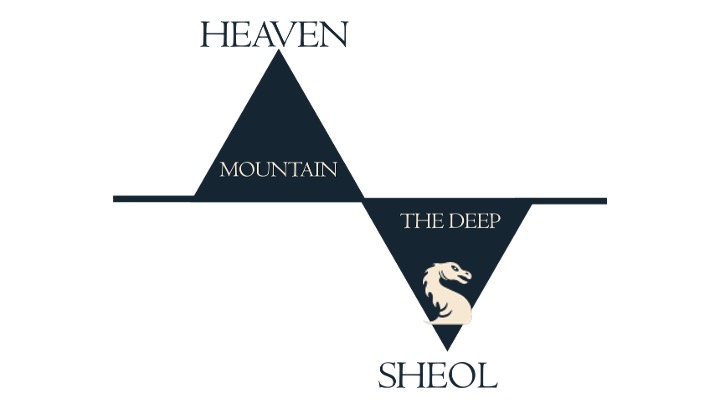
This map of reality sets us up to see moving upwards as moving upwards as moving towards heaven — mountains matter — while moving down into a valley or water is moving towards the realm of death.
Ezekiel tells us the Garden of Eden is on a mountain — Genesis 2 hints at this as it describes rivers of life flowing down into other regions…
And a serpent invades, leading people to grasp the fruit of the tree of knowledge (Genesis 3:6), so they are sent down the mountain, and the way up is guarded by heavenly gatekeepers (Genesis 3:24).
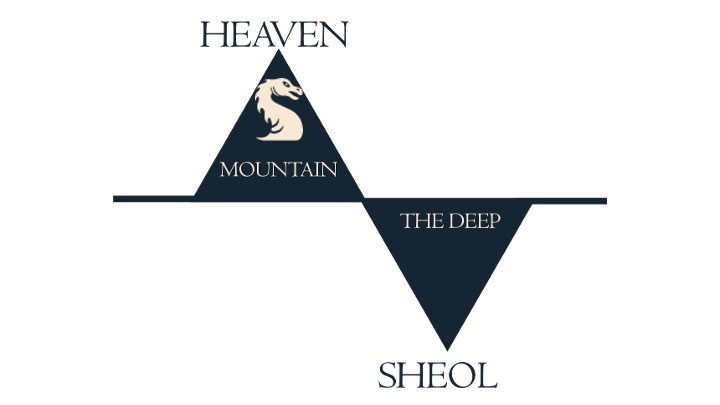
This 4D story of disconnection from heaven is reinforced in the 3D spaces — the tabernacle and temple, that are described in the text, and are at the heart of Israel’s rituals, where they act out being excluded from the Holy of Holies, where God rules from his heavenly throne; pictured in the ark and its cherubim.
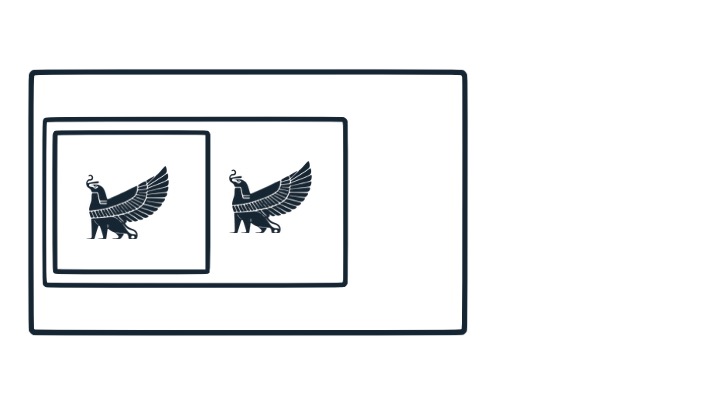
When the Bible gives architectural plans for 3D spaces, these teach a story about the cosmos as people follow the plans, building and interacting in those spaces.We do not have the spaces, but we have the plans, and can picture them the way ancient readers would…
Like the first century AD Jewish historian Josephus, who says the floor plan ‘imitates the system of the world,’ so the place behind the curtain is heaven.
Now the room within those pillars was the Most Holy Place: but the rest of the room was the Tabernacle, this was open for the Priests. However this proportion of the measures of the Tabernacle proved to be an imitation of the system of the world. For that third part thereof which was within the four pillars, to which the Priests were not admitted, is, as it were, an Heaven, peculiar to God. But the space of the twenty cubits, is, as it were, sea and land, on which men live: and so this part is peculiar to the Priests only.
Josephus, Antiquities
While the curtain — with its colours, and embroided cherubim and stars — is also a micro-cosmos — an image of spiritual, 4D, reality.
It was a Babylonian curtain… a kind of image of the universe… This curtain had also embroidered upon it all that was mystical in the heavens…
Josephus, The Jewish Wars
The tabernacle travels from Mount Sinai to Mount Zion, where a permanent house — the Temple — is built using the same floorplan.
This 3D space built on the 3D mountaintop place taught God’s people about the 4D reality of heaven and earth; complete with cherubim guarding the barrier between realms.
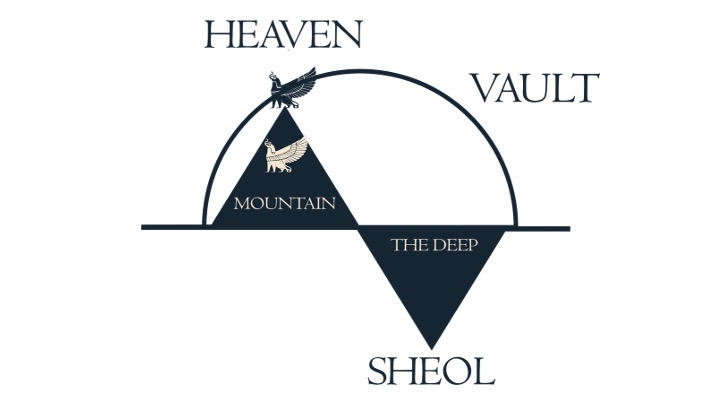
Picture this as we read our story in Genesis 6; where these sons of God ‘saw’ human women were pleasing to the eye, and they took them…
…the sons of God saw that the daughters of man were attractive. And they took as their wives any they chose.
The Nephilim were on the earth in those days, and also afterward, when the sons of God came in to the daughters of man and they bore children to them. These were the mighty men who were of old, the men of renown.Genesis 6:2, 4
These are the same words as when Eve saw the beautiful fruit and took it; it’s a fall story for heavenly beings; happening in 4D as heaven and earth come together. It creates these beings called Nephilim; these children of gods — ‘heroes of old’ — literally mighty men of name; they are gibborim in Hebrew — that is plural — the same word is used for Nimrod, he is a gibbor — (Genesis 6:4; Genesis 10:8).
He builds Babylon… (Genesis 10:8, 10). And we get the story of the construction of the tower of Babel — Babylon — in chapter 11. This city built on the plain of Shinar (Genesis 11:2), with a tower linking heaven and earth, so the humans ‘make a name’… Gibbors of name.
“Come, let us build ourselves a city, with a tower that reaches to the heavens, so that we may make a name for ourselves; otherwise we will be scattered over the face of the whole earth.”
Genesis 11:4
There are 4D parallels here back to the sons of God’s heavenly fall. Those sons of God come down to earth from heaven, creating these mighty warriors of name — like Nimrod — who leads humans from earth to heaven as they build a man-made mountain to make a name.
But between these stories there is the flood, which was meant to wipe out the Nephilim who are linked to the earth being filled with violence (Genesis 6:11–12); in the flood God opens the vault so the waters of earth and heaven separated re-combine and everything is de-created except Noah and co (Genesis 7:11), who land on a mountain and restart (Genesis 8:4).
So what is with Nimrod the gibbor?
He is maybe part of a giant problem involving Nephilim-like folks after the flood. As Israel are moving from Sinai to Zion — Moses sends spies into the land, who report it’s inhabited by giants; Anakim who are descendants of the Nephilim (Numbers 13:33).
There are more giants; more Anakites aka the Rephaites… (Deuteronomy 2:11). Their king is a giant named Og of Bashan — his bed is 9 cubits — 13 feet — long. (Deuteronomy 3:11). We will look at Goliath in a couple of weeks — but David and his merry men go head-to-head with a bunch of giants, including Goliath’s brother, they are descendants of Rapha, “Rephaim” (2 Samuel 21:16, 19, 22).
This word Rapha has got two separate dictionary entries; one says giant and the other ghost — whether they are linked is debated. I reckon they are — cause when Isaiah uses the word about ghosts, these Rapha are in the realm of the dead — Sheol (Isaiah 14:9). Picture our map.
Isaiah says they are the dead leaders of the world; probably guys like Nimrod and Og the giant — not nepo-babies, but nepho-babies (Isaiah 14:9). Isaiah says Israel has been ruled by these lords, but these children of cosmic rebellion against God are dead; their Rapha do not rise (Isaiah 26:13–14). God wiped them out (Isaiah 26:14). Let me tell you this story.
The rebellious sons of God are the origin story of giant, violent warrior kings of the nations; the kinds who call themselves images of God, who rule the nations who oppose God’s people, and tempt God’s people to worship. But Isaiah says ‘do not worship these giants, they are ghosts in Sheol, which is where they will take you.’
Then Israel is exiled because the gods of these nations become Israel’s gods, their kings become like the nation’s kings (and so the nation’s kings become Israel’s kings); the violent attempts to bring heaven and earth together displayed in Babylon lures Israel in; but their path ends down in the grave, not up in the sky.
Here is where we bring back some more nuts and bolts to see how Deuteronomy 32 gives us a 4D map of this… In the NIV it says the Most High gave the nations their inheritance; dividing mankind (Deuteronomy 32:8), literally the sons of Adam — setting up their boundaries — the scattering he did at Babel… according to the number of the sons of Israel (Deuteronomy 32:8).
When the Most High gave the nations their inheritance, when he divided all the sons of Adam, he set up boundaries for the peoples according to the number of the sons of Israel.
For the Lord’s portion is his people, Jacob his allotted inheritance.Deuteronomy 32:8–9
But remember textual criticism — from part one — and the Dead Sea Scrolls; and the Greek translation of the Old Testament.
The NIV and other translations say sons of Israel here and the Masoretic Hebrew from the medieval age says “sons of Israel.” But. Earlier Greek translations say either angels of God or sons of God… And Hebrew manuscripts from the Dead Sea Scrolls — the writings used by a Jewish sect located outside Jerusalem — say sons of God…
When the Most High gave the nations their inheritance, when he divided all the sons of Adam, he set up boundaries for the peoples according to the number of the sons of God.
For the Lord’s portion is his people, Jacob his allotted inheritance.Deuteronomy 32:8–9
The ESV follows this translation. And, if it’s right and the LXX and other manuscripts are right, when God divided up the sons of Adam into nations, he did it according to the number of sons of God; heavenly beings like those in Genesis 6, while keeping Israel — Jacob — for himself.
So, what is the original?
The “sons of God” text thing fits with Psalm 82, where the Most High God — (Deuteronomy 32:8; Psalm 82:6)
God presides in the great assembly; he renders judgment among the “gods”
“I said, ‘You are “gods”; you are all sons of the Most High.’ But you will die like mere mortals; you will fall like every other ruler.”Psalm 82:1, 6–7
God — literally Elohim — judges an assembly of other gods Elohim — (Psalm 82:1), who are called sons of God, but told they will die like mortals; perhaps becoming ghosts like their giant children.
And it fits with a source; a kind of 4D map, the book of Enoch, that isn’t in our Bibles, but is a source quoted by New Testament writers…
And the angels, the children of the heaven, saw and lusted after them, and said to one another: ‘Come, let us choose us wives from among the children of men and beget us children.’
Enoch 6:2–3
It’s a commentary on Genesis 6 and the sons of God; it uses the Greek word angels.
And again the Lord said to Raphael: ‘Bind Azazel hand and foot, and cast him into the darkness: and make an opening in the desert, which is in Dudael, and cast him therein.
Enoch 10:4–5
They lead humans into violence, and God binds them and casts them into darkness in a grave in the wilderness;
And place upon him rough and jagged rocks, and cover him with darkness, and let him abide there forever, and cover his face that he may not see light
Enoch 10:5–7
Covered forever, until they are hoiked into an abyss of fire, with their followers.
In those days they shall be led off to the abyss of fire: and to the torment and the prison in which they shall be confined forever.
And whosoever shall be condemned and destroyed will from thenceforth be bound together with them to the end of all generations.
Enoch 10:13–15
If that sounds familiar it’s cause Jude and Peter quote Enoch; Jude calls him the seventh after Adam, then quotes this bit… (Jude 1:14). Compare:
“See, the Lord is coming with thousands upon thousands of his holy onesto judge everyone, and to convict all of them of all”
Jude 1:14
“And behold! He cometh with ten thousands of His holy ones. To execute judgement upon all…”
Enoch 1:9
Peter talks about Jesus preaching to dead spirits from the time of Noah (1 Peter 3:18), and God punishing fallen angels… (2 Peter 2:4–5), and Revelation describes a fiery end for rebellious spiritual beings in league with the serpent (Revelation 20:10) — both draw on this picture from Enoch.
Enoch connects the two meanings of Rapha a bit; these spirits of dead rebels become demons — evil spirits — who come up from Sheol to afflict, destroy and attack humans.
And now, the giants, who are produced from the spirits and flesh, shall be called evil spirits upon the earth, and on the earth shall be their dwelling. Evil spirits have proceeded from their bodies…
And the spirits of the giants afflict, oppress, destroy, attack, do battle, and work destruction on the earth, and cause trouble…
Enoch 15:8–9, 11
The book of Enoch describes these sons of God landing on Mount Hermon.
And they were in all two hundred; who descended in the days of Jared on the summit of Mount Hermon…
Enoch 6:6
Rebellion on a mountaintop…
Let’s tie some Old Testament threads together; Og the giant king of Bashan rules Mount Hermon (Joshua 12:4–6); Bashan is the land of ghost giants — Rephaim — and Hermon is the highest mountain in the region (Deuteronomy 3:13).
There’s a Psalm about this mountain of Bashan being jealous of Zion, because God chose it. This Psalm also promises God will bring people out of captivity from Bashan, and the depths of the ocean. The mountain and the deep…
Mount Bashan, majestic mountain, Mount Bashan, rugged mountain, why gaze in envy, you rugged mountain, at the mountain where God chooses to reign, where the Lord himself will dwell forever?
The Lord says, “I will bring them from Bashan; I will bring them from the depths of the sea…”Psalm 68:15–16, 22
Jewish folks in the first century had this story of Mount Hermon being where the rebel sons of God launched their heaven-meets-earth program — birthing giants, ghosts, demons and violent god-kings of the nations; where those nations were ruled by these powers and principalities after Babel. It would be cool if Mount Hermon showed up in the New Testament…
Hey?
Let’s set the scene for a 4D reading of the transfiguration.
At Caesarea Philipi Jesus asks “Who do people say the Son of Man is?” Peter answers “You are the Messiah” — the Son of God… This son of Adam is the Son of God. Jesus says Peter — you rock — and on this rock I will build my church, and the gates of Hades won’t overcome it (Matthew 16:13, 16, 18)… Hades is the Greek for Sheol; the gates of Hades won’t open up so death overcomes life; they won’t prevent Jesus bringing heaven and earth together in his kingdom.
Josephus says Caesara Philippi got it’s name cause Caesar gave the region to one of Herod’s sons, who built a temple for Caesar at Panium — named after the goat god Pan.
And when Caesar had further bestowed upon him another additional country, he built there also a temple of white marble, hard by the fountains of Jordan: the place is called Panium…
Josephus, Wars 1.404
Caesarea Philippi is at the base of a huge mountain; and features this cave, with a kind of bottomless pit of water, immeasurably deep…
…where is a top of a mountain that is raised to an immense height, and at its side, beneath, or at its bottom, a dark cave opens itself within which there is a horrible precipice, that descends abruptly to a vast depth; it contains a mighty quantity of water, which is immovable and when anybody lets down anything to measure the depth of the earth beneath the water, no length of cord is sufficient to reach it…
Josephus, Wars 1.405
It’s called Pan’s grotto; where people make sacrifices sending stuff through the water to the underworld… Interesting place for Jesus to talk about the gates of Hades… (Matthew 16:18).
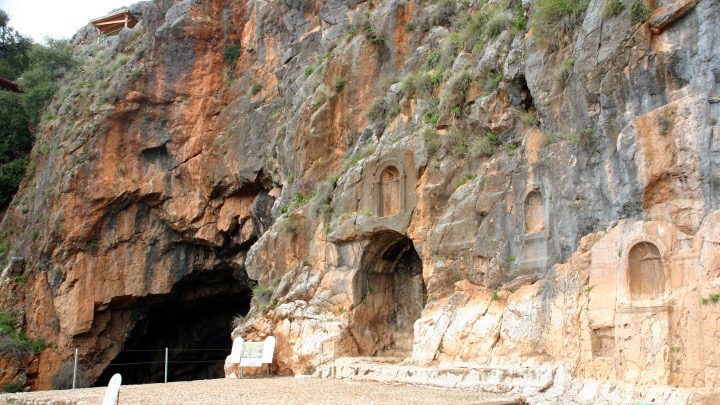
Just plot this water pit on this map as we go…
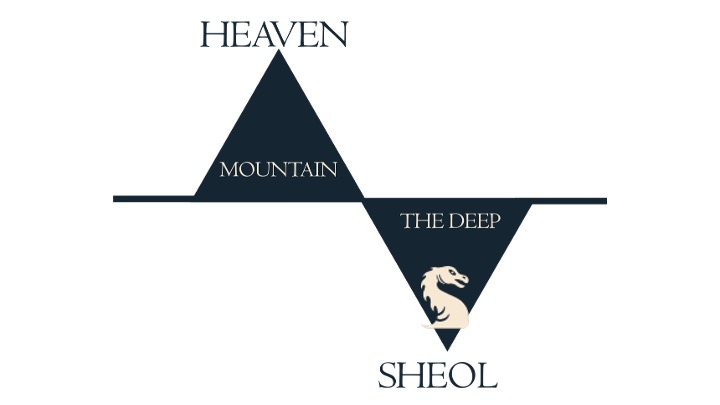
This is where Jesus says the Son of Man will be a human who enters the Father’s glory; with his angels — people will see him entering heaven on God’s terms; it’s a kind of Babel; or a reverse of sons of God coming down.
For the Son of Man is going to come in his Father’s glory with his angels… Truly I tell you, some who are standing here will not taste death before they see the Son of Man coming in his kingdom.
Matthew 16:27–28
Then — Matthew mentions no change in location, just that six days later Jesus takes Peter, James and John up a high mountain (Matthew 17:1) — want to guess what the mountain at Caesarea Philippi is called?
Mount Hermon.
The mountain where serpenty rebellion occurs from heaven, to lead humans away from God… under these powers.
And he was transfigured before them, and his face shone like the sun, and his clothes became white as light.
He was still speaking when, behold, a bright cloud overshadowed them, and a voice from the cloud said, “This is my beloved Son, with whom I am well pleased; listen to him.”Matthew 17:2, 5
This is where Jesus is transfigured, so the disciples see him in 4D — gloriously uncovered as a heavenly human straight out of Old Testament visions… where God’s voice booms from the clouds of heaven — like at Sinai — imagine the 4D cinema experience… saying “This is my Son.”
Jesus the Son of God and Son of Man who will bring heaven and earth together — restoring the nations under God’s rule is revealed; on this mountain; reclaiming the territory for the Most High.
He comes down the mountain and there is this kid who keeps falling into fire or water — maybe the gates of Hades are beckoning — (Matthew 17:15) And Jesus rebukes this demon — maybe a Rapha-ghost — and restores this boy (Matthew 17:18).
Then — with Hermon in the background he says prayer doesn’t just drive out demons, it moves mountains — specifically “this mountain”: the jealous Mount Bashan, where God will gather people back to himself, and from the deep. Jesus is going to call people back from darkness; from the rule of these nations and the powers behind them. People will no longer be held captive to demons or powers — the stuff associated with Mount Bashan or Mount Hermon…
“Because of your little faith. For truly, I say to you, if you have faith like a grain of mustard seed, you will say to this mountain, ‘Move from here to there,’ and it will move, and nothing will be impossible for you.”
Matthew 17:20
And, again, he foreshadows his death as where this will happen (Matthew 17:22–23).
When Jesus quotes Psalm 22 — ‘my God, my God, why have you forsaken me’ — from the cross; this Psalm pictures Israel’s Messiah being attacked by ‘strong bulls of Bashan’ and lions — beastly pictures of rebellion; trusting God to rescue him from the lions and bulls.
My God, my God, why have you forsaken me?
Many bulls surround me; strong bulls of Bashan encircle me. Roaring lions that tear their prey open their mouths wide against me.
Rescue me from the mouth of the lions; save me from the horns of the wild oxen.Psalm 22:1, 12–13, 21
And the transfiguration — on the mountain — reveals Jesus as the Son of God — who, through the cross, brings people home to God; anticipating when Jesus will stand on a mountain (Matthew 28:16), and say all authority has been given to me, sending his disciples into all the nations to baptise people into God’s life; gathering us from Bashan and the deep; so the gates of Hades won’t prevail; Sheol has lost its grip. (Psalm 68:22)
“All authority in heaven and on earth has been given to me. Therefore go and make disciples of all nations…”
Matthew 28:18–19
If we put on our 4D glasses we find this thread through the New Testament.
In Athens Paul says God distributed the nations (Acts 17:26), but we are all God’s children and should stop worshipping other gods (Acts 17:29), cause God overlooked this, but now calls all people to repent (Acts 17:30). Reversing that Deuteronomy 32 ‘distribution’ of the nations.
In Ephesians, Paul writes about ‘us’ or ‘we’ the chosen inheritance of God — Israel — adopted as his children… (Ephesians 1:4–5) And then a ‘you’ — the Gentiles — who are rescued from the power of the serpent and included in Christ; given an inheritance; receiving the Holy Spirit; brought into 4D life with God (Ephesians 1:13–14). He says ‘you Gentiles were excluded’ (Ephesians 2:11–12) — now included (Ephesians 2:19).
He even uses the map of reality in the temple floor plan to make the point — once Gentiles were separated by a dividing wall of hostility (Ephesians 2:14); now we are included as bricks in the temple; members of God’s household (Ephesians 2:21–22); adopted as heirs so that in this mystery (Ephesians 3:6). God is making his victory known to the powers and principalities; that divine court room.
His intent was that now, through the church, the manifold wisdom of God should be made known to the rulers and authorities in the heavenly realms,according to his eternal purpose that he accomplished in Christ Jesus our Lord.
Ephesians 3:10–11
Paul even quotes Psalm 68 — the one about Bashan — when he says Jesus is taking people as captive to give us as gifts to each other (Psalm 68:18; Ephesians 4:8–9).
In Revelation, John pictures Jesus in heaven as he saw him on the mountain top.
“His face was like the sun shining in all its brilliance.”
Revelation 1:16
And then sees God’s throne atop a crystal sea (Revelation 4:6); the vault. He sees God destroying the powers who align with the serpent — and the serpent (Revelation 20:10) — and the deep and Hades — Sheol — death itself — before creating a new mountain where heaven and earth meet and the sea — no deep; no barrier, so humans can dwell with God in a new garden city; on a new mountain.
The sea gave up the dead that were in it, and death and Hades gave up the dead that were in them, and each person was judged according to what they had done. Then death and Hades were thrown into the lake of fire.
Then I saw “a new heaven and a new earth,” for the first heaven and the first earth had passed away, and there was no longer any sea.And he carried me away in the Spirit to a mountain great and high, and showed me the Holy City, Jerusalem, coming down out of heaven from God.
Revelation 20:13–14; 21:1, 10
Turning this…
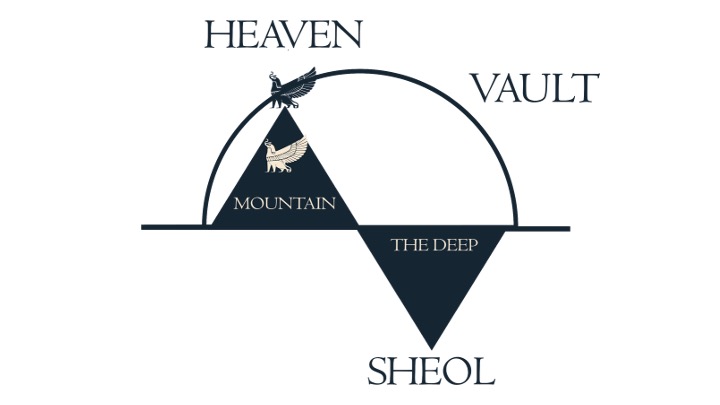
Into this…
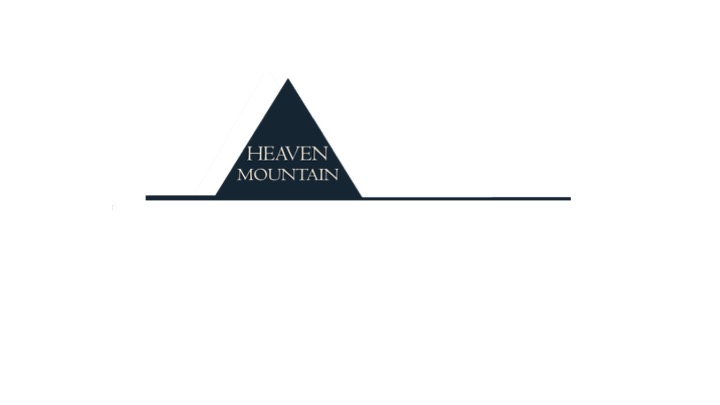
When we read in 4D we are tracking this thread.
You might feel like reading in 3D — or 4D — needs special glasses… that this is special knowledge only mystical, professionaly, priestly types can reveal… And that is a real risk. But all of us need guides in a foreign land.
We don’t know Greek or Hebrew so we are guided by translators already.
Maybe we need map translators not just word translators.
But also, this isn’t new.
Jude names Enoch. It’s ‘in the Bible’…
It’s possible that guides from our time — committed to disenchantment — have led us away from this reality; flattening the map; pointing us at words not the world they create; away from the mountains.
We modern readers flatten the Bible into 2D cause we are committed to the idea that comprehension is about getting the right answer; the facts.
Shifting from 2D to 4D shifts us from comprehending and certainty to contemplation. Away from analysis of words to a humble, inquisitive, imaginative curiousity…
Even if some of this wild stuff is speculative; sitting and thinking about the imagery and the vision it creates and not knowing the answers, or admitting we do not know, or we are confused so we reflect and wrestle more takes us into a richer conversation with the God we are too tempted to domesticate and explain.
Even if we have been reading the Bible our whole lives — most of you longer than me — this is a posture that cultivates wisdom, not just knowledge.
We can picture this reorientation as moving away from grasping the fruit of the tree of knowledge using our own power for ourselves, to sitting and examining the beauty of the tree God made, and his word about what it’s for, so that contemplation itself is a gift from God that grows us — and we get to enjoy this sort of contemplation of glorious things for eternity.
This sort of reading involves a different lens; and we might need to act some of it out in our bodies — and we might need guides who will take us from 2D to 4D.
Here are three suggestions.
First, this is how people through church history and outside the west view the world. It’s only disorienting for us moderns who have turned the vault into a closed dome; shutting ourselves off from the heavens. Guides from outside our time and place can help.
Second, I’ve drawn lots of this from an Old Testament scholar named Mike Heiser; his work is disputed; he spent his career writing and podcasting about this stuff; and he might have been wrong about plenty, but he is a good example of taking the Bible seriously, while seeing differently.
Third, C.S. Lewis is less controversial, mostly cause we have domesticated him; turning him into a ‘safe’ Lion… He is not safe, but he is good.
His metaphor for seeing differently is to picture yourself in a dark tool shed; a sunbeam shining through a crack.
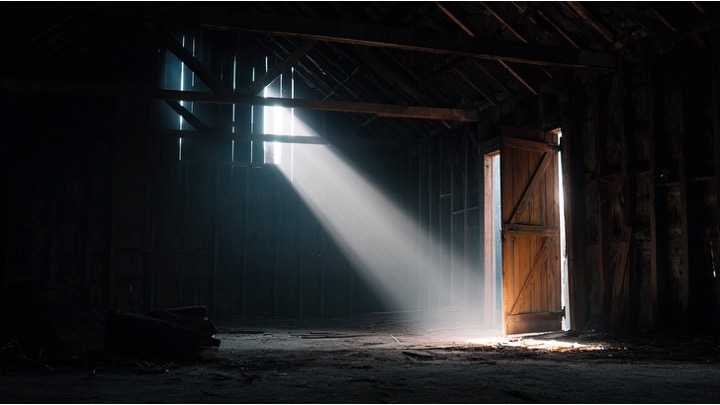
When you look at the beam you can see it lighting up specks of dust, and that it’s “the most striking thing” inside the shed.
Our 2D readings are like this.
Lewis invites us to stand in the beam and look along it; picture looking along the beam out the hole; seeing green leaves on trees, and further — the sun — a bigger reality than the shed. Looking at the beam and looking along the beam are different experiences…
But once we start looking along the beam, it changes how we see the shed; or life on earth, so, like Lewis says elsewhere…
I believe in Christianity as I believe that the sun has risen: not only because I see it, but because by it I see everything else.
C.S. Lewis
If we can — by God’s Spirit — see the world through radiant glory of the transfigured Jesus on the mountain top; as he invites us out of darkness and into his wonderful light — reclaiming us from ground once held by rebellious powers — as the eyes of our hearts are opened and his word helps us see the world this way, it changes everything.