This series of posts was first a series of sermons I preached at City South Presbyterian and Coorparoo Presbyterian in mid 2026. You can, if it is your preferred medium, watch the video recording of this sermon here (Vimeo), or listen to the audio recording here (Spotify link).
There is a way of reading the Bible where Red Bull gives you wings.

Tim LaHaye wrote the Left Behind series; you might have read them, or seen the movies.
His golden rule of interpreting the Bible was:
“When the plain sense of Scripture makes common sense, seek no other sense…take every word at its primary, ordinary, usual, literal meaning.”
Tim LaHaye
The way this works — for him — is to read bits of the Bible others see as symbolic; where there are numbers and visuals, and take them very literally; which leads to interesting places when it comes to the book of Revelation.
I’ll unpack the Red Bull thing, but we can read the Bible as 100 percent truth while also recognising this is embedded in literature; and our job is not just to read it literally, but literarily; to ask what sort of writing we are reading.

Our nuts and bolts this time around is called ‘literary criticism,’ or ‘form criticism’ — we are looking genre, and why it matters.
Genre is a way of describing the forms words are put in; the formulas or structures we use.
This book by Aussie Bible scholar Andy Judd is a great intro on genre and the Bible, which we are drawing on here.
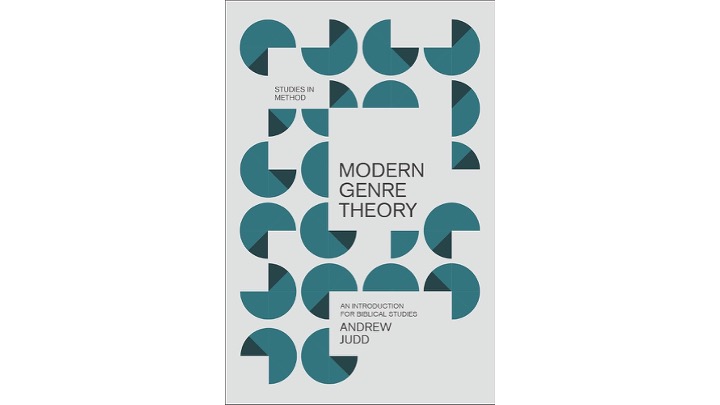
The Bible is a library of literature featuring stacks of genres — different books, and even bits within books — stories, songs, laws, and vivid symbols.
And every one of these forms is a choice and author has made. And this isn’t just a choice about form — it’s a choice of function. Different genres do different things.
…genres are about more than what’s written on the page; they’re about who is trying to achieve what with the piece of paper.
Andrew Judd, Modern Genre Theory
If I want to do things with words, there are some times literal, ready made, forms — like, when I conduct a marriage, I fill out some paperwork, other people will read it, and the marriage will be ‘official’.
Other people use forms or formulas to do things too. Council-issued parking tickets have a form we understand. So do no parking signs. These forms do things.
We also know they do not do other things; we should not treat a parking ticket as a love letter or a marriage certificate.
And, when we read the Bible we can’t just look at the words and ignore the form — asking what they say — cause the form, or genre, comes with a function, so we have to ask what this does.
We are not always told the genre of a text; and ancient texts are more like each other, than like modern texts.
Andy suggests a boomerang test for trying out genres, and working out what a text is meant to do; where we try different ideas and see what comes back.
Take up your guess about the kind of genre your text falls into, give it a throw, see what comes back. If the payoffs suggest it doesn’t work, try again.
Andrew Judd, Modern Genre Theory
Tim LaHaye’s rule makes assumptions about genre; that words mostly have a common sense, literal meaning. Let’s boomerang test his approach.
LaHaye’s Left Behind books are novels — this is a genre; but they are novels that are models of his understanding of writing; they are quite ‘literal’ while also being fiction.
In fancy theological terms, his books are about eschatology.
They tell a story about the end of the world he wants people to take seriously. You might also have heard the word apocalypse and think that is a word about the end of the world — but it’s not; that is a genre, which gets its name from the opening line of the book of Revelation (Revelation 1:1). This word is actually the Greek word apocalypse; which literally means revelation or unveiling; the genre is named after this, but originates in Jewish literary tradition — both in and outside the Bible.
Because he reads Revelation literally; LaHaye holds a theological position called premillenialism; which gets its name from what Revelation 20; this millenium — this thousand year period where Satan is bound and Jesus rules with his people.
He seized the dragon, that ancient serpent, who is the devil, or Satan, and bound him for a thousand years… They came to life and reigned with Christ a thousand years. (Revelation 20:2, 4)
Christians debate when this thousand years is; if it’s literal or symbolic; and what it symbolises.
So you get premillenialists who believe it has not happened yet; that Jesus will return and then this thousand years kicks off.
Postmillenialists who believe it has happened, and we live in this millenium now.
Amillenialists, who believe it’s all symbolic so there is no thousand years.
Folks called preterists — who believe all this stuff is written about Rome destroying the temple in AD 70 as a sign of God’s judgment on the nation of Israel for crucifiying Jesus.
And, millenials — people like me, born between 1981 and 1996… but we’re different.
Your position here is a sign of how you read the text; and this is ultimately — whether you know it or not — about what genre you think it is.
How we read the text; and “the millenium” shapes how we see the world, and the political or ethical positions we embrace. This is part of the boomerang.
Pre-millenials might find themselves looking for signs, or doing things to prepare for or hasten the return of Jesus as the fulfilment of prophecy, while some post-millenials work at transforming the world; discipling the nations under Christ’s rule and God’s law; hoping to end the age and launch the new creation.
Some read Revelation 17:9 and talk about capturing the seven mountains of our cultural and political order.
“This calls for a mind with wisdom: the seven heads are seven mountains on which the woman is seated” — Revelation 17:9
This vision drives Christian Nationalism — and some support for Trump — in the U.S.
”Finally we have a president that understands the seven mountains of cultural influence…”
Charlie Kirk, 2020
And — count the mountains — this Christian Nationalist conference here in Australia too.

But this symbolic reading misses how Rome was famously built on seven mountains; so the poet Virgil describes the god Mars saying “behold my son” Romulus, founding Rome with its seven hills.
Behold, my son, under his command glorious Rome will match earth’s power and heaven’s will, and encircle seven hills with a single wall, happy in her race of men
Virgil, The Aeneid VI, 1st century BC
One issue with seeing an apocalypse as describing the end of the world; eschatology — not the ends of the world — its purpose — is if the end has not happened, the text is about us, or the future; not the past.
So ‘battle locusts’ in Revelation (Revelation 9:2-3) are identified as combat drones — things totally removed from the human world of the author and audience of the text.
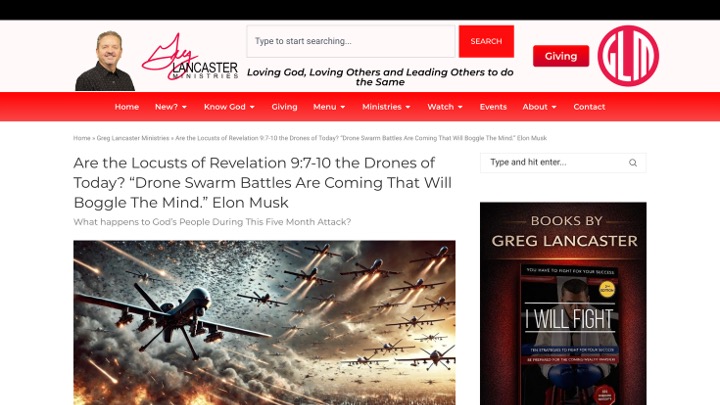
There is a legit way to use the text as a lens — 4D glasses — and see drones and wars as a continuation of the beastly kingdoms of the world; but we are not reading well if when we decode these words, we take them out of the hands of the first readers. Or, take up the challenge of fulfilling them; launching the thousand years when we are taken up to heaven with Jesus — getting our wings.
Some folks in Texas believe Jesus’ ‘millenium reign’ or ultimate return requires the building of a Third Temple in Jerusalem. So, they have been breeding perfectly Red Bulls.

Teaming up with some folks in Israel, who believe their Messiah will come for the first time when this happens.
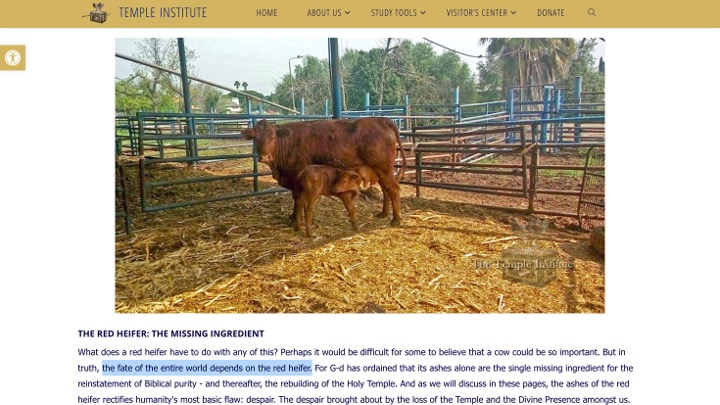
Zechariah prophecies a new temple being built as people come from far away (Zechariah 6:15). The law requires an umblemished red heifer (Numbers 19:1-2), whose ashes are mixed with water to cleanse people, places, and things (Numbers 19:9).
Here is the boomerang coming back — with devastating political consequences in the Middle East.
In 2018, before becoming “Secretary of War” for Trump, Pete Hegseth spoke in Jerusalem about his hope of a Third Temple being built.
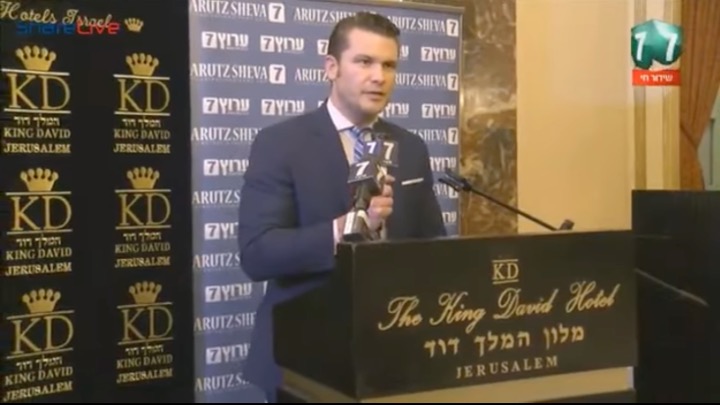
“There’s no reason why the miracle of the re-establishment of the temple on the Temple Mount is not possible.”
Pete Hegseth, 2018 (now US Secretary of War)
Texan cattle breeders have recently sent five red cows to Jerusalem to be assessed.
Temple mountain in Jerusalem is now home to the Al-Aqsa mosque.
These red cows were a red-rag to a bull. In a speech justifying the October 7 terror attacks — the “Al Aqsa Flood” — Hamas said the plan to knock down the mosque and build a temple was their motivation — and these red heifers were their proof.
“They did not hide their intentions of establishing their alleged Temple upon the ruins of the site of our Prophet Muhammad’s night journey, peace be upon him. They brought the red heifers to burn them, and to scatter the water of their ashes as a practical declaration of demolishing Al-Aqsa and building the Temple.”
Mohammed al-Deif, Hamas
The current horrific violence in the Middle East is linked to Christians reading Revelation literally.
That is some boomerang.
It’s either a sign the reading is on the wrong track; or that the end is near.
This could have been avoided by reading these texts as a different kind of literature.
A different reading isn’t compromise; or watering down the text — but grappling with how texts work. LaHaye’s principles are not how ancient humans thought about writing; or how the genre of apocalypse works.
Genre matters for the whole Bible; not just with apocalypses; from page 1 — reading Genesis beside other ancient creation stories and their functions; to Revelation — the Bible is written the way it is to do something, not just say something.
But our readings today are both apocalyptic; they are from a genre that has certain forms that people can play with to do new things — for parody or satire — but that only works if we know their form, and function.
Apocalypses share a formula; they tell a story of a revealing encounter — a journey or vision — usually led by an otherworldly being; inviting someone to see differently.
So… Daniel 7 is a vision in a dream (Daniel 7:1), while Revelation is a series of these visions for John — the one in chapter 20 begins in chapter 17, with an angelic tour guide showing John a bunch of stuff (Revelation 17:3; 20:1).
These encounters involve vivid symbolic imagery. Daniel sees these four beasts (Daniel 7:3). John has already seen a dragon — who we are told is Satan (Revelation 12:3, 9). And these beasts from the sea and land — who serve the dragon (Daniel 7:3; Revelation 13:1, 11).
In Daniel, the beasts run wild until the Ancient of Days crushes them (Daniel 7:22).
In John, both the dragon and beasts are destroyed in fire (Revelation 20:10).
These texts warp space and time; they take humans into heavenly realities, and their descriptions of the end of the world — eschatology — are an invitation to see where trajectories in the present are headed; inviting people to live towards different ends. Their symbolism — even of the end — unveils or reveal things about the author’s present; especially where it’s dangerous to speak plainly. Both Daniel and Revelation follow this form.
Daniel is troubled by these visions, and gets an explanation — which explains things for those reading the text as the events it describes are happening around them (Daniel 7:14-15). These beasts are four human kingdoms (Daniel 7:16-18). Daniel takes Israel’s experience in Babylon — and, in our reading — extrapolates and describes Israel’s experience under other empires — the Medes, Persians, Greeks, and perhaps nodding towards Rome; promising a Son of Man will enter heaven, and rule a kingdom that will last forever; beastly kingdoms will fall, his won’t.
“In my vision at night I looked, and there before me was one like a son of man, coming with the clouds of heaven. He approached the Ancient of Days and was led into his presence.” He was given authority, glory and sovereign power; all nations and peoples of every language worshiped him. His dominion is an everlasting dominion that will not pass away, and his kingdom is one that will never be destroyed.(Daniel 7:13-14)
In another vision, Daniel describes an abomination that causes desolation (Daniel 9:27).
One Maccabees, a Jewish source from between Daniel and Jesus reckons this happens when the Greek king Antiochus Epiphanes installs an image of himself in Israel’s temple…
On the fifteenth day of the month Kislev, in the year one hundred and forty-five, the king erected the desolating abomination upon the altar of burnt offerings, and in the surrounding cities of Judah they built pagan altars.
1 Maccabees 1:54
Jesus links to a more shocking event — I think the ‘destruction of his body, the temple’ — but others see it as the destruction of the temple in AD 70 — or an event we are still waiting for (Matthew 24:15-16).
He is talking about the coming of the Son of Man — where Daniel saw him entering the throne of heaven (Matthew 24:27). The catch for the literal folks looking to the future, is they take all this literally, except when Jesus says this will happen in his generation.
Truly I tell you, this generation will certainly not pass away until all these things have happened
— Matthew 24:34
What is the function of Daniel’s genre when we see it applied to political empires and these sorts of events in present and near future of his readers?
Andy’s book gives a handy guide to an apocalypse; they pull back the curtain; using descriptions of unseen realities to say true things about the physical world, and spiritual realities.
It is all about pulling back the curtain, often through dreams or visions, on the unseen spiritual realities determining human destiny.
Andrew Judd, Modern Genre Theory
They expose the pretension and even the spirit of rebellion behind these powers in a way that invites people they hurt to find meaning and hope amidst their distress.
To experience an apocalypse is to peer behind the curtain of history – to see through the pretension of unstoppable human powers and grasp reality as it truly is.
Andrew Judd, Modern Genre Theory
So Daniel, for example, is giving assurance to God’s people ruled by a series of violent regimes, that it will work out; that they are not ultimate, but God will vindicate them, so they should faithfully worship him, and live differently — like Daniel.
Daniel is providing assurance of an eschatological vindication for oppressed people
Andrew Judd, Modern Genre Theory
An apocalypse is spiritual resistance literature designed to cultivate fruitful faithfulness and hope in God.
Let’s try this boomerang out for Revelation — which picks up where Daniel leaves off; but after the Son of Man is enthroned in heaven.
It turns the 4D glasses onto Rome; a new beastly empire (built on seven mountains) — so we also see any empires like — where God’s people are being persecuted or facing the temptation to worship the culture’s gods and conform — as beastly.
It doesn’t just picture Rome as a beast following a dragon — it pulls the curtain back and says look at heaven and see the Son of Man ruling with the Ancient of Days; worship them; do not side with devilish powers.
This is how he starts his apocalypse from Jesus…
The revelation from Jesus Christ, which God gave him to show his servants what must soon take place.
— Revelation 1:1
This could also be of Jesus — the unveiling of Jesus. For God’s servants — to show what will soon take place — not ‘what will take place in 2,000 years’ — but a picture that has meaning in their situation, if they see reality unveiled.
He calls Jesus the Son of Man (Daniel 7:13; Revelation 1:13). But also pictures Jesus as being like the Ancient of Days in Daniel 7 — with radiant white hair (Daniel 7:9; Revelation 1:14), and like this figure Daniel meets in a later vision… eyes blazing with fire (Daniel 10:6; Revelation 1:14), bronze feet (Daniel 10:6; Revelation 1:15), and a voice of rushing waters (Daniel 10:6; Revelation 1:15). This melting pot of images deliberately links his content and form to Daniel; which also connects the function of his writing. John is bringing all this together — and — seeing Jesus like he saw him at the transfiguration; face shining like the sun (Revelation 1:16).
John keeps fixing our eyes on this vision of Jesus; so despite the other images — the beastly machinations of the Empire chewing up and consuming human lives — especially God’s people, he wants us to see Jesus reigning and bringing justice.
The bad guys do not win.
This imagery is there right before our reading; Jesus — the dragon slayer who is named Faithful and True; whose eyes are blazing fire; who is named the Word of God… with a sword-mouth; who takes the beast, and the kings with it who want to go to war, and… He wins.
I saw heaven standing open and there before me was a white horse, whose rider is called Faithful and True. With justice he judges and wages war. His eyes are like blazing fire, and on his head are many crowns. He is dressed in a robe dipped in blood, and his name is the Word of God. Coming out of his mouth is a sharp sword…
Then I saw the beast and the kings of the earth and their armies gathered together to wage war against the rider on the horse and his army. But the beast was captured… (Revelation 19:11-15, 19-20)
The genre John uses calls people to live with hope; to keep trusting God; no matter how powerful the violent empires look, or how compelling their gods — and achieves this purpose for its first readers… and for us.
An apocalypse is like a set of 4D glasses to help us peer into heaven; to see the world — and even to properly read God’s word. Revelation is full of intertextual references to the Old and New Testament; it is reflecting and refining and integrating imagery from the whole story; by bringing together this data — these references, and allusions, and images — Revelation invites us to see the whole Bible as apocalyptic — a text given by God to unveil heavenly realities and call his people to be faithful in the midst of systems opposed to him that tempt and persecute.
The Genesis story reveals that Babylon’s stories and gods are hollow and destructive.
The prophets, like Daniel expose these empires and their worship as beastly.
The Gospels unveil Jesus as the ultimate son of God; not Caesar…
Now. You might disagree — you can definitely be a Christian and think LaHaye is right; or have a different view of the thousand years and Jesus’ rule and return.
But we intuitively know genre matters; we know there is no crystal vault in the sky separating heaven and earth; you can’t get to heaven in a rocket ship. We know if we drill down deep we won’t find a fiery pit full of demon ghosts.
We know genre matters, and that words can be true literarily not literally.
The genre — the form and formulas that shape every text — are part of how God speaks through humans to achieve his purposes; to keep us out of other kingdoms, and pull us towards an encounter with the glorious Jesus.
Genre matters with parking tickets and love letters, and it matters with every book of the Bible, and how we read has consequences.
One guy in Texas obsessed with Red Bulls can throw his boomerang and an evil regime will use it to justify a terror attack — now, geopolitics in the Middle East are more complicated than just Red Bulls; but politics and empire are always theological; always driven by a view of the end of the world and the ends of the world; and Christianity has a real impact.
Reading the text right was life and death for an Israelite in Babylon — or under Greek rule; or a Christian in first century Rome facing the choice of whether to bow down and worship Caesar, or stick with Jesus. Revelation is part of the Bible’s explanation for why people will choose the wealth and power of a violent empire; why they will crush and kill and destroy — cause of the sinister power behind the throne, and how it invites us into a different story to live towards different ends.
Let’s boomerang test this. We do not need to claim seven mountains, or build a new temple, or breed Red Bulls.
Zechariah is clear — God’s Messiah — the Branch of the family of David — builds the temple of the Lord and sits on the throne as a priest.
‘Here is the man whose name is the Branch, and he will branch out from his place and build the temple of the Lord.’ It is he who will build the temple of the Lord, and he will be clothed with majesty and will sit and rule on his throne. And he will be a priest on his throne
— Zechariah 6:12-13
Jesus doesn’t need water with bulls’ ashes; he makes purification by his blood; so his Spirit can dwell within his people.
And — here is my millenial card on the table — the new age begins; the Son of Man reigns, and the temple in Jerusalem is replaced, when the curtain tears, and God’s Spirit descends on and dwells in the church; so we are the living temple.
The destruction of the temple in AD 70 is a sign God is done with that spot — but also a sign the Son of Man is reigning in heaven; like Jesus promised, and John sees.
The thousand years tell us beastly empires do not last forever; those who choose them end with them; they might look like a path to prosperity or power or life — but they are a dead end. It’s the vision of Jesus reigning that holds us fast as empires rage, and the dragon thrashes about. Defeated.
Jesus already wins.
He reclaims the mountains and — as we saw last week — calls people from those powers and principalities; those mountainy empires.
We do not have to look for signs, or fulfil prophecies, or breed Red Bulls — in every moment we are called to look to the glory of Jesus, and then look at the world.
To not be tempted by beastly powers who rule now, but be ruled by Jesus; becoming a faithful resistance; living a fruitful alternative vision of life amidst death cause we peer into heaven, where Jesus reigns — and see the end and ends of the earth.
This isn’t just about the politics of empire — or how we participate in politics; it’s about the way I live in my relationships; in my work; in my home — an apocalypse teaches us there are ‘4D’ spiritual stakes in every moment; and to live in reality seeing Jesus as the victorious king who wins by dying and rising — being faithful to God — so that when we see him this way, we can faithfully die to our grasping selves and the kingdoms we build; and take up our cross daily, trusting that it will work out in the end; that we too will be raised up.
That is a boomerang that works for me, and I hope, for you.