Month: September 2010

Wrapping up Greece

We’re in Turkey today, and for the rest of this week, and possibly have a more reliable in hotel wifi connection, so we’ll see if blogging improves.

We spent a couple of days in Greece touring first century entertainment precincts to get a feel for the cultural life of the citizens Paul addresses in his letters. Roman culture was entertainment heavy. The entertainment, like everything else, was filled with cultural propaganda and designed to reinforce, in the regions, the supremacy of the emperor.

Sport was a massive deal. In fact, the highest paid sportstar of all time was a second century Roman charioteer.

The very best paid of these—in fact, the best paid athlete of all time—was a Lusitanian Spaniard named Gaius Appuleius Diocles, who had short stints with the Whites and Greens, before settling in for a long career with the Reds. Twenty-four years of winnings brought Diocles—likely an illiterate man whose signature move was the strong final dash—the staggering sum of 35,863,120 sesterces in prize money. The figure is recorded in a monumental inscription erected in Rome by his fellow charioteers and admirers in 146, which hails him fulsomely on his retirement at the age of “42 years, 7 months, and 23 days” as “champion of all charioteers.”

His total take home amounted to five times the earnings of the highest paid provincial governors over a similar period—enough to provide grain for the entire city of Rome for one year, or to pay all the ordinary soldiers of the Roman Army at the height of its imperial reach for a fifth of a year. By today’s standards that last figure, assuming the apt comparison is what it takes to pay the wages of the American armed forces for the same period, would cash out to about $15 billion.

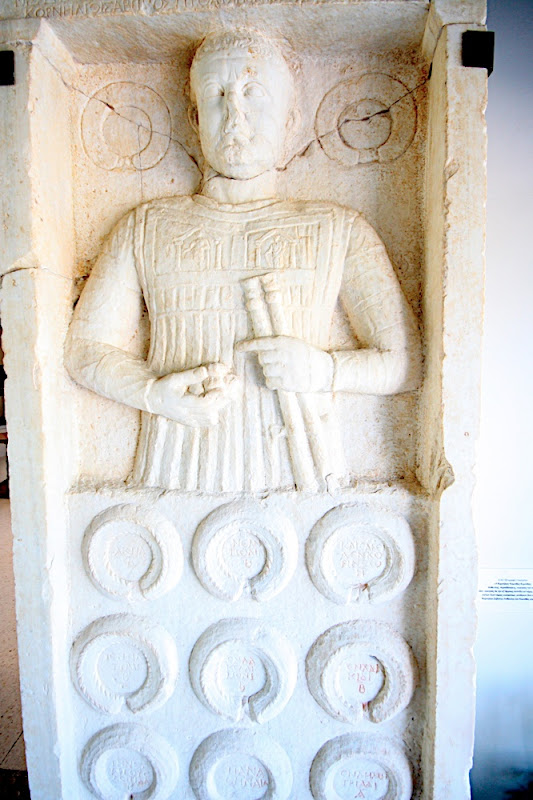
Here’s a picture of a first century sporting superstar.
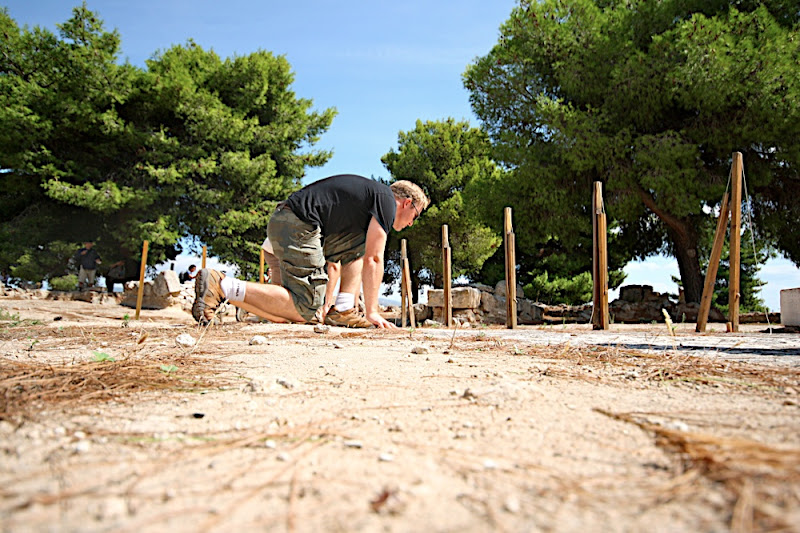
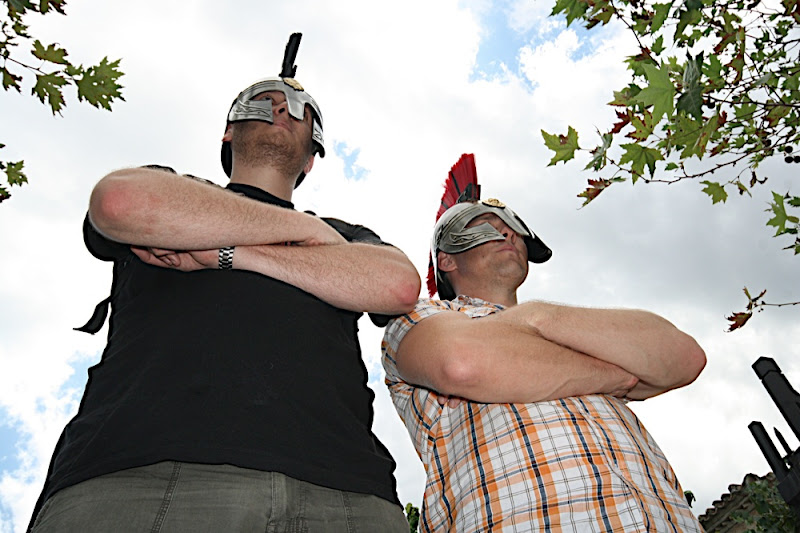
Here’s a reenactment.
Roman bathhouses would have been a hotbed of political and social intrigue – and an important part of the daily routine of the elite. Everyone went to the baths, the time of day you arrived (and the heat of the water) was determined by your social status.

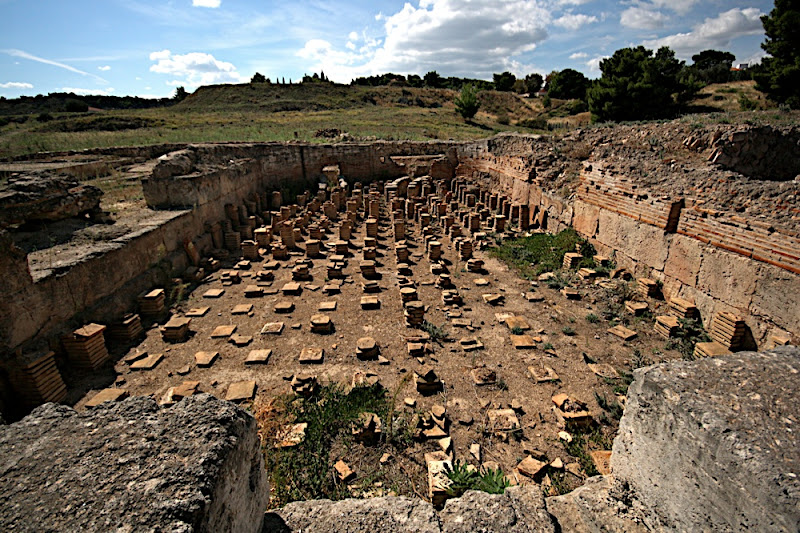
We saw some bath houses at Isthmia, as well as the famous Corinthian Isthmus, which gave the nation controlling the city of Corinth control of trade in the region.
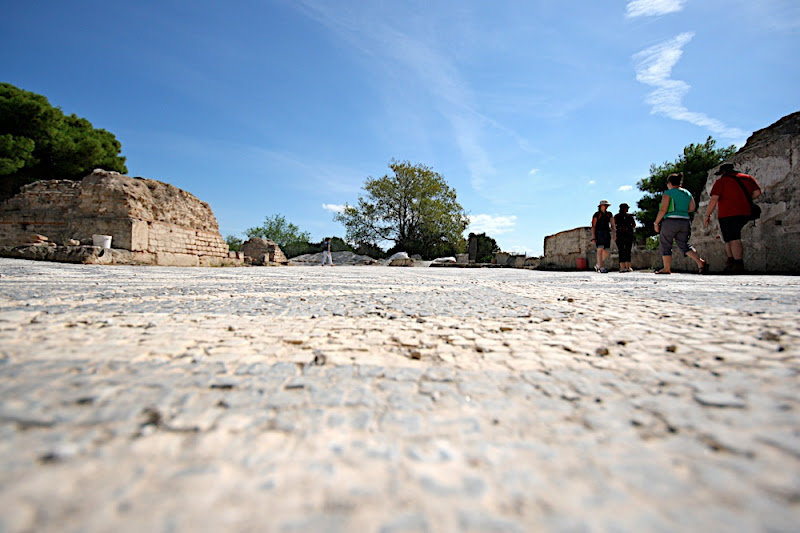
We stopped at Cenchria where we may or may not have walked through the fenced off ruins of a house that may or may not have belonged to Phoebe (a patron of the city who looked after Paul). We looked for some of Paul’s hair, because he had a haircut there as he departed.
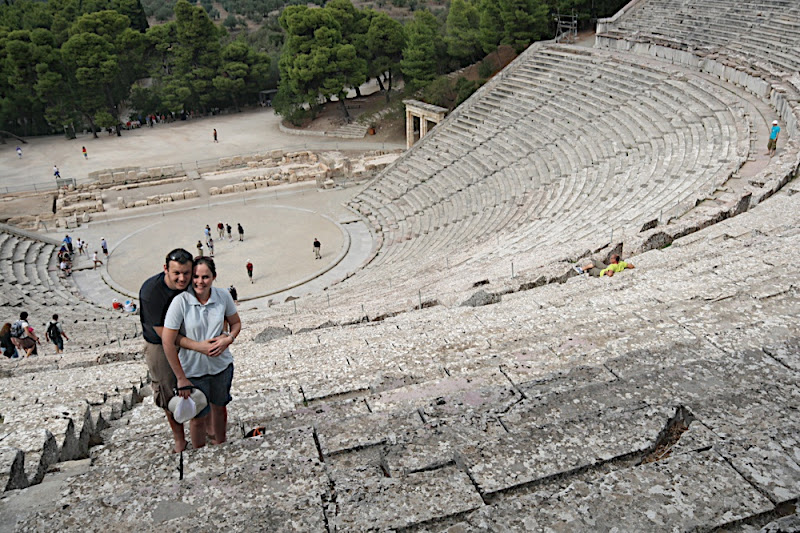
Epidaurus has an immaculately conserved theatre, where the acoustics are demonstrably impressive. A tour guide from another group dropped coins in the centre of the circle, and tore paper, and we could hear it sitting in the back row.

In Athens we stood atop Mars Hill, an experience that supports Bruce Winter’s contention that the Areopagus Council probably met in a room in the marketplace rather than on the hill, which was also used for execution by fatal drop.
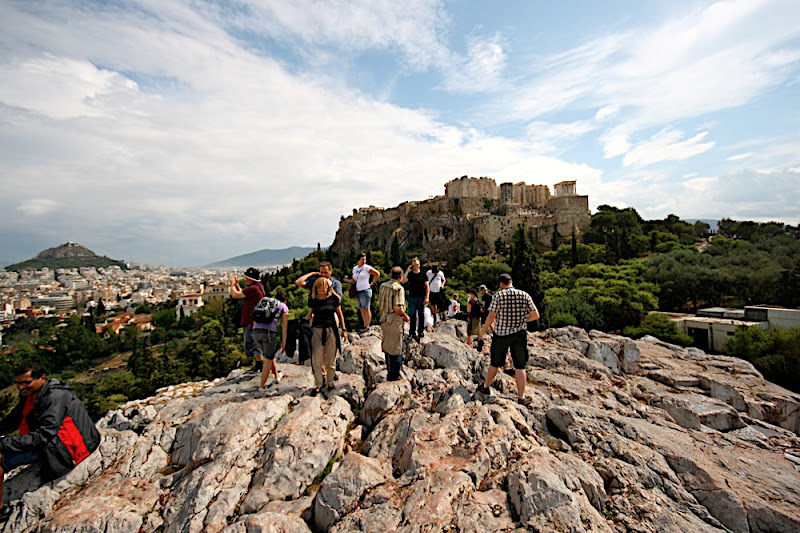
This is the spot Bruce suggests the council, whose job it was to introduce new gods to Greek life, would have met.
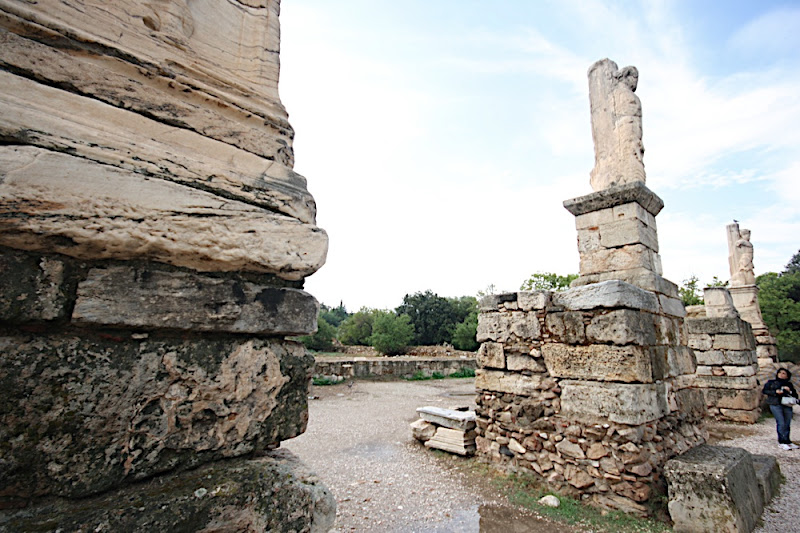
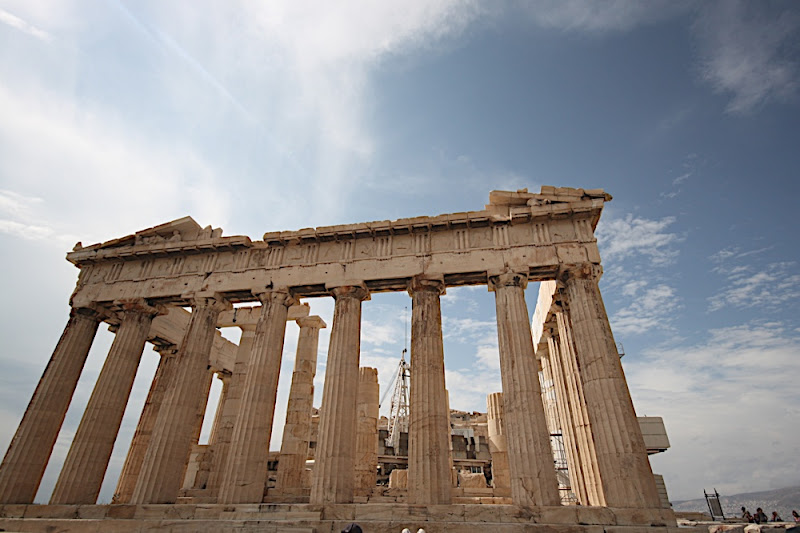
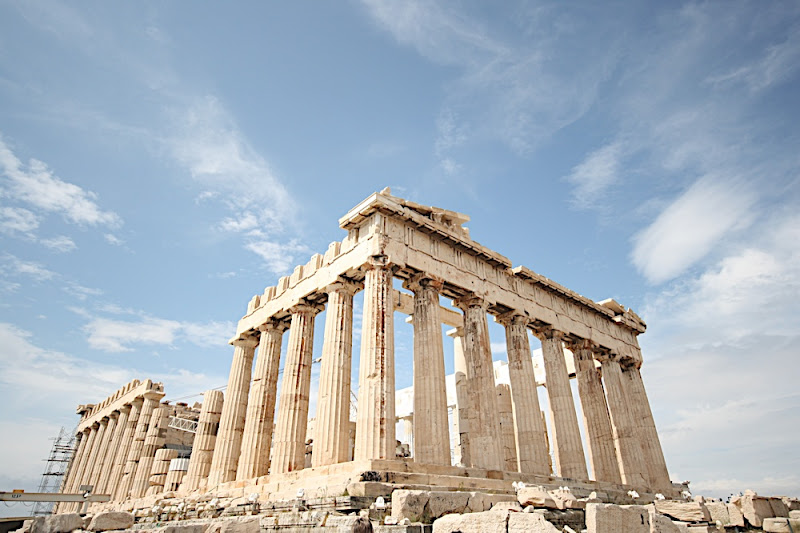
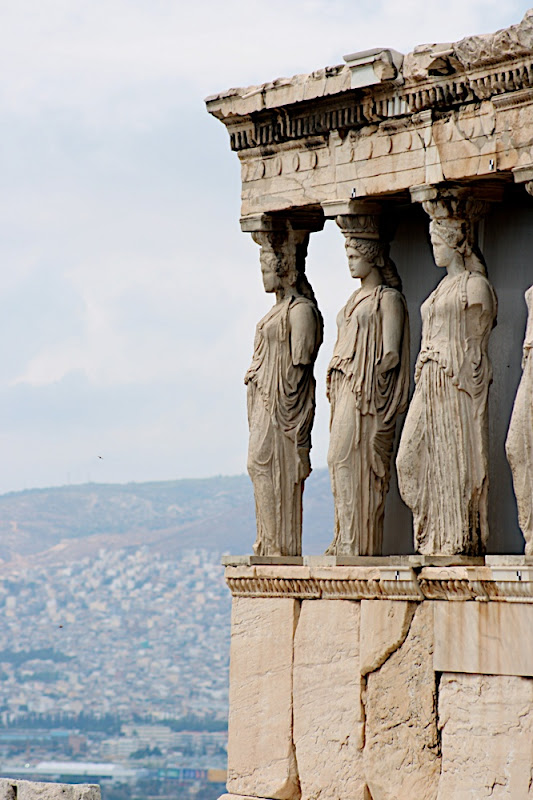
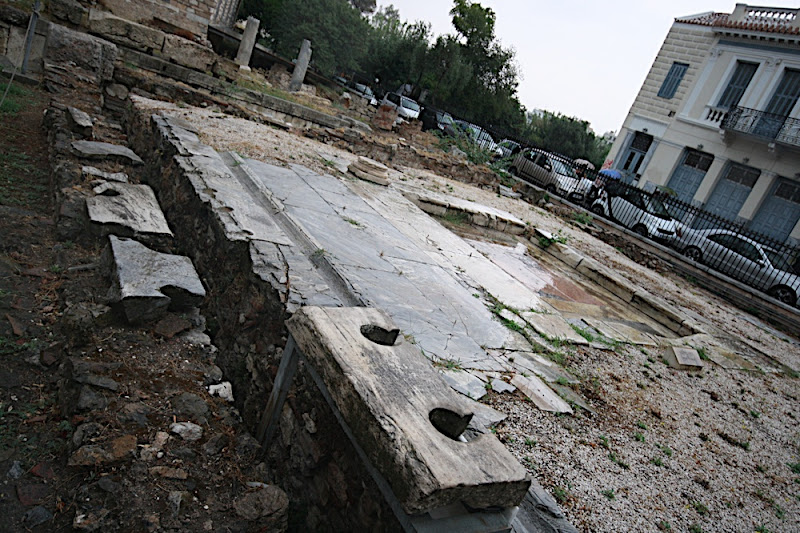
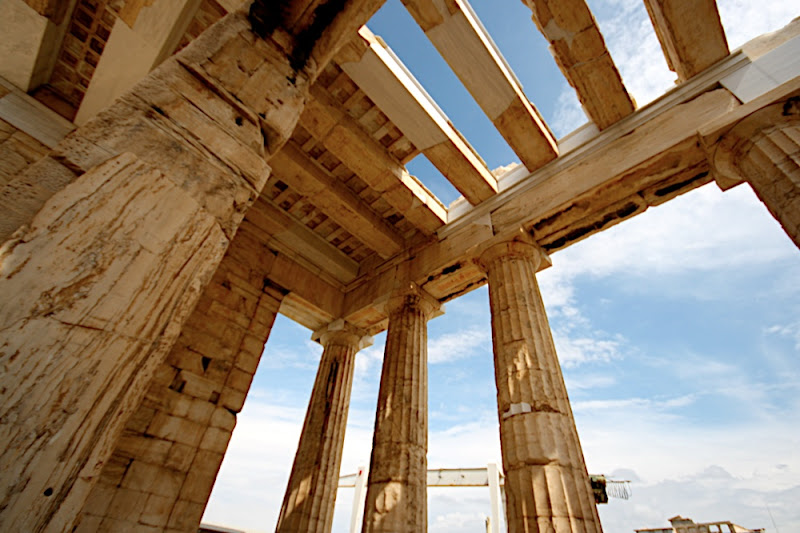
The Acropolis was amazing. Athens was doubtless a city dominated by religion. The Parthenon overlooked the metropolitan sprawl and would have been visible from all corners. The hill was dotted with alters and minor temples, including a small Imperial Cult temple next to the Parthenon, the Romans had a separate marketplace which was home to the architecturally significant temple to Roma, and a public latrine.

Here’s the latrine.
Some pictures from the Acropolis…
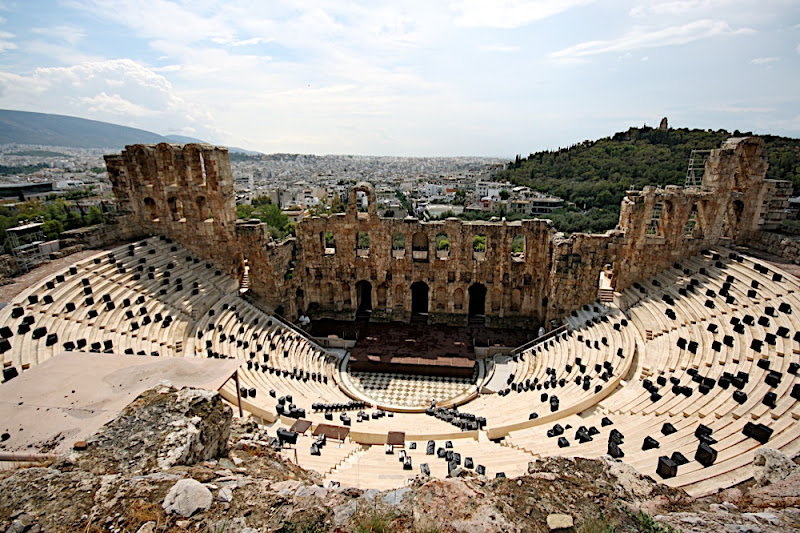
The Athenian theatre was renovated by Nero to celebrate his victories in some oratory competitions.
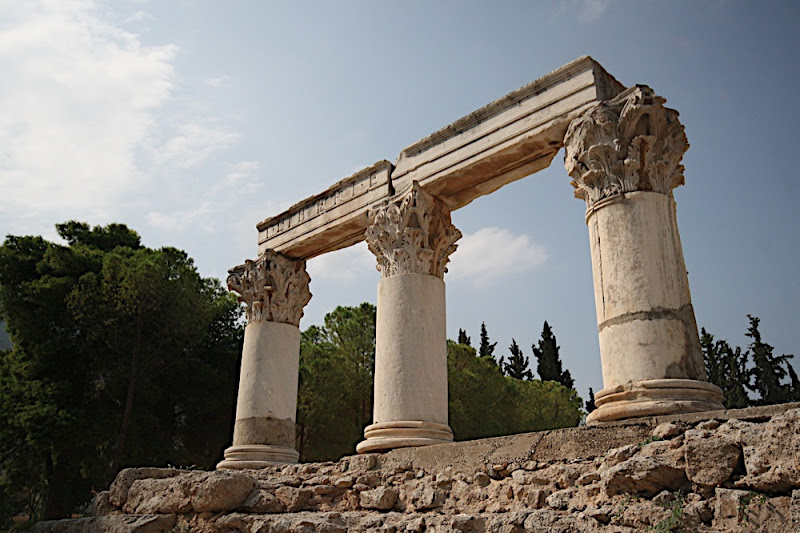
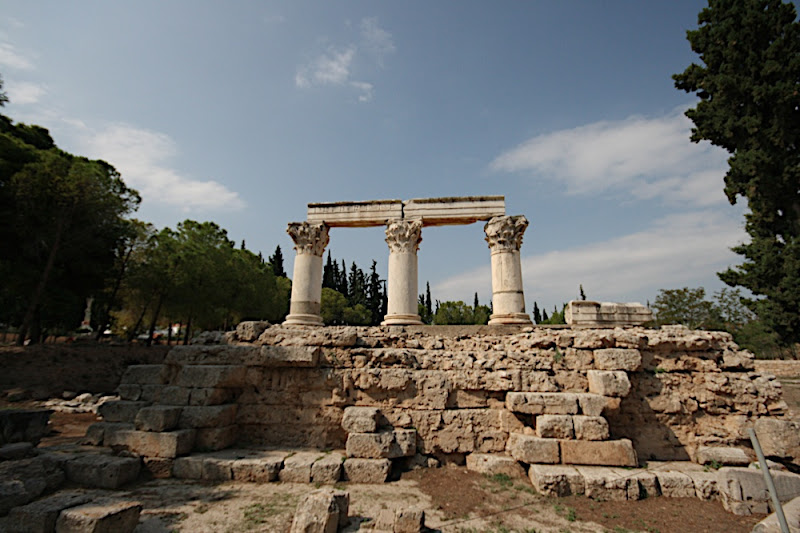
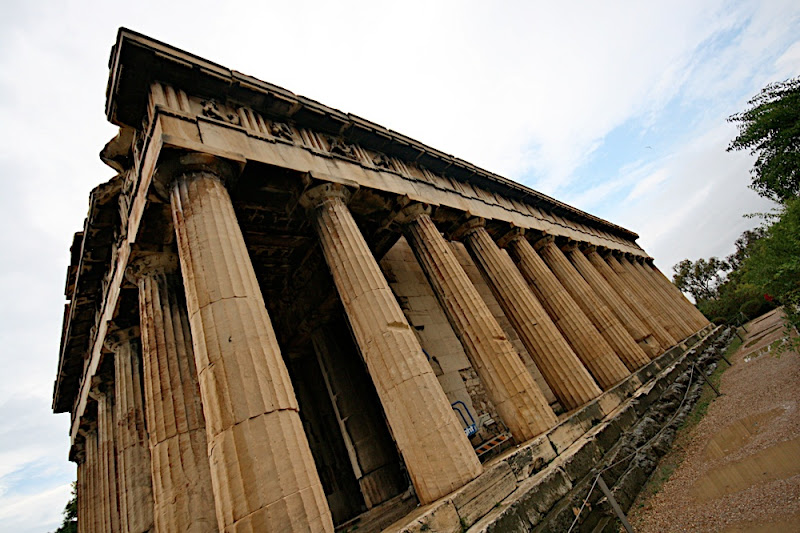
The agora is dotted with religious and political propaganda. Here is another temple, still standing, that overlooks the shopping precinct.
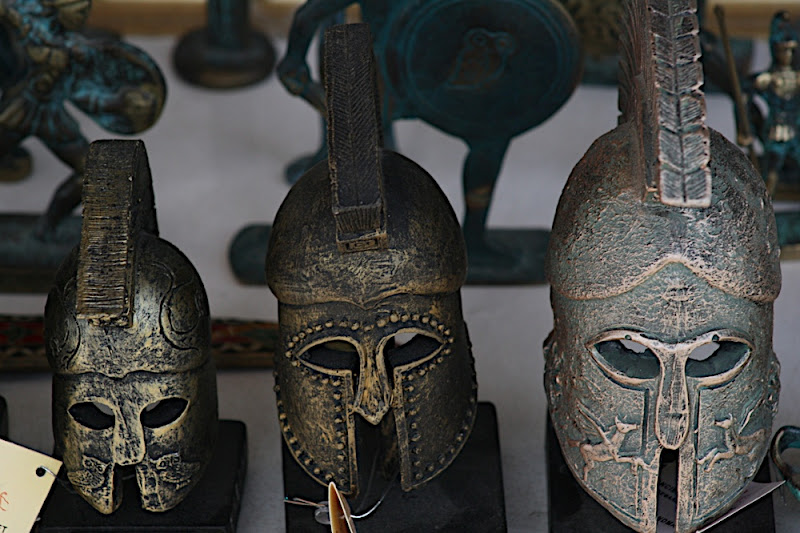
We finished our time in Greece with a spot of souvenir shopping in Corinth.
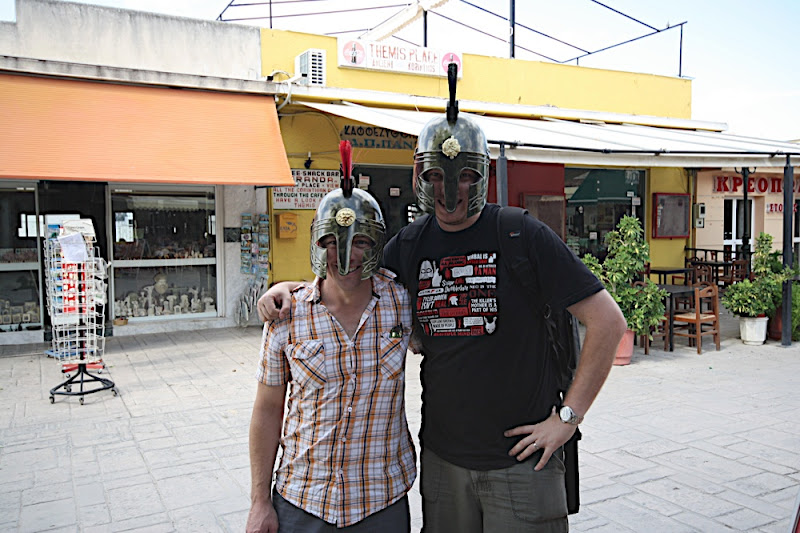
Capturing the fort Spartan style.
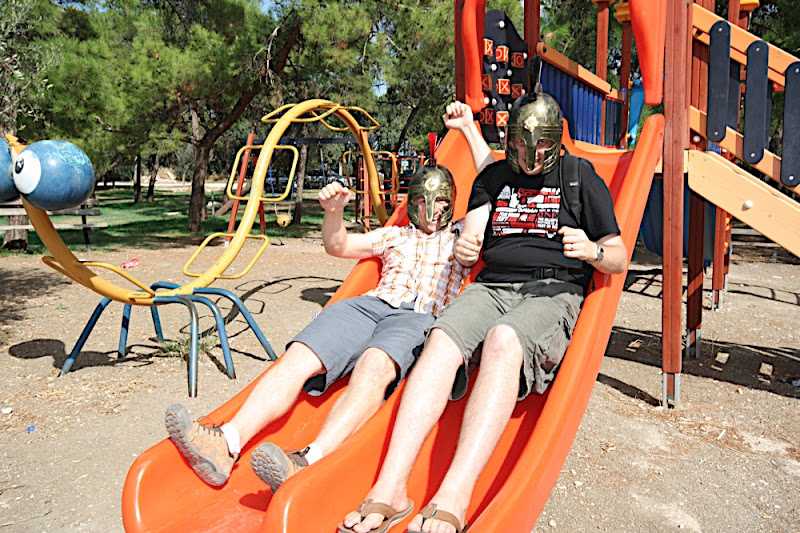
We’re going to wear these helmets to the Presbyterian Assembly when we’re all grown up.
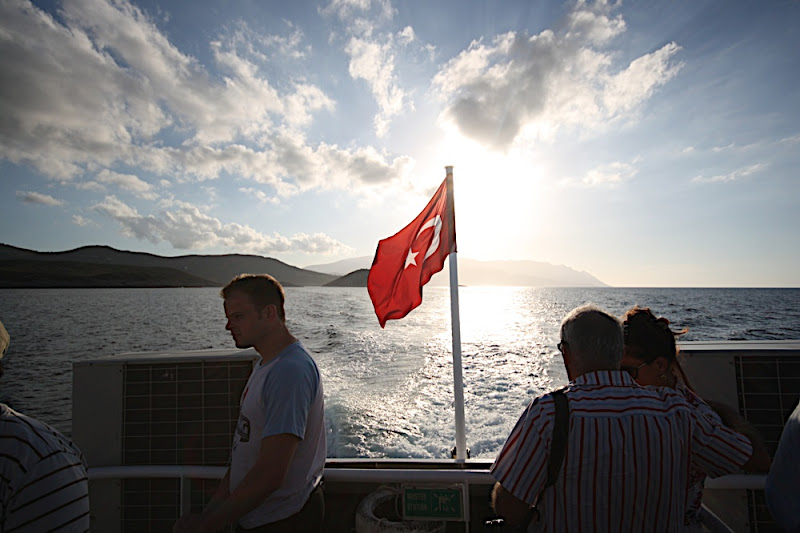
And then caught the slow boat to Turkey.
We’re all feeling slightly more angelic as a result of our time treading the footsteps of Paul.
Turkey feels like being back in the first world, Greece, thanks to the Global Financial Crisis, is a country of empty billboards and layabout retirees sitting in cafes. The economy is stagnant. It feels like a first world country slipping into the third world.
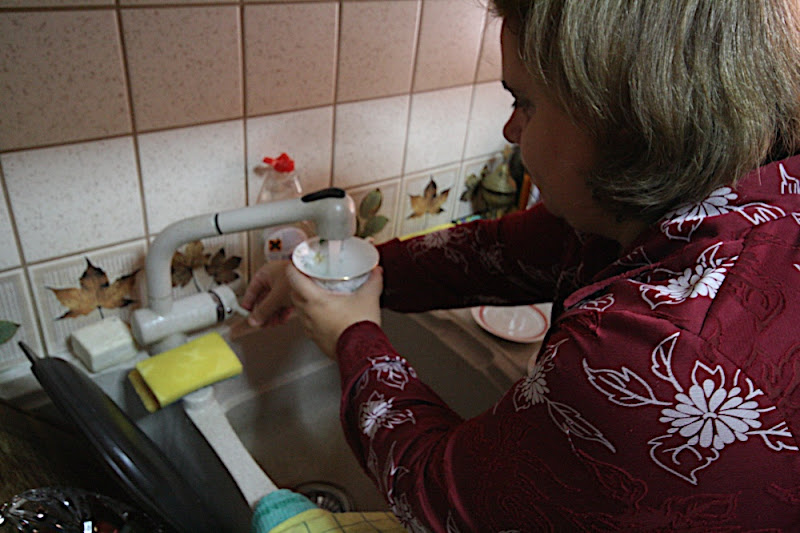
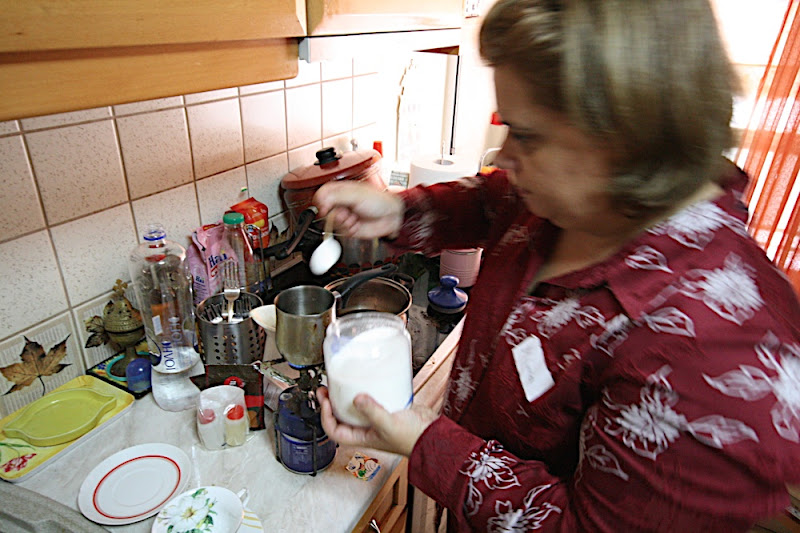
How to make Greek Coffee

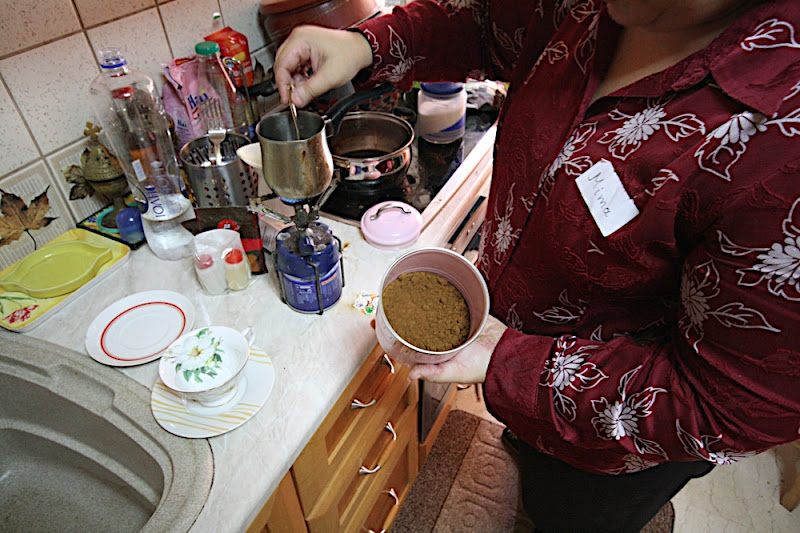
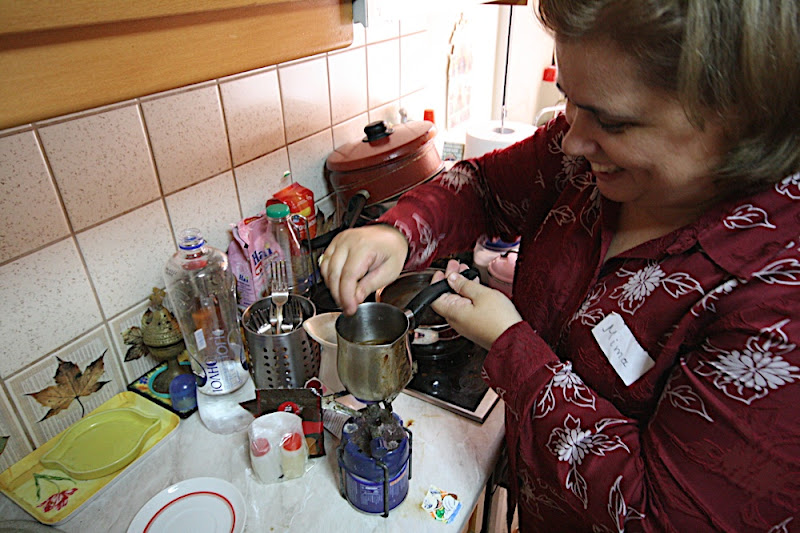
I had a bit of a crash course in making Greek coffee yesterday. We had an incredible lunch, hosted by a Greek family, Mima took me through the steps. I photographed them for your benefit. Basically you are trying to make coffee that is almost toffee.

You start by measuring the amount of water you want for your cup.

Then you add two and a half teaspoons of sugar to your heating water.

And two and a half teaspoons of very finely ground coffee.

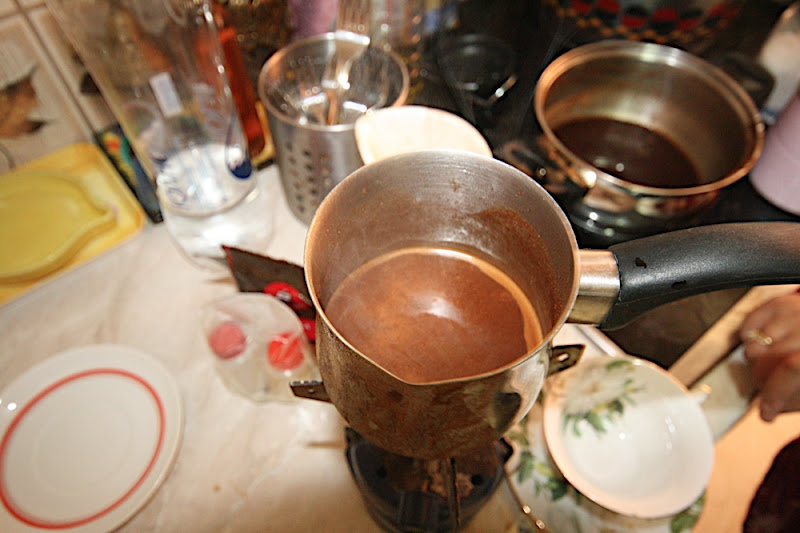
Then you stir. And stir. And stir. Forty times clockwise, then forty times anti-clockwise.

You wait for the coffee to visibly thicken – like the first sign that sugar is caramelising.

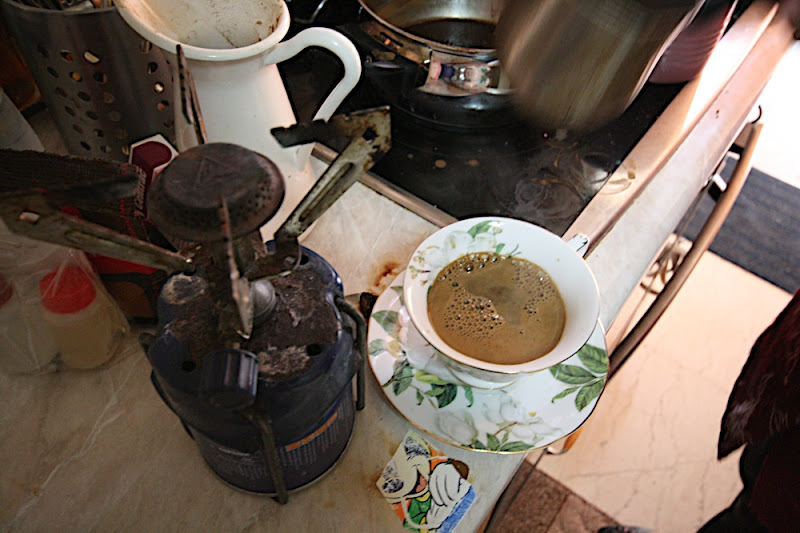
Then you serve it immediately.

How to make Greek Coffee

How to stop street preachers

Ask where the pancake mix is…

EDIT: I should clarify that the preachers being heckled in the video were apparently Westboro Baptist style preachers so I think this is a case of meeting nonsense with nonsense.

My Big Fat Greek Adventure: Post Three

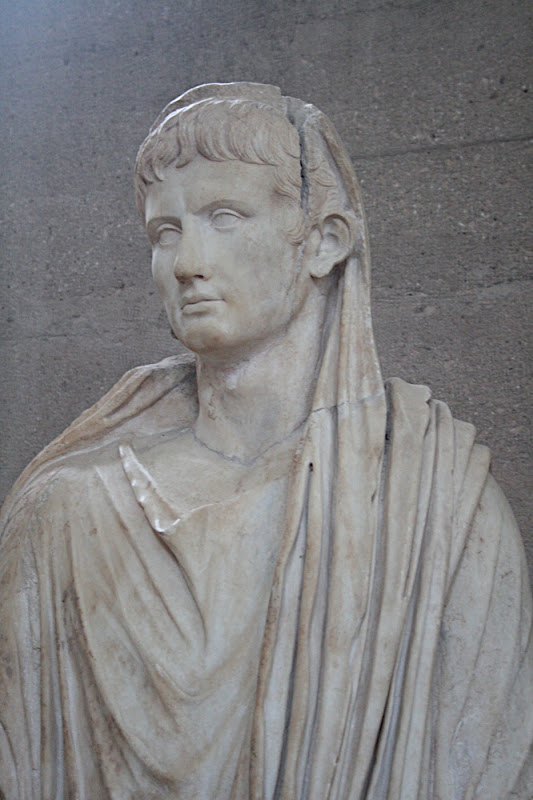
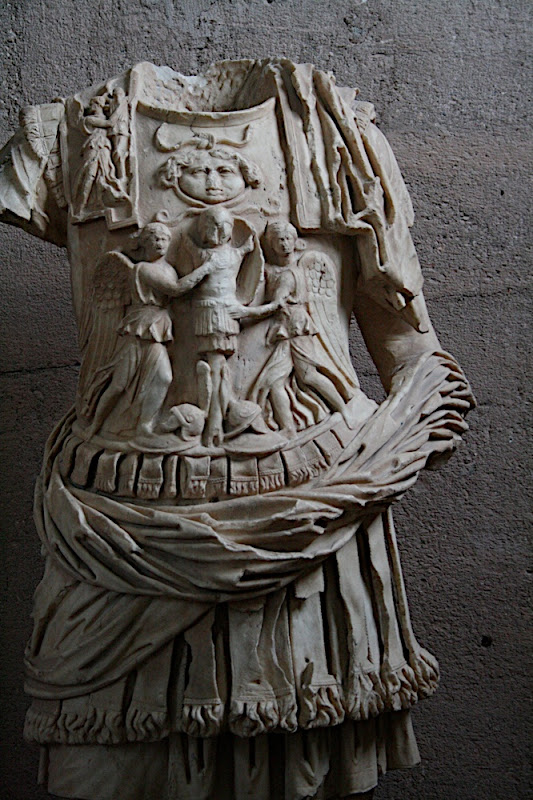
The morning of day two was more time spent on site at the archeological dig in Ancient Corinth. We walked through the museum where there are plenty of statues of emperors both deified and “living.” Plus statues of soldiers and other trinkets uncovered on site.

The museum gestapo wander round the halls enforcing their two photographic rules – no flash, and no posing.

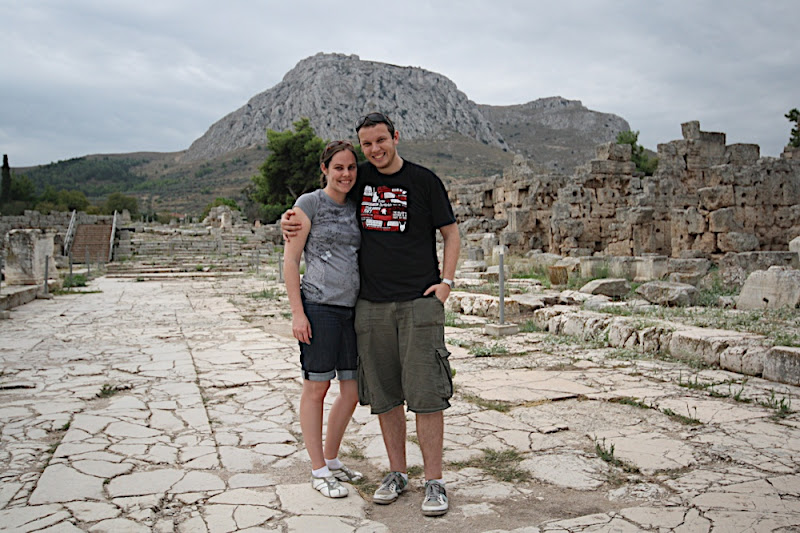
After wandering the museum we wandered the site. Standing on site gives a phenomenal picture of the intersection of religion, law, and commerce in the city, and the way this intertwining would have presented major problems for Christian converts.

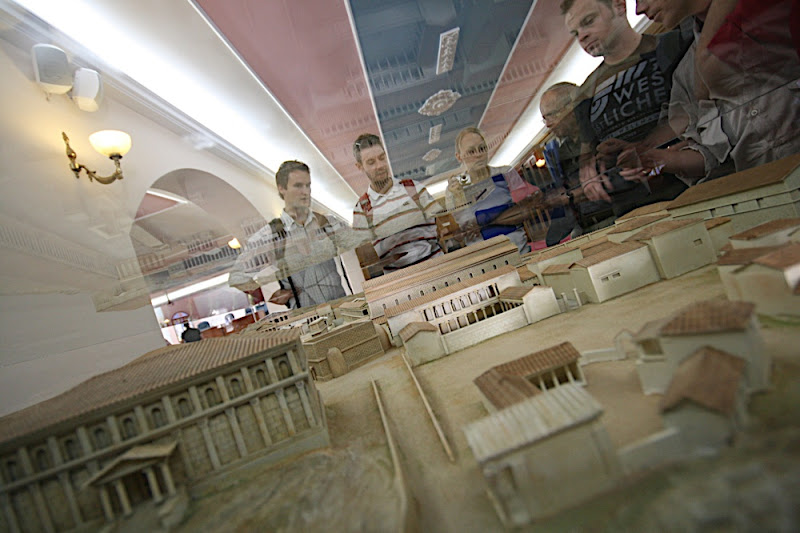
Here’s a model of the city from the Orthodox conference centre.

Roman culture was status heavy – life was all about how important you were, and becoming more important. So the radical realignment of identity that comes through being sanctified in Christ and being statusless would have felt like having the marble roads pulled from under your feet.

Statues and buildings were public relations propaganda. Which I’m finding particularly interesting. The placing of buildings, the statues therein, and even the material they were constructed from said something about the people who frequented them and served to build that status.

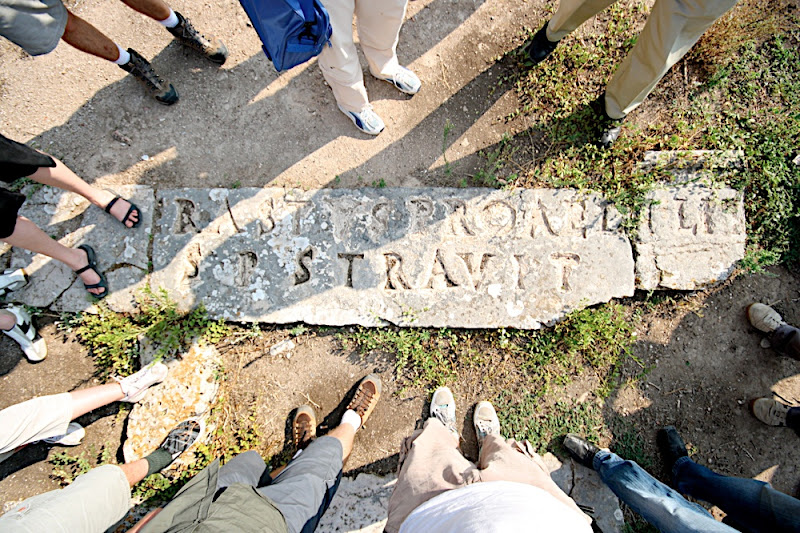
This inscription, in a footpath, is possibly linked to Erastus, the treasurer of Corinth, mentioned in Romans 16. Bruce says that Paul’s commands to do good in Romans 13 specifically referred to individuals acting in whatever capacity they had to serve the city. He says this looked like making a financial benefaction for a project, or running for office. People who ran for office had to promise benefactions, and this footpath inscription says that it was produced under the Aedileship of Erastus.

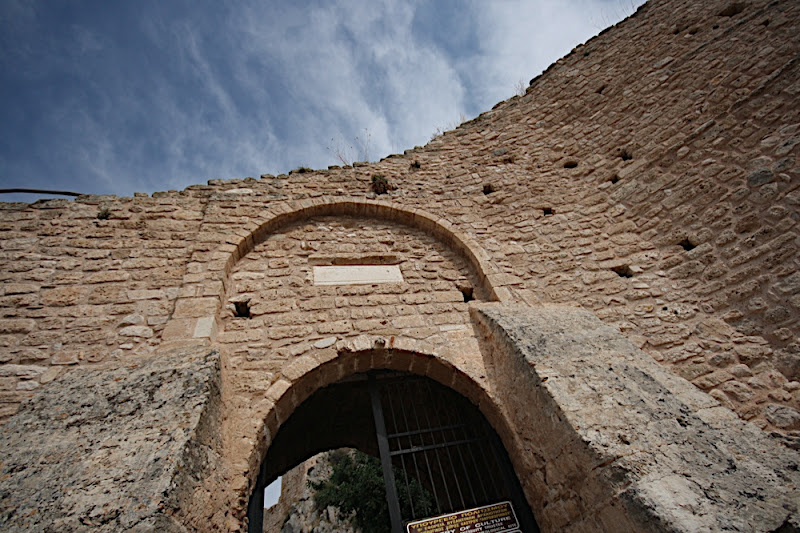
At some point in the process we climbed the massive hill that sits behind Ancient Corinth, it’s called the Acrocorinth, which means the Corinth hill. There is an old school castle on top. It was almost cooler than checking out anything to do with Paul. Almost.

More photos are in my Picasa album, photos of the people I’m on the trip with are available on Facebook if you’re my friend.

Bad Christian Music Week: Day 5

This one was on the Gruen Transfer, but I’ve been saving it for a rainy day.

My Big Fat Greek Adventure: Day Two

We hit Ancient Corinth on day two in Greece – our visit to the site was sponsored by the Bishop of Corinth. His minion who wore black, carried worry beads and looked like a gangster watched our trek around the site, before we made our way to a newly minted “St Paul Centre” for an absolutely opulent (and free) lunch put on by the Bishop.

The site itself is amazing. There’s a museum filled with relics that have been uncovered in the dig. The chief archeologist gave us a run down of the landscape. The city of Corinth sits under a pretty impenetrable fort (more on that later) atop the Acrocorinth, it has a steady supply of water, is resource rich, and sits beside the Corinthian isthmus, a vital trade link between two major oceans.

The city was pulled apart by the Romans, who later rebuilt over the top of the Greek foundations in the late BCs. The dig has uncovered much of Roman Corinth, and gone deeper into Greek Corinth. One of the best bits from the head digger was a look at a little secret passage that they found in an underground Greek temple (no longer underground).

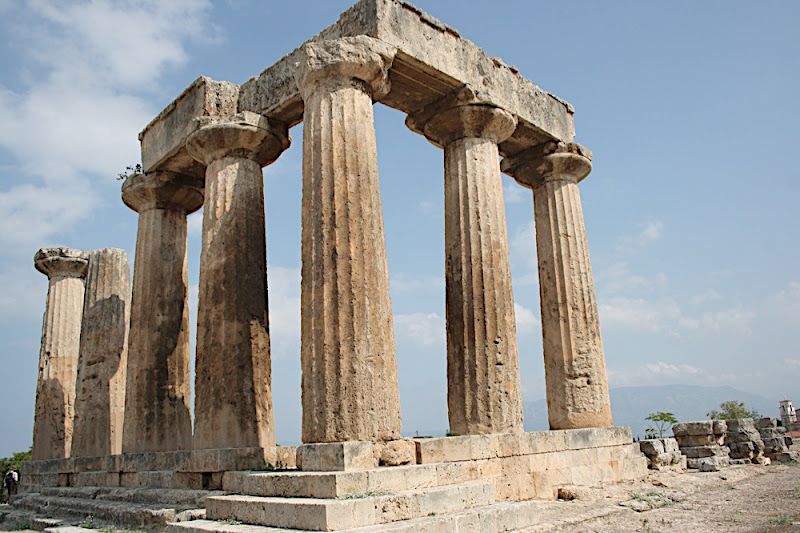
On the Roman Corinth front, the city puts the New Testament into real perspective – which I guess is the point of the visit. Standing in the centre of the city square you’re struck by the intersection of commerce, justice and religion. Roman business and Roman Law were inextricably religious. And the construction of the city and placement of idol statues (especially of deified emperors) hammered that home. The temple of Apollos is pretty impressive (some of its pillars still stand) but the imperial temple dominated the landscape, and could be spotted from just about anywhere in the city.


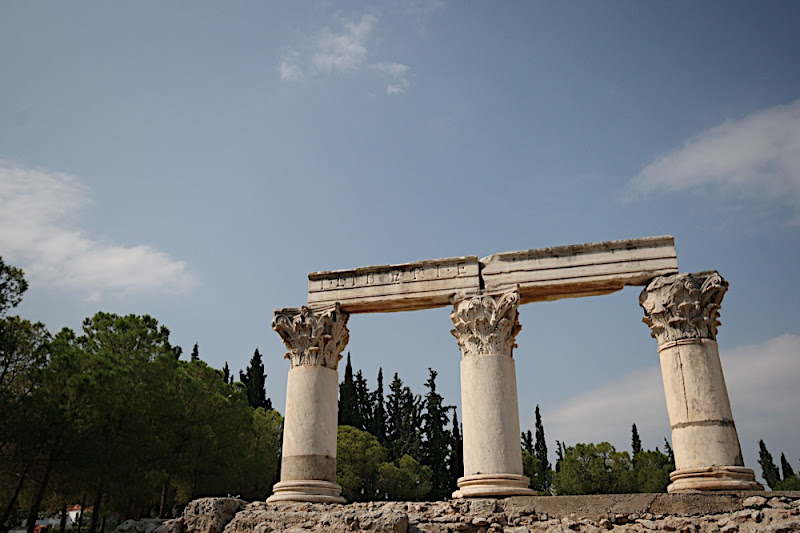
The imperial temple – the pillars have been slightly rebuilt, though much shorter than they would originally have been.


The temple of Apollos

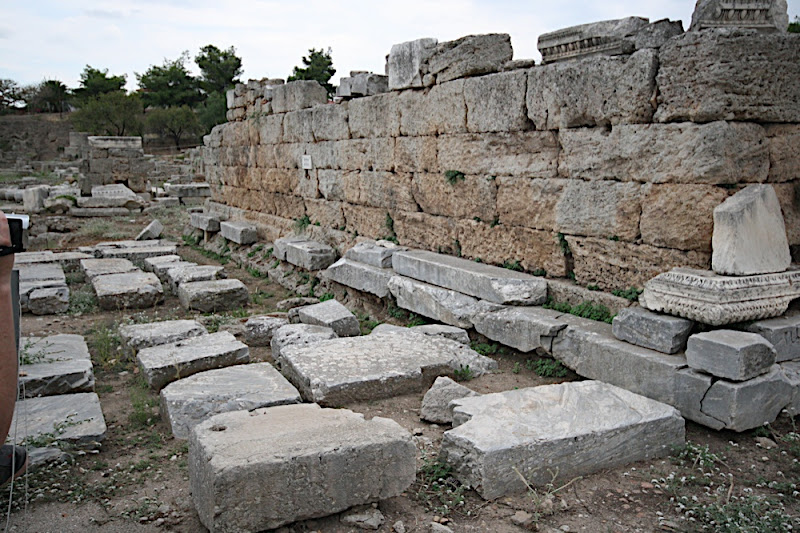
The coolest bit of the trip (Bible wise), was standing in front of the Bema, or justice seat, where Paul appeared before Gallio in Acts 18.

12 But while Gallio was proconsul of Achaia, the Jews with one accord rose up against Paul and brought him before (AC)the judgment seat,

13 saying, “This man persuades men to worship God contrary to the law.”

14 But when Paul was about to open his mouth, Gallio said to the Jews, “If it were a matter of wrong or of vicious crime, O Jews, it would be reasonable for me to put up with you;

15 but if there are questions about words and names and your own law, look after it yourselves; I am unwilling to be a judge of these matters.”

16 And he drove them away from the judgment seat.

This is one of the only geographic points we have for Paul’s visit – so as we stood here and looked around, not only could we imagine the streets alive and an impending riot being quelled by Gallio’s prudent judgment, but we were standing somewhere where Paul himself stood, and where an event of some significance in the New Testament occurred. Gallio’s judgment, and reputation as a juror, meant Christianity was suddenly a legal religion in the empire.

There have been a couple more “aha” moments that will doubtless be the subject of subsequent posts. Stay tuned for our visit to a real castle. It was incredible.

Bagpipes and Unicycles

Because everybody needs to multitask.

Bad Christian Music Week: Day 4

Production values. That’s what Christian music is all about.

My Big Fat Greek Holiday: Post One

Day One of our “New Testament In Context” trip involved flying. Lots of flying. 24 hours of flying with Singapore Airlines (albeit with a stopover in Singapore). I slept a bit, watched a couple of movies I’d been hoping to see (Robin Hood, Kick-Ass, and the A-Team), and tried to avoid deep vein thrombosis. The service on Singapore Airlines was pretty spectacular.

When we arrived in Athens we went from plane to train to automobile. After a few little travel dramas we made it to our accommodation, checked out a cafe in the heart of Old Corinth (next to the archeological dig), and tried to stay awake for dinner. Dessert was a pretty spectacular piece of baklava.


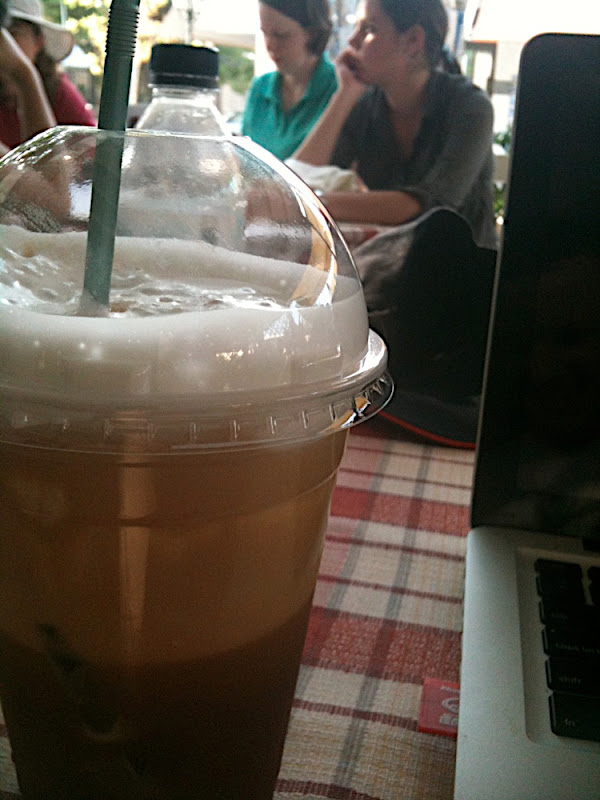
Greece is pretty cool. Toilet paper isn’t allowed to be flushed so all the toilets have little bins next to them. They smell bad. There are stray dogs wandering the streets at every turn. People ride scooters and motorbikes without helmets. The coffee is interesting. I ordered a cappuccino and received some sort of iced coffee with cream and milk that had been whipped in a milkshake maker.

The men gather in the streets after dark to sit in restaurants together. They all look old and stereotypically Greek.

Bruce, our principal, is a minor local celebrity. The lady who owns the restaurant we’re frequenting remembers his name from four years ago.

The souvenir shops have cool Greek helmets and stuff. I want to buy one to wear to Presbyterian Assembly in a few years.

I’m putting photos in this gallery on Picasa, and I’ll post some stuff about how Corinth fits in with the New Testament in subsequent posts.

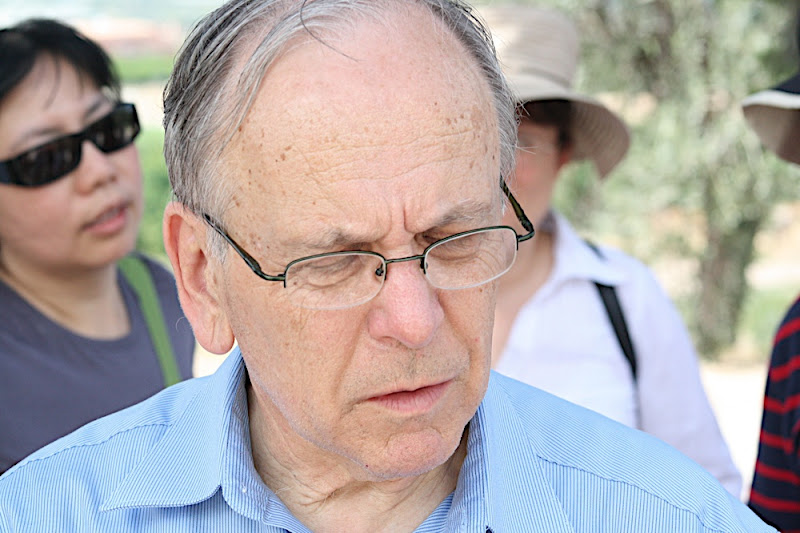
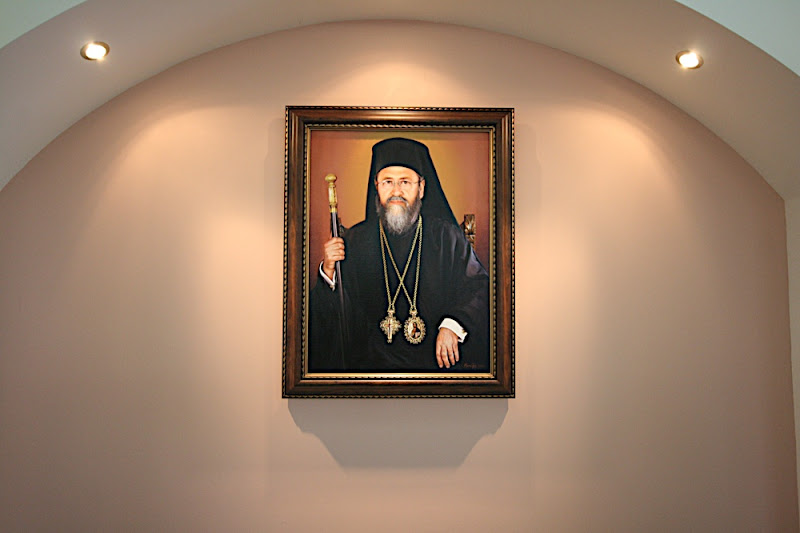
We had lunch courtesy of the Orthodox Bishop of Corinth yesterday, it was amazing. The bishop looks a lot like Kutz’s dad, so I took a photo.

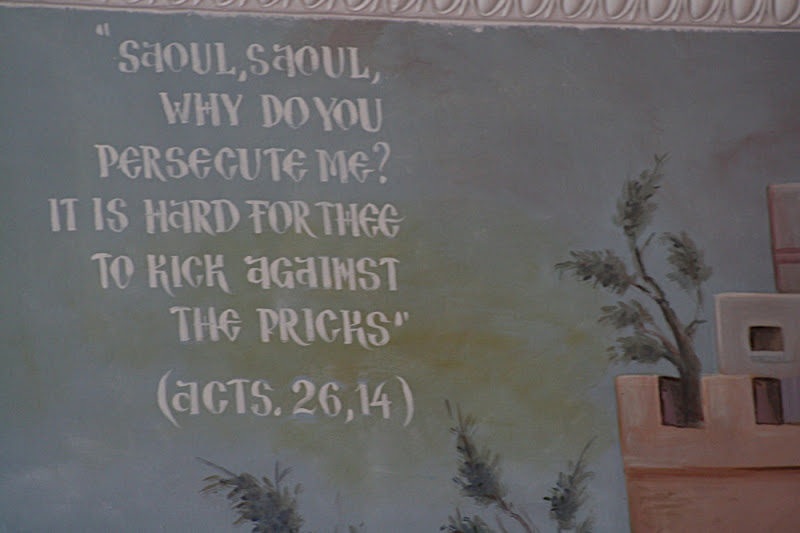
Here’s a little piece of Biblical “lost in translation”…

Bad Christian Music Week: Day 3

Nothing says “I love Jesus” like some young boys in colourful t-shirts rapping.

The implications of seeing the alternate ending of Mark’s Gospel as scripture

Bad Christian Music Week: Day 2

I’m not related to monkeys. Really. I’m not.

YouTube Tuesday: Some Mumford

A bit of Mumford and Sons singing a hymn for your edification. From Ali.

Bad Christian Music: Day 1

Now with Tamborine.

Bad Christian Music Week

While my blog is on autopilot for a little while I thought I’d post this string of horrible pieces of Christian Cultural expression.

I trust you’ll enjoy it. Comment here with any suggestions I may have missed.