This is the latest YouTube Tuesday ever… “bvvvrrrr” is the noise I reckon the Vuvuzela makes. It has no vowels. This video is funny.
Via Tim’s blog.
Category: Culture
YouTube Tuesday: Fellowship of the bvvvrrrrrrr
Separated at Birth: the World Cup game, and Steven Seagal
The World Cup has been producing ample fodder for one of my favourite games (which is probably pretty frustrating for other people) I like to call it “hey that guy looks like…”
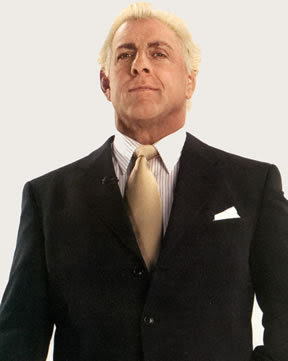
Here’s an example. The Dutch manager Bert Van Marwijk looks almost exactly like former WWE wrestler Ric Flair…



In unrelated television – Master Chef regular Neil Perry looks exactly like Steven Seagal.

Especially when the latter plays a chef in Under Siege:

Here are Neil Perry’s knife skills on display (in text form) from a Q&A on taste.com.au:
“I love the way you cook and no matter how I try I can’t chop herbs fast or very fine without cutting my fingers. Can you give me some tips on how to chop as well as you do?”
The main thing to remember is to use a slicing action with your knife as opposed to a chopping action. By this, I mean keep the tip of the knife firmly glued to the board and cut/slice in flowing movements. Also, keep your finger tips tucked out of the way at all times. Use the middle knuckle of your fingers as a guide for your knife to lean against and make sure that any part of your fingers below that knuckle are tucked in.
And here, for your viewing pleasure (though it’s probably M rated) are Steven Seagal’s knife skills on display.
And, in a bizarre twist, St-Eutychus has a world exclusive linking the two men, and perhaps establishing that they are in fact the same person…
Neil Perry is the leading Australian endorser of a Japanese brand of knives called Shun knives. Shun knives are made by the Kai Corporation, who in America trade as Kershaw Knives, who just happen to be the manufacturers of the knife Steven Seagal designed.

That’s right. Same knife company. Same hairstyle. Same face. Same Asian flavour. Same person… you be the judge…

Do you have any World Cup lookalikes for me?
Why speech recognition will (probably) never work
Speech to text recognition software is one of personal computing’s final frontiers. The dream of sitting in a room and talking to your computer (and having it understand, compute, and respond accordingly) is, apparently, unlikely to ever become an actual reality. The problems are manifold – the biggest problems being that words are aurally ambiguous and we instinctively translate them based on context and expression, and that certain words have an array of meanings.
Here are a couple of snippets from this fascinating article, that ends up being more about language than voice recognition (you might also notice a couple of things I’ve posted recently in that article).
In 2001 recognition accuracy topped out at 80%, far short of HAL-like levels of comprehension. Adding data or computing power made no difference. Researchers at Carnegie Mellon University checked again in 2006 and found the situation unchanged. With human discrimination as high as 98%, the unclosed gap left little basis for conversation. But sticking to a few topics, like numbers, helped. Saying “one” into the phone works about as well as pressing a button, approaching 100% accuracy. But loosen the vocabulary constraint and recognition begins to drift, turning to vertigo in the wide-open vastness of linguistic space…
Many spoken words sound the same. Saying “recognize speech” makes a sound that can be indistinguishable from “wreck a nice beach.” Other laughers include “wreck an eyes peach” and “recondite speech.” But with a little knowledge of word meaning and grammar, it seems like a computer ought to be able to puzzle it out. Ironically, however, much of the progress in speech recognition came from a conscious rejection of the deeper dimensions of language. As an IBM researcher famously put it: “Every time I fire a linguist my system improves.” But pink-slipping all the linguistics PhDs only gets you 80% accuracy, at best…
Researchers have also tried to endow computers with knowledge of word meanings. Words are defined by other words, to state the seemingly obvious. And definitions, of course, live in a dictionary. In the early 1990s, Microsoft Research developed a system called MindNet which “read” the dictionary and traced out a network from each word out to every mention of it in the definitions of other words.
Words have multiple definitions until they are used in a sentence which narrows the possibilities. MindNet deduced the intended definition of a word by combing through the networks of the other words in the sentence, looking for overlap. Consider the sentence, “The driver struck the ball.” To figure out the intended meaning of “driver,” MindNet followed the network to the definition for “golf” which includes the word “ball.” So driver means a kind of golf club. Or does it? Maybe the sentence means a car crashed into a group of people at a party.
To guess meanings more accurately, MindNet expanded the data on which it based its statistics much as speech recognizers did. The program ingested encyclopedias and other online texts, carefully assigning probabilistic weights based on what it learned. But that wasn’t enough. MindNet’s goal of “resolving semantic ambiguities in text,” remains unattained. The project, the first undertaken by Microsoft Research after it was founded in 1991, was shelved in 2005.
They’re not the Messiah…
Throw three delusional patients of a mental institution together in a locked room and conversation is likely to be awkward. But if you put three with the same delusion in a room it’s a recipe for trouble. Even if a three of them think they’re the messiah… But when you put a psychologist who has a bit of a god complex in the mix bizarre things happen. Here’s the story of the story of “The Three Christs of Ypsilanti”…
“Frustrated by psychology’s focus on what he considered to be peripheral beliefs, like political opinions and social attitudes, Rokeach wanted to probe the limits of identity. He had been intrigued by stories of Secret Service agents who felt they had lost contact with their original identities, and wondered if a man’s sense of self might be challenged in a controlled setting. Unusually for a psychologist, he found his answer in the Bible. There is only one Son of God, says the good book, so anyone who believed himself to be Jesus would suffer a psychological affront by the very existence of another like him. This was the revelation that led Rokeach to orchestrate his meeting of the Messiahs and document their encounter in the extraordinary (and out-of-print) book from 1964, The Three Christs of Ypsilanti…
very little seems to shift the identities of the self-appointed Messiahs. They debate, argue, at one point come to blows, but show few signs that their beliefs have become any less intense. Only Leon seems to waver, eventually asking to be addressed as “Dr Righteous Idealed Dung” instead of his previous moniker of “Dr Domino dominorum et Rex rexarum, Simplis Christianus Puer Mentalis Doctor, reincarnation of Jesus Christ of Nazareth.” Rokeach interprets this more as an attempt to avoid conflict than a reflection of any genuine identity change. The Christs explain one another’s claims to divinity in predictably idiosyncratic ways: Clyde, an elderly gentleman, declares that his companions are, in fact, dead, and that it is the “machines” inside them that produce their false claims, while the other two explain the contradiction by noting that their companions are “crazy” or “duped” or that they don’t really mean what they say.”
You aren’t as clever as you think you are…
And this blog is here to tell you why not… You Are Not So Smart.
This is one of my favoruites – the myth of not conforming to capitalism by buying non-mass market products.
“You needed to self actualize, to find your own way, and you sought out something real, something with meaning. You waved your hand at popular music, popular movies, and popular television. You dug deeper and disparaged all those mindless sheeple who gobbled up pop culture.
Yet, you still listened to music and bought shirts and went to see movies. Someone was appealing to you despite your dissent.
If you think you can buy your way to individuality, well, you are not so smart.
Since the 1940s, when capitalism and marketing married psychology and public relations, the free market has been getting much better and more efficient at offering you something to purchase no matter your taste.”
Unknown bands are a special sort of commodity. Living in a loft downtown, wearing clothes from the thrift store, watching the independent film no one has heard of – these provide a special social status which can’t be bought as easily as the things offered to the mainstream.
In the 1960s, it took months before someone figured out they could sell tie-dyed shirts and bell bottoms to anyone who wanted to rebel. In the 1990s, it took weeks to start selling flannel shirts and Doc Martens to people in the Deep South. Now, people are hired by corporations to go to bars and clubs and predict what the counter culture is into and have it on the shelves in the cool stores right as it becomes popular.
The Internet: Now with Vuvzelas
If, like me, you’ve been up late at night watching the World Cup and you’re finding it hard to adjust to life without the drone of the vuvuzela – then I have a solution for you. Use this site as the gateway for your browsing and you can add the monotonous (in b flat) buzz of the Vuvuzela to any web page.
Here’s St Eutychus with Vuvuzela.
Cheer up Keanu day
The Keanu Reeves meme is gathering steam. Someone, somewhere, introduced this photo of Keanu looking very sad to the picture:

And the previously reported “Thank You Keanu” movement has become “Cheer up Keanu” day (Facebook Event).
Here’s the photo in various forms. Because this is what the collective power of the Internet produces… and here’s a sample.

Now if only Chuck Norris would send him a message of support.
How to be a gastro-snob
I take great pride in being a coffee snob, but I’m not one of those people who complies copious volumes of “tasting notes” trying to identify nuanced flavours like berry, or citrus, or caramel, or dark chocolate. But if you want to be that type of person, in any field of gastrononomy, here are some tips.
- Use your nose – “Our tongues are equipped to experience only salty, bitter, sour and sweet flavors, plus umami, a newish term we borrowed from the Japanese to define a savory tasting sensation… Flavor — the citrusy essence of lemongrass, that lusty smokiness of chipotle peppers — comes mainly via our nose, he says, and largely through what’s known as retronasal or orthonasal smelling.”
- Develop a mental flavour bank – “Get in the habit of tasting all the ingredients that go into a dish you’re cooking before it’s made… so you can see what they’re like raw and cooked in certain ways and with certain components.”
- Practice identifying flavours in your own words – “Wine tasting, you might have noticed, is big on cognition of a certain kind: a vocabulary of comparison, all that jazz about wine tasting like oak and petroleum and passion fruit and cat pee. Having “the balls”… to put what you’re tasting into new adjectives is what makes great tasters, great tasters. But the rest of us usually just learn the old adjectives that turn into jargon, usually by tasting something that is already agreed-upon to be apple-y or citrusy or whatever — Merlot and plums, Riesling and petroleum — rather than trying to pick it out ourselves.”
Vuvuzelas and how to boost Australia’s 2022 World Cup Bid

Ahh, the Vuvuzela. What a profound choice to be the symbol of this World Cup. When we forget the teams that come 2nd to 32nd we will remember them. Their atonal sound (or b-flat tonal apparently – my wife used her iPhone piano to figure it out, and wikipedia confirms it)drowns out every other memory I have of any on field action in the six games I’ve watched so far.
The wikipedia article is in the throes of comedic vandalism as fans turn to the web to vent. Here’s what was in the description when I visited a few minutes ago:
“Vuvuzelas have been controversial.[1] They have been associated with permanent noise-induced hearing loss,[2] cited as a possible safety risk when spectators cannot hear evacuation announcements,[3] and potentially spread colds and flu viruses on a greater scale than coughing or shouting.[4][5] Commentators have described the sound as “annoying” and “satanic” [6] and compared it with “a stampede of noisy elephants,”[7] “a deafening swarm of locusts,”[8] “a goat on the way to slaughter”[9] and “a giant hive full of very angry bees.”[10].
The sound level of the instrument has been measured at 127 decibels[11][2] contributing to football matches with dangerously high sound pressure levels for unprotected ears.[12] A new model, however, announced on 14 June 2010, has a modified mouthpiece which is claimed to reduce the volume by 20 dB(A).[11]”
Here is an excerpt of Wikipedia’s description of their sound:
“BBBBBBBZZZZZZZZZZZZZZZZZZ ZZZZZZZZZZZZZZZZZZZZZ ZZZZZZZZZZZZZZZZZZZZZZZZZZZZZZ ZZZZZZZZZZZZZZZZZZZZ ZZZZZZZZZZZZZZZZZZZ ZZZZZZZZZZZZZZZZ ZZZZZZZZZZZZZZZZZZZZZZZZ ZZZZZZZZZZZZZZZ”
Some culturally sensitive numbskulls are suggesting that the Vuvuzela is a cultural icon. It’s not. There’s nothing uniquely South African about an annoying plastic trumpet that only plays one note. It’s not old enough to constitute “culture.” Claiming that the Vuvuzela is the epitome of South African culture is the equivalent of claiming Justin Bieber as the pinnacle of US music.
But look out – the vuvuzela has been given out to so many people free of charge that it’s probably going to be making its way back to your home country, where it may invade your favourite sport. If I were Australian Customs I’d be adding them to the dangerous goods list…
What Australia needs for its 2022 World Cup bid is an iconic national instrument that barely anybody plays, that requires little effort to pick up, and that would make an annoying noise if played en masse. I propose the wobble board. It’s cheap, readily adaptable for commercial purposes, and has an element of cultural cringeworthiness attached to it. Rolf Harris could be the face of our bid.

That’s culture.

It’s even in our national museum. It’s not some fly-by-night pretender to the cultural crown.

Saved by WoW
If you go out in the woods today you better have played some WoW, at least if you’re going to confront an angry moose. That is one of the coolest sentences I’ve ever written. But it’s real. Two Norwegian siblings were confronted by an angry, and territorial, moose while on a jaunt through the forest. The twelve year old Hans Olsen saved his little sister by bringing skills he’d developed in the WoW world into the real world…
Thanks to his numerous encounters in Blizzard’s MMORPG, his first reaction was to “taunt” the moose so that it would ignore his younger sister. With its focus shifting to the boy, the sister was able to flee and head for safety.
In the PC game, taunting is the ability to draw the attention of the attacking beast away from the lower-level and less-armored party members. Apparently it works on real-world beasts too.
After the girl escaped, Hans initiated another World of Warcraft tactic he learned at level 30: feigning his death. Dropping to the ground and remaining inanimate, he waited for the moose to sniff him out and lose interest.
Gilligan’s Island’s subtext gets explained
This is a cool essay explaining the subtext of the show that ostensibly only existed to sell Terry Toweling hats… or so I thought. Gilligan’s Island. It’s deeper than you think.

“Gilligan, the Skipper’s “little buddy”, embodies every extraneous governmental agency, policy and program ever foisted on innocent people anywhere. It is “Gilligan’s island.” Gilligan is well-intentioned. He sincerely wants to help. Gilligan saves no exertion, refuses no absurdity, respects no boundary in his unceasing efforts to solve, or at least soften, any and all of the everyday problems of the castaways. More often than not Gilligan is the problem. At best he makes a bad situation worse. At worst, he makes a great situation completely unbearable.”
Even this lofty theme is not the primary thesis. The story is actually about something much more fundamental. The most remarkable message of the tale lies in the paradox of the concentrated lust of the castaways — their burning desire to go back. Back to a time and a place that is more familiar and romantically remembered as “better.”
The tragedy of the tale is not that they can never go back. The real affliction is the wish itself. They are all so preoccupied with the notion of going back that they never realize they are already in paradise.
He built this city for shock and LOLs
This is a cool story. It comes with a video that I haven’t watched (and I’m currently on mobile broadband so won’t until later). Let me apologise in advance if it traumatises you, or contains foul language.
It’s not the main point of this story, or I wouldn’t have posted it…
The link there contains a Q&A with the guy who built this city… oh he built this city…
It took one and a half years:
“During the planning stage of the city I was also busy constructing other large-scale cities, which laid out much of the theory for Magnasanti. New ways of doing things were not yet developed until experiments were done within the game to verify ideas, and notes had to be taken down in conjunction with each new experiment, as well as devising new experiments to find out if there were better ways of solving the problem. Building cities and doing in-game experiments to obtain the results desired takes time. Additionally, I had other things to do, and only worked on it in my spare time, so it was a gradual development, not something I was working on 24 hours a day, 365 days a year.”
It’s a brilliant piece of social/political/economic art. Here is what life in the city is like for its residents:
“There are a lot of other problems in the city hidden under the illusion of order and greatness: Suffocating air pollution, high unemployment, no fire stations, schools, or hospitals, a regimented lifestyle – this is the price that these sims pay for living in the city with the highest population. It’s a sick and twisted goal to strive towards. The ironic thing about it is the sims in Magnasanti tolerate it. They don’t rebel, or cause revolutions and social chaos. No one considers challenging the system by physical means since a hyper-efficient police state keeps them in line. They have all been successfully dumbed down, sickened with poor health, enslaved and mind-controlled just enough to keep this system going for thousands of years. 50,000 years to be exact. They are all imprisoned in space and time.”
Benny on the mining super tax
Speaking of economics… my almost resident economically minded friend Ben has kindly produced a three part series on the Mining Super Tax that everybody keeps banging on about in the news. If you’ve been wondering about the economics of the issue, then wonder no longer… all will become clear.
The Resource Super Profit Tax (RSPT) falls into the deepest pit of my taxation system interest. Much has been written about it by the mainstream papers, much of it oddly conflicting. The source documents of note can be found in here (pdf) and here.
At present, mining companies have to pay royalties, which are payments made to the states for taking their resources. Comparatively, the RSPT will tax profits, or more descriptively, will tax the value of the resource at the taxing point (which seems to be a derived value at the mine gate) less all allowable costs in getting the resource to the taxing point, such as exploration costs, mine/well development costs, processing and haulage costs. The stated intention of the RSPT is to collect an appropriate return for the community from private firms exploiting non-renewable resources, via implementing a taxation system that responds to changes in profits. Fair enough.
The mining companies have complained the tax is too high, and that it will stunt business investment, and thus impact on economic output (and therefore employment). The Government was of the opinion the RSPT will “remove impediments to mining investment and production…[and] encourage greater investment and employment in the resource sector”. At face value, the logic would be that higher taxation or decreased profits would reduce investment, however it is the intricacies of the tax that suggest this might not be the case.
The real intrigue about this tax is its application to company’s losses. Articles have thrown around the idea that it is a brown tax, which isn’t the case, though it is understandable why the comparison is being made. Similar to a person’s income tax, a company will be able to use any of its costs of the project as a type of tax deduction. Importantly, as most mining companies are likely to spend the bulk of a project’s costs during the initial phases when setting up a mining process, which will likely also be a period where they make little revenue or profits to offset their costs against, they will be able to carry their costs forward to be deducted as a loss against future income (or deduct them against profits made elsewhere if available). Due to the delay between accruing costs and receiving the credit, the cost offset will grow at the long term government bond rate. This is all fair enough.
However, controversy has stemmed from the initial announcement which suggests that the RSPT system provides that if the company never makes a profit to offset these costs against, they can simply get this amount payed out when they wind-up the project.
This effectively means that the Government will be funding project start-ups, and effectively taking on some of the risk of the project. For example, a new project might be to develop a coal mine at the cost of $1 billion. Ten years later, the coal mine may not have ever made any profits, so the Government may not have received any revenue from it, but will have to pay the company 40% of the $1 billion (grown at the long term government bond rate, so the $1 billion may have grown to $1.1 billion over the ten years). However, this potential cost to the government will be offset by potentially higher revenues from decent mining projects (which, in Queensland’s case, given the absolutely booming situation surrounding global coal demand and prices, will be a lot).
What is a human life worth? $6.1 million
Behavioural economics fascinate me. Here’s a story about a guy named Cass Sunstein who’s a friend (and loosely speaking, an adviser) of Obama’s, from the University of Chicago, who wrote a book called Nudge, it sounds Gladwellesque. It might be my next holiday read…

Here’s a bit of a summary from the compelling NY Times profile.
In “Nudge,” a popular book that he wrote with the influential behavioral economist Richard Thaler, Sunstein elaborated a philosophy called “libertarian paternalism.” Conservative economists have long stressed that because people are rational, the best way for government to serve the public is to guarantee a fair market and to otherwise get out of the way. But in the real world, Sunstein and Thaler argue, people are subject to all sorts of biases and quirks. They also argue that this human quality, which some would call irrationality, can be predicted and — this is the controversial part — that if the social environment can be changed, people might be nudged into more rational behavior.
Libertarian paternalists would have school cafeterias put the fruit before the fried chicken, because students are more likely to grab the first food they see. They support a change in Illinois law that asks drivers renewing their licenses to choose whether they want to be organ donors. The simple act of having to choose meant that more people signed up. Ideas like these, taking human idiosyncrasies into account, might revive an old technocratic hope: that society could be understood so perfectly that it might be improved. The elaboration of behavioral economics, which seeks to uncover the ways in which people are predictably irrational, “is the most exciting intellectual development of my lifetime,” Sunstein told me.
Sunstein now works with OIRA – which, being an acronym, is a government department. A department that looks at policy ideas and ways them up economically using a cost/benefit analysis that controversially assigns dollar values to intangible things… it has previously used these values:
The office’s administrators require that federal agencies express the costs and benefits of their proposed rules (lives saved, swampland preserved) in dollars. Moral principles, filtered through this cost-benefit analysis, find their way into confounding little boxes. A human life, the E.P.A. figured in a 2001 rule about arsenic and drinking water, was worth $6.1 million. (If an environmental regulation would save one life but cost $4 million, it ought to be put into effect; if it cost $8 million to save that life, the regulation would be scuttled.) Each I.Q. point a child lost because of exposure to lead was worth $8,346 over the course of a lifetime. A lost workday was worth $83. Many of these estimates used data from surveys — taken at malls, among other places — that asked passers-by how much more they would need to be paid to take on a job that carried, for instance, a 1-in-10,000 risk of death. Richard Posner, who has the most magnificent and chilly mind in this realm, used similar projections to price the benefit of preventing the extinction of the human race at $600 trillion.
Sunstein wants to bring this utilitarian approach together with his “libertarian paternalism” which would be very interesting indeed.
Your favourite games… now with extra Bible
I’ve posted a couple of times about lame Christian computer games. I’d dig up the posts but that would take me five minutes. Anyway. Here are a bunch of currently popular games reimagined as Christian… they made me laugh.


It’s sad because once upon a time Christian game producers did in fact take a cool game (Wolfenstein 3D) and a Bible story (Noah’s Ark) and mashed them together into a game where you ran around slingshotting animals with food and sleeping pills so that you could pile them into the ark. Lame.