It doesn’t look like Dr Paul will be coming through with a photo for me. Well, not the photo I want. He did send me this:
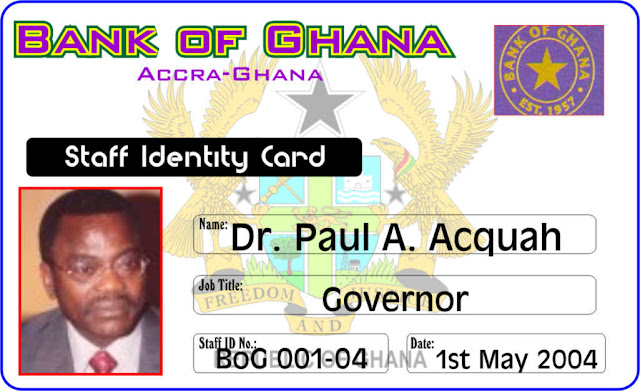
You’ll not that that’s not what I asked for. Sadly, he was pretty insistent that it’d be all I get.
Dr Paul,
It’s great I’ve got your passport picture – I really do need that second photo before I send you your money.
I have a question regarding the final transfer – what currency do you need the money in? You haven’t specified this – I assume Ghana’s currency – the Cedi – is what you’re after?
Please let me know when you provide the photo as requested.
Regards,
Nathaniel
He was less than forthcoming.
Dear
Thank you for your mail, and sorry for my late response, my friend because of big work i have in office makes me not to contact you since some days now, please am very sorry.
You can find the attache copy of my office id card, so my friend try you best to see that you sent the money down by next week diplomat will come over and deliver this fund to you.Am looking forward to hearing form you today.
Yours Freind
Dr.Paul
This was not acceptable to me. No sirree.
Dear Dr Paul.
Your ID card is not what I requested.
I requested a photo that could not be faked. Your unwillingness to provide what I have asked concerns me.
I also asked what sort of currency you want the transfer conducted in – and you didn’t answer that either.
I look forward to receiving your photo. As requested. With you holding a card with the words I have requested – either “John 3:16” or “Robot in disguise”. If you would prefer to come up with your own suggestion please let me know.
I must insist on a photo that could not be doctored or faked. Please supply this to me as quickly as possible. My patience is wearing thin.
He did not like this. Clearly I’m not following the script – he rang me to tell me that nobody else requires this sort of “proof”. I’m not normal. And he wrote to me to say the same thing.
Dear.
Thank you for your mail and explanations so far. my dear am not happy for you because i live very thing am doing in my office to see that you get this fund this very week but you are making very thing to go back. my dear the photo you are telling me i can not do that because since many people like you have being get the fund nobody of them told me this can of thing ,so my friend if you really want this fund the want to deliver to you please tell me but if you want it tell me because the way you are talk to me i did not like it.
once again my friend i done no how i want to help you but you done want to understand me.my friend if you are not interest tell me in time now so i will not being westing my time. my friend i give you my internation passport you did not understand me, i give you my id you too but you done want to understand so i will not die my self to you. Am looking forward to hear from you soonest .
Yours Friend
Dr Paul
Something needed to change in order for me to secure my photo. I had to give him an incentive.
Dr Paul.
I am sorry I did not answer your calls last night. I was very tired and couldn’t quite wake myself from my sleep.
I am starting to doubt you. I would say I am at best 30% confident in you. You have promised me an improbable amount of money. You have failed to provide the evidence that I have requested. You have sent me incorrect identification. You have ignored specific and reasonable questions over and over again.
$850 is a lot of money to throw away to a person in a country famous for corruption without doing proper due process and getting the evidence required.
Dr Paul – as the head of an international bank I would not think accessing a camera is beyond your means. I can’t understand why this task seems beyond you. Perhaps you’re busy seeing Barack Obama. I heard he was in your country calling for reform of your banking institutes. I hope this goes well for you.
I really must insist that you provide this photo that I have asked for before we go any further. Your passport and ID card mean nothing without this.
It is you that does not understand – provide the photo I have requested and we will conclude this transaction.
He responded with a phone call – so I wrote to him again…
Dr Paul,
I was glad to hear from you today.
I can’t understand why the fact that you’ve never done something before means that you can’t do it now. Has anybody asked you to do this before?
I don’t think you’re being reasonable. I have made a simple request and you have refused to comply. I thought we were friends. Give me one good reason why you should not provide the photo?
I can’t think of a reason for you to refuse, unless you are trying to defraud me.
I thought you wanted me to receive my money…
You are not being helpful.
Say hello to president Obama for me.
He responded to that one…
Dear.
Thank you very much for your mail and all the infromation you have being sending to me. my friend i do like the way you have being talking to me.my friend since in my life i have being send many people the fund i never see any body that told me to do this you told me to do. please my friend if you did want diplomat to come and deliver this fund to you just tell me now so i will not being westing my time.
once again one thing am advice you that i will never do this can thing because you are giving me too much disgrace. i give you my internationpassport and my id but you do want it, so i will never do any thing again. i live very thing am doing in my office want to help but you done want you help you self. so my friend all i want to told you now that if you done want to take my word or follow my word please stop contacting me. Am looking forward hear from you soon.
Yours Friend
Dr paul
Well, I am treading on thin ice. But I want my money. Well actually, I’d settle for my photo.
Dr Paul,
If this money is legally mine how can you possibly refuse to conduct business with me? I will report you to your superiors at the bank.
You have two choices – do what I say and provide the photograph or don’t do what I say and I will report you.
Once you do what I ask of you my friend I will transfer the money – and a generous fee for your time – to the contact you requested. I believe you should be unofficially recompensed for your hard work. I know you are just doing your job. I’m sorry that you find my caution insulting. I wish you would see it for what it is – an opportunity to build the trust and fidelity that exists between us.
I feel I have possibly not explained myself clearly enough. I once was presented with a similar offer from the Cote D I’vor – where I sent an advance fee in order to secure monies owing to me – it’s hard to know what money is out there owing to my family on account of our large property holdings throughout the world. The Cote D’Ivor deal turned out to be a fraud and I lost a significant sum of money. I am careful not to be caught up in that situation again – and so I ask you to do this one small thing for me.
Please Dr Paul – do not be upset or insulted. We are friends are we not? I would simply like to have that friendship confirmed with this act of loyalty and good faith. It worries me that you are not willing to act in such a way.
He was upset and insulted.
Dear.
Thank you very much for your mail and explanations so far. my friend you are doing this like me and you was i having problem. my friend all i want to advice you that if you are willing to sent the money so you fund will deliver to you do it but if you go head and talking too much word it will not help you. my friend just do what i told yiou to do very thing will been ok. Am looking forward to hear from you soon.
Yours Friend
Dr paul
Poor Dr Paul. He needs some real “hard evidence” of my fidelity. And I need my photo…
Dear Dr Paul,
It’s not that we’re having problems – I value this correspondence – I don’t want to have problems in the future.
All you need to do in order to enable me to send these funds to secure my funds – if that is what you want – is send me a photo.
I am starting to suspect that you are not what you seem.
I have acted in good faith with you – and you have promised me much but delivered nothing.
If this money is real (and I am beginning to doubt it) – I make you this offer… I will give you 40% of it on completion of the transaction. I am so confident now that the money does not exist that I am willing to promise you a share of it – because a share of nothing is nothing. If it does exist I am willing to take that gamble as I will still come out of this deal with a significant amount of unexpected revenue.
If you want to secure your 40% of this deal – and if it is genuine – then send me the photo I have asked for. If you send me this photo I will pay you an advance on this deal because of the insult that my distrust must be.
If you send me this photo I will transfer the $850 you have requested and a $10,000 down payment on your share of the money. This photo is worth $10,000 to you. Either do it – or I’ll know you aren’t genuine. This is the only way I will be convinced to continue in this deal and trust you.
The equation is simple. At this stage I need proof in order to send you, a stranger, $850 of my money in order to secure millions of dollars you have promised me – that I have never seen. It may not exist. I don’t believe that it does. If it did you would send me the photo.
Remember Dr Paul that because this may be insulting to you I have promised you $10,000 of my money, as an advance, when you prove yourself to me. Do other clients pay you like I am promising to? I doubt it.
After this email he rang me. Once I figure out the best way to upload the phone call (I recorded it) I’ll put it here.