What Facebook’s “Promote post” option means for promoting stuff on Facebook

Facebook is a bit of a minefield for marketing/communication people to navigate at the best of times. It can be incredibly useful, and plenty of businesses swear by it, but it can also be an incredible waste of time. Especially because Facebook keep changing the game. And they keep finding all the really effective ways people are using the platform to boost their business without paying – and killing them.

I’ve got a few marketing clients who use Facebook, I use Facebook advertising to help out with my sister-in-law’s bridal make-up and children’s theatre companies, and I use Facebook to promote Stir, a Christian event in Brisbane, and think about how we use Facebook as a church. Incidentally – it appears Facebook is currently doing a survey where they’re giving out $25 in advertising credit.

I know heaps of sole trader small business/creative/entrepreneurial types who use Facebook as the sole means of promoting their business and finding clients. While these friends of mine have chosen Facebook because they don’t want to spend on advertising – I don’t think this change represents a hurdle for these types of business. This model, resisting advertising, relies on creating good products, and putting these creations on Facebook in a way that encourages sharing. It’s word of mouth stuff. That just takes strategy, encouraging people/customers to share your business with their friends, and putting up posts that people are more likely to interact with and share. That business model isn’t really going to be threatened by this change unless a huge number of people start paying to have their posts shared in a way that clogs up all of their friends’ news feeds.

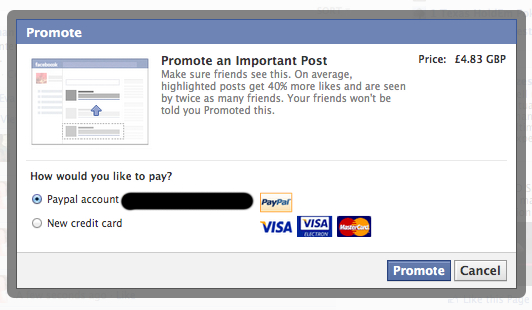
In the last couple of days Facebook has rolled out a new revenue raiser. The “promote post” option – not just for pages, but for individuals. You can pay to make sure every one of your friends sees your latest update. I assume the cost is figured out by how many of your friends are regularly interacting with your posts, and how many friends you have might also be a factor.

This is potentially a game changer – both positively and negatively. Here’s some reasons why.

First of all – Facebook is now a public company, it has to make money for its shareholders, it has to produce revenue to pay its costs, and people don’t really love anything Facebook does to make money, because for some reason we think it’s free.

There’s an old saying, If you’re not paying for Facebook, you’re the product, not the customer. It’s trite, but true.

Second, the real strength of Facebook, for companies, and particularly for churches, is the platform it provides to communicate to people who have opted in by liking your gear – ads that convert to likes are ultimately more valuable in the long term, than ads that convert to one off sales, or event attendance.

Third, in my experience, advertising is good at securing likes. But, unless you’re serving up ads to your fan base, rather than to your targeted audience, it’s likely that you’re paying about $0.80 for a like that goes nowhere. The chance to send a guaranteed post to the newsfeeds of 800 people for five British pounds is, in my mind, better than the return on investment where you pay $20 for 25 likes. But used together, there’s a good chance to turn likes into something a bit more ongoing.

Fourth, until this change – there was no guarantee that what you post on Facebook gets into your friends’/followers’ news feeds. Facebook is clever. It knows you won’t come back if all you see is 13 photos of cats from your aunt’s crazy friend who you accepted because you know how fragile her delicate ego is and you didn’t want to push her over the edge. It also knows you don’t want to be constantly spammed by businesses you don’t really value, who somehow tricked you into hitting like. Facebook works out what you want to see using a clever algorithm called Edgerank. What they’ve told the world is that edgerank figures out your relationship to all the elements that can possibly appear in your news feed using an algorithm that values how often you interact with the person/page, how many other people think their post is worth interacting with, and how recent the post is. If you’re a business (or person) and you have a bad social media strategy, where you post too much stuff that nobody cares about, pretty soon your stuff is pretty rarely going to hit the news feed and people will have to deliberately seek out your content. The stats on this are pretty appalling – most people like a Facebook page and never go back – which means they aren’t going to see your stuff very quickly, and any time and effort you’ve spent gathering a tribe of loyal followers is going down the drain.

This has implications for how you use Facebook if you’re interested in people seeing your stuff. Social media success, as far as the expensive social media consultants (or your cheap ones like me) are concerned, is about boosting interactions on your posts. This means posting stuff that encourages a response, posting really likeable stuff that people want to share, and trying to keep discussions going when they start. But that’s really hard, and takes time and effort, and there are plenty of businesses out there who have killed their edgerank by just not getting it (or knowing about it). So this promote post option offers a fresh start for businesses like that. It also gives businesses who do produce good content the opportunity to boost their edgerank – if what Facebook says about promoted posts is true (40% more interactions on promoted posts), then it is likely that the $5 hit, delivered a few times, will add value to your Facebook presence.

I’ll be using this option with a few of my clients, and factoring it in for a few of my content driven social marketing budgets. Because it takes a lot of the guess work out of using Facebook, and puts heaps more control back in the hands of page owners who have been dudded by the switch to Timeline (but that’s another story for another time).

I won’t be using it for my profile – partly because I don’t think it’s worth it, I have photos of a cute baby daughter to generate interactions. And the beauty of this is that once you’ve done it a few times, if you get a good response, you won’t have to keep doing it until Facebook inevitably reconfigures its EdgeRank algorithm.

Powerful media outlet, “Fox News” tied to Norwegian Terrorist

Apparently, according to Fox News, all that is needed to link something good, with something bad, is the use of a common language.

Powerful ‘Flame’ cyberweapon tied to popular Angry Birds game

“The most sophisticated and powerful cyberweapon uncovered to date was written in the LUA computer language, cyber security experts tell Fox News — the same one used to make the incredibly popular Angry Birds game.”

And the image that they used with the story (in case you are smart enough not to click through)…

Fox News published this amazingly over the top, and downright idiotic headline and lede in English. Norwegian psycho Anders Breivik published his manifesto in English. Link established.

Seriously. This is horribad journalism. I know. It’s odd to be getting angry at Fox’s stupidity over a story like this, but it’s a dumb story that serves a much broader point about their credibility.

That is all.

A funny thing happened yesterday: how @CollectiveShout won Twitter (and me)

Anti-sexploitation lobby group Collective Shout does some smart, and necessary work, opposing the degradation of society. They’re like the ACL, only without “Christian” in their name, so not as cringeworthy. And they’re more focused.

Collective Shout cares about such things as logos.

This is theirs.

This is the flag adopted by Greendale Community College in Community.

I can’t look at the Collective Shout logo without being influenced by Community. So I thought I’d be funny. And I dug up a YouTube clip and tweeted:

The marketing people behind @CollectiveShout need to watch this Community clip and rethink their logo: youtube.com/watch?v=Y6oez0…

— Nathan Campbell (@nm_campbell) May 31, 2012
I’ll admit I wasn’t expecting much in response. I was, after all, stirring the pot a little, and mostly just showing off pop culture chops… But I got one. And it was snappy, relevant, and put me right in my place. It was from a real person. They weren’t just toeing a party line.

There were a couple more tweets exchanged following this – but I left way more impressed with Collective Shout than I planned to be, this, people, is how you use social media – they actually do a great job on the social media awareness/activism front, so it doesn’t surprise me that they’ve got someone behind the keyboard who is savvy and engaged enough to produce this sort of response to pseudo-criticism.

Cage does Cage: Nicolas Cage in 4’33 mashup

So meta.

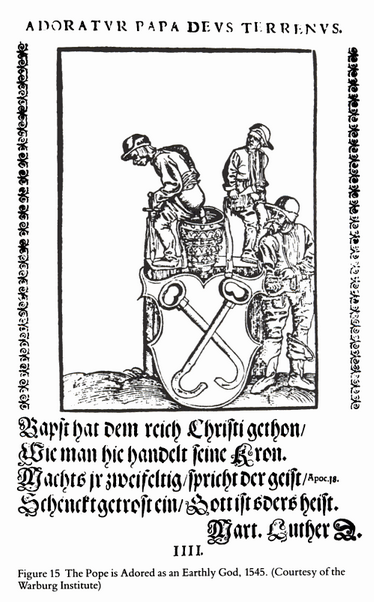
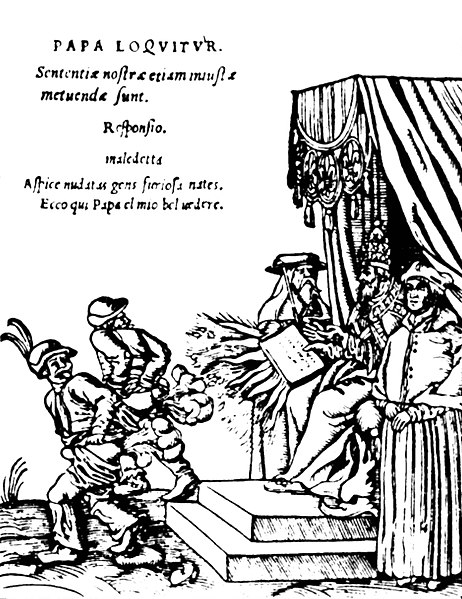
I fart in your general direction: Luther and the Pope

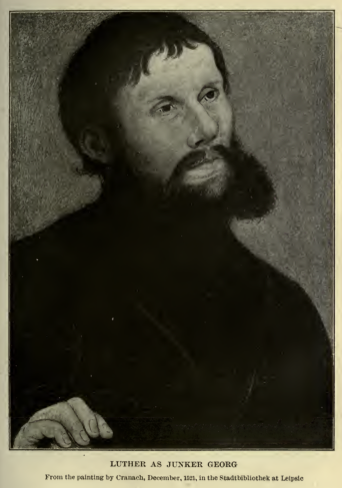
I’m writing an essay at the moment about Luther. This explains the relative paucity of posts this week, and other essays are to blame for the last two weeks’ relative absence.

I’m going to look at Luther’s approach to communication throughout his life. And in the process of my research I came across this pamphlet that Luther distributed during the Reformation. In 1545, in his Depiction of the Papacy


Image Credit: Wikifiles

The Latin reads:

“The Pope speaks: Our sentences are to be feared, even if unjust. Response: Be damned! Behold, o furious race, our bared buttocks. Here, Pope, is my ‘belvedere'”

Apple’s OS naming dilemma

Ahh XKCD.

I’m hoping for Sabre-Tooth.

Tetris: the blockbuster

Possibly the best heading I’ve ever written.

Speaking of the end of the world and rapture music

Here are two probably more hideous songs than anything the Third Eagle might produce. Both are covers of The Final Countdown, which Arrested Development made one of the most annoying songs to be stuck in my head for all time.

New Third Eagle song: now with more waterfalls

Typical rapture rock.

Also. This important analysis of an Obama poem…

Convergence and Conversation: When the main thing is talking about the thing, not the thing itself

Sacha Baron Cohen has a new movie out, and by all accounts it’s incredibly puerile and terrible. I’m not going to see it. Borat was enough for me. I’ve always had a soft spot for Baron Cohen and the way he used outlandish characters to highlight the outlandish traits in normal people, as uncomfortable as that became. But his kind of under the radar shock humour, luring unsuspecting victims into making fools of themselves, always had a limited shelf life as his notoriety increased. I reckon he actually peaked with Ali G. Who is, for mine, the funniest interviewer ever.

It seems though that to create genuinely funny humour of the type he had become accustomed, Baron Cohen had to create a terrible movie that then became the vehicle for catching people unaware and reproducing some of his shock comedy, in character.

So, we have examples like this train wreck on the Today Show. I’ll embed it. But watch it at your own risk, it’s crude and it’s simply here to illustrate a point. It’s some of the most uncomfortable breakfast television you’ll ever see.

Baron Cohen is maintaining his brand – people will still think of him as an edgy, and funny, comedian who puts people in awkward situations, this time journalists, because of the press circus surrounding the movie. The TV opportunities are now the vehicle for his comedy. I’m no more likely to see the movie because of moments like this, but at least it has generated the kind of response I’m sure Baron Cohen enjoys most. It’s where the art is now. I wouldn’t be surprised if his press appearances become the main reason people buy the DVD version of the movie, so it’s a tactic with a bit of a silver lining.

Here’s how a boingboing review (which contains a vivid description of the offensiveness of the movie in the opening para) describes what’s going on:

“This is what The Dictator was made for; to spew, into the world of the living, the fully-formed obscenity that is Aladeen.

Sacha Baron Cohen’s characters come into their own when they are put into contact with real people—and even chat show hosts are people—because, as Ali G taught us, the embarassing reaction and our own cringing is at least half of the humour, innit.”

This is an interesting theory – treating content creation as a launchpad for something more long term.

As a media strategy it’s not bad – particularly in the social media world where engagement and conversation are the big goals that lead to conversion. The idea is that you develop loyal fans of your brand who purchase your products and become advocates who talk about your product to their friends. You do that by producing content they want to share, or content that gets people talking. And the movie and associated interviews have ticked that box.

This has me thinking a bit about how this principle applies to church communication and social media stuff. I’m doing a bit of thinking at the moment about how the church I’m part of can use Facebook better, and get people being ambassadors not just for our church, but for Jesus, when they’re online (incidentally, there’s a great Church Marketing Sucks post/series on this).

This is one thing I reckon Mark Driscoll does really well. He’s phenomenal not just at scouting out opportunities in the press, but creating them. I have started to wonder if that is why he and wife Grace went so far and were so graphic in their marriage book – for the shock factor. It’s pretty much the Christian equivalent of the Dictator. The book flew up the best sellers list, fanned the flames of controversy around the Christian blogosphere earlier this year (seriously, google it), it certainly had people talking, and Mark and Grace Driscoll have been touring the US on the back of the book seemingly ever since – including this amazing stopover on CNN with Piers Morgan, who’s not a massively successful TV superstar, but still gets around 500,000 viewers a night.

This isn’t all of it – you can read a transcript here. It’s pretty much a mix of everything that’s good and bad about Mark Driscoll.

“MORGAN: But why was — why should it be one rule for her and one rule for you?

DRISCOLL: I think I was selfish and I think I was being a hypocrite. And I’m not going to defend things that I’ve done or said or thought that were wrong. No.

But I do believe — and this is where we’re going to get to Jesus — that he died, he rose, he forgives me, he helps me, and I hope to keep changing and doing better.

MORGAN: But for people watching this, you know, especially younger people, for example. They said, well, it’s all right for you. You know, you had all this sex until you were 19, then you get —

DRISCOLL: Well, it wasn’t a lot of —

MORGAN: Then you got born-again so you had sort of sown your wild oats and then — and then you’ve become a born-again virgin. But for them, you’re trying to punish them and they can’t have anything.

DRISCOLL: Well, I think, ultimately, sex is best reserved for marriage. And I think if you look at the statistics of sexual assault, sexual abuse, sexually transmitted diseases, there’s a lot of people that are suffering, too.

I mean you’re not your average pastor, are you?

DRISCOLL: I don’t know.

MORGAN: Saying stuff like that.

DRISCOLL: I have fun. Sometimes I get it wrong.

MORGAN: Do too many people in the world of religion take it too seriously?

Is that part of the problem?

DRISCOLL: I think we should take Jesus seriously. We should take the Bible seriously. We probably shouldn’t take ourselves nearly as seriously. And that’s how I approach it.

MORGAN: Do you think you’re a tolerant kind of guy?

DRISCOLL: I love people very much and it’s — it’s —

MORGAN: That’s not the same thing.

DRISCOLL: Well, it’s — how do you disagree, sometimes, with people that you love?

That’s a very difficult issue for everybody, but for a pastor in particular, because —

MORGAN: But do you preach tolerance?

DRISCOLL: I’ve preached that we should love our neighbor, that we should accept —

MORGAN: But tolerance — tolerance in particular.

DRISCOLL: Why — you keep hammering it. What — what do you mean by tolerance?

MORGAN: Tolerating people who may have a lifestyle or a belief that you don’t agree with.

DRISCOLL: Yes, we have to. And that’s — when Jesus says love your neighbor, you know, he knows you’re not going to agree with all your neighbors, but he wants you to love them, to seek good for them, to care for them.

However, like everything in life, shouldn’t it be dragged kicking and screaming into each modern era, and be adapted, like the American Constitution.

DRISCOLL: Yes.

MORGAN: Because, you know, my — my view about this is — is not that I don’t respect Christians or Catholics or whoever who — who absolutely swear by every word in here. It’s just that it’s — I just don’t believe anyone who is genuinely Christian should be spouting bigoted opinions about sections of the community for their sexuality.

DRISCOLL: Well, I think when it comes to the Bible, you’ve got three options. Take it, I believe what it says. Leave it, I don’t believe what it says. Or change it —

MORGAN: Or adapt — or adapt the wording —

DRISCOLL: Which would be the changing it.

MORGAN: If it was in — the majority of Americans believed in it, would you then go along with it?

DRISCOLL: Would I officiate same-sex weddings and things of that nature?

MORGAN: Yes.

DRISCOLL: I couldn’t, according to conscience, no.

I think the big issue for families in America is really men who walk out on their families. I mean, right now, the average child born to a woman under 30 is born out of wedlock —

MORGAN: Yes, but that’s why —

DRISCOLL: — with no father.

MORGAN: — see, that’s my whole point about this. There are so many feckless guys out there —

DRISCOLL: That’s really —

MORGAN: — right?”

I’ve gone a bit nuts with the quotes – but I reckon this is a great example of public engagement that is both Christ focused, and engages with social issues. Which is what Driscoll does best. This interview almost makes the (by all accounts justifiable) controversy around the book worthwhile. And like Baron Cohen’s work one wonders if Driscoll produced the book with half an eye on how things would play out past its release.

The third little example takes the form of a book review, a public discourse between critic and author, the book is Ross Douhat’s Bad Religion (which I’m reading on my bus ride at the moment), the discussion happened on Slate.com (starting here). It’s an incredibly gracious discussion which I think is probably more valuable than the book – and it was why I purchased it.

None of these cases simply involve the content producer reproducing their content – in each case there’s a development of the core concept before a wider audience, that adds value. It’s good stuff. And now I’m wondering how this works at the level of the local church – how we turn the content we produce regularly (sermons etc), into sharable chunks, or leverage the work on new mediums.

Anyway. That’s a long post about some stuff I noticed in some stuff I read.

Call it sore losing… but I wish Origin was about the game not the tribal stuff

Cultural anthropologists would have a field day if Facebook walls were physical and people were looking at what happens in May/June in Australia each year with the benefit of 200 years of hindsight.

I love sport. I love league. And I enjoy watching Origin even when my team loses. Which for the last seven years has been a pretty regular phenomenon. I enjoy a bit of the tribal aspect of sport. I get it. But I wonder at what point the “otherising” that goes on alongside sporting success is healthy – both within the Christian community and as an indicator of our culture more broadly. I get that winning is fun. Nobody likes losing, and nobody likes when a team they have some affiliation with – by choice, or by birth, loses.

But it’s a game. A sport. A contest between 17 guys who have been chosen not as representatives of a state and all that it stands for, but as 17 guys who the selectors hope will beat the other 17 guys and provide a modicum of entertainment for the masses. To invest a game of football with inane tribal parochialism is to explain why the intellectual set get dismissive of sport.

If, as Tim Keller suggests, idolatry is what happens when we take good things and make them ultimate things, then for about 6 weeks of the year, football becomes an idol for the vast majority of Queenslanders. Now it may be true that New South Welshman are just as guilty of this – I don’t know, I can’t really remember the last time New South Wales won a series, and I certainly can’t remember when New South Wales won the last series while I lived there. But I think our culture is shifting in Australia to the point where to be an “other” in Queensland, even amongst Christian circles, is an interesting and character revealing experience. It’s also an interesting, and completely non-scientific, exercise to look at what my NSW friends have been talking about on Facebook in the last 48 hours, and what my Queensland friends have been posting.

It’s possible that this is something that should be reflected on with more distance from the event, and the experience, so that accusations of “sour grapes” and hypocrisy are less likely… but from where I’m sitting, reluctantly in the trenches as a New South Wales supporter not really savouring the prospect of a seventh year of defeat, and the parochial vicarious gloating that comes with it, from residents of a state with an in-built siege mentality based on some sort of inferiority complex, a state where an unpopular Premier is lauded for getting up during a natural disaster and rousing the proletariat’s collective spirit with the tearful catch-cry “we are Queenslanders,” as though the post code one lives in is somehow a determinant of character… what’s going on isn’t really healthy (nor is the length of this incredibly complex sentence). Somehow we’ve allowed where we live, and where we’re from, to become an acceptable idol, a point of difference, something that is acceptably the butt of jokes, where to replace the punchline with other differences would probably be in breach of vilification laws around the country.

I’m not really setting out to be a killjoy, nor am I particularly offended by these examples of humour… it’s funny though, every time I say, on Facebook, or in person, that I don’t really care about the result – people call that into question. Sure. I watch the game. I like it better if we win. But I don’t lose sleep over it, and I’m certainly not going to run around producing a bunch of meme styled photos when, as it is historically inevitable, New South Wales eventually wins a series. I talk about it. I post the occasional Facebook status as part of the fun, and sometimes to bait Queenslanders into doing exactly what I’m accusing them of here – buying into cheap tribal parochialism, just so that I can turn the table on them and exert some sort of enlightened cultural superiority in a post on my blog.

Being from New South Wales means transcending the silliness of the short man syndrome that is identifying primarily by the state that you come from.

In conclusion, while I think I can say, without a shadow of hypocrisy, that I don’t care about the game at least in the way that Queenslanders do, I do care about the reaction to the result, and about the bizarre situation where suddenly it’s ok to make jokes about an other on the basis of the success of the people you affiliate yourself with. I am wondering what they say about the human condition, and about our culture more broadly.

That is all.

Record business: these vinyl trick shots are amazing

Wow. No seriously. Wow.

Who sits around and says to themselves “you know what we should do, we should throw our records from all sorts of angles and get them to land on a record player”…

Awesome mad scientist makes Tesla Gun

I kid you not. According to the interwebs. This guy’s name is Flickenger. His life as an awesome physics defying mad scientist was nominally determined. Here’s how he did it. But seriously. Don’t try this at home. Unless you’re happy to make two.

And look. Video.

Dress sharp for the pulpit with PastorFashion.com

This website has been around for a couple of months now, and I’m still fairly sure nobody knows if it’s actually a joke or not. I mean. It’s a joke. But I’m not sure if it’s intentionally a joke, or if we’re laughing at it.

PastorFashion.com is celebrity preacher Ed Young’s gift to the world. It features fashion tips to help pastors teach the Bible while being really, really, ridiculously good looking. Or at least well dressed.

The latest post is called “Skinny Jeans and testosterone” and contains this video for your edification.

Hardcore (probably Canadian) farmer looking old guy opens beer with a chainsaw

Because sometimes the simple, non-petrol powered, ways, aren’t the best.

Apparently paramedics talk about cases, trivial cases, where they get called in, as “chainsaw-bonsai” cases. I reckon this guy could prune bonsais with this sort of precision.