This one is mainly for Izaac – who writes Australia’s leading Pixar blog in his spare time. 25 years seems a long time.
Archives For Izaac
Izaac, who knows more about Pixar than anybody else I know, sent me this little story that warmed the cockles of my heart.
In Toy Story 3 there’s this great scene where Mr Potato Head’s parts get put on a tortilla. And he sways around everywhere. He can’t stand up. It’s funny.
Funnier still is this little story that the animator of that scene tells on his blog:
The animation supes took me into a room to tell me the news ‘We are giving you Mr. Tortilla-Head’ Its one of those moments where your really happy then really nervous. How was I going to animate that thing? Sure it plays funny in boards, but to bring it to life! The Supes knew it was going to be a challenge, being the great leaders they are said ‘these are your last shots, take all the time you need!’ I kept telling myself, you’ll be happy you animated this once it over.
I sure was – although they were extremely hard shots to pull off, I’m really proud to part of that character. There was a small team of us, 3 animators helping each other. Showing each other what works, what didn’t. Some reference that really inpired us was Drunk Guy Buying Beer. I wonder if this guy knows he was in a movie?
Drunk Guy Buying Beer is an hilarious little clip on YouTube that made me laugh. So here you go, this is how you inspire a movie scene:
Our friends Izaac and Sarah are visiting us this week. So tonight we’re having dinner with Andrew and Simone. A chance to turn the virtual into the real. Should be fun. I told Simone she had to come up with some controversial conversation topics. Shouldn’t be too hard.
Stay tuned for reflections on what it’s like to meet those people in real life, from the other people.
My sister has a blog – at this stage tracking her German holidays (on a scholarship) – if you like it when I try to write wry observational posts, but would prefer them to be funny – then you should check it out.
Izaac has started a Pixar watch blog in his holidays.
I’ve registered a domain for my own holiday project – watch this space.
We’re all very excited anbout the new ESV iPhone app – which presents the well documented dilemma regarding being spotted staring at an electronic device in church services.
Izaac devised this solution:

Long time readers may have seen this before – but there is a commercial solution (you don’t need to hack up a Bible – give it to an enquiring friend instead)… this was designed for hiding a flask – but it looks like it would do well with an iPhone… it also comes with a bonus flask so that you can carry around your spirits with you as well.

If you’re more musically inclined there’s a hymn book iPhone cover that will do the trick too.


Do you read Izaac’s blog yet? You should. It’s funny. And it’s by my friend Izaac. Izaac and I grew up in the town of Maclean. We’re both first years at Bible college. Maclean has a good chance of having the highest per capita production of blogging bible college first years in Australia. Anyway. Despite the self deprecation Izaac is a pretty talented guy. I wouldn’t have had him MC our wedding reception otherwise. It might have been ruined.
Here’s his mad skill.
I’m average at a lot of things. I lack the dedication and motivation to be truly awesome at any individual skill. I play piano but don’t read music, I play guitar but can’t play lead, I sing but only by the broadest definition of the word and at 25 I just started learning the clarinet and can only just make a noise. I am in no doubt this ‘could be better’/'could be worse’ stance has continued into the realm of blogging.
One thing I can do however is shamelessly plagiarise the works of others for personal gain (though parody is protected by law and I don’t actually get any benefit from it). I now present to you Mad Skillz – How to write Christian Parody Songs.
- Don’t be obvious.
Every man and his dog has thought about re-writing the lyrics to “I’m a Believer.” No one thinks you’re clever.
And then I saw God’s grace/Now I’m a believer/Now there’s not a trace/Of doubt in my mind.
All you’ve actually done is replaced “her face” with “God’s grace” which is both vague and potentially confusing jargon. It’s akin to re-writing Bryan Adams Everything I Do (I do it for you) by replacing every “you” with the word Jesus. - Choose enduring songs
There’s no point putting all that effort in just to have the original song fade into oblivion by the time the next ARIA chart is released. It’s better to choose songs by established artists and particularly their earlier work. Along the same lines rock and/or roll endures while other styles tend to fade away. Pop sensibilities change and most dance music has a particularly short lifespan. Remember Disco?This is the current ARIA Top 5 – Replay by Iyaz, Fireflies by Owl City, Blah Blah Blah – Ke$ha, Memories – David Guetta Feat. Kid Cudi, Tik-Tok – Ke$ha. No doubt like me you’re scratching your head wondering who these people are and how long since Coldplay released a single. Don’t re-write any of these songs.
- Pick songs with lots of lyrics.
A lot of modern music is based more on the beat and bassline than the lyrics. Go for artists that are particularly verbose. I once attempted to use the entire Beatles #1 album to re-tell Romans. It was really hard with the shortage of lyrics and the length of lines for many of the songs. Make sure you have enough words to tell your story. - Not all ideas are created equal
Sometimes a great idea won’t work in practice, at other times all you need is a word or phrase to kick you into action. When I re-wrote Little Lion Man about Daniel in the Lion’s Den, it was just the word ‘Lion’ that got me thinking. I broke Rule 2 because the song won the Hottest 100 which ensured a lot of instant recognition. For those thinking I broke rule 1, I would contend because the song isn’t actually about lion’s it isn’t all that obvious. Maybe I’m just trying to say you don’t need much of an idea to have a go. - Lighten up
You’re essentially engaged in an act of humour. That means you must try to be funny, even if you fail. People will already be smiling because “Hey, isn’t this that song? But listen that crazy cat has changed all the words.” Don’t get bogged down with too much seriousness. I wanted to convey in Little Lion’s Den that King Darius hoped Daniel would be frightened by the punishment. The line I was trying to rhyme with said “Tremble for yourself, my man” I went for “Tremble in your sandals Dan.” It’s not funny ha-ha, but it works because it’s a play on “tremble in your boots” plus sandals are inherently funny. - Realise it’s not a congregational song
Simone writes God-glorifying congregational lyrics which she tells us aren’t particularly suited to recounting narratives. Parodies on the other hand are a perfect vehicle for retelling Bible stories. The lyrics remain the driving force behind the song, so craft them carefully but just realise you are unlikely to get a parody onto the next EMU cd, so write accordingly. - Follow the metre of the original
Most popular songs aren’t modern poetry. Some are, most aren’t. That means lyricists often squeeze in extra words, change the length of lines, occasionally change the rhyme pattern. Wherever possible try to work off the same number of syllables sung with the same staccato as the original. (Apologies to those who know anything about music and realise I’m using technical musical terms without actually knowing if they’re appropriate.) - Rhyme like with like.
It’s hard to strike a balance between rhyming with the original rhymes and telling the story you want to tell. Wherever possible try to rhyme with the original sound,. If there are multiple rhymes within a line, work extra hard to include them. A lot of the humour in a song can come from rhyming closely to the original. My version of Little Lion Man isn’t overly humourous – but those who know the original hopefully appreciate the effort I went to replacing the repeatedly dropped F-bomb with “Luck”, “just”, “stuck” and “plucked”. - Production values count
There’s nothing worse than writing a parody only for the hearer to be unable to recognise the original. If you are recording try to be as close to the original as possible. Personally, I would never sing on a recording if I had the choice, but seeing as most of my recording is done using my MacBook set up at home when Sarah is busy I am left with the devices and skills that I have. As most people don’t have the budget to accurately record or proficiency to play live close to the original, it is important to understand musically what is the hook to the song. It was too difficult to learn and record my Missy Higgins parody on piano, so I played the piano riff on a harmonica over my guitar to make it stand out and the song instantly recognisible. - Arrogantly overstate the history of parody songs in the Church
Having written a number of parodies, a few of which I’ve recorded I like to exaggerate the history and importance of parody songs. I think I heard somewhere once that many old church songs were written to famous tunes such as “God has spoken by his prophets” to Beethoven’s Ode To Joy. But more than that, a number of songs were written to famous pub tunes. Though on reflection I’m pretty sure the lyrics to pub tunes I’m referring to were by the heretic Arius. Hmm… this is an awkward place to finish.
According to a comment on Izaac’s blog – if I blog about how Guy Sebastian is a genre crossing fashion tragic I’ll get some new commenters who have google alerts set up to monitor mentions of Guy Sebastian. I’ve never sat near Guy Sebastian – but I don’t like his v-necked jumpers. I hope I’ve spelled his name properly.
Izaac, by the way, recently celebrated 200 posts. If you’re not already reading him you should.
There are times when I engage passionately in arguments when I don’t really mean it. There are other times when I engage passionately because the stakes are incredibly high and I think the issue is both theologically and strategically important. This, friends, is a case of the latter.
I’ve stirred up a veritable hornets nest of criticism both here and elsewhere for daring to question the assumption that people should stay in Sydney to do ministry. I thought it might have been one of those cases where I took an argument too far and risked causing offense. So I read my comments on Izaac’s blog a day later and in a rare moment of clarity and conviction found that I still completely hold on to every word I have written both here and elsewhere.
I did unwittingly cause Izaac some offense by quoting his post in an email to Phillip Jensen seeking clarification on his position. This was by no means my intention. Izaacs editorial surrounding the comments is balanced (and far less polemic than mine). I have no bone to pick with his contextualisation of the quotes. And I want to, in a public forum, apologise for the way in which I presented his views. I do think before I go further in criticising the statements attributed to Phillip I should find out if my criticisms are on the mark.
The irony of this situation is that I had heard recently, on another matter, that Phillip himself was critical of someone for speaking what everybody was thinking because “every statement is political”.
I wonder about the political wisdom of making a statement – polemical or otherwise – suggesting that areas of the country where there are more people than sheep (and I suspect removing the hyperbole this can be translated to rural Australia) – are of less strategic importance than the city. That’s not the attitude demonstrated by the ministry of Jesus, nor is it the attitude expressed in the parable of the lost sheep. People of all stripes and locations are important to God and need the gospel. Which means people of all stripes and locations need gospel workers with a heart for sharing the message of the cross.
It doesn’t seem to serve the cause of the gospel in reaching the rest of Australia and the world – but it does seem to serve the cause in Sydney. Phillip’s statements are fine in that they represent political statements that further his cause – gospel ministry in Sydney – I don’t really get the flack I’m wearing for disagreeing and presenting an alternative priority for growth in Australia.
It’s all well and good to suggest that other regions and states should be looking after themselves and setting up sustainable cities – but if you choose the Billy Graham crusades when the Jensen brothers were converted as the start of a groundswell of evangelicism in Australia, or if you choose any other moment in Australian history, the influence of Moore College as Australia’s premiere and premier training institution for evangelical workers needs time in order to create a cycle of self replication.
Here are a couple of potential case studies.
Case Study Number 1 – Maclean
Maclean, the town Izaac and I grew up in, has a population of about 3,500 people. It’s not a “strategic regional centre”. When my family moved their 20 years ago there was a night service meeting in Yamba (population 5,000) and two morning services – one in Lawrence (population – from memory less than 1,000) and the other in Maclean. We stayed in Maclean for ten years and by God’s grace left a thriving and gospel centred church family behind when we moved to Brisbane. Maclean has been vacant for almost half of the last ten years (by my guestimation). The strategic regional centre for the Lower Clarence is not Maclean – it’s Grafton. Grafton is the natural hub for small towns in the region. And holds the lion’s share of the regional population.
The church in Maclean has, again by the grace of God, produced a number of Godly young adults who still live in Maclean and a number who are serving in churches around the country – in Perth, Tasmania, Brisbane, Sydney and throughout New South Wales. For a town of less than 4,000 people Maclean is more than punching above its weight in terms of people entering theological training and ministry apprenticeships. But there has been a pretty long lead time. It has taken 20 years from the moment an evangelical ministry beginning in Maclean for two of us to be entering Bible College (and I think we’re the first). I can’t even truly claim to have completely grown up in Maclean (and Izaac rightly credits the faithful ministry he has received in Sydney for propelling him to where he is today).
To suggest that Maclean should have produced its own ministers to sustainably and strategically (as some have done both overtly and between the lines) look after the future of the region is disingenuous and doesn’t really take into account the nature of regional centres where a high percentage of young adults leave to seek their fortunes (and education) in the city.
According to Wikipedia 3.2% of residents of the Clarence Valley earn a living in “sheep, cattle or grain farming”… there’s a pretty good chance that there are more sheep in the region than cattle. According to the Clarence Valley Economic Development stats page more than 7% of residents are engaged in agriculture. ABS census statistics indicate that the Mid North Coast region (which includes Maclean) is home to approximately 3,000 sheep. It seems going to Maclean is ok. But not if it is a question of cattle rather than sheep. There are 409,000 head of cattle in the statistical division and 297,000 people. The region extends from Taree to Grafton. Maclean is typically rural.
For it to produce its own sustainable gospel work (on the assumption that this requires a home grown college trained worker) either Izaac or myself would have to go back there. I can’t for at least 8 years (candidacy locks me into Queensland for six) and Izaac would have to do two years of PTC training at the end of a four year degree. The suggestion that these regions should fend for themselves is pretty laughable.
Case Study Number 2: Townsville
I’ve spent the last four years in Townsville. It’s fair to say that evangelical ministry in Townsville is in its late infancy. There are perhaps five churches in Townsville that could be defined as evangelical. Townsville has a population of 180,000 people. It’s growing at about 5,000 people a year. All the ministers serving in Townsville have come there from elsewhere.
Dave Walker has been working for AFES in Townsville for (I think) nine years. AFES Townsville, again by the grace of God, has trained hundreds of students in that time. A number of these students are in full time ministry in high school chaplaincy, others have left Townsville for graduate positions. None, at this stage (to my knowledge) have entered theological training at this point. Nine years of fruitful labour has not been enough to meet staff shortfalls with the student ministry – let alone going close to providing enough workers for church ministry in the city.
I don’t think Dave will have a problem with me pointing out that AFES have been trying to appoint a female staff worker for the last couple of years – pursuing a number of candidates but attracting none to this point.
According to the ABS, North Queensland has no sheep, but it does have 496,000 head of cattle. Compared to Sydney the North Queensland region is an evangelical baby. It is not in a position to be self sustaining – give it 150 years and perhaps the region will have a population, and training college, similar to Sydney’s now. Sydney apologists can’t forget that they owe their strength to missionaries who came to Australia in the first fleet. All regions around the world, since Jerusalem and Judea, require workers to come in from the outside.
There aren’t all that many sheep in Queensland. Just 3.9 million. Luckily there are 4.1 million people. We should have no trouble filling vacancies in regional Queensland now should we?
I’m sure my friend Mike from Rockhampton could share equal tales of unrequited ministry opportunity – which is why those of us outside of Sydney get a little put out when we see a map like the one featured in this post.

One of the issues plaguing the local tourism industry in the time I’ve been working in Townsville has been convincing people that the best way to grow their individual operation is to grow the pie for their “competitor” at the same time.
It’s as true in coffee as it is in tourism… and it’s probably true in ministry too.
In tourism your goal is to develop first an appreciation of a destination and then compete for the attention of the people who holiday in the region.
In coffee your goal is to develop first an appreciation of great coffee (compared to the average coffee served in the average cafe/diner/McDonalds).
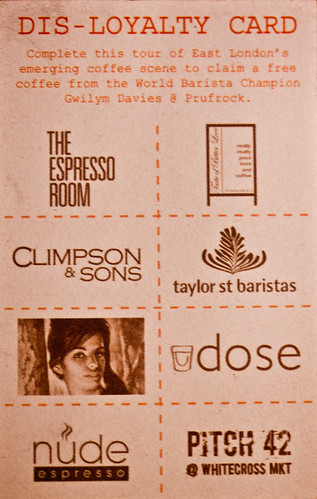
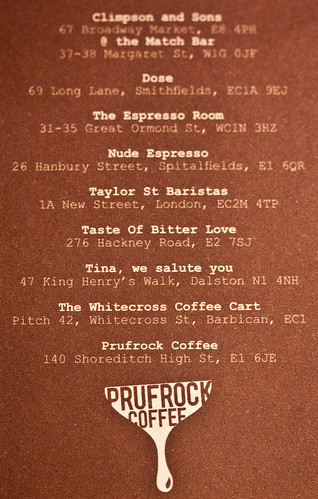
This “disloyalty card” that has been produced by the current World Barista champion is a sensational idea.


The coffee guys are onto something with their focus on cooperation rather than competition. Strong competition and an educated market is a great thing for everybody competing – it’s not great for those left behind with a shoddy product.
The ministry application is probably tangential – but important… obviously there’s a Biblical compulsion to stay with a particular body of Christ (local church) – it’s not a matter of continuous shopping around while you look for the church that best suits you.
Izaac wrote about Godcasting the other day – the act of downloading and listening to sermons from quality preachers.
He envisaged a day where we will be warned off listening to sermons from gifted men by preachers jealous for the admiration of their flocks (or perhaps, more charitably, sensitive to the possibility that listening to exceptional preaching will cause discontent).
I think we should be encouraging Christians to listen to, read, and consume as much great teaching as possible. Chances are that those Christians keen enough to seek out great teaching will be the ones who are keenest to serve their church – rather than critique. And the idea of learning everything from one flawed vessel is scary. I’ll be encouraging everybody who comes to any church I preach at to seek a second opinion on whether my teaching is faithful to scripture. That’s the model we encourage when we’re training preachers and teachers at college isn’t it? Who wants to go to an institution with one lecturer.
I meant to post this photo with the iPhone flowchart I posted this morning.
Clearly iPhones are designed to be used when you’re on holiday in Townsville…
They’re all playing LineUp.
I have a confession. Whilst I encourage lots of friends to join me in the blogosphere, I also feel threatened when they do that with moderate, or better, success.
So while I commend Izaac’s UniChurch through Chairs series to you, and direct you to his first column on the Geneva Push website, I do so feeling sinfully envious.
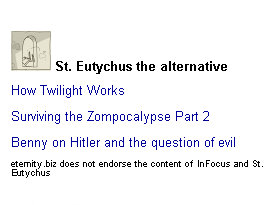
But, I can also finally announce that I have a little column in the Eternity newspaper – and a link on its homepage.
That makes me feel moderately better. I do love how they have a disclaimer.
My friend Todd is a photographer in Brisbane. He has a photoblog. It’s cool. It features mostly weddings but his regular “Fridays on Foot” posts are crackers.
Here’s one that has had a little bit of clever post production done.

The coolest thing about his post was the link to the Tetris Effect on Wikipedia.
People who play Tetris for a prolonged amount of time may then find themselves thinking about ways different shapes in the real world can fit together, such as the boxes on a supermarket shelf or the buildings on a street.[1] In this sense, the Tetris effect is a form of habit. They might also see images of falling Tetris shapes at the edges of their visual fields or when they close their eyes. In this sense, the Tetris effect is a form of hallucination. They might also dream about falling Tetris shapes when drifting off to sleep. In this sense, the Tetris effect is a form of hypnagogic imagery.
Izaac and I have discussed our Tetris effect problem. I had no idea it was widespread enough to earn its own article.
Stickgold et al. (2000) have proposed that Tetris imagery is a separate form of memory, likely related to procedural memory. This is from their research in which they showed that people with anterograde amnesia, unable to form new declarative memories, reported dreaming of falling shapes after playing Tetris during the day, despite not being able to remember playing the game at all.[2] A recent Oxford study (2009) suggests Tetris-like video games may help prevent the development of traumatic memories. If the video game treatment is played soon after the traumatic event, the preoccupation with Tetris shapes is enough to prevent the mental recitation of traumatic images, thereby decreasing the accuracy, intensity, and frequency of traumatic reminders. “We suggest it specifically interferes with the way sensory memories are laid down in the period after trauma and thus reduces the number of flashbacks that are experienced afterwards.”, summarizes Dr. Emily Holmes, who led the study.
I had read about (and posted) that study about Tetris and trauma. But this has opened up a whole new world of normalness to me.
Do you suffer from the Tetris Effect?
I also used to suffer from the GoldenEye effect – I’d be popping bad guys in my dreams after extended sessions on the Nintendo64.
This was my day at work today. And the second day of Izaac and Sarah’s excellent Townsville adventure.
I needed models for our photoshoot. Zack and Sarah were available. Here are some of the photos I took while I was along for the ride. Robyn got off school early and joined us for the afternoon.
I’ll no doubt upload more photos to this photoshoot album one day…
Convicted as I am by the reminder that links are part of the rules for blogging I thought I should draw your attention to the fact that I have reinstated the blog roll to my front page.
I’d like to update it.
If you comment or read here, and have a blog, let me know. Chances are I already read it. But it’s buried in myriad other blogs in Google Reader. If you let me know, I’ll add you.
I’ve just added Izaac’s wife Sarah – who has started her own blog.
If you have a blogroll, and you’re reading this, and I’m not on it… add me. It’ll make me feel special. And if I get lots of traffic from you I might even mail you a Freddo.