Author: Nathan Campbell

Nathan runs St Eutychus. He loves Jesus. His wife. His daughter. His son. His other daughter. His dog. Coffee. And the Internet. He is the pastor of City South Presbyterian Church, a church in Brisbane, a graduate of Queensland Theological College (M. Div) and the Queensland University of Technology (B. Journ). He spent a significant portion of his pre-ministry-as-a-full-time-job life working in Public Relations, and now loves promoting Jesus in Brisbane and online. He can't believe how great it is that people pay him to talk and think about Jesus. If you'd like to support his writing financially you can do that by giving to his church.

On essay writing

I think I quite enjoy essay writing. Though I may have romanticised it from my fleeting memories of putting in caffeine fueled all-nighters on deadline day while I was at uni. I’m trying to figure out what the difference is between essay writing and blogging (other than the finding reputable sources to cite bit).

Here is what I’ve come up with (not as a difference, but as a reflection on the art). I might be wrong. Feel free to crush my analogy in its infancy in the comments.

Essay writing is like finding threads of common quality from an array of garments, and tugging them out of those items in order to weave your own smaller and less significant rag.

Obviously you don’t damage the original in the process – unless you really go out of your way to discredit it.

I am enjoying the essay I’m writing for Bruce Winter’s Christ and the Clash of Cultures subject. Here is the question:

Citizens in the first century met in the context that declared who they were. Discuss the implications of this for the gatherings of the first Christians in the Roman East.

I’m sort of dancing around the question and trying to just write about the differences between the way the church ate together and the way pagan Rome ate at idol temples and banquets. I think I’ve jumped through enough logical hoops to synchronise the question with my topic.

Why you shouldn’t care that 50% of all media coverage comes from PR

As a former PR spin twit* nothing raises my hackles faster than the suggestion that PR is a pointless industry that thrives on the back of lazy journalism like a carrion bird picking the dead carcass of this once noble industry.

Crikey “broke” a story today, a bit of a non-story if you ask me, and it is certainly not “news” to anybody who knows anything at all… more than half of the stories in the media that Crikey monitored for a week originated in Public Relations.

After analysing a five-day working week in the media, across 10 hard-copy papers, ACIJ and Crikey found that nearly 55% of stories analysed were driven by some form of public relations. The Daily Telegraph came out on top of the league ladder with 70% of stories analysed triggered by public relations. The Sydney Morning Herald gets the wooden spoon with (only) 42% PR-driven stories for that week.

I’d be willing to bet that 95% of that 55% were about newsworthy issues that were worth breaking, and that they were reported in a fair and balanced manner.

As a PR spin twit I released hundreds of media releases a year – and probably 30% of them were never ever going to get printed but were released to meet KPIs, commitments to other organisations, or political expectations. Media releases are currency in modern business – a way that companies can be seen to be taking a proactive stance on issues. Who cares if this sort of release is picked up (well me, as a PR spin twit whose pay increases are dependent on a better than average rate of pick up of my stories)? Some media releases are produced simply to reflect the company line on issues upon request, others are glorfied advertorials that might get a run on a really slow news day – but the vast majority – are things that a company believes are going to make the news because they are inherently newsworthy. Media placement is competitive – especially when you’re in a major city where space is tight. You’re not going to cheapen your brand by releasing something that everybody recognises as dross – unless you’ve got a really good reason to do so. You want to be the guy the media calls when they need stories, not the guy who clogs their inboxes with meaningless corporatised tripe filled with weasel words.

I’m actually surprised at how low that figure is – I wonder if they excluded all sporting stories from the mix – which would be a folly, because I can’t think of any competitive sports team that doesn’t employ a media manager to train players in how to talk to the media after games. PR is happening any time someone talks to a journalist with an agenda. Unless the journalist gazumps somebody with an FOI story, or doorstops them with a bombshell question, you can bet that “PR” is at play when any spokesperson from a listed company, political party, advocacy body, or sporting team fronts a camera.

If this figure only considers proactive PR, rather than reactive PR, it’s still lowballing the actual reality – there are thousands of ways to place a story – and unless a journalist literally stumbles across the story themselves on the way to work you can bet they’ve got a source who is interested in seeing a story getting out. Whistleblowers are engaging in public relations.

It’s disingenuous to run this story suggesting that the landscape of journalism is changing, or indeed that there’s a problem with the idea of public relations. Journalists are interested in pursuing either truth or their newspaper’s particular agenda (read the hobby horses of their readership). These biases are usually so overt it’s as if they’re declared on the masthead or clearly obvious from the demographics they reach. So long as news is market driven – ie giving the masses’ itching ears what they long to hear – PR professionals have to be presenting stories in interesting and intriguing ways that will move units and sell advertising.

Here are some facts to consider when dismissing news coverage because it originates in PR…

  • Most public relations professionals hold some sort of qualification in journalism or communication
  • Most have a good eye for a story
  • Most are killing more dumb stories in their organisation as editorial decisions (ie things people think are stories that aren’t) than they are releasing
  • Most are investigating their claims and fact checking rigorously to avoid releasing bad information (which is deadly for any company that trades on its reputation)
  • Most have a vested interest in the truth getting out – unless they’re working for a terrible and unscrupulous company in which case they’re interested in cover up and are culpable, or working for a politician in which case their bias figuratively written all over their faces.

PR people aren’t the bad guys – and spin mostly isn’t the enemy. Spin is the product of a culture that crucifies any company or individual brave enough to take an unpopular stand. If you want to know why politicians vacillate and pontificate rather than providing answers to questions from journalists look what happened to Tony Abbott when he admitted the he’s scared of homosexuals (which was admittedly a pretty stupid thing to say).

This quote from the editor of The Australian – Chris Mitchell – to Crikey is pretty telling…

“It’s very difficult I think, given the way resources have drifted from journalism to public relations over the past 30 years, to break away as much as you really want to … I guess I’m implying, the number of people who go to communications school and go into PR over the years has increased and the number in journalism has shrunk even more dramatically.”

Why are we assuming that the better trained and more talented journalists end up working for the media? I’d rather keep a good company from the maws of the ravenous tabloid journalist than feed the masses their latest sacrifice any day of the week. There is no real nobility in the fourth estate (the media) any longer.

The Crikey article reaches some stupid conclusions that are pretty close to scaremongering propaganda themselves.

Our investigation strongly confirms that journalism in Australia today is heavily influenced by commercial interests selling a product, and constrained and blocked by politicians, police and others who control the media message.

Why is controlling a message a bad thing? If it was up to the unscrupulous headline grabbing media barons they’re conduct crucifixions by media, or put heroes on pedestals, just to sell more papers. Why would the media run a moderate, unmanaged quote when they can take a sensational soundbite and beat someone they don’t like over the head with it. You’re stupid not to think about how you control your message in any context.

Some PR is stupid though – I’ll leave this rant with a priceless quote from a SMH story in the Binglegate case. The only winners in this case are the promoters (and perhaps Michael Clarke). Max Markson is using this opportunity to get himself on TV so every aspiring celebrity golddigger knows his name – and the best line in any of the stories surrounding the affair came from Bingle’s law firm. In a media release.

”We are not seeking publicity by this media release.”

How can you tell me a line like that is not worth a story of its own – and Crikey complains about 55%.

*A title bestowed on me by the Townsville Bulletin’s resident cynical “about town” columnist…

Advice for young preachers

Remember all that furore last year about Mark Driscoll’s plans to go global – planting video screen churches all over the planet? Here’s some timeless advice Mark should probably listen to – pulled from a list of tips for young preachers.

Beware of the radio preachers.
As a new Christian I listened to many hours of Chuck Swindoll, Greg Laurie, Tony Evans, Billy Graham, John MacArthur and others and was blessed. However, when men preach for the radio they are preaching to the masses. Subsequently, they are not as likely to speak personally of themselves, their struggles, their families, and the specific issues in their church because they are preaching to America. Most pastors don’t preach to the nation or world, but just to their flock who need to know their pastor, see what the Holy Spirit has been doing with the Bible in their life, and how the Bible is integrated into their daily life and relationships instead of vague and general illustrations and principles that are true but not specific to their community. Also, younger preachers can often listen to so many hours of a radio preacher that they end up parroting him rather than finding their own voice and style.

Emphasis mine. You could quite easily replace the word “radio” with “internet” and have it still ring true. The catch – this quote is from Mark Driscoll’s own list of tips for preachers. Which is mostly useful.

Real life Lemmings


This street art is funny – but it is not “Lemmings in real life” (as this link proclaims) it is “characters from the game Lemmings in a real life context”… This, on the other hand, is a real life lemming…

Play with gusto

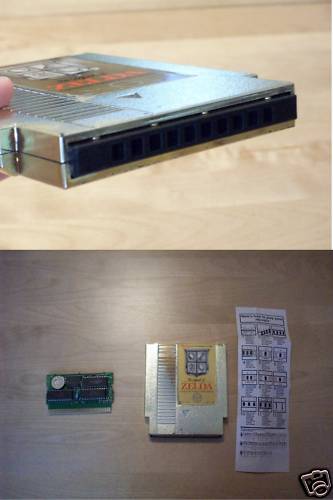
Anyone who ever owned a NES gaming console knows that to make it work you had to give the cartridge a good gust of wind. So some bright spark decided to put a harmonica inside them and sell them on ebay. Ahh. Nostalgia.

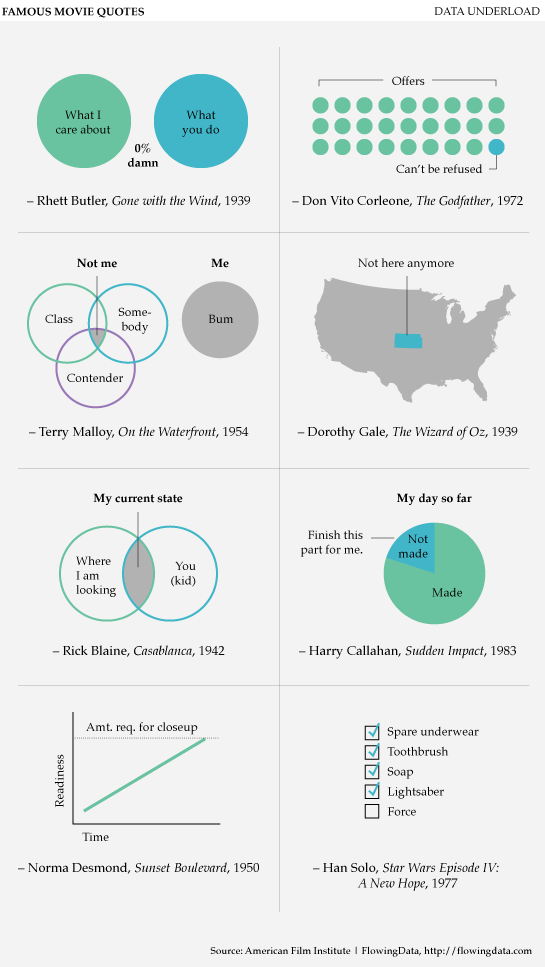
Visualisations of famous movie quotes

These are cool. From FlowingData.

Unifying unifying ideas

Izaac has been reflecting on life at Moore College – and I’m happy to see that stuff first year Moore College students are taught in the early weeks of their course is similarly formative to the stuff we’re taught in the early weeks of our course at QTC.

It would be really nice if the Bible could be summed up with one unifying idea that every passage drives towards. I think it’s something like “you need God”… other people have more nuanced interpretations of that. There are classic systems for understanding every passage of the Bible – a lens through which people come to terms with every passage they approach.

Here’s Izaac’s helpful diagram.

Let the reader understand.

Here are some of the big ideas that “famous” preachers are famous for:
John Piper: Joy.
Mark Driscoll: Missional contextualisation (and sex, lots of it).
Tim Keller: Idolatry.
Graeme Goldsworthy: God’s people, God’s place, God’s rule.
Phil Campbell: Deuteronomy 30.
Matthias Media: The answer to your every question is Jesus – and we’ll even skip the actual answer to your question and get to Jesus straight away in order to sell books that are the right size for people to read.
NT Wright: Who knows, but it makes people angry (possibly “the people of God”).

Share any more in the comments…

The nice thing about these ideas is that they all capture the essence of something true and good. And something big, but just that little bit elusive. Like an animal you try to spot in the wild – like bigfoot or the Sydney panther – that comes close to being caught but escapes just when you think you’ve got it… Thinking through how each passage we’re exegeting fits into these schemas is useful when it comes to applying them, and to pointing people to Jesus. All have their place.

The problem comes when we push one barrow as the “big” idea driving every part of the Bible. These ideas suffer because they’re never quite big enough. I’m going to plant myself into the “The Bible has more than one big idea that ultimately help us to live our lives as God’s people, joyfully, forsaking idols while pursuing righteousness by the spirit so that people will know that they need Jesus”… I’m not sure that I can fit Driscoll’s second big idea in there… Is this rocket science? It feels like one of those posts you write that is really obvious to everybody reading it.

Coffee and ministry

I wrote about the sin of instant coffee a few weeks ago – if your church is still serving International Roast at morning tea and wondering why all the young people are heading down the road to the nearest espresso machine wielding pentecostal church – then I am here to help. Vicariously (or possibly directly).

The other night we trekked out to Ipswich to make coffee at a church function. We’ve done a few events around the traps and it is always pretty warmly received. We’re still trying to figure out how to cost our services. So if you’re someone responsible for putting on church events or budgeting for them I’d love to know what you think the provision of good coffee is worth… but if you’re running a church event and you have a machine available and you want to know about quantities then this is the post for you.

Neil Atwood from Ministry Grounds (in Sydney) has a 2 group machine he makes available for hire for events. In his paperwork on the hire page he gives the following quantities to help you budget for your event. They’re a pretty good yardstick. I tend to go with single shots rather than doubles – mostly because I do most of my events in the evening, and a lot of people don’t drink coffee at night. Hot chocolate tends to be twice as popular as coffee at these events.

Coffee
We recommend that you built your event around serving double shot drinks. This is because: a) For most people it’s much easier to pull a good double shot than a single. b) The taste profile of a good double is usually much better than a single.
If a single is required (ie: someone requests a ‘weak coffee’) , you can use a double spout portafilter and let the output from one spout run into the drip tray.
On that basis, you will get approximately 50 double shots from each kilo of coffee. If you decide to serve singles, your will get double that quantity.
Milk
On the basis of using 8oz disposable cups (8oz = 240ml), using double espresso shots, and making a flat white or cappuccino/latte, you will need around 200ml of milk for each drink. That means you will need 10 litres of milk per 50 milk coffees served. If you are serving hot chocolates, you will need to allow around the same amount of milk per 8oz cup. You can use whatever milk you prefer, but most people can’t tell the difference between full cream and lite white!

If you’re a church in Brisbane looking to hire a coffee machine, beans, and a barista for an event fill out the contact form on my coffee page.

The power of social media

If you’ve ever wanted proof that the people of Facebook will get behind a good cause then look no further than this group – My sister said if I got 1,000,000 fans she would name her baby Megatron – it now has over 1.3 million fans. No word yet on whether the sister will come through on the deal. Here’s hoping.

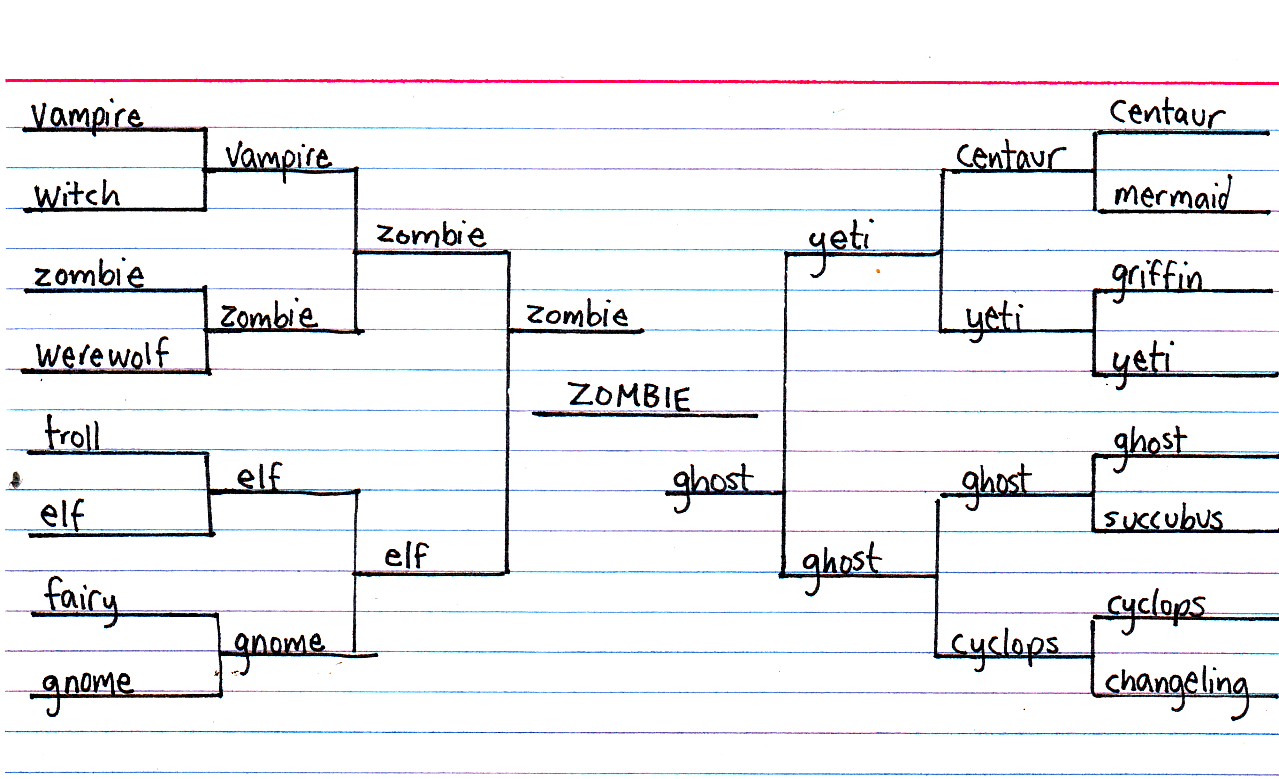
Fantasy Finals

Ever wondered what fictional character would win in a fight?

From This is Indexed.

Invasion USA: Part 4

The children sing “row, row, row, your boat…” the bus approaches a road work induced traffic jam. Someone in another car is arming a bomb. They mow down the lollipop man. And all the witches hats. They plant the bomb on the bus. It beeps. The timer says 182. Chuck is in the traffic jam. He takes the same route as the bad guys. Missing the lollipop men. The timer says 90. The timer says 75. The timer says 29. Chuck grabs it. No. He misses it. He grabs it. It’s beeping in his cab. He drives up beside the bad guy’s car. He says “did you lose this?” The car explodes.

Chuck is walking through an abandoned sideshow alley. We see a destroyed merry-go-round. He looks sad. The upturned carriages (it’s not a horse one) are a stark reminder of the trouble gripping the nation. The not very sneaky government offical comes up to Chuck for a dialogue. They argue. Chuck gives him a mission. He wants to refuse.

We’re now at a military base. The news anchor mentions martial law. Both Chuck and Blondie are in their hotel rooms watching space ships crash into buildings in some d-grade movie. Chuck wears jeans, army boots and a denim vest to bed. Special agents are running towards one of the rooms with the spaceships on television. We’re not sure which one. The spaceship crashes into the White House. It’s Chuck’s room. The police arrive. They tell Chuck that nobody is beyond the law.

Critics are on television denying that the coverage of terrorism is having an impact. Blondie watches the news – Chuck’s arrest for “vigilante behaviour” is in the bulletin.

There are lots of army men. It’s day time. Chuck is paraded – buttons open – through a mob of journalists. At least one calls out “would you like to make a statement” – I would have thought wearing an unbuttoned denim shirt to court was statement enough.

The pesky journalist is reading a pamphlet – dropped by helicopters – about a new curfew. She runs up to a cordon of soldiers – who block her path until she shows her press credentials. She’s in the court room. Chuck says “see you round” after they engage in some flirting. Churck addresses the media. He speaks directly to Blondie. “I’d like you to close your eyes, when they open, I’ll be there. And it will be time to die”. Blondie calls in all his troops for a final showdown with Chuck.

Incompetent security personnel are taken by surprise by a marauding army of Russians – who jump back into their fleet of armoured cars and trucks. The bad guys drive towards Chuck. They take pot shots at army men as they go. Blondie takes a helicopter. He arrives at his destination just before his infantry. They fire their weapons in random directions. Now some tanks are on the move. We can’t tell if they’re good guys or bad guys. Chuck appears next to Blondie’s (now vacant) helicopter. The pilot tries to take off but Chuck shoots the chopper with a rocket launcher.

The horde of bad guys enter an office building – they shoot lots of empty desks. They move up to the management level. There are nice paintings on the walls. The people driving the tanks were good guys. They set up outside. The bad guys shoot up the executive offices – incliuding a fish tank. They are looking for Chuck. There is no Chuck to be found. They realise it’s a trap and try to escape. They run outside and are confronted with lots of tanks and guns. Chuck is upstairs where Blondie tries to escape. One bad guy tries to shoot down an army helicopter and the assembled soldiers open fire. It’s hard to tell who’s winning.

Chuck is walking through the offices. He’s in middle management. He shoots one bad guy.

The tanks are crushing the armoured cars outside. Chuck kicks another bad guy in the head then shoots him – he was wearing a beret so he deserved it.

There is more fighting outside. Chuck shoots four more men in the office. Some hide in cubicles. Chuck goes to reload. He realises he’s out of ammo. He ditches his machine pistols (which are joined together by a leather holster) and picks up a much larger weapon from his fallen prey. He enters a very dark room. There’s a suit hanging on a coat rack. He keeps walking. There’s a closed door. He approaches. Quietly. He raises his gun and steps inside. It’s empty. He approaches another closed door. He has a knife in his belt. There are two men behind the door – their ears are pressed against the wood. Chuck steps back and uses the grenade launcher to blow two holes – one either side of the door. One of the bad guys stirs. Reaching towards his gun. Chuck drops his machine gun and the bad guy reaches for his pistol. Chuck throws the knife at him. And kills him. Now it’s just Chuck and Blondie. Chuck is unarmed. Chuck runs around the office calling Blondie’s name. The walls of the office look like those peg board things you put up in your tool shed to hang your tools from. Blondie enters a dark room. Chuck waits for a few moments. Then pounces. Like a panther. Blondie squares up like a boxer. Chuck kicks him in both knees and then the head. This isn’t one of those fights wear the bad guy gets to take a swing. Chuck kicks him in the head again – and then disappears. Blondie runs into the room with the two big holes. He picks up a rocket launcher. We see more gunfighting outside. The tide has turned in favour of the US army. The bad guys have brought their pistols to a tank fight.

Blondie is walking the hallways with his rocket launcher. Very slowly.

There’s a cease fire called outside. The evil army lay down their weapons. The army men cheer.

Blondie is still walking the corridor very slowly. Chuck appears behing him, out of focus at first, he has his own rocket launcher. He locks and loads it. He says “it’s time”… and we have a rocket launcer duel. Blondie grunts and swings his rocket launcher around to shoot Chuck – but he’s too slow. Blondie wears Chuck’s rocket and goes flying out the window.

Credits roll. The end. Stay tuned for Robyn’s review. Here’s the final scene.

And some sort of trailer.

Invasion USA: Part 3

Two very muscly men are polishing their car in a backstreet. One can’t touch his sides with his elbows. They are disturbed by a bunch of passers by. They look angry. The two car washing guys follow the bad guys into the high class establishment. The bad guy has a sore hand. Chuck pins his hand to a bedside table with a knife. Now he has two sore hands. The knife is serated. He pulls it out – now he has a saw hand.

Someone tries to intervene, Chuck says “if you come back in here I’m going to hit you with so many rights you beg for a left.” The tough car washers arrive. Chuck says “you’re beginning to irritate me. He pulls the pin from a grenade and puts it in the bad guy’s sore hand. He gives the man holding the grenade a warning to pass on to Blondie. As he escapes the man throws the grenade out the window – onto the car that was being polished below.

A child throws bubble gum onto a shopping centre display. He is chased by security. A bad guy carrying a beeping package disguised as Christmas presents walks into a department store. He leaves the bag and walks away – a helpful shopper picks up the bag. The bad man runs away as the helpful man tries to return it. The bad guy doesn’t want to die. Bad men carrying guns appear from nowhere. The bomb goes off. Chuck arrives, to much fanfare. Driving his truck through the shopping centre doors. There are six men with machine guns. His truck is bulletproof.

The writer of this show doesn’t like children. Every scene a child appears in is followed by an act of unrelenting and unmitigated chaos.

The bad guys knees aren’t Chuck proof. Chuck is carrying two machine pistols. The bomber is trying to hotwire a car that has been on display in the shopping centre. Grenades are hurled. Chuck plays chicken with the bad guy’s truck. He jumps on the back. The punch sound effects in this movie are just like the punch sound effects in a boxing game. Chuck hangs on to the truck until it drives through the shopping centre doors. The bad guys grab a hostage and carry her along – outside the truck. The pesky journalist appears on the scene and jumps into the convertible that Chuck steals. Chuck’s hair and beard blow in the breeze. He rams the truck – a Nissan – with his convertible. The truck passenger shoots. The journalist rescues the bad guy’s hostage. After a few attempts to grab on to her fail.

They drive past a baseball game shots are fired. The bad guys drop a grenade inside their car. Chuck runs them off the road. They explode, crashing into a row of parked cars as they do for maximum effect. The director isn’t a fan of subtlety.

Blondie really likes shooting people down the front of their trousers. Blondie is scared of Chuck. His loyal offsider (the guy who shot the couple on the beach) convinces him not to go after Chuck by himself.

The police inspect the damage at the shopping centre – they mention in passing that the pickup truck they had recovered from the shopping centre has been stolen from the depot. We cut to Chuck, driving said pick up truck. He wears black gloves. Chuck is waylaid by men wearing army clothes. They block the road at the exit and at the rear. Chuck shoots them all. Except one, well, he shoots him, but he leaves him allive. A fellow ranga. He gets information from the ranga. These rangas stick together.

It is night time. Choppers are flying around telling citizens to stay off the street. A family with a child are caught running around after curfew. They escape into a church.

Bad guys are hiding in trucks. The minister in the church starts his prayer with “protect our children”… the bad guys descend on the church. They rig the church with explosives. Blondie is told his team of crack assassins has been terminated by Chuck. The congregation sings an unrecognisable hymn. The bomb beeps, helpfully, so that we know it’s a bomb.

We hear the words to the hymn now – “In my hands, oh Christ I bring”… anybody recognise it?

The bad guys try to blow up the church. Chuck has their bomb. It’s no longer beeping. Chuck drops the bomb (in a suitcase) on them. He says “didn’t work huh? Now it will.” They blow up.

A butcher is out of meat. A rabble forms. The military arrive. They set up a perimeter around the rabble. They are about to mow down the innocents when Chuck appears. He takes them down. Mostly. The bald henchman grabs the pesky journalist – who happened to be at the butchers. The bad guy calls Chuck’s name. Chuck appears beside him and grabs his gun, he makes him shoot himself in the head, rescuing the journalist – who employs the “treat em mean, keep em keen” ploy and calls Chuck a creep.

A bus load of children are getting ready to flee to the country. Their parents wave goodbye. The children look sad. Clearly something bad is about to happen to the bus. This is the director’s theory regarding pathos.

Invasion USA: Part 2

Meanwhile, the bad guys are celebrating removing their one obstacle by heading to a beachside pub – it looks like the pub from that Keanu Reeves surfing movie I’ve never seen.

They plot the downfall of America. A young couple frolic at the beach – wearing tropically themed speedos. They have a little portable television. Some flares go off on the beach. The main bad guy’s loyal offsider approaches the couple as they canoodle on the beach. He looks sad. He walks up and shoots the couple And laughs at a joke about Liberace’s underwear on the television. Boats approach. The invasion has begun. Hundreds of henchmen wearing dark clothes and speaking in foreign languages run up the beach. Treading on the dead couple and their television. They are all carrying guns. Most of the guys are wearing muscle shirts. They pile into an armada of waiting trucks. The main bad guy – blondie – says that in 18 hours “America will be a different place”…

The not very sneaky government official (who earlier broke into Chuck’s house) spots Chuck at a hotdog stand. Chuck agrees to take the assignment on the proviso he works alone. The government official informs him that he is a deniable operator.

A pesky journalist and possible love interest hassles the police as they investigate the beach shooting. She calls Chuck “Cowboy”…

Two children squabble over who gets to put up the Christmas decorations. Blondie’s pickup pulls up. The little girl runs outside to put up the Christmas decoration. The Bad guys put on goggles. And then blow up the children’s house. And another house. And another house. And another house. And another house. And another house. The poor suburban street is obliterated. The houses in the street have clearly subscribed to K-Rudd’s pink bat scheme – they all burn far too easily. The street is appropriately called “First Avenue”…

The pesky journalist lady takes a photo of people dancing outside a Community Center. Two men talk about meeting women. We’re in Miami now. They approach the young ladies. A police car arrives on the scene. The Spanish Lothario approaches the police. They look more like the stripograms from Arrested Development. They pull out shotguns and start shooting the crowd. They stop shooting because one policeman says to the other “stop, he wants witnesses”… The real police arrive and a riot starts.

Chuck is driving the back streets. He passes a black Elvis impersonator and some angry street workers. Some bikies hit his car with chains. He keeps driving. Chuck Norris is not phased by bikies with chains.

He walks into a dingy bar filled with nefarious looking characters. A drunk guy stops Chuck, looking to make trouble. Chuck grabs his hand and breaks the bottle he is holding. Chuck sits at the bar. He speaks to his informant. He’s looking for Blondie. These two have history – in South America. The informant has seen some bad guys in another bar. He says “see you in Hell” to Chuck, Chuch says “send me a postcard”…

Invasion USA: Part One

This movie is so good I’m going to have to watch it in a couple of sittings. Here is my summary of the first half hour or so – with a particular focus on scenes involving Chuck Norris.

Opening scene – a boatload of Cuban refugees are paddling towards American soil. Their engines aren’t working. They spot a boat with a USA flag. The boat pulls up. It looks like the Coast Guard. Oh No. The captain of the boat says “welcome to America”, the refugees cheer. The guys on the US boat seem too well armed to be the Coast Guard. They open fire on the little refugee boat. Killing all on board. They climb aboard the refugee boat and remove a false floor. It’s full of drugs. Cut scene to Chuck.

Chuck Norris is driving a swamp boat. Looking stern (facial expression, not to the front of the boat). Wearing denim.

Chuck Norris Fact #1: Chuck Norris always looks stern when driving a boat.

Chuck Norris Fact #2: Chuck Norris doesn’t look cool in denim, denim looks cool on Chuck Norris.
Time passes. The bad guys do something to set up some sort of narrative tension. Cut to Chuck Norris.

Chuck Norris is in a swamp wrestling a crocodile.
Chuck Norris Fact #3: Chuck Norris was wrestling reptiles when Steve Irwin was a toddler.

The bad guy just shot another bad guy down the front of his trousers.

Chuck Norris is offered a dinner date with an elderly native American. He wants him to eat frogs, from a jar. Chuck Norris says “I’m sick of frogs”…
Chuck Norris Fact #4: Chuck Norris doesn’t like French people either.

A guy in a suit tries to enter Chuck Norris’ house in the dark without knocking. He disturbs an armadillo. Chuck disturbs him. Chuck says “I’m not interested” in the guy’s ear before he’s had a chance to offer him work. Chuck walks out of his own house leaving the guy there.

Chuck Norris Fact #5: Chuck Norris does not need a “do not disturb” sign – Chuck Norris is never disturbed.

The bad guy just tried to assassinate a senior government official with a rocket launcher. Chuck Norris caught him, pointing a pistol at his head. Chuck Norris said “it’s time to die” and then didn’t kill him. But kicked him in the head. The bad guy woke up. It was only a dream.

Chuck Norris Fact #6: Chuck Norris hurts bad guys in their dreams.

Chuck Norris is using a chainsaw. Four swamp boats worth of bad guys approach. There are three guys per boat. Their approach is obscured by the sound of the chainsaw. The armadillo is scared. Armadillos look a bit like their name. Like if I wrote the word “armadillo” and asked you to draw what came to mind you’d draw what they look like.

The bad guys are disturbed by the approach of Chuck’s old Native American friend. He shoots one with a shotgun. The Bad guys blow up Chuck’s shack with about eight rockets and a few shots from a grenade launcher. The armadillo survives. Hurt. So does Chuck. The bad guys leave on their swamp boats. Chuck carries his native American friend (John Eagle) into the charred remains of his swamp shack (which is the kind of beach shack you live in if you’re really tough). Chuck lights a lamp – a kerosene type hurricane lamp thing – and throws it into the shack – giving his Native American friend a fitting farewell. He rides off on his swamp boat. Arriving in town with vengeance on his mind.

Chuck Norris Fact #7: It takes more than 12 explosive rounds to kill Chuck Norris. But only one explosive round with Chuck Norris for him to kill you.


Chuck Norris Fact #8: Chuck Norris is culturally sensitive and knows the burial rites of obscure Native American tribes and is not afraid to use them given the correct context in which to do so.

The town square has a billboard advertising frogs legs. Chuck gets into his beaten up pickup truck and drives away. The billboard is next to a building called “Eagle John’s Restaurant”…

To be continued…

Liveblogging Chuck Norris’ classic: Invasion USA: Introduction

I don’t think I’ve ever live blogged a movie before. Tim (as in Tim and Amy, as in the Adventures of Amy and Tim) watched this movie and offered it to the first person to claim it via his blog. That was me.

How can a movie with a poster that looks like this be anything but awesome.