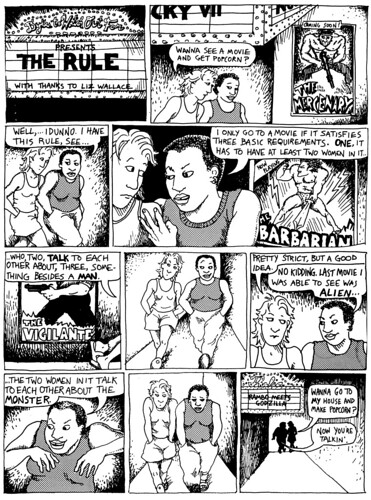
Wouldn’t it be nice if your morning news came with a straightforward interpretive key – something a little bit like these warning labels (available as a pdf) from this guy named Tom Scott.


Wouldn’t it be nice if your morning news came with a straightforward interpretive key – something a little bit like these warning labels (available as a pdf) from this guy named Tom Scott.


Have you been wondering why the Labor party is launching its campaign today – less than a week out from the election? I know I have. Now I know, and it makes me grumpy.
…a loophole in Department of Finance policy means the sizeable daily travel allowances for politicians and staffers are paid out of the public purse until the day of the respective political parties’ campaign launch.
The Liberal Party and the Nationals have been carrying their own costs for a week and will ultimately be financially responsible for nine days of the 33-day campaign.
However, the ALP will continue to have public funding until the conclusion of tomorrow’s ”official” campaign launch in Brisbane, leaving Labor with just five days to pay for.
Minor parties have never looked more attractive to me.
Kanye West joined Twitter a couple of weeks ago (I think I mentioned it at the time). His Tweets have been, shall we say, over the top. So over the top that a few people decided they would make nice captions for cartoons from the New Yorker, sparking possibly the funniest internet meme ever.


A bunch here at Huffington Post, and some at urlesque, and at BuzzFeed.
A gonzo journalist who spent twelve years getting to know the ins and outs of the Japanese organised crime gangs, the Yakuza, managed to sit three bona fide gangsters down to play Yakuza 3 – a Playstation game.
They seemed to enjoy the experience. The interview is here, and it’s pretty fascinating.
“M: A real fight–it’s short and it’s brutal. Over in a minute. Nobody goes around trading blows and crap like that. Usually the first guy to punch wins.
K: I like that you can grab things like ashtrays or billboards and beat the crap out of the punks bothering you. Or smash their faces into car windows. That’s what you’d really do in a fight, grab something and use it as a weapon.
S: Why doesn’t he just shoot them?
K: That would be unrealistic. Nobody is going to waste a bullet on some street punk, like the ones that keep bugging Kiyru.
M: If they wanted to make it realistic, he’d pull out a gun and shoot it and miss! Or the damn thing wouldn’t fire. That would be realistic. (They all laugh).
K: Shooting people sends a message.
M: So does shooting anything. Shooting people gets you sent to jail.
K: That’s part of the job description. ”
Mikey raises the question1, on Christian Reflections, about whether its ever acceptable for a muso to start providing prayer muzak.
I say no.
I’d love to read your thoughts over there too.
1 Though he calls it something very different -“the post-sermon prayer tinkle” which to me sounds a little like a post sermon bathroom break, analogous to the obligatory pre-sermon bathroom break (if you don’t know about this, don’t ask. I think it’s called “Preacher’s Belly”… or it should be.
When Hanson famously crooned:
“Plant a seed, plant a flower, plant a rose
You can plant any one of those
Keep planting to find out which one grows
It’s a secret no one knows.”
In their wildly popular chart-topping pop-ballad Mmm-Bop, which was, as we all know, a lyrical triumph, they could well have been singing about the Life Box – an environmentally friendly postage box that, when planted, may or may not become a tree.

The cardboard box is laced with tree seeds. You just have to soak the box in water, tear it into pieces, and stick it in the ground. Easy.
Details here.
Some time ago I posted about an invention that monitors the weight component of your toilet transaction. It looks like they weren’t the first to think that idea up – here is a patent submission for a very similar item, from 1924.


Can you imagine people’s Facebook statuses with this sort of thing. “is proud of little Johnny whose bowel movement just registered 700gm on our toilet scale.”
One small step for man, one giant leap for oversharing.
This is a pretty funny story about how internet conspiracy theories spread. It all started with a serious Wired story about a vaccine that may mitigate stress related hormonal damage to your brain.
Headline: Under Pressure: The search for a stress vaccine.
It became a four hundred word tabloid story about a vaccine for stress.
Headline:Jab that could put a stop to stress without slowing us down.
Then a little conspiracy committee decided that what was going on was some sort of clinical trials of a mind altering, brain eating, drug that would be a tool of the nefarious one world government.
Headline: Establishment Media Pushes Brain Eating Vaccines.
This last group encouraged readers to search “brain eating vaccine” on google – and it quickly hit the google trends charts. One day I’m going to spend a bit of energy blogging specifically about the words that are on that chart at the time to see what happens to my traffic.
My good friend Chris is a seahorse expert. Somebody made a minidoco about his work in the waters of Sydney. It’s pretty cool.
Seahorses in Sydney Harbor from Maiara Da Rocha Skarheim on Vimeo.
We all know that some foods were made to go together. Perhaps the most appropriate way to recognise this is in ampersand form. Like these:
There are more here from designer Dan Beckemeyer. Via The Jailbreak.
Here’s how to make an infographic. In case you’ve been wanting to jump on that particular viral bandwagon.

Via here.
This was the last session and concluded with a nice little summary of how these thoughts can be used in meeting culture with the gospel.
Self-rule and self-mastery
If we are to exercise dominion over creation then that should start with the creature closest to us – ourselves. This is one of the things that distinguishes us from the animals. Animals don’t exercise self-control. We can train them, but they are driven by instinct. We are humans who are less than human because we do not exercise dominion over ourselves.
Esau, the hairy baby, is portrayed as a beastly human – a hunter who is at home in the wild. Jacob is more “ideal” – but he has to cover himself in goat skin, like an animal, in order to trick Isaac.
Esau lives on instinct, like an animal. He sells his birthright to satisfy his hunger. He’s not exercising self control.
This opens up some interesting angles on our culture – we define what it is to be human in degrading, instinctive, animalistic terms – “if it feels good do it” is the modus operandi of animals. Does our advertising sell the human experience or a sub-human experience?
Christian ethics – like abstinence before marriage – is decried as unhuman. It’s a case of exercising self-control.
We need a rich and diverse presentation of the gospel to reach our culture – because not every angle will hit every person.
The good news of the gospel is our hyper-restoration. We’re not just restored to Adam’s status but beyond. We go past the pristine. There’s a way out of our beastialised humanity. There’s a way for us to exercise dominion over creation, and ourselves. The gospel reconceives what it means to be human. The question “What does it mean to be human?” is a great way to address our culture with the gospel.
The good news of the gospel is not just about Christ – but about Christ and his Spirit. We’re often Christocentric in a way that forgets the Spirit. It can seem like evangelicals are a bit embarrassed by Jesus’ humanity – we like to focus on his divinity. Our definition of true and normal humanity is skewed – we talk about our reality, normal humanity, as though our fallen selves are the norm. Perhaps Jesus’ humanity is the norm – and is in line with our created identity (ie that which we were created to be prior to the fall). Jesus is the true bearer of the divine image. The true human (in his sinlessness). It’s not super humanity but true humanity. It’s where we’ll be in our resurrected state. Sin is the aberration. We say “to err is human” but that’s really a definition of what it means to be fallen humans.
Jesus may, in fact, be no more than humanity as it’s meant to be. The resurrected Jesus is as humanity was always meant to be.
The writer of Hebrews reads Psalm 8 as a prophecy about the Messiah. “We see him for a little while made lower than the angels, now crowned with glory and honour.”
True humanity submits to God’s authority – which is what Jesus did, in the extreme, at the cross.
The writer of Hebrews doesn’t limit this picture of glorified humanity to Jesus alone – but puts it as the destination for humanity through Jesus – the purpose of Jesus’ resurrection is to bring many sons to glory. Jesus suffered, died, and rose again so that we might become like him as “sons of God” – not in a vague liberal sense that we’re all sons of god, but to be what Adam was supposed to be.
The doctrine of glorification (eg Romans 8) – we need to think about this doctrine as a now but not yet doctrine – yes, it’s our condition in the age to come, but the power that will transform us (the Holy Spirit) is already at work in us. Mostly it’s not yet. But that power of transforming us into glorified people is already at work in us. The Spirit’s work in us is to make us human in a way that God’s breath into Adam made him human. We’re being made a new people, now glorious.
When we are speaking about what it means to live as true humans Jesus should be our starting point because he is the “true human.”
Ethics
Living as true humans has to mean living in Christ. Once you come at it this way, Christian ethics are simply to live humanly (rather than animalistically).
If we are to understand our fallen humanity as “beastly” where we live without self-control and on instinct. Peter uses the analogy of “brute beasts” when describing those who blaspheme – “creatures of instinct born only to be destroyed”…
Our tendency is to live by instinct. We should, instead, be living via the fruit of the Spirit, a redefinition of what it means to be human (Galatians 5), where self-control gets a Guernsey. Paul’s language in 1 Corinthians 9, with an athletic comparison, also uses self-discipline as a key for life as a Spirit empowered human. The new human is united to Christ and empowered by the Spirit and so is beginning to exercise the dominion that Adam was meant to exercised over creation.
Self-control is about every area of our lives – not just about sex. It’s about our tempers, about controlling our tongues, about controlling our diets, it’s about controlling our passions. This is counter-intuitive in our culture, which regards self-control as an unnecessary prohibition. Our world looks at self-control and calls it a vice (cf Romans 1).
When we look at the fruit of the spirit we should think “this is what it means to be human, no more and no less.”
Fresh angles on evangelism.
We live in a world where everybody is questing to be truly human.
Every religion and ideology, every political vision, is built on the question of what it means to be truly human.
Our political debate is just an expression of what it means to be truly human. The health care debate in the US is also underpinned by what it means to be truly human. The debate about gay rights, our popular culture (eg Twilight), just about every expression in our world is undergirded by this question of what it means to be truly human. We say that the definition of true humanity focuses on the question of Jesus Christ – who shows us what it means to be God, and also what it means to be truly man.
We say “consider Jesus” the one true human, defining humanity by any other starting point is defective. We, as Christians, should be modeling what it means to be human. We are the ones living the truly alternate lifestyle. Our task is to live humanly and model what it means to be truly human.
We are united to Jesus and have begun the process of becoming truly human. We don’t get up and pronounce that we’ve got something that others don’t – but we do model this fuller picture of humanity. As we become more “godlike,” as the Spirit transforms us, we become more human, and then we become advertisements for the gospel.
Our gospel message is redefining and modeling humanity in a way that is hopefully attractive to the people around us.
Deuteronomy – when Israel keeps the law the nations go “oh what a wise God you have…”
Australia is ahead of the US in terms of being a “post-Christian” society – the US is moving that way and grappling with the question of what that will look like.
More notes from Doug Green… including some more speculative stuff (by his own admission) that was pretty thought provoking. You’ll notice that in order to convey the essence of some sort of characteristic Doug would often add “ness” to the end of a word, and occasionally negate that with an “un”… my spellcheck didn’t really like that so much…
Evangelicals have a low view of what it means to be human even before we introduce the subject of sin. In our unfallen condition we were like God as a son is like his father.
The Fall Stuff – less pretty, and a little more speculative…
We know how the story in Genesis 3 transpires – the “king and the queen” reject their undergodness. The consequences of Adam’s sin have been understood conventionally in expressions like the WCF.
Five things that happened in the fall:
Romans 3:23 – because we’ve sinned we now fall short of the glory of God that attached to us as unfallen humans (rather than being a case of missing God’s standard of perfection). Psalm 8 – for all have sinned and we no longer have our heavenly nature. We are “falling short” humans.
Doug Green is speaking at QTC today. His first session was on the “image of God” in Genesis (and a bit of Psalms, and a bit of Kings). Here are my notes.
Guilt and Depravity – the two problems facing humanity
Guilt is the bigger issue in western sentimentality.
Depravity concerns inner corruption.
This double focus means that when it comes to defining the gospel we focus on these two conditions.
The WCF mirrors this focus on these concerns. This is what our reformed minds are interested in. If we talk about the gospel it’s likely we’ll end up talking about these concerns.
Justification – we get a new legal position and inner moral orientation. This is how we define the work of Christ and the Spirit. These views have come under criticism in recent years (the justification debate). Our definition is possibly too individualised. We need to do a better job at describing the gospel as it applies to the cosmos – but that’s not our focus today.
The Human Condition
The atonement is incredibly important for understanding the solution to the human problem. It is the central element in God’s answer to the human condition.
Nothing today is a contradiction of that central tenant.
“The Gospel as the Way to be Truly Human”
The salvation or gospel story told from the perspective of what it means to be truly human.
Image of God – that was our original definition of humanity.
The consequence of human sinfulness can be enriched by saying when humanity sinned we lost our glorious godlike status. We metaphorically fell from heaven, and we became less human as a result. We became more like the animals we were supposed to be ruling over. All sin has a dehumanizing effect. It makes us more beast than human.
Imagine a sliding scale on a continuum with God on one side and the animals on the other – we were, in the beginning – closer to the God end of the spectrum than the animal side.
Doug is pushing a very high anthropological view – true humanity was more like God in the beginning than we often think. Sin tipped the spectrum.
The word “fall” captures the idea of this change in status.
We didn’t become mere animals, and the image of God was not obliterated within us (Genesis 9). Something happened there to decrease our “image of godness.” Before the fall we were “glorious” creatures – but there’s a sense that sin ripped away or diminished that glory. We now live in perpetual quest for our lost honour and glory – perhaps an interesting angle on our human condition.
The good news of the gospel is that you can become glorious again. You can become human again. This has implications for pastoral life and evangelism.
The Godlike Glory of Humanity
Genesis 1 v 26-27
When we read the text we focus on the word “image” and forget the “likeness” – what does this mean? It confirms the creator/creation distinction. WE are creatures like the fish and the birds, but on the other hand among the creatures there is one that resembles God. That is man. We have “one foot on either side of the creator/creature distinction” – in the ancient world if you wanted to know what a God looked like you were supposed to look at his image or statue. His physical resemblance. However you talk about the image of God in humanity you can’t ignore Psalm 8.
“You made him a little lower than (Hebrew) Elohim” – a little lower than divine beings. That’s an awfully high anthropology. That we were just a tad short of divine.
Instead of saying that humanity was created like God the psalmist says that we were made similar to heavenly beings. The main point is that there’s something almost divine about unfallen humanity. [ed note – which would be consistent with reading the passages in the light of an eschatological view of humanity].
“You crown them with glory and honour” – this divine glory, traditionally divine characteristics, rested on humanity.
To bear the image of God meant that the first human, Adam, bore aspects of divinity.
Our doctrine of “total depravity” leaves us with a low view of humanity – but that’s our post fall humanity – what does it mean for us if we’re in Christ. Sometimes Doug wonders if our view of who we are as Christians is a little anemic. “There but for the grace of God go I” – we’ve been transformed, on the road to glorious humanity, so we’re not just forgiven sinners anymore…
The Holy Spirit in us gives us an element of Godlikeness. Maybe we need to take that work a little more seriously.
We’re godlike – but we’re also “sons” – Genesis 5 gives us an interesting hint about what it means to be made in the image and likeness of God. “Adam had a son in his own image, in his own likeness who he named Seth…” Seth was to Adam what Adam was to God. Luke’s genealogy makes that point (Luke 3 – Adam the son of God).
“Son of God” is a way of referring to exalted humanity.
We were godlike. We were glorious. We were sons.
We were godlike, therefore we were kings over creation.
“then God said let us make mankind in our own image, in our likeness…” with a purpose construction in Hebrew “so that they might rule.”
Because the original humanity was created in the image of god they were created to be kings over the rest of creation – exercising dominion.
It’s a vice-regency deal. In the ancient world creation isn’t a neutral act. When gods create they gain mastery over their creation. [Interesting aside – perhaps our postmodern approach to literature (denying authorial intention) is part of this desire to not associate creation with mastery/ownership. It’s certainly consistent.]
God’s rule over the world is meant to be a mediated rule – through his creatures, humans. Who are designated to rule on his behalf.
The first humans were not kings over creation – they were “God’s kings” – like the governor general with teeth. With real power.
“You made him ruler” [ Psalms ]
“The flocks and the herds… all creation belongs to the Lord God, all creatures are the works of his hands”
Genesis 2 portrays Adam as a king (subtly). One is obvious – the naming of the animals. Name giving was also a way of exercising dominion and authority.
Genesis 2:7 – much more subtle. The language of being taken out of dust, throughout the OT, is the language of enthronement. 1 Kings 16 is an example. The prophecy against Bashar “I lifted you up from the dust and I made you a leader…”
Dust is the language of “nobodyness” this language of being created from the dust is the metaphorical “raising up of a king” – “dust you were, and to dust you will return” is the language of dethronement.
2:15 – the portrayal of Adam as a gardener – in the Ancient world the kings were the garderners who made their nations fruitful. Ecclesiastes 2 – “this is my greatness, I built houses and I planted vineyards and parks, I planted all kinds of fruit trees…” the proof of the author of Ecclesiastes’ great kingship is that he is a gardener.
We were created to be kings over creation, but we are also kings under God.
Humanity was godlike – but not god. And the godlikeness was subject to recognising this relationship. Should they forget that they would immediately lose their godlike standing.
“The Lord God commanded them: “you are free to eat of any tree of the garden…”
Adam receives a one word Torah. A single test of obedience, of creatureliness. Failure to comply casts him out of his kingly role.
To be truly human is to submit to God and to obey his commands.