In case of zombies: flee to Canada
Oh Canada.
Canada’s Minister of Foreign Affairs, in response to a question during Question Time:
“Under the leadership of this Prime Minister, Canada will never become a safe haven for zombies ever…”
This is, perhaps, tempting fate. If you’re smart enough to prepare for zombies, perhaps its indicative of the size of your brain, which is a tempting delicacy for said zombies. Classic catch 22.
#Benspiration a new craze sweeping the internet
Faux-spiritual fauxtivation is the new black on Instagram. I’ve always fancied myself a hallmarkesque writer of vaguely convincing half truths – and lets face it, that’s what passes for truth these days. So I’ve launched an experiment that is part seeing how gullible the internet is, part fun, part outlet for my cynicism.

Will you join me? Will you be #benspired?
You can get your regular dose of #benspiration, or contribute, at the Facebook page, the instagram hashtag #benspiration, or you can follow @benspiration on instagram.

When I get sick of it I’ll do a bit of a breakdown on what sort of pictures and quotes were the most popular and what that says about the instagram generation. Maybe. Or maybe I’ll be so benspired I’ll start believing the hype.
Rappin for Jesus
These guys do “exude some Christian swag.”
But this is not how to make the gospel relevant for the hip hop community. There is so much wrong with this… particularly the bit where a couple of middle aged white people are more than a little bit racist, not to mention that they’re rapping.
Total Perspective: De Botton, Douglas Adams, and God
I’ve been thinking a little more about one of the points I was chewing over as I wrote yesterday’s thing about church for atheists – just how De Botton’s proposed London temple seems geared to produce some sort of nihilistically driven depression because it makes it clear that people are oh so insignificant in the scheme of the universe.

Image: Total perspective (arrow not to scale).
It’s a horrible narrative to find yourself part of… unless you’re prepared to buy into the idea that you’re totally at the heart of the universe. Which is, of course, what happened with Zaphod Beeblebrox when he confronted the Total Perspective Vortex in the Hitchhikers Guide to the Galaxy story The Restaurant at the End of the Universe…
The Total Perspective Vortex is a torture chamber that leaves most people in a nihilistic malaise, broken by the realisation of their own abject insignificance. It does this pretty much by presenting the same truth that De Botton proposes to celebrate…
“When you are put into the Vortex you are given just one momentary glimpse of the entire unimaginable infinity of creation, and somewhere in it a tiny little mark, a microscopic dot on a microscopic dot, which says, “You are here.””
That sort of perspective hurts…
“At that moment another dismal scream rent the air and Zaphod shuddered.
“What can do that to a guy?” he breathed.
“The Universe,” said Gargravarr simply, “the whole infinite Universe. The infinite suns, the infinite distances between them, and yourself an invisible dot on an invisible dot, infinitely small.”
In the book, the guy who built it did so because his wife nagged him…
“Have some sense of proportion!” she would say, sometimes as often as thirty-eight times in a single day.
And so he built the Total Perspective Vortex — just to show her.
And into one end he plugged the whole of reality as extrapolated from a piece of fairy cake, and into the other end he plugged his wife: so that when he turned it on she saw in one instant the whole infinity of creation and herself in relation to it.
To Trin Tragula’s horror, the shock completely annihilated her brain; but to his satisfaction he realized that he had proved conclusively that if life is going to exist in a Universe of this size, then the one thing it cannot afford to have is a sense of proportion.
The vortex is a little chamber, with a single door, that contains the whole universe…
“At the far side of it stood a single upright steel box, just large enough for a man to stand in.
It was that simple. It connected to a small pile of components and instruments via a single thick wire.
“Is that it?” said Zaphod in surprise.
“That is it.”
Didn’t look too bad, thought Zaphod.
“And I get in there do I?” said Zaphod.
“You get in there,” said Gargravarr, “and I’m afraid you must do it now.”
“OK, OK,” said Zaphod.
He opened the door of the box and stepped in.
Inside the box he waited.
After five seconds there was a click, and the entire Universe was there in the box with him.”
Zaphod survives, without spoiling the story, because he enters it in a fake universe where he is the centre – so the perspective provided by the Vortex actually affirms that he is uniquely, and specially, the figure at the heart of the universe.
“It just told me what I knew all the time. I’m a really terrific and great guy. Didn’t I tell you, baby, I’m Zaphod Beeblebrox!”
Here, as a reminder, is what De Botton is proposing… the Temple to Perspective.

Image Credit: The Guardian – for an interesting, more to scale version, check out this pic from artinfo.com
Each centimetre of the tapering tower’s interior has been designed to represent a million years and a narrow band of gold will illustrate the relatively tiny amount of time humans have walked the planet. The exterior would be inscribed with a binary code denoting the human genome sequence… The temple features a single door for visitors who will enter as if it were an art installation. The roof will be open to the elements and there could be fossils and geologically interesting rocks in the concrete walls.
He thinks that’ll produce awe, not depression…
“The dominant feeling you should get will be awe – the same feeling you get when you tip your head back in Ely cathedral,” he said. “You should feel small but not in an intimidated way.”
I’d say Douglas Adams is closer to the truth. Unless you can find a way to provide yourself with value and significance, the universe is a very big place, and it’s going to blow your mind.
I reckon the Psalms, in the Bible, have a much better account for human perspective than Adams or De Botton. While the universe is really big, the Psalmist, in Psalm 8, points out that God is bigger. This both inspires awe, and gives value to humans…
1 Lord, our Lord,
how majestic is your name in all the earth!You have set your glory
in the heavens.
2 Through the praise of children and infants
you have established a stronghold against your enemies,
to silence the foe and the avenger.
3 When I consider your heavens,
the work of your fingers,
the moon and the stars,
which you have set in place,
4 what is mankind that you are mindful of them,
human beings that you care for them?
5 You have made them a little lower than the angels
and crowned them with glory and honor.
6 You made them rulers over the works of your hands;
you put everything under their feet:
7 all flocks and herds,
and the animals of the wild,
8 the birds in the sky,
and the fish in the sea,
all that swim the paths of the seas.
9 Lord, our Lord,
how majestic is your name in all the earth!
But the story gets better. This is perspective – and it’s a perspective that gives value. This God isn’t just interested in humanity corporately – but in individuals… Here’s half of Psalm 139. We don’t get in the box and perceive the universe, the God who created the universe perceives us…
1 You have searched me, Lord,
and you know me.
2 You know when I sit and when I rise;
you perceive my thoughts from afar.
3 You discern my going out and my lying down;
you are familiar with all my ways.
4 Before a word is on my tongue
you, Lord, know it completely.
5 You hem me in behind and before,
and you lay your hand upon me.
6 Such knowledge is too wonderful for me,
too lofty for me to attain.7 Where can I go from your Spirit?
Where can I flee from your presence?
8 If I go up to the heavens, you are there;
if I make my bed in the depths, you are there.
9 If I rise on the wings of the dawn,
if I settle on the far side of the sea,
10 even there your hand will guide me,
your right hand will hold me fast.
11 If I say, “Surely the darkness will hide me
and the light become night around me,”
12 even the darkness will not be dark to you;
the night will shine like the day,
for darkness is as light to you.13 For you created my inmost being;
you knit me together in my mother’s womb.
14 I praise you because I am fearfully and wonderfully made;
your works are wonderful,
I know that full well.
15 My frame was not hidden from you
when I was made in the secret place,
when I was woven together in the depths of the earth.
16 Your eyes saw my unformed body;
all the days ordained for me were written in your book
before one of them came to be.
“9 You, however, are not in the realm of the flesh but are in the realm of the Spirit, if indeed the Spirit of God lives in you. And if anyone does not have the Spirit of Christ, they do not belong to Christ. 10 But if Christ is in you, then even though your body is subject to death because of sin, the Spirit gives life because of righteousness. 11 And if the Spirit of him who raised Jesus from the dead is living in you, he who raised Christ from the dead will also give life to your mortal bodies because of his Spirit who lives in you.
12 Therefore, brothers and sisters, we have an obligation—but it is not to the flesh, to live according to it. 13 For if you live according to the flesh, you will die; but if by the Spirit you put to death the misdeeds of the body, you will live.
14 For those who are led by the Spirit of God are the children of God. 15 The Spirit you received does not make you slaves, so that you live in fear again; rather, the Spirit you received brought about your adoption to sonship. And by him we cry, “Abba, Father.” 16 The Spirit himself testifies with our spirit that we are God’s children. 17 Now if we are children, then we are heirs—heirs of God and co-heirs with Christ, if indeed we share in his sufferings in order that we may also share in his glory.”
I’m not suggesting you should pick truth based on what the best story is – but this is the sort of perspective that is going to produce awe and a good and happy life, based on being valued by an infinite personal and relational entity, not a small and depressed life based on being a speck in the scheme of an infinite universe that doesn’t care if you expire tomorrow.
Church for atheists? What’s the point?

Image Credit: The first Sunday Assembly Meeting, BBC
Meet The Sunday Assembly. An atheist “church”…
“The Sunday Assembly is a godless congregation that will meet on the first Sunday of every month to hear great talks, sing songs and generally celebrate the wonder of life. It’s a service for anyone who wants to live better, help often and wonder more.
Come on down to hear inspirational speakers and to enjoy a morning that is part-foot stomping show, part-atheist church.”
The atheist church: it’s all about you…
The church’s co-founders wrote a piece as part of the same New York Times conversation as Penn Gillete’s piece I wrote about the other day.
“We started The Sunday Assembly… because the idea of meeting once a month to sing songs, hear great speakers and celebrate the incredible gift of life seems like a fun, and useful, thing to do.
What’s more, church has got so many awesome things going for it (which we’ve shamelessly nicked). Singing together in a group? Super. Hearing interesting things? Rad. (Our first reading was Theodore Roosevelt’s Man in the Arena bit.) A moment to think quietly about your life? Wizard. Getting to know your neighbors? Ace.”
This seems to be building on the theme of philosopher Alain De Botton’s Religion for Atheists (incidentally for a more eloquent treatment of De Botton’s work than you’ll find here, or elsewhere, be sure to read Dan Anderson’s observations on a night with De Botton while he was on the Australian leg of his book tour).
De Botton gave this talk at TED.com that spells out his thinking.
Here’s a summary of De Botton’s thesis in the book, from his own website:
Religion for Atheists suggests that rather than mocking religions, agnostics and atheists should instead steal from them – because they’re packed with good ideas on how we might live and arrange our societies. Blending deep respect with total impiety, Alain (a non-believer himself) proposes that we should look to religions for insights into, among other concerns, how to:
- build a sense of community
- make our relationships last
- overcome feelings of envy and inadequacy
- escape the twenty-four hour media
- go travelling
- get more out of art, architecture and music
- and create new businesses designed to address our emotional needs.
De Botton has taken his idea a little further than the gathering (the ekklesia – which is the word we translate as “church”), he’s planning to build an atheist temple in the middle of London’s finance district.
“Normally a temple is to Jesus, Mary or Buddha but you can build a temple to anything that’s positive and good. That could mean a temple to love, friendship, calm or perspective … Because of Richard Dawkins and Christopher Hitchens, atheism has become known as a destructive force… De Botton revealed details of a temple to evoke more than 300m years of life on earth. Each centimetre of the tapering tower’s interior has been designed to represent a million years and a narrow band of gold will illustrate the relatively tiny amount of time humans have walked the planet. The exterior would be inscribed with a binary code denoting the human genome sequence.”
His proposal has been pretty soundly criticised by other atheists who are less willing to buy into anything that uses “atheist” and “religion” in the same sentence without the qualifiers “not a”… Here’s another piece from the Guardian… and the concluding quote about how unnecessary De Botton’s approach is…
“To answer De Botton’s original question, atheists do have their own versions of great churches and cathedrals. If the antithesis of religion is scientific rationalism, then surely its temples are the British Library, theMillau Viaduct and the Large Hadron Collider? If it’s about glorifying creation, then why not the Natural History Museum or the Eden Project? What about the Tate Modern? Or Wembley Stadium? Or the O2? Or the Westfield shopping centre? Perhaps non-believers should decide for themselves what a temple of atheism should be.”
There’s something in that criticism, but it’s the same sort of criticism I might make against the notion of carving out “sacred space” from a sacred creation. If the earth is the Lord’s and everything in it – then why make a church building when you can meet on the beach. I think there are actually good sociological reasons for creating spaces to use and gather for mission, and great reasons for those spaces to look nice and inviting, and even for them to help people grasp something of the God we follow… but that space isn’t really sacred in any magical sense.
It seems from these two examples that some atheists recognise the good and compelling aspects of religion, and they’re trying to copy it by capturing some of the nature of religion, without the essence – it looks like, at this point, the process boils down to two alternative methodologies – trying to capture something transcendent in art and architecture, and trying to capture something more meaningful in human relationships built around a core commitment… and why not, these are fairly consistent with how religions operate in time and space, sociologically.
In recreating a gathering, and recreating a “sacred space,” these newer atheists are following the sort of religious handbook you follow if you believe religion is a purely human invention, and the transcendental aspects of religion are something we create through manipulating the senses and emotions.
These are the worst bits of religion. Not the best bits.
They’re good things – but they’re not the sort of good things that make religious belief worth sticking with.
A grand building is nice, and can be a testimony to the God who provided order and beauty in the creation. But, in the end, Dawkin’s criticism of De Botton’s project (from the article linked above) is essentially the criticism most protestants have when walking through massive and ornate cathedrals in Europe…
“I think there are better things to spend this kind of money on. If you are going to spend money on atheism you could improve secular education and build non-religious schools which teach rational, sceptical critical thinking.”
The Sunday Assembly went for corporate singing as one of the artsy elements of religion that is worth maintaining in a post-Christian (non-Christian) church. And corporate singing is good.
In fact, just to be clear, I’m not saying great architecture, and great music are bad things – they are good things, they’re just some of the worst parts of Christianity.
At this point it’s worth throwing to Dan Anderson’s assessment of De Botton’s plundering of the “gold” of Christianity… and the way it highlights something lacking in how my tradition, and Dan’s, do religious “culture”…
“Too frequently, conservative evangelicalism operates with a truncated theological anthropology. As a product of the rationalist Enlightenment, evangelicalism frequently forgets the power of exactly the kinds of practices that De Botton commends: we jettison liturgical habituation to the truths of the gospel, we fail to engage with the fact that we are creatures of desire, of community, who thrill to beauty, who are inescapably embodied. If the full galleries at the Opera House last night are anything to go by, people are craving the kinds of things that make church ‘churchy’. Ironically, in our passion to make churches as welcoming to outsiders as possible we actively trash our rich heritage of these practices until the church gathering becomes indistinguishable from the philosophical lecture, apart from some vestigial (embarrassed) singing.”
That’s important. But this is silver cutlery stuff. At best. When it comes to the treasures of Christianity.
Restored human relationships, and a bit of perspective about the universe and our place in it – the other, slightly more transcendental aspects of the Sunday Gathering and De Botton’s open air temple, are also great things about Christianity. Probably the slightly better gold plated tableware. But human relationships are really hard – even in a church context where some of our central tenets – that we’re all equals united in Christ, naturally sinners who’ll stuff up, but new creations, called to put others first, called to love our neighbours as ourselves, and to serve a common purpose – should mitigate selfishness and some of the brokenness in how we relate to one another. The church is full of people hurt by how they’ve been treated by other members of the church – who’d leave if these things weren’t true. If we were meeting on the basis of being able to relate well to one another without these central truths of Christianity we’d be splintering into denominations ad infinitum or at least until we had as many churches as there are people. The Sunday Gathering, or any atheist church, loses all of these elements and is pushing a pretty optimistic view of human nature.
That’s beginning to tap into the really good bit of Christianity, and the church, and it’s a good bit that is out of reach for atheists – precisely because atheism is not a religion, or a belief in something. At this point there are two questions I want to explore before wrapping up… the first I think is predominantly something for non-Christians (possibly atheists) to think about when it comes to the exercise of trying to copy the good bits about church, the second is for Christians given that there’s some sort of movement wanting to duplicate the good (but not essential) bits of church…
What is (good about) church?
A lot of this depends on the idea that Christians are gathering around something that is supernatural and true – that there is a God, who revealed himself in Jesus and through the Bible – in fact, those things are so central to what it means to be Christian that there’s no value to be redeemed if they’re not. I reckon Paul’s right at this point, in Corinthians, where he says if Christianity isn’t true, then individual pursuit of pleasure (eat, drink, and be merry) is really where it’s at (though, for extroverts, this might be found in something that looks like church). Because death is the ultimate reality. But if Christianity is true, then death is the penultimate reality – it’s a gateway, to God’s presence.
If there’s no truth to religion then there’s no point for doing anything altruistic, and it’s hard to demonstrate that the good life is tied up in anything other than selfishness – why you’d gather with other people who think this way anyway – unless there is a deeper human yearning for community and connection with something bigger than ourselves – is beyond me, perhaps you can explain in the comments. And if that deeper yearning exists, then it could be explained by an appeal to human nature, but it opens the door for a god to have created humans with this capacity. Anyway. I digress.
There’s really nothing good about the Christian church, in my opinion, if you take out the core bits of Christianity. This is especially true if most of the non-core bits of Christianity are shaped by human culture. And they basically are. Any good sociologist should be able to show that… it’s why churches look and feel different in different times and places. If you want to build a society around the best bits of culture then it’s only worth pillaging the church so long as Christians are doing our job and creating the best bits of culture. I’m not sure that’s been really true of the church since Bach (or maybe Tolkein and Lewis). Which is a tragedy, and reflects a bit of a failing of the church in terms of how we think about creation.
One of the really powerful movements from the Old Testament – where the Temple was kind of important – to the New Testament, is the movement in how Sacred space is understood. This is one of those cool things where seeing how something develops across the whole Bible, and into the future, is really cool – and it’s pretty foundational to how we define church, and what the “good” essential bit of church is.
It all starts in the beginning… one of the fun things about Genesis 1 and 2, and the Garden of Eden, is that the Garden is described using the same sort of language and setting that is later used for the Temple in Jerusalem. You can read more on this in this article “Eden, the Temple, and the Church’s Mission” which is a nice summary of Beale’s book The Temple and the Church’s Mission
Then we get to the New Testament. And everything changes. First God dwells with the world in the person of Jesus (read John 1). Then, Jesus makes it clear who God’s people are, after he leaves, because they’re given his Spirit (see the closing chapters of John, and all of Acts). Sacred space isn’t a big deal for the early church. They’re meeting in houses, town halls, the mini-sacred spaces of the Jews (synagogues)… and the word “church” is being used for the gathering – and Paul freely uses temple language to describe individuals (we’re the dwelling place of God) and the church more corporately. There has been a movement. The people are sacred, the dwelling place of God, and space is relatively unimportant.
The church gathering – the people – is good because it anticipates where we’re heading in the long term, the Bible ends with a description of the church of the future – and in some ways this is the aspirational standard we’re struggling to meet now, as broken humans in a broken world.
“Then I saw “a new heaven and a new earth,” for the first heaven and the first earth had passed away, and there was no longer any sea. 2 I saw the Holy City, the new Jerusalem, coming down out of heaven from God, prepared as a bride beautifully dressed for her husband.3 And I heard a loud voice from the throne saying, “Look! God’s dwelling place is now among the people, and he will dwell with them. They will be his people, and God himself will be with them and be their God. 4 ‘He will wipe every tear from their eyes. There will be no more death’ or mourning or crying or pain, for the old order of things has passed away.”
Temples and religious spaces are pretty important to the sociology of religion, but they’re not really important in Christianity in terms of what it is to be part of the church. Where God dwells in us, in a way that unites us.
Gatherings of people around a purpose in a way that breaks down hostility and creates love are good things, and again hugely important when it comes to explaining religion as a social phenomenon – but unless the purpose is really big, and people are so bought into it that they’re able to overcome personality differences, or perhaps alternatively there’s either some really good external help for dealing with differences, or an internal change in nature, my guess is people will stay while it suits them.
The great and important bit of Christianity and being the church is that we gather around the ultimate purpose, not around an absence of purpose, or the purpose of trying to “live better” in a broken and frustrated world where tears, death, mourning, crying and pain are penultimate realities.
The better news is that our understanding of humanity changes – not only to give us a pessimism about human organisations and how individuals will react to situations, but because we’re united in Jesus, and our nature is changed through the Holy Spirit – we can truly love others and appreciate gathering together only if we’re cognisant of the God who is there, who we’re gathering to celebrate, and the work he’s done in bringing a bunch of broken people together. Church is fundamentally not really about self-improvement (though that might be a bi-product), but about thankfulness to God, and service of others in the hope that other broken people will know God too. We gather around a story that makes us something, connects us to something – each other, sure, but ultimately we gather because we have been connected to God, through Jesus, with an amazing future. Our narrative is pretty powerful.
The atheist church, especially as the Sunday Gathering defines it, is far too self-serving to be a long term proposition – perhaps that’s why they’ve set the bar pretty low at monthly, as opposed to the picture of what it means to be the church in the Bible, which sees the gathering as a regular expression of a permanent reality.
The other big problem I see with the atheist church is the complete and definitive absence of a positive narrative. By its very nature, atheism, and corporate atheism, is a lack of belief, or a gathering around a lack of belief. The strength of Christianity is the story it involves – of a God who creates the world, and redeems it from brokenness, through sacrifice, for each person who wants to become part of the story, and it offers a future. It interweaves with our history and resonates with our experience. We’re people who live lives as stories, and communicate in stories – and there’s nothing compelling about the atheist narrative. The story De Botton’s atheist temple tells is depressing. You are a small dot in a big and infinite amount of time and space. You are, essentially, nothing. How can you live a more fulfilling life if that’s the meta-narrative you’re buying into. You might be a bigger bit of nothing than other individuals if you do something great. But it’s a pretty hard sell. Who’d want to be a teller of that story? Who’d want to wake up with that story defining their choices. Believe nothing if you like – but gathering as a celebration of this belief doesn’t seem like the path to happiness. It doesn’t make any sense. Better to gather in an association that celebrates something positive – a wine club, a music club, an Epicurean society… If you really want to capture the essence of the church without its core, it’s tied up in the power of our narrative – this is true for other religious belief systems too, it’s why oppressed minorities are amongst the first to flock to Islam, it’s why Mormonism is big in the US… while De Botton is essentially trying to do this in the design of his temple which functions as an ode to the complexity of the human genome but simultaneously highlights our insignificance in the scheme of things – the qualitative aspects of that story (the facts of which other religions acknowledge) aren’t all that compelling, they lack direction. A good story has a plot.
What can Christians learn from the Atheist Church?
300 people went along to the first Sunday Gathering – it is capturing something, at least initially, that humans are geared to look for. It’s sad that they appear to have a better doctrine of creation than we do, it’s sad that they’re interested in the ephemeral nature of music, the arts, and even science while we’ve, largely, abdicated the responsibility to be not just workers in creation but people who want to make good things that reflect who God is… There’s a balance here, but there are two reasons I think we should be returning to the abandoned field of producing good works – even good works that appear to have little value outside the cultural sphere – because when they’re not turned into some sort of idol, which is what this Sunday Gathering is basically doing, they testify to the God who revealed himself in Christ, in the best story ever told. Good art (and living a good life) is a good response to this story, and doing art (or life) well is a good way of telling this story.
I don’t mean making Christian sub-culture versions of current art either, they’re sub-standard by nature. I mean making the best versions of art, as Christians, having healthy theologies of creation, culture, and work… people are wired to appreciate that, especially post-modern people who have moved a little beyond the idea that we sway people with just the bare facts – which is where we’ve kind of found ourselves in the conservative evangelical circles that I’ve been shaped by. Dan’s quote that I posted above says this better than I will – or at least positions us to be thinking this through, but if these things are naturally attractive to humans, and not contrary to the gospel, then why aren’t we using them?
They can be a distraction from the main thing – the story that we’re on about – but they can be used to help tell our story in a more powerful way that resonates with people and tugs at more than the part of their brain that’s geared towards listening to a boring monologue.
Most idols are good parts of creation that we turn to when we should be turning to God – these things are the objects of idolatry, but they were gold created by God before we turned them into golden cows.
We’ve over-corrected in response to the insidious idolatry that tends to turn good cultural things into ultimate things, and it’s probably time to get the good golden dinnerware out of the closet and start using it, lest it get plundered, copied, and cheapened because of the glut of replicas in the market.
Real real life superheroes…
I’ve posted lots of stuff about vigilante “real life superhero” type peeps in the past, but questionable legality aside, they’ve got nothing on these window washers who dress as superheroes to cheer up the patients in a children’s hospital.



Via here, and @Fraank_Oceaan
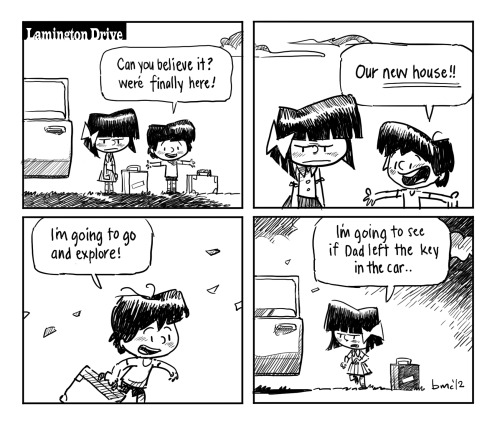
Lamington Drive: a new webcomic
Ben, whose regular blog is one of my all time favourites, also happens to be a pretty talented arty types, in fact, you might argue that he’s something of a polymath (he shared another one of his mad skillz here a while ago).
He’s branching out, and has started a webcomic. It’s called Lamington Drive. I’m hoping for good things – and he, like Simone, is one of those people whose blog might have waxed occasionally, but hasn’t waned (PS – 2013 is the year of the blog comeback).
Church Websites: Jesus is king, but content is important
Continuing this little series on building a new church website I thought I’d go through a little bit of how to fill your outsider focused site, designed with the modern web consumer in mind, once you’ve found, or defined, your voice.
This takes two separate but related bits of thinking: A content strategy and a content schedule. It’s quite possible that the thinking you put into your web based content strategy and content schedule will actually double as your communication strategy and your communication plan which will cover how you communicate offline as well. This is a good, and mostly necessary, step. But I’m jumping right into the latter, because that’s what I’m working on right now, and knowing that in our case, the teaching plan for the year at church is well and truly bedded down. If you’re just starting with a web content strategy, that’s fine, but it might feel like cart before horse stuff.
The step after this, which depends on having content is your distribution strategy, and somewhat relatedly, what to do with comments and discussion about your content. That can get its own, subsequent, post, but you should read this study about the impact of comments on the web in the meantime.
Your content strategy (and a bit about information architecture)
There are a few ways to approach the question of what content you’re going to put on your site, and a few style type decisions you’re going to have to make in the process. The first is choosing whether you’re building a static site (where the content is fixed, and a schedule might involve a periodic update – this is the easiest option), a dynamic site (a site where new content is generated in a steady stream, where a schedule is really important, or the stream will stagnate – this option is the most work), or a site with a mix of static and dynamic elements.
You could, I reckon, mount an argument by analogy from the nature of God’s interactions with creation that the last is the best. If you’re familiar with deism – the idea that God set up the world and then walked away – the static site is the deistic option. Set it up. Forget it. It’ll point to the existence of your church, but won’t really help people know it beyond whatever content they can observe from a very small amount of evidence. The purely dynamic site is more like open theism – this is a simplification of open theism – but there’s nothing concrete. Everything changes. According to the whims of the webmaster. There’s not really much consistency and nobody really knows what to expect. The mixed site – which I like the best – involves a well thought out creation, that is good and purposeful, with fixed rules and structures, but a long term commitment to engaging with the world. The analogy breaks down in all sorts of ways, and isn’t really that useful… except that static sites aren’t all that great, and purely dynamic sites are dangerous).
While I’m a big fan of the static/dynamic mix – there are actually good reasons to choose a static site, if your resources are limited. If this is the case, don’t start a blog on your website and leave it with the “hello world” post that WordPress gives you as a default… That undermines the credibility your website is attempting to give your church as it proclaims an important message. It says “I’m lazy” or worse “I’m uninspired”… A static site, at the very least, should give a visitor an idea of what your church is on about, where it is, and how to contact you.
The voice you’ve developed comes into play when you’re writing the static part of your site – but so to does the content strategy. Are you going to be take a minimal approach to content, or try to give as much information as possible. Is your information architecture going to be simple – with as few pages and clicks as possible, or complex with complicated menus and trees and a huge dependance on your site’s search capabilities?
So we’re going with a mix of static pages that tell our visitors who we are and what we’re on about as a church (the gospel of Jesus), that use a mix of multimedia and carefully structured text, erring on the side of saying too much rather than not enough, and a blog where we demonstrate who we are and try to provide valuable content for visitors to our site that serves our mission as a church.
A content strategy for static pages
It’s counter-intuitive – but I think with some careful writing and layout you’re actually better off doing a relatively flat, minimal click, site structure, with a fair bit of content per page.
There are good search engine optimisation reasons for writing pages that use lots of relevant keywords together, and I think there’s huge value in producing a site that actually answers the questions people might be bringing to a search for a church in a transparent and open way. I’m also pretty convinced that long valuable content is a better long term strategy than minimal content – though it is really important to be aware that not everybody reads the web in the same way.
This means each page should have a nice clear lead paragraph that explains what you’re on about in the rest of the page – recognising that a fair percentage of your audience will stop reading and click away there – and making the opening paragraph link heavy, so you can control where people are clicking to next, I’m a big fan of anchor links that take people to specific sections of the same page too, they can be a really useful heuristic tool.
Basically my approach to content writing is based on the good old inverted pyramid that journalists use.

Image Source: Wikipedia: Inverted Pyramid
The inverted pyramid is useful for a couple of reasons – it recognises that some people want all the background stuff, but others only want the news at a glance, and it means if you’ve got limited space people don’t lose out on the real substance of what you want to communicate if they ignore the bottom two thirds.
You are more than a headline. Your website, hopefully, is occupying something more significant than the role a headline plays in a news story. There are good reasons for an exceptionally minimal approach to marketing a product – especially if the product is well known, or if you want to create some sort of buzz, or vibe. But if you’re after a user-friendly website, that will make an interaction with your church in the real world less painful for somebody who is not familiar with who you are, because they’re more informed, then just having your particular buzzword like “PRUNE” in really big text isn’t actually telling anybody about who you are or what they can expect.
And you also can’t rely on videos and multimedia to carry the can (and they certainly won’t help with how you come up on a search engine). While videos won’t play nice with search engines, the use of testimonials from real people is, I think, a really nice way to not be blowing your own trumpet, and to be authentic. That’s why people use written testimonials, but videos help carry a bit of pathos and ethos along with the written world. They’re moments of oratory captured for ongoing use.
Which means you need text. And I think more is more. Or rather, enough is enough. But you need to structure it with a mind to how people read websites – they scan, they look for links, they click away, and structure your content accordingly. So that a visitor to your site can both find what they’re looking for, and get a sense of what you’re trying to tell them about, with minimal fuss.
A content strategy for a church blog
So once you decide you want a dynamic aspect to your site, and you’ve allocated resources to the site for a certain amount of time (you can always reassess and downgrade to a static site if you can’t maintain a schedule), you need to decide what sort of stuff you’re going to post, and there’s a few factors to weigh up when you’re answering this question.
- Who are you? Part of this is knowing what your voice will be, but a bigger deal is figuring out if you’re existing online as a particular individual within your church (the minister), as the church speaking corporately, or as individuals from your but before that you need to figure out what your “brand” is – what is your ethos that you want driving your communication? How do you want to present yourself to outsiders so that they get a feel for who you are.
- Who is your audience? How wide are you casting your net? If your site is for newcomers are you just blogging for non-Christians? Do you also want to be providing resources for other Christians?
- Why are you posting? What’s the purpose of having a dynamic page – just for google links, to provide resources, etc?
- How does your blog content relate to the real world that people will experience when they visit your church? How does it match up to your philosophy of ministry?
- Who will write your content? Will it be a team of individuals as individuals, or a corporate mothership with multiple contributors adhering to the same style guide?
- What are you going to write about? Are you going to generate content? Are you going to link to other resources?
- How often will you post, and how substantial will your posts be?
Here’s a case study for how we’re thinking about our blog at church, which will then inform the schedule/plan we put together for our blog.
I’m thinking that it’s not too weird to have our static pages (to use a nice WordPress distinction) speaking in a “corporate voice” – so using a royal “we” and hopefully saying things that every member of our church family would be happy to have said on their behalf, with a personality that’s a bit representative of how we do things on a Sunday, and think about ourselves, and then to have our posts, on our blog, using particular voices – from particular individuals within our church family. So there’ll be a little less consistency in style, but we’ll also be giving people a picture of who they might meet on a Sunday, and who in our team and congregation is interested in different areas.
We’re pretty keen for our website to primarily be about the newcomer – but we also want to give the newcomer an accurate picture of what we’re on about without them having to sign up to be part of The City, our online community – so we want to be providing content for people who are part of our church to share with their non-Christian friends, content that reflects on what it means to be a Christian, and we’re also committed to using our resources, as a bigger church, to serve other churches who are, like us, trying to reach people in our world with the gospel.
We’ve got a philosophy of ministry that is pretty helpful for shaping our editorial policy – how we decide what goes up, and what doesn’t. We use a pathway for how we think about how individuals move from being a visitor to a mature, servant hearted Christian – and we use the words: Connect, Grow, and Serve. These will become the categories that we use for our blog. We also teach through books and topics in groups of ten – in line with the school term, which gives us a nice period of time to produce material related to the big idea of a Sunday service.
Connect will feature bits and pieces that help newcomers connect with the gospel, resources for people thinking about Christianity and joining us to process whatever issues the current series is raising, links to the podcast, some bits and pieces about church life, and maybe some interactions with pop-culture and current events. Grow will feature book reviews, interesting and useful articles, resources for living as a Christian, some more in-depth reactive stuff when it comes to pop-culture and current events. Serve will feature resources that we’re producing for other people, outside of Creek Road, to use for ministry – kids church material, some articles from our staff on different aspects of what we’re doing as a church, etc – and both the Grow stuff and the Serve stuff will be produced mindful that it’s being published to an audience of everyone.
The content will be produced by a number of different contributors, centralised, checked for consistency and moderated and posted by one or two people. It’ll include a mix of videos, text, links, and pictures. And the content will either support or duplicate what is happening at Church on a Sunday, so that there’s consistency in our messaging across our different distribution platforms. This means a lot of our content is generated by what we’re already doing, but appropriated for the web, and some of it will be generated to support what we’re doing, and to articulate how we’re doing it, which is a pretty useful process and hopefully won’t bog our staff and content producers down.
Your Content Schedule
This is a pretty tricky area with millions of different opinions. Here are a couple of maxims I live by:
Blogging regularly is important for keeping on going.
A blog that isn’t updated regularly dies, and stinks up the place (where the place is your website).
The problem with these maxims is that it’s impossible to know what regularly is. 6 times a day is too regular, and you should probably see a doctor. Once a week is probably at the other extreme.
The most important thing here is to have a plan, and try to stick to a minimum. The thing I like about our content strategy is that there’s a mix of proactive stuff – where we’re running the agenda, and putting out material that supports our ongoing ministry, and reactive stuff, where we’re joining existing conversations that are happening in the public and using those conversations as opportunities to express our key message – the gospel. Having that freedom is really nice, it makes sure we’re not missing anything essential, but that we have the freedom to take opportunities as they arise, without being inconsistent or piecemeal in our online presentation.
My plan, partly design driven, is to be preparing posts in triplets – one for each category – and featuring them in dedicated boxes on our home page by relying on certain WordPress processes, rather than needing to do things manually. That means getting a pool of content generated for release ahead of time, and keeping ahead – it helps that we’re planning our sermon series a long time in advance, and having most of the content sorted months in advance too. The lead time in the teaching team’s thinking means there’s time to generate supporting content before the last minute.
This also means we need to plan a slot for reactive stuff. And planning to be reactive is hard, and counter-intuitive. But there are certain events we know are going to happen ahead of time (like a Federal election), and there are pop-culture type events like movie releases, or music releases, that other things might trump, and that aren’t as time critical. Plus, there’s always something to react to.
I’m wanting to sketch out a schedule in line with the teaching plan, and have a more concrete schedule for a term, with posts produced at that point (before the term, if possible), and then a slightly more flexible weekly or fortnightly schedule for some reactive things. Steve Fogg has this cool template for church communications planning that’s worth using at this point. I’ll be putting together something like this with three different columns dedicated to blog categories.
Hume, Penn Jillette, and faith v reason
I mentioned I’d been reading Hume the other day. He characterises “religious people” in a slightly well-poisoning way in the midst of his discussion in Dialogues on Natural Religion…
“And here we may observe, continued he, turning himself towards DEMEA, a pretty curious circumstance in the history of the sciences. After the union of philosophy with the popular religion, upon the first establishment of Christianity, nothing was more usual, among all religious teachers, than declamations against reason, against the senses, against every principle derived merely from human research and inquiry… The Reformers embraced the same principles of reasoning, or rather declamation; and all panegyrics on the excellency of faith, were sure to be interlarded with some severe strokes of satire against natural reason.”
This characterisation has become a bit of a meme. It treats all religious belief as outside of human reason, a case Hume attempted to make in his seminal ‘Of Miracles’ in An Enquiry Concerning Human Understanding. There, Hume argues that because miracles don’t happen, because they are outside of nature, and are almost impossible to verify using a naturalistic framework (a somewhat circular approach to the supernatural), religious belief operates in the world of faith, not reason. He pushes a form of fideism. The belief that reason and faith are in conflict. He does this because he needs to maintain some veneer of being an orthodox Christian, because not being an orthodox Christian in 18th century Scotland is pretty difficult – fideism is a cop out, Hume probably didn’t hold to it – given that his entire academic program contradicted it, and it’s pretty sloppy arguing, on behalf of modern atheists to characterise faith in this way.
Fideism is dumb. Faith might be the belief in things unseen or hoped for (Hebrews 11:1), but it is also based on experience and observation, and not a little reason. That’s pretty consistently been the Christian approach to faith and knowledge since, well, forever. That’s why science was a product of Christians trying to read and understand God’s world better. Seriously. Google Francis Bacon. And it’s why atheistic naturalism’s sweeping claims are devoid of anything that looks like history or philosophy
It’d be great for the thinking, intellectually honest, atheists out there to break free of the group think shackles of this meme, and start admitting they don’t have a monopoly on reason.
But no. It continues. Enter Penn Jillette’s recent opinion piece in the New York Times. Penn’s a smart guy. He’s funny. He’s been reasonably nice about Christians in the past – while clearly disagreeing with people of faith. But this article perpetuates a false meme. To be fair, he’s answering an equally annoying meme from our side – the claim that atheism is a religion…
Here’s what he says…
Religion is faith. Faith is belief without evidence. Belief without evidence cannot be shared. Faith is a feeling. Love is also a feeling, but love makes no universal claims. Love is pure. The lover reports on his or her feelings and needs nothing more. Faith claims knowledge of a world we share but without evidence we can share.
Faith is a hypothesis, as is atheism, about the question of God’s existence on the basis of evidence – like revelation, history, philosophy, and not a little bit of reasoning on the basis of our own existence.
It’s a positive hypothesis, while atheism is a negative hypothesis. There are plenty of less than good systems of religion built on varying types of faith – but faith itself should never be maintained contrary to actual evidence. It’s just that the evidence that naturalists put forward is so dissatisfying on anything but a purely material level, and in its modern form (possibly since Hume) it fails to consider any alternative frameworks and anything that has come before it. Hume was pretty good at characterising or ignoring the people who made good arguments against what he was saying, his whole project in Dialogues and Enquiry essentially ignores 1,700 years of Christian thought that is relevant to the natural theology exercise. Christians have something to say on how we read nature based on the Bible – and I’m not talking about accounts of human origins, but accounts of human nature, and the application of a Christian anthropology to the scientific endeavour had been serving us pretty well since Christians kicked the scientific process off because they believed God supplied a guarantee that the natural order would continue in the way that he created it to operate.
That is all.
The Tarsier is awesome.
There are some language issues that may offend you in this video. But wow. This is a cool animal.
Also it made me laugh.
Here, meet Matt Le Tarsier. Which is what I would name a pet Tarsier if I were lucky enough to have one…

20% time and “working on your church, not in it”
If you hang around in the business world for long enough – especially with small business owners who are working really hard at growing, you’ll hear the phrase “I’m wanting to work on my business, not just in it”… this realisation that growth comes through changing and improving, rather than maintaining the status quo (generally), is what drives big companies to spend big bucks on research and development.
This was the sort of mentality that drove some friends I used to do PR for in my old role to do all sorts of cool things – two guys in particular were champions on this front – my friend Allan, who ran a cafe, decided to set up quad bike tours, a gift shop, a function centre, walking tracks, a bus tour, a furniture shop, and to start selling Kopi Luwak – cat poo coffee – a decision that netted him millions of dollars worth of media coverage. He was a big fan of this maxim. The other, my friend Ross, spent time looking into grants for solar power, and found a heap of other ways to not just cut costs at home, but become greener in a way that opened up new markets for his cabins. Working with these guys was pretty exciting – because they were always coming up with new ideas. Both businesses started off as family projects. Both Allan and Ross lived on site at their businesses and could easily have been caught up in the day to day operations, the mundane stuff – and the important. But they found time to develop and change through a bit of creativity. They kind of inspire me – I learned heaps from them, lessons that I’d love to apply to ministry. I’ve spent a long time trying to figure out how I’d do that. I don’t know for sure – but I reckon there was a reason they were heaps less jaded and likely to burn out than other people I worked with.
Big technology companies have worked pretty hard to foster this sort of culture and harness the creativity of all their staff by giving workers a certain portion of their week to work on their own projects – usually with certain parameters about being related to the core business of the company. Google has 20 percent time – one day a week – and about 50% of their current range of products have been developed in that time, Apple has just introduced Blue Sky Time – encouraging certain staff to think creatively, and perhaps most famously 3M, the company behind such ubiquitous stationery as the post-it note, has been driving innovation by freeing up their staff to develop ideas since 1949.

But what would this look like in the church context – to “work on your church, not for it”? I’ve got no idea – for full time church workers, or for the members of the body of Christ. I think this is a “priesthood of all believers” thing – the companies that do this best let everybody in on the action, 3M has patents produced as the result of ideas from administration staff… But I reckon it’d be pretty cool to figure out.
I’ve been a student minister in a couple of different shaped churches in Brisbane, a member of a few different churches in different places, and the son of a minister of churches that grew from small to big… but I still have no idea what the average week of full time ministry should look like. I’ve only experienced four years of reality outside of a life framed by full-time ministry – my family’s, and now my own, and all I know is that full time ministry is time consuming.
I’ve got no idea what a ministry week looks like other than that it’s busy. Very busy.
It seems to be a mix of the routine, and the reactive.
If you’re the sole minister at a church, regional or otherwise, you seem to routinely prepare a talk, write a Bible study, go to a meeting, teach RE, and you reactively pastorally care for people, take funerals, and deal with whatever else pops up. That all seems to take up a fair bit of time. All your time. It’s pretty much the same in a team context – it’s impossible not to be busy in ministry. Because all of life is ministry – in one form or another.
If the principles from the business world translate, then this seems like a recipe for staying the same. We’ve been thinking about this a bit at Creek Road – a couple of us were struck by a similar thought within a day or two of each other as we read and watched some stuff about Google. We’re trying to figure out what 20 percent time might look like in our team ministry, but the principles seem applicable to any ministry – by analogy – just as they are for small one man tourism operations, and multibillion dollar technology companies.
What I’m really keen to explore is how this sort of paradigm shift in thinking about ministry and how we use our already busy schedules when we’re talking about life as a church community. How we could start a culture of 20% time, or research and development time… how we could free people up to think about, and work towards, growth.
I’m a bit blown away by how well Luther got his base of supporters involved with promoting the Reformation – just by empowering people to produce their own material and modelling how to distribute new ideas in a really fast and effective way. How do we free the human resources at our disposal up to get people coming up with new ideas and opportunities to share the gospel – rather than just doing the same old stuff, and how do we control what ideas get legs and which ones are thrown back into the pool of ideas for refining… so that we’re not doing a million things badly.
Here’s a paper I wrote for our staff retreat that is trying to figure out what time like that would look like in our context – it’ll look different based on the shape of a church, or the people involved (both in your mission field, and in your team)… but for a creative person like me, this sort of freedom to think, explore, and fail – without it interrupting the flow of a normal week, is something I find really exciting.
“20 percent time” at church: building “blue sky thinking” into the work week
Big tech companies who value, and rely, on innovation to keep growing and developing new products, and who also value, and rely on attracting staff who are passionate about the vision of their company, have adopted an interesting policy – let staff work less on their “job,” and spend a portion of their time creating something new.
The idea is typically traced back to post-it note company 3M. The stationery company came up with an idea, back in 1948, to give staff a portion of time (15% of the work week), to dream big, and use the company platform to come up with new ideas that would help grow the company’s range, and bottom line.
The company is still, years later, a stationery powerhouse – with more than 22,000 patents. They’ve got a culture of creativity – and the Post-It Note itself, which you’ll find in offices, homes, schools, and just about anywhere that pen and ink exist, was a product of the 15% time of its inventor, Art Fry. Cool name.
Other companies have taken the idea to the virtual world – where it’s cheaper to develop new products, and even to the hardware world – Hewlett-Packard, Google, and Apple all have variations of the theme. They all want staff to feel like part of the company’s vision, and have the opportunity to pursue their passions and their own personal, but work related, projects.
Google call this 20% time. They give staff one day a week to work on new tech developments. Figures get bandied around a bit about how effective this has been for the company – but the conservative estimate is that 50% of their innovation has been the result of this time. Products that heaps of us use, like gmail.
Here’s something a google staffer says about the value of the program:
“We try to encourage this type of blue-sky thinking through ‘20 per cent time’ – a full day a week during which engineers can work on whatever they want. Looking back at our launch calendar over a recent six-month period, we found that many products started life in employees’ 20 per cent time.”
Blue-sky thinking is thinking free of the restrictions of your day-to-day job and routine. It’s the kind of thinking that’s needed for change and innovation to happen – but it’s only really valuable if you’ve also got time, and resources, to try to implement the changes – without it hurting your ability to get your job done.
Apple now has a “blue sky program” where certain employees can work on a “passion project” – something they’re keen to see get off the ground, they’re giving staff a block of time, rather than a regular window, but they too are keen to give their staff some room to experiment and try new things.
Blue-sky thinking in our context
We have a growing team with a huge range of gifts at our disposal, and all sorts of people who are passionate about different things. Hopefully all these passions are related to the gospel – our “core business” or “product.” We passionately want to reach people with the good news about Jesus. Hopefully we’re all also on board with our philosophy of ministry – which wants to see people end up as mature Christians, with servant hearts, via our two pathways.
We’ve all got particular jobs to do, we’re all busy – and while we’re certainly passionate about the work we’re doing every week – it’s possible that there are huge untapped ideas and new ways of doing things, that we’d discover if we had the freedom to dream, to experiment, to get a bit creative, and to produce new things in a bit of time each week.
Blue sky thinking is something we can do alone – given the right environment – and having the freedom and time to put some new ideas, outside your core “job description” into practice might be a great way to connect, grow, or serve – or to reach people in our city, and around the world. Having the time to do some of this is just the first step.
But what if, like Captain Planet, we combined some of our powers. Some of our Blue Sky time. And came up with new things together.
It’s also possible that we’re greater than the sum of our parts – that mixing and matching some of our gifts and resources might produce new and exciting things that help us reach more people with the Gospel.
What if the kids team spoke to the media team about a video series to post on YouTube, that didn’t really tie in to the teaching program, but was something people might share that taught kids about Jesus in a clear and fun way.
What if some of the coffee snobs on staff came up with a way to connect the coffee snobs of Brisbane with some Christians, and the gospel, in a clever way.
What if the music team sat around with the youth ministry team and came up with a dub-step, spoken-word, fusion piece that would take the Internet by storm…
What if we all tackled some projects together – coming up with a stream of content for the website in a brainstorming session, or if we all jumped into the kitchen to make a batch of freezer meals for people in our neighbourhood, or in our church community. A one hour meeting with 30 staff could become 30 man hours spent on a project that makes a real difference.
One of the Google staffers realised the potential power of harnessing the “20 percent time” of some of his colleagues – he’s got an army of Googlers – 200 of the staff in his 1,000 person office – working on his “YouTube for Good” which provides technology solutions for the fight against AIDS, for clean water in various countries, and the United Nations World Food Program.
What next?
What would our week work with if we spent a day working on projects that help our core business – reaching Brisbane, and our world, with the gospel, in line with our philosophy of ministry – helping kids, youth, and young adults to reach maturity, and moving people towards Christian maturity.
What if we spend a few hours a week “promoting” things that we’re already doing – finding new channels to get information about Jesus, and our church, out to new people? What if we spent a few hours encouraging some people by giving up some of our time to catch up to read a helpful book together? What if we put some time into developing a clever and engaging video on the modern fight against slavery that we could share around the web? What if we created some pictures or social media campaigns using different hash tags that would get some of our big ideas from the term shared by people from our church on their social networks?
That’s just scraping the top of the barrel – the great thing about Blue Sky Thinking is that we’re only limited by imagination and time.
So how might we make this time a part of the work week at church – and what would it look like?
There’s a danger in just implementing this policy, that it’ll end up in wasted time, especially if the ideas are never put in to practice or development. Here’s what an author who studied the approach said:
“Many companies have tried to emulate the 20 percent time idea but failed because they remained conservative about supporting the new ideas.”
How do we use this time to create new resources, gospel opportunities, and growth?
More reading:
- 3M: http://www.fastcodesign.com/1663137/how-3m-gave-everyone-days-off-and-created-an-innovation-dynamo
- Google: http://royal.pingdom.com/2010/02/24/google-facts-and-figures-massive-infographic/
- http://www.thinkwithgoogle.co.uk/quarterly/innovation/8-pillars-of-innovation.html
- http://go.bloomberg.com/tech-blog/2012-10-17-how-a-youtube-exec-built-an-army-with-googles-20-percent-time/
- Apple: http://online.wsj.com/article_email/SB10001424127887324073504578115071154910456-lMyQjAxMTAyMDEwMjExNDIyWj.html
- LinkedIn: http://www.wired.com/business/2012/12/llinkedin-20-percent-time/
- The value of “non-commissioned work”: http://www.creativitypost.com/business/why_free_time_frees_creativity
Same Love: the pathos power of music, and what love truly is
Heard this?
It’ll probably hit somewhere near the top of the Hottest 100 today (UPDATE – it got number 15, but it is number 1 on the ARIA charts at the moment).
It’s pretty powerful. It’s catchy. Its mix of perspectives works as a stand alone song, and is intensified in video form, where you get the additional benefit of seeing a young man, presumably the singer’s uncle, find happiness in his gay relationship.
That’s the fundamental premise of the song. Happiness is the ultimate end, and how can we deny someone the warmth and fulfilment a relationship offers.
It’s fairly convincing. Sort of. It’s just a shame it gets so much wrong. At the very least it’s persuasive, in the technical sense, and it got me questioning why I’m more persuaded by a song like this, than by the same premise put forward in dry argument.
For those getting ready to throw stones at me for being bigoted, or a heretic, let me remind you of my position – I am willing to cede the point that so far as our legislation is concerned this is the “same love” – in that it is voluntary, between two free individuals, and because I’m not huge on letting the government dictate what morality is and isn’t, I am not opposed to changes to the marriage act that reflect the wishes of the population – we live in a democracy, after all. But I’m also not willing to budge on the theological question – God says proper sexual expression that is in line with the order he established at creation (before the fall), and is good for the flourishing of humanity, is the kind of expression found in a loving, heterosexual union, for life, where man and woman become one… though neither, as individuals, were “less than one” beforehand – and it’s absolutely ok to be single without feeling like you’re missing out on an aspect of humanity – which this Same Love thing kind of glosses over in its bid for sameness. Pushing same sex attracted people towards heterosexuality isn’t really the answer, showing all people that the ultimate form of love and identity is found in a relationship with Jesus, and the community of the church (and being a community that people want to be part of) is ultimately far more valuable for everyone.
Anyway. Back to why I felt my head moving as my heartstrings were tugged by this song…
Part of the power of music is that as a song is catchy, and as it bounces around in your head, and as the lyrics start to resonate with your experiences and observations of the world, suddenly you find yourself giving assent to whatever conclusions the songwriter offers.
Old Testament theologian Gordon Wenham has some great things to say about the power of music in shaping our ethics, perhaps especially if we sing along to something, via the power of a little speech-act connection where the words we say become the words we think, a little bit of reader-response theory being applied through something called democratisation, where use of the first person can make something feel like it’s about us, and via this reality regarding the value of some sort of performance in shaping our thinking, which he describes in a piece on the teaching value of ritual:
“Educational psychologists tell us that we remember 10% of what we hear, 30% of what we see but 70% of what we do”
Anyway, in a piece called “Reflections on Singing the Psalms,” Wenham makes the following points about how music is perfectly geared to shape our thinking on moral and ethical issues…
“But even mere recitation is a more powerful instructor than listening to stories, commands or wisdom sayings. Listening is passive, indeed the message can be ignored by the listener, but recitation and especially singing is an activity which involves the whole person and cannot be honestly undertaken without real commitment to what is being said or sung…”
Here’s a little on the power of first person – which the song Same Love uses extensively. We become part of the story and identify with the protaganist.
“Another device inviting the worshipper to identify with the sentiments of the Psalm is the use of the first person. The psalmist often speaks in the first person ‘I will bless the LORD at all times’ (34:1). Someone singing or praying this Psalm later is thus invited to do the same… This switch between first and third person encourages the user of the Psalm to identify with the viewpoint of the psalmist. But particularly the use of the first person encourages such identification: ‘The experience of the I of the psalm embodies a religious ideal, whose reality is open to the reader to experience…
And here’s a little more on why music is more powerful than other mediums.
I have already observed that the Psalms differ from other parts of the Bible in that they are meant to be recited or sung as prayers… This involvement of the worshipper in expressing assent to these sentiments makes the Psalms quite different from the other modes of teaching ethics in the OT. The OT narratives were presumably recited by storytellers within the family or in the tribes, but they rarely make explicit their judgments on the actions that are recited, so the moral of the story might have been missed and certainly did not have to be endorsed by the listeners. They could have just ignored the point, as I suspect many listening to worthy sermons often do… When you pray a Psalm, you are describing the actions you will take and what you will avoid. It is more like taking an oath or making a vow… Promises for example change the situation and impose obligations on the speaker and create expectations in the listener. A promise is an example of a speech act.”
It’s powerful stuff – and I reckon Same Love will form a pretty powerful part of the case for gay marriage in Australia, it makes me think we need to do heaps better at writing music that is artistically good for a bigger portion of the world than our congregations on a Sunday. It worked for Luther.
But as powerful as it is – it makes some pretty interesting assumptions about what Christians believe about homosexuality, and about the motives of Christians in shutting down love.
Here’s a little bit from Macklemore and Ryan Lewis themselves…
The right wing conservatives think it’s a decision
And you can be cured with some treatment and religion
Man made rewiring of a predisposition
Playing god, aw nah here we go
America the brave still fears what we don’t know
And god loves all his children, is somehow forgotten
But we paraphrase a book written thirty-five-hundred years ago
I don’t know
Look – I’m sure reparative therapy (the cure with treatment and religion) has been harmful when people have been forced to undertake it against their wishes by bigoted parents or something… but the only real research I’ve seen that does something like a longitudinal study, by Jones and Yarhouse (it’s a fairly controversial study – as is anything Christians write on this issue), on the effectiveness and effects of such therapy found that it doesn’t actually cause harm, even if it doesn’t always work. And it doesn’t always work – contented celibacy is a statistically more probably result. I’m not sure that this is a “right wing conservative” issue either…
I’m also not sure that for a Christian the idea that something is a predisposition means that it shouldn’t be changed – or at least not acted upon. We call constantly try to challenge ourselves to leave predispositions behind. I’m lazy, I’d say all the evidence suggests this is my predisposition. That’s bad for my ability to be productive. We do this all over the aspects of our person, identity, and personality – without being accused of “playing God” – and the notion that “predisposition makes right” is patently impossible to demonstrate as soon as you throw in an example of someone who is predisposed to doing something heinous. The Christian account of human nature which sees us as simultaneously “children of God” made in his image, and broken by sin, such that the child-God relationship needs restoring through Jesus, the true child of God, means we can simultaneously say God loves all his children, while he punishes some for the broken relationship, and the broken acts that result. You don’t need to paraphrase the Bible to find this either. It’s right there. Especially in Genesis and Romans, but also in Psalms – the Bible’s biggest insight into what it means to be human but want a relationship with God.
There are some great bits about the song – it really nails why we need to be careful in how we speak of those who are homosexual in orientation, and who identify according to that orientation. There’s not much to disagree with here – except to say there’s a tragedy that you could easily replace hip-hop with “church”…
If I was gay, I would think hip-hop hates me
Have you read the YouTube comments lately
“Man, that’s gay” gets dropped on the daily
We become so numb to what we’re saying
A culture founded from oppression
Yet we don’t have acceptance for ‘em
Call each other faggots behind the keys of a message board
A word rooted in hate, yet our genre still ignores it
Gay is synonymous with the lesser
It’s the same hate that’s caused wars from religion
Gender to skin color, the complexion of your pigment
The same fight that led people to walk outs and sit ins
It’s human rights for everybody, there is no difference!
Live on and be yourself
That is a powerful reminder – even if it’s feeling the hate somewhat vicariously – that we’ve got to be sensitive and clear when we talk about issues that surround the areas people choose to identify themselves by… The song doesn’t really seem to be all that interested in letting one or two categories of humans be themselves though – Christians who want to disagree with the stance it takes, and perhaps more importantly, those who are same sex attracted who do want to make the choice, free of coercion, to not pursue a relationship with a member of the same sex. That is an ultimate act of “being yourself” – but it’s implicitly, and somewhat explicitly denigrated by this song.
The chorus, where we hear from Mary Lambert, singing in the first person, about her love, who keeps her warm, is where the real thrust of the song’s argument is – we’re talking about denying somebody this love. This happiness. How could we?
And I can’t change
Even if I tried
Even if I wanted to
I can’t change
Even if I try
Even if I wanted to
My love
My love
My love
She keeps me warm
She keeps me warm
The same sentiment is repeated in the final verse…
“Whatever god you believe in
We come from the same one
Strip away the fear
Underneath it’s all the same love
About time that we raised up”
Again – he attributes opposition to gay marriage or “equal love” to “fear”… I don’t doubt that some of the negative aspects of the way those in the GLBTI community are treated is the result of fear, but I’m not sure that’s always true.
Sometimes it’s love.
The love that counts.
Sometimes we do actually disagree with somebody, and say something is wrong, because we love them. It’s not just possible to disagree with somebody and do it with love, it’s possible to disagree with somebody out of a greater love. Sooner or later, to be really loving – we’ve got to stop saying it and keep loving people despite this disagreement. But it is never loving to stay silent.
Not all love is the same. That’s why there are five Greek words for love. The song ends with a few little snippets of the famous 1 Corinthians 13 passage about love (love is patient, love is kind), but there’s a better passage about love in the Bible – one that shows that not all love is the same, and where real love is found.
It’s from 1 John 4… and while Macklemore, Lambert, and Lewis would like you to think that because we’re all God’s children this means everything we do naturally is good – John, who wrote this following passage, also wrote that famous bit of the Bible that describes the manner of God’s love as tied up in the death and resurrection of Jesus – which had to happen precisely because everything we do is naturally bad… anyway that’s there in verse 10 of this passage too.
Here’s 1 John 4 on real love, the kind of love that makes singleness a possibility if we do community well (we need to be much, much, better at this – we need to be very noticeably different from the comments section on YouTube), and makes giving up eros or epithumia (greek words for lust and desire) worthwhile in the pursuit of the true happiness that comes from knowing God.
7 Dear friends, let us love one another, for love comes from God. Everyone who loves has been born of God and knows God. 8 Whoever does not love does not know God, because God is love.9 This is how God showed his love among us: He sent his one and only Son into the world that we might live through him. 10 This is love: not that we loved God, but that he loved us and sent his Son as an atoning sacrifice for our sins. 11 Dear friends, since God so loved us, we also ought to love one another. 12 No one has ever seen God; but if we love one another, God lives in us and his love is made complete in us.
13 This is how we know that we live in him and he in us: He has given us of his Spirit. 14 And we have seen and testify that the Father has sent his Son to be the Savior of the world. 15 If anyone acknowledges that Jesus is the Son of God, God lives in them and they in God. 16 And so we know and rely on the love God has for us.
God is love. Whoever lives in love lives in God, and God in them. 17 This is how love is made complete among us so that we will have confidence on the day of judgment: In this world we are like Jesus. 18 There is no fear in love. But perfect love drives out fear, because fear has to do with punishment. The one who fears is not made perfect in love.
19 We love because he first loved us. 20 Whoever claims to love God yet hates a brother or sister is a liar. For whoever does not love their brother and sister, whom they have seen, cannot love God, whom they have not seen. 21 And he has given us this command: Anyone who loves God must also love their brother and sister.
You heard it here third…
I’m not a big fan of putting too much personal stuff on this blog – it’s bad enough for my family (extended and nuclear), and especially my lovely and patient wife, that I am constantly putting my thoughts and stuff out there, let alone posting about the boring and mundane things I’m eating. I’m not really all that interested in talking about me when there are whole other social networks that exist for exactly that purpose, and for photos of my food (or coffee).
And I struggle with sharing good news on this particular front, and figuring out how to do it in a sensitive way, because we know what it’s like to hear other people’s news while you’re struggling in this area. But I love sharing in other people’s joys, and praying for safe arrivals of new babies… and I expect others are the same… so I guess there’s this.

We are actually pretty excited about this, even if it’s still in that stage where it hasn’t quite sunk in just what double the responsibility will feel like.
If you’re the praying type – we’d love, and crave, your prayers. Especially for Robyn as she tries to knock over the last three subjects in her Masters between now and mid-year.
If you’re not the praying type, then please send financial gifts or other donations to us (not really).