Part one of this series considered the changing (disrupted) economic landscape and the future of work (and the idea of a post-work future), it suggested Christians might have reason to be optimistic about a disrupted future, perhaps especially if we take up the challenge of being disrupters — challenging the idolatry of work, and profit, the understanding of humanity that suggests we’re fundamentally economic beings, and the routines of work that mean we feel busier than ever. In order to get to a stage where some of these changes become plausible these next two posts are going to step back and consider why we work, what work is (and what its purpose is).

The drive to work
Do you work to live, or live to work?
Do you work to pay the bills, or to change the world?
How do you think most of your friends would answer these questions?
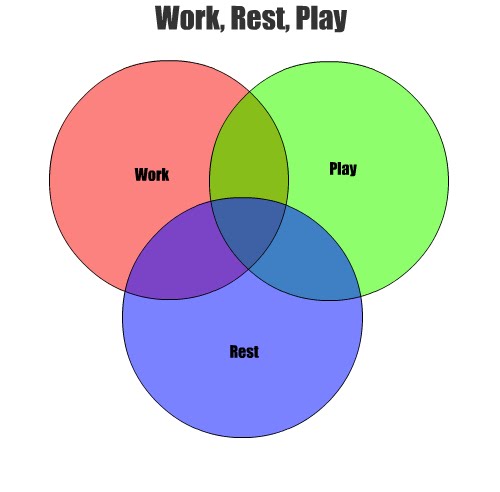
Our jobs often involve repetition that is frustrating (not to mention the frustration around results) — and its not just the daily routine of alarm clock, breakfast, the commute, the recurring functions of your job (the admin, the reproduction of tasks, the meetings), it’s also the ‘rat race’ the work to eat/eat to work, and work to rest/rest to work cycles built into the monotony that become habitual liturgies in this worship. We’re shaped before we know it, and taught to love things (like money and productivity) by this frustrating and frustrating pattern but we keep doing it. We’re driven to. So why is that? What gives us this drive to work, or rather to ‘work-as-worship’? And why do we want to escape?
This little short animation that ran before Disney’s Moana over the summer is a nice little picture of the tension we live in.
When I ubered to the airport in Sydney a few weeks ago, my driver’s name was Roman. He’d come to Australia from New Zealand, but before that, was from the Middle East. We talked about parenting. About how hard it is. About the pressure society places on kids to grow up to fast, and about how parents get no down time. He loved Uber cause he could be home at dinner time, then head back out. He worked to support his wife and kids. He worked to secure their future. This purpose gave him the drive to do a relatively mundane job (and one he is way over-qualified for).
Here’s why I think we work. We work because we want to change the future; not just the present. We work because we want to carve something out for ourselves and those we love. We want to shape the world in some way — either directly in the act of making things, or creating order, or indirectly in what we use the products of our work for. The way we want to shape the world, the thing we want to carve out, or the version of ourselves we’re working towards are a product of our values (the things we love), and our values are a product of, or ordered by, our ultimate loves (the things we worship).
Work is an act of worship. And I don’t just mean this in the ‘Christian sense’ but in the David Foster Wallace sense of worship being the act of self-sacrifice for the object of our ultimate love. Work either is that love, or it’s a means to serving that love with what we’re paid for work (or both).
Work involves the sacrifice of your time, energy, some sort of ‘presence in order to apply energy’ (even if remotely and via a computer), effort, and intellect; ideally in work that sacrifice reaps something more rewarding than what you’ve invested into the enterprise, but these things are finite. Your time and energy are going to be exhausted. The number of breaths you take is finite. You have an expiry date. And in that sense everything we do is ‘sacrifice’ and the returns are limited. So the decision to go to work is a decision to sacrifice yourself to, or for, something. A cause, a company, your family, your experiences, your pleasure, your empire. If we’re driven to work for some finite thing, especially if we’re driven to work in order to get or consume more stuff because we worship wealth, and comfort, and ‘the things of this world’…. then as Wallace says, it ‘will eat you alive,’ the catch is, if we’re driven to work in a way that consumes us (without giving back), so that we can consume stuff (without giving back), then it’s also likely our drive to work is destroying the planet (ironic really, if we consider climate change and the emissions created by a consumer-first approach to driving to work (where apparently the average occupancy rate per car in Brisbane is something like 1.2 people)).
Brian Walsh wrote this book called Subversive Christianity: Imaging God In A Dangerous Time back in 1994. It’s one of those books that, when read in hindsight, seems prescient, prophetic even, and that you wish had been read more widely and taken more seriously by the church. He writes about work, and how Christians might subvert, or disrupt, how work happens. He talks about how the stuff that drives us to work — that we sacrifice for — is tied to worship.
“Modern culture has entered into a covenant with an unholy trinity. Three good dimensions of creation, three good dimensions of our culture-forming tasks have been absolutised. They have been erected as idols and they demonically distort our cultural lives. These three idols are scientism (the belief that science provides us with authoritative knowledge and functions as the omniscient source of revelation in our culture), technicism (the effective translation of scientific knowledge into power and control of the creation which promises us a scientific-technical omnipotence), and economism (the golden head of the idol that believes that a rising standard of living is the ultimate goal in life and the only route to personal happiness and societal harmony). The question for our time is whether this unholy covenant is still tenable. Do these gods deliver on their promises? Can we continue to make the sacrifices necessary to appease them? My answer to all of these questions is a resounding no…
Serving the three gods of scientism, technicism, and economism, our work lives (in both the shop and the office) are subjected to scientific analysis by industrial engineers and a whole army of consultants, to determine the most efficient way to accomplish the task at hand using the best and quickest techniques to attain the highest possible economic good.”
Disrupting this drive to work
Walsh’s analysis 23 years ago is pretty similar to Rod Dreher’s analysis in his Benedict Option (and the observations of a bunch of other modern thinkers. His analysis is that it’s not politics or sex that presents the greatest danger to us in terms of ‘idolatry’ or Babylonian captivity; but economics.
The reason for this state of affairs—nothing less than a spiritual catastrophe in the Western church—is, I submit, the enculturation of the church. As a community of believers and as individuals we have, mostly against our best intentions, been thoroughly sucked in to our secular culture. This is what I mean by the term “enculturation.” Our consciousness, our imagination, our vision has been captured by idolatrous perceptions and ways of life. The dominant worldview, the all-pervasive secular consciousness, has captured our lives. And what is so intriguing about this phenomenon is that we were not taken after a long drawn-out fight. No, it happened in our sleep. You see, while we were fighting with each other about evolution, the infallibility of the Bible, spiritual gifts, and various other hotly debated issues, we were falling into a deeper and deeper sleep in relation to the cultural captivity of our very consciousness. We were asleep to the secularisation of our lives and of our most fundamental values. We simply bought into the materialistic, prestige oriented, secular values of our age without ever noticing that that is what was going on.
What he suggests as the antidote for this captivity is a rediscovery of our own story; our own worship; a new drive to work. If we’re going to disrupt the economic status quo (ala post one in this series) as Christians we need to consider how our drive to work might look different (the sort of work we do, why we do it, and how we do it).
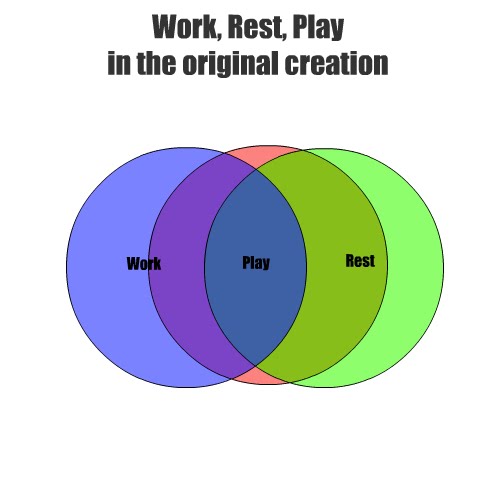
Christians have a different approach to work because we have a different approach to worship (or rather, we worship a different God), and our worship is linked to bearing his image. We work because we’re created to work; created in the image of the God who worked to create the world (and then rested from this work). It’s in our nature. And our approach to work is shaped by our nature. Work isn’t just a thing we do, it’s part of our purpose, and that purpose is shaped by what we worship. Here’s Walsh again.
“When a community in a capitalist society insists that labour—the work of our hands, the toil of our brow—is good, it is being subversive. Why? Because when such a community breaks with the dominant utilitarianism, which sees work as a disutility and consumer goods as utilities, it thereby breaks with the whole movement of twentieth-century industrial capitalism. This movement has propelled us into energy and capital intensive production processes which produce more and more goods at an ever increasing rate, while also decreasing the quality of the products, decreasing the role of human labour, and decreasing the resources of creation. When that is the fundamental movement of a culture, then a community which says that work is good and more and more consumer goods and services is not necessarily good, that community is being subversive. Insisting that work is an integral dimension of human life (not to be contrasted as productive activity over and against consumptive leisurely activity), that it is a form of worship, that it is meant to ennoble humankind, that it should be dedicated to serving one’s neighbour and the stewardly care of the creation—all of these are subversive ideas. But Christianity is not only subversive in a culture such as ours; it is also deeply offensive to the dominant forces in our culture. This offence is related to what the Bible calls “the offence of the cross.”
…Dare we imagine an economics of equality and care in place of the economics of affluence and poverty? Can we imagine what would happen if we began to disciple our children with a prophetic vision and imagination? Can we imagine our work life to be at one with our worship—an act of service and praise, not a necessary evil on the way to an affluent lifestyle? In a production oriented society where meaning and worth are measured by one’s productivity in the market place, therefore defining retirement as a loss of worth and meaning, can we imagine what it could be like if the elderly had an indispensable role in our communities? Can we imagine a society which has broken through its morbid preoccupation with death and truly affirms life, not just at the fetal stage, but in all of its dimensions and stages? Is a relationship of friendship, instead of exploitation, with the rest of the creation imaginable? Is it imaginable that the mass media could be an agent of awakened social, cultural, and spiritual renewal, rather than the one thing that numbs us into cultural complacency and sleep more than anything else? And is our imagination spiritually opened up enough to conceive of a business enterprise that is characterised by stewardship, environmental responsibility, and real serviceability rather than profits, pollution and superfluous consumer goods? It seems to me that, in the midst of a declining culture, these are the kinds of questions that a prophetic imagination raises for us. We are called to be a prophetic community, a prophetic people. — Brian J. Walsh, Subversive Christianity
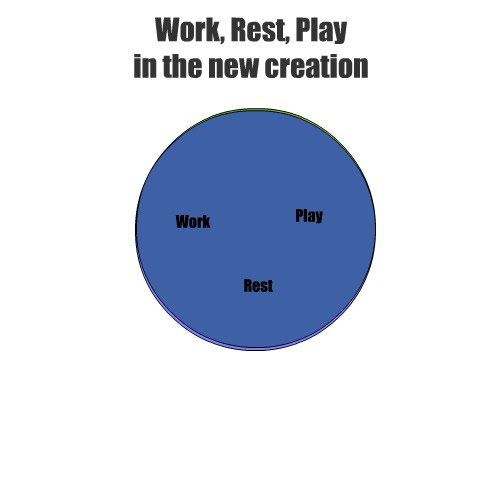
In the next post in this series, I’m going to suggest that this new drive isn’t just a new origin story (which is where Walsh starts), but a new end of the story; one that brings a new ‘end’ to our work (both in terms of a telos, and an ending of the story we’re living in). It’s not just who God is as we meet him in Jesus that should shape how we work and worship, but where Jesus is taking us, and what work will look like in the future (in this world, and the new creation). This story will change the way we approach work, because it changes the way we worship. It will make us disruptors of the status quo. In the final post I’ll consider what that might look like in real terms.