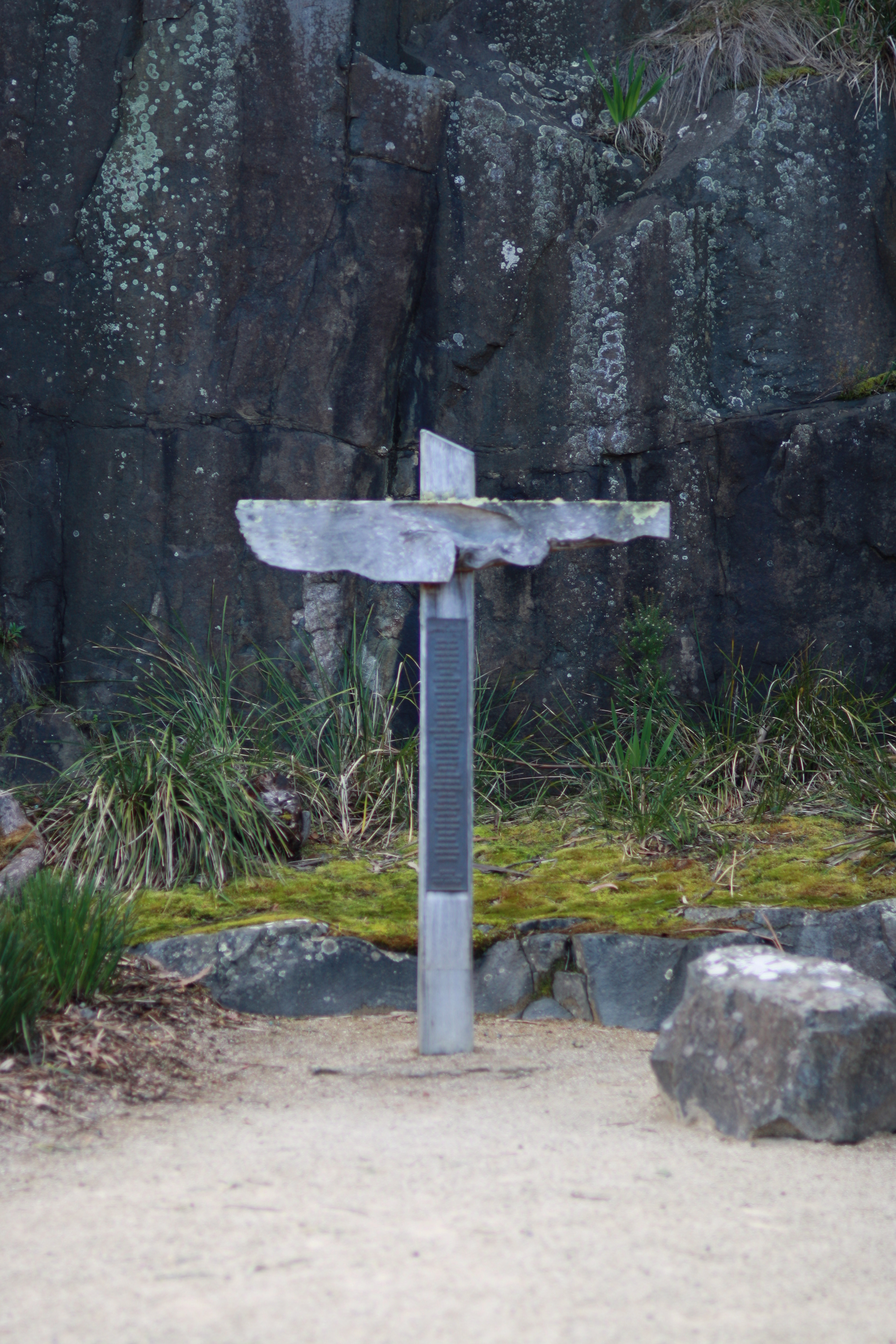
It’s fair to say the leaders of politically conservative Christianity here in Australia have been soundly defeated this week. We were told that the best way to secure religious freedom was to fight robustly against same sex marriage (even to make the fight against same sex marriage a fight against religious freedom) and it turns out, at least this week, that this was a terrible strategy. If these leaders led in a secular environment where results matter then they should be lining up for new employment tomorrow… but Christians don’t operate this way; we learn from mistakes, we grow, and we forgive… we focus on character or virtue (means) rather than results (ends) at least when we’re at our best.
Now. Unlike many things I’ve read this week I remain hopeful about the future of Christianity in Australia; and even about our religious freedoms, though I do think there are significant challenges that would require us to learn big lessons from the last few years.
Now. Before we go on down the path of thinking ‘here’s a political (or theological) liberal telling conservatives to suck lemons’ or whatever; I reckon I’m still a conservative theologically, and I struggle to pin myself down politically; the best articulation I’ve found of my dilemma politically is one from a Christian in the US, despairing about the evangelical church throwing its lot in with Donald Trump and arguing for a different conservative political vision.
I wrote a short piece for Eternity’s latest print edition as a bit of a post-mortem of the postal survey; some of the points here are duplicated ideas from there.
1. Hope is found in the Cross of Jesus. Political hope is found in a politics of the Cross.
Politics is not restricted to the corridors of power (or even to power).
Elections are now won or lost at the grass roots; social media is all the rage. Politics is ultimately about people. There was a clear sense that the No campaign understood this (I’ve never been urged to doorknock by church and mission agencies so much in my life). But what we’re missing is that there’s actually more to shaping our shared life together than the law and the courts. There’s a politics of institution building apart from the government; of faithful presence in our communities; of loving those at the margins who we might sit across from in the power struggles that we’ve mostly missed.
There’s a whole element of our engagement with politics missing; we’ve outsourced the professional stuff so that there are only a handful of MPs who grasp how religious faith operates, and we’re too focused on other concerns to join the rank and file of party membership to start civil conversations and disagreeing well at a local level; we’re also too enamoured by the idea that political change happens top down rather than from the community up; yesterday’s decision was the government catching up with the will of the people, not shaping it. If we want to be effective we might practice a different shaping of people’s vision of the good life for our nation by doing grass roots politics differently; it might be more holding barbecues than doorknocking. It’s too easy to outsource our politics to denominational leaders and professional lobby groups (and then to rely on those politicians of faith to get the job done when all else has been lost).
Here’s James Davison Hunter in his book To Change The World; it’s worth slogging through this because of his diagnosis of modern life, and what he says about public life, public space, and politics without actually giving a way forward.
Politics has become so central in our time that institutions, groups, and issues are now defined relative to the state, its laws and procedures. Institutions such as popular and higher education, philanthropy, science, the arts, and even the family understand their identity and function according to what the state does or does not permit. Groups (women, minorities, gays, Christians, etc.) have validity not only but increasingly through the rights conferred by the state. Issues gain legitimacy only when recognized by law and public policy. It is only logical, then, that problems affecting the society are seen increasingly, if not primarily through the prism of the state; that is, in terms of how law, policy, and politics can solve them…
Taken to an extreme, identity becomes so tightly linked with ideology, that partisan commitment becomes a measure of their moral significance; of whether a person is judged good or bad. This is the face of identity politics… Politics subsumes the public so much so that they become conflated. And so instead of the political realm being seen as one part of public life, all of public life tends to be reduced to the political… It is difficult to even imagine much less accept the idea that there should be public space occupied by activities or organizations that are completely independent of the political realm. The realm of politics has become, in our imagination, the dominant — and for some the only adequate — expression of our collective life. In this turn, we have come to ascribe impossibly high expectations to politics and the political process…
This turn has brought about a narrowing of the complexity and richness of public life and with it, a diminishing of possibility for thinking of alternative ways to address common problems and issues.
Imagine if we took up our cross, and let that shape our politics. If it wasn’t about winning but about following the example of Jesus whose very public faith was an act of publicly being put to death by those wielding political power; but ironically, it was at this point that he was claiming the crown and the throne of the kingdom of heaven. Imagine if we saw building that kingdom and having it accommodated in our nation as our public, political, priority.
2. Hope is found in a secular, pluralistic, politics of generous compromise
We’ve created the rod for our own back by playing politics as a zero sum game.
A zero sum game is a game where there is one winner and one loser; which is how a debate framed around securing a ‘yes’ or ‘no’ vote operates. Imagine if we’d sought to be peacemakers. The people now asking for religious freedoms are (largely) the same people who campaigned against the freedom for same sex couples to describe their relationships according to conscience and deeply held convictions about the world. As soon as this issue became about winners and losers we Christians were going to lose; and because we aimed to ‘win’ (to have our will and God’s design shape the nation’s laws), there is nothing for us now that we’ve lost. We’re left relying on the goodwill of the victors, and just as we weren’t interested in protecting their freedoms, en masse, they’re seemingly not particularly inclined to protect ours.
It might be too late to play ‘what if’ here; but what if we’d recognised the goodness of religious freedom for a shared life in our diverse community and taken the first step towards compromise. For too many Christians compromise is a dirty word; but we’re talking about how non-Christians live, so compromises might actually be steps towards virtue rather than away from it; and we might view compromise as a dirty word and lose that simply by playing power-politics or seeking to win via worldly power we’re already compromised.
This is probably the best point to address this — but one thing I hope never to see again is us embracing populism on the off chance it will deliver the best result for us; rather than working towards the best result for the unpopular in order for them to live well in community with those who disagree with their lifestyle. It’s pretty clear we’re not the popular ones any more but this would be a pragmatic reason to jump; the virtuous reason is that it’s just the right thing to do in a system of government built on the belief that all people are made in the image of God and so of equal value in a society. Populism is a form of power politics; when we play power politics for our own interest, or against the interest of a marginalised group in society, we undermine the message of the Gospel; that God’s power is present in weakness — the cross, not the sword.
3. Hope is found in a public faith
We’ve got a problem with the secular/sacred divide and how it operates and is understood here in Australia; it cuts both ways. Acknowledging that everything is sacred for everybody is more theologically honest (and has greater explanatory power).
Now. I’m not totally freaked out by the religious freedom stuff from this week — the failed amendments — the way same sex marriage has been introduced has been via the amending of existing acts (especially The Marriage Act); the Smith bill, the Marriage Amendment (Definition and Religious Freedoms) Bill 2017, which sought to protect religious freedom while changing the definition of marriage, included amendments to an existing framework which explicitly deals with clergy in their function as celebrants.
But the discussion around the issue has been revealing. One way it has been revealing is that it has exposed our inability to grapple with some of the basic expediencies of governing and that these grey areas will be used by people with agendas… had we listened better (see point 5) we wouldn’t (yet) be feeling like the sky is falling in; but I reckon as we do listen it becomes clear that there’ll be a problem when the government does set about dealing with religious freedom.
When Labor front-bencher Brendan O’Connor, speaking on Q&A after the result of the postal survey was announced, said “the religious freedoms and protections are contained within the bill” he was using this to dismiss the concerns of religious people that marriage re-definition has particular and direct religious freedom ramifications (beyond celebrants); Labor’s position (and that of the Greens, and members of the Liberal Party) seems to be that protecting clergy and protecting sacred space is enough. The Smith Bill says its objects are:
(a) to allow civil celebrants to solemnise marriage, understood as the union of 2 people to the exclusion of all others, voluntarily entered into for life; and
(b) to allow ministers of religion to solemnise marriage, respecting the doctrines, tenets and beliefs of their religion, the views of their religious community or their own religious beliefs; and
(c) to allow equal access to marriage while protecting religious freedom in relation to marriage.
When it comes to protecting religious freedoms it is rightly focused on religious celebrants because those are the people explicitly included in and affected by changes to the original Marriage Act. The amendment does provide robust protection for religious celebrants, and also for “bodies established for religious purposes” who “may refuse to make facilities available or provide goods or services.” The act protects sacred people and sacred space; and if these were the limits of religious life then the act does a fine job of achieving its end.
Only. There’s a problem.
One of our founding democractic principles; oft-cited in this debate is the ‘separation of church and state’ — how that is now understood, if James Davison Hunter is right about the current landscape, is that the state is responsible for the public life of a citizen, and religion is an entirely private matter. More; because Christians throughout the ages have bought into an anemic, Platonic (literally) vision of Christianity where belief is enough, and the salvation of the soul is the purpose of the Christian life, we’ve got rampant nominalism in Australia shaping our understanding of what Christianity is, and a thin Christianity being practiced within the church. We don’t just buy the secular/sacred divide. We sell it.
Until we’re a florist or a baker who doesn’t want to participate in a same sex marriage, or medical professional who doesn’t want to participate in abortion or euthanasia, or the myriad other ways the secular/sacred divide is demonstrably falsified in the throes of real life.
Here’s the problem.
There’s a certain secular agenda who want to keep religion private if it is going to exist at all… and a certain predisposition of religious people in Australia to live according to those rules anyway, coupled with a “secular” political strategy being adopted by Christian lobbyists and institutions (which further reinforces the perception that explicitly religious beliefs don’t belong in the political realm.
There’s another problem.
There’s no such thing as a place that isn’t sacred for Christians (or, as I’ll suggest, for anybody). It’s a noble act on the government’s part to consider space and how it is weaponised, and to seek to protect church property becoming a political battleground; but bizarrely, Jacqui Lambie, on a recent Q&A episode, nailed the problem with a scenario:
“You know, I had a bloke ring me back two weeks ago saying, “Jacqui, I want to know what my rights are right now because I only want to marry a man and wife in my garden.” And I said, “I’m sorry, I can’t help you out with that.” He’s now going to sit in limbo for months. What should he do? He has a freedom in this country. He has a right to say, “You know what? Because of my religious freedom…my religious beliefs, I cannot marry you in my backyard.” And this is what you are doing to people because you’re going out there, bull at a bloody gate, as politicians do, and yet they haven’t filled in the gaps. How long are these people going to have to go through more pain? They’ve lost. They’re feeling the pain. How much longer do they have to feel more pain?”
Is your backyard sacred space?
For Christians all space is sacred because there is no square millimetre that is not in reality created by God and under the Lordship of Jesus. But all public space is capable of being sacred for any of us; some space is more malleable and contested, so, for example, we rent a space used by the Opera to run church on Sundays.
The thing is it’s not just that there is no secular/sacred divide for Christians, there is no secular sacred divide for anyone; and we’d have a much richer pluralism if we just acknowledged that all public space is “sacred” and contested; and that governments either have to pick what the majority believes is right or accommodate different parties in the contest, or both. We can’t pretend the ‘secular’ methodology is neutral if it excludes the sacred reality of mundane life. We don’t expect others to check their beliefs at the door and make a public/private distinction in this way — especially the non-religious — and this is why we should have approached changing the Marriage act as a chance to offer religious freedom to others; not as a contest about the ontological definition of marriage (which is inevitably shaped by one’s sacred sense of how life works), or even the ‘common good’ without understanding all goods as ‘secular and sacred’. We saw evidence in the lead up to the legislation changing (both before and during the postal survey) that the change was being pursued with a religious fervour (often with religious language), where ‘heretics’ were anathematised (Coopers Light anybody), and where ‘priestly actors’ in the religion of sex and the free market made both public pronouncements (corporate advertising for a yes vote) and cleaned up their temple infrastructure (changing employee policies and in extreme cases, dismissing staff). These are pretty much the same freedoms the church is asking for as ‘sacred acts’ being conducted by actors who hold to a different sacred view.
David Foster Wallace once said “everybody worships”; and elsewhere (in Infinite Jest) that worship is what you would lay down your life for, or what you love ultimately. He also said that the term ‘fanatic’ comes from ‘worshipper at a temple’ and that we all have a temple; we just have to choose it carefully. He’s right. We all get our identity from somewhere —ultimately from what we worship — and if that is now wrapped up with politics (and political ideology) then everybody is basically operating with no separation between church and state… everybody but us Christians. This is what Romans 1 teaches too; as part of the theology of the Bible that starts with us being made as the living idols (images) of the living God, who, in worshipping other things, start to represent/be the image of those gods. There’s no secular/sacred divide because worship is enacted love (and belief) and shapes who we are.
We’ve got a problem. The secular world we live in believes faith is private and politics is public. And so do most Christians, most of the time. We need to recapture the idea that our faith is public; which means our faith is also inherently political.
4. Hope is found in listening better
I think this one operates on a few levels; one, we could have listened to the voices and desires of others better so as to understand them, two, we could’ve listened to the decision makers better about how they understood exactly what is and isn’t on the table in this process, and three, I personally think we could’ve listened to God better (and his explanation for departures from his design for life, and what the way back is (the Spirit via the Gospel (1 Corinthians 1-2, Romans 1, Romans 8).
As evidence for the first point, I sat in a room of Presbyterian ministers from around the country who specifically resolved to participate in the Coalition for Marriage, and resolved (minuted) against being on the record as seeking to understand the concerns of the LGBTI community. The thing about minutes isn’t just that they’re public and so can be appealed to to account for how we ended up where we got; they’re also public and so help shape how we act. This was shaping we didn’t believe we needed, apparently, but the Coalition for Marriage campaign lacked both grace (in tone and content) and understanding. We just didn’t care about the other; we cared about truth and winning.
As for the second point; in seeking to make the issue being discussed the secondary impact without actually demonstrating a link between same sex marriage and safe schools (already taught in schools) or same sex marriage and same sex parenting (which already happens in our community), and about religious freedom, we also failed to listen to the way the postal survey was being framed and being understood. We assumed we were in a position to shape the form of the debate; or hosts of the table, and not just participants simply by shouting over the top of the host (the parliamentarians) and the other guests (the yes campaign) who mostly agreed on what was being discussed.
The view of the government was that the postal survey was specifically about whether or not the definition of marriage should change; it was a discussion about what marriage is according to the law of Australia so when we made it about all these other things we were understood not to be listening. It’s still possible we aren’t listening on the religious freedom front when we’ve made it all about the secondary issues and then pinned our hope on amendments to a bill about marriage law. The government has promised a more widespread review on religious freedom. Perhaps that’s where our energy should be, post-postal survey (though I wonder if our energy is better spent showing how religious freedom is a good thing for our society by exercising it in how we love the Lord our God with all our hearts, and love our neighbours as we love ourselves… how we live and proclaim the kingdom of God.
Here’s the attorney general, George Brandis, on the post-postal survey episode of Q&A in November:
“What the Prime Minister and I, as two of the Government’s principal advocates for the Yes vote, have always said is that there is no inconsistency whatsoever between recognising the right of same-sex couples to marry, which this prime minister has worked for in a way that no other Australian prime minister has ever done, and at the same time respecting traditional religious freedoms.”
Now. A little back and forth on that same question reveals the problem with secular/sacred thinking as it operates in our community and how these two issues are actually linked, and that the failure to listen goes both ways… but we don’t compound not being heard well by not listening well ourselves. Here’s a question that assumes no secular sacred divide. The bold bits are telling.
GEOFFREY JONES
My question is to Brendan O’Connor. Regarding the recent plebiscite result, the diverse Western Sydney will want strong conscience provisions when the Marriage Act is changed. Muslim bakers from Bankstown will want the right to opt out of baking cakes for gay weddings, and Maronite families from Punchbowl will want the freedom to establish schools that teach the Maronite ethos, and Christian Samoan preachers won’t want to be dragged before any hate speech tribunals. Can you see why promises to protect these people’s rights at a later unspecified date might sound insincere?
TONY JONES
OK, we’ll go to Brendan O’Connor first, and we’ll hear from Janet as well.
BRENDAN O’CONNOR
Clearly, there are protections afforded to religious institutions insofar as who they choose to marry. That’s contained within the Dean Smith bill. However, it’s also critical to ensure that we do not go backwards when it comes to anti-discrimination laws. I mean, it would be absurd, offensive and ironic that we would find ourselves going backwards in discriminating against same-sex couples in order to reintroduce and indeed qualify anti-discrimination laws that exist already in this country. So, I don’t accept the proposition that religious pastors or religious preachers or others who choose to marry only heterosexual couples are discriminated against insofar as the bill that’s been proposed by Senator Smith. And for that reason, I think… And that’s the thing I’m worried about – that people will attempt to create a scare campaign to misrepresent the actual bill that’s before the Parliament, which we’ve been debating, I might add, certainly in the case of the House of Representatives, for over 40 hours. It wasn’t like we haven’t thought these things through. And there’s been hundreds and hundreds of hours, of course, that has led to the outcome of that bill. And it’s one of the very few decisions… Whilst we didn’t support the survey and we’ve said it was an expensive waste of time, I have to say the result of the survey certainly endorsed the view that overwhelmingly Australians want to see the end of discrimination against same-sex couples, and their right to marry should be enshrined in law. And I don’t think it should be…
Let’s pause for a second; for Labor’s Brendan O’Connor, religious freedoms are about pastors and institutions, but what is at stake here is framed by the limits of the conversation and the bill… who gets married in ‘sacred’ spaces by ‘sacred’ people, (not how marriage is understood, recognised and practiced in public — which was at the heart of the question).
Green senator Janet Rice is in same sex relationship and has been a passionate advocate for marriage equality. She was also on the Q&A panel, and here was her response to that same question.
“Yes, I mean, Geoffrey, you’ve got some serious concerns, but I think largely they are unfounded, because religious organisations and ministers will continue to have the right to choose who they marry. And nobody is going to be forced to marry… If you’re a church or another religious institution, you’re not going to be forced to marry people that you don’t want to marry.”
Again, for her, religious freedom concerns are all about sacred people and spaces, which are protected, but she doesn’t actually listen to the question either to see how the sacred extends beyond the question of who someone marries to how we recognise and practice marriage (and the recognition of marriage) in public. But for these two politicians that issue isn’t on the table even if it was the heart of Geoffrey’s question (and the no campaign).
Here’s how George Brandis responded to this same question:
“… let’s be very plain about this. What the Australian people voted for overwhelmingly last week was a very simple proposition – should the law be changed to allow same-sex couples to marry? That was the question that was put to them and it was the only question that was put to them.”
There’s a really interesting back and forth in this discussion in that Q&A transcript that I think gel with what I’ve said above (and a great contribution from broadcaster Stephen O’Doherty who gets it), and George Brandis who says these issues (marriage and freedom) are related but not the same so shouldn’t be dealt with at the same time… But here’s something that should give us hope, that parliamentarians are willing to do the hard work of figuring out religious freedom; just not at the same time as they redefine marriage, here’s Labor’s Brendan O’Connor:
“It’s a debate we should have separate to the bill that’s before the Parliament in a couple of weeks. And it should be something we can look at in the New Year, because we should be focusing on the question of enacting marriage equality.”
By getting angsty about the failure for amendments to be carried when the vast majority of participants understood the amendments as being about a totally separate issue, we’ve failed to listen. There is still hope. It’s always been awkward to me that the same people who say that the government should uphold Christian goods as communal goods are also the most cynical about the likelihood that they might eventually do that. It’s that awkward part of reformed theology where we paradoxically believe that all people are broken by sin, but also that the government will a mechanism for the provision of common grace.
By trying to make this conversation about something else we haven’t been great participants in the dialogue; but by not listening to these genuine concerns (and not understanding the public nature of faith) this hasn’t been a particularly civil, generous, or pluralistic dialogue. The right response to that is for us to practice the virtue of civic dialogue, built on listening well, not simply to speak without seeking to understand.
5. Hope is found in the imagination; in imagining and publicly striving for the goodness, truth, and beauty of the kingdom of God.
Imagine a politics shaped by the imagination; and that sought to present the goodness, truth, and beauty of life in the kingdom of God, where Christians truly saw themselves as ambassadors for Jesus, and happily proclaimed his rule (and relevance) for life in Australia.
What if we’d approached this debate as ambassadors for Jesus; as an opportunity to present the compelling vision of a marriage shaped by the Gospel that so many of us are motivated by in our own public and private lives?
Or, to flog something from Wesley Hill who flogged it from someone else:
“What the pagans need on this matter [of same-sex marriage] is conversion, not argument; and what the Church ought to do to encourage that is to burnish the practice of marriage… until its radiance dazzles the pagan eye.”
What if we’d told stories about the goodness of male/female marriage for kids and communities, and stories of same sex attracted Christians who chose Jesus over the pursuit of marriage? We’d score less political points (and results), but we’d be cultivating virtue. And politics doesn’t have to be a results game; not in an eternal perspective. If Jesus played the results game Caesar would have faced a flaming sword and an army of angels, instead, Jesus faced humiliating death on the cross.
Our entire political paradigm is about winning results, not persuading people. In 2 Corinthians 5, Paul says since we know what good it is to follow Jesus, to be new creations, to ‘fear the Lord, “we try to persuade others”… that we do this as new creations — a taste of God’s eternal kingdom — and as new creations we are ambassadors for Jesus. This changes our approach to public life, and politics, because it changes the win.
All this is from God, who reconciled us to himself through Christ and gave us the ministry of reconciliation: that God was reconciling the world to himself in Christ, not counting people’s sins against them. And he has committed to us the message of reconciliation. We are therefore Christ’s ambassadors, as though God were making his appeal through us. We implore you on Christ’s behalf: Be reconciled to God. — 2 Corinthians 5:18-20
6. Hope is found in stories.
Imagine if we’d told better stories; rather than campaigning on fear, loathing, and logic. Their stories trumped our facts.
Being more imaginative and aiming at the imagination would mean a shift from ‘reason’ to ‘reason and emotion’ and from ‘facts’ to ‘true stories’…
Have you been watching the speeches in parliament this last week? The ones in favour of changing the act? They’ve almost universally been stories of people whose lives will be improved by this decision — or from parents of same sex attracted children who wish to marry, or from a mother whose son tragically took his own life. These stories resonate because they speak to our hearts; to our emotions and desires. They continue the trajectory established by the ‘yes’ campaign.
The ‘No’ campaign, on the other hand, traded on facts and logic, and when it did veer into emotions, on fear rather than joy; and by trading on fear (and stoking fear) around the issue of a marginalised people group who feel ostracised from the mainstream, the no campaign added a dash of loathing.
This was bad marketing and a product of a bad anthropology; people aren’t thinking things, or computers, or rational decision makers. We are storied creatures; virtue is cultivated by the participation in a community that is deliberately living out a story (see Alisdair MacIntyre’s After Virtue); the Bible is a story not just a collection of facts… God is a story teller who both in the Bible, and in history, orchestrated the story of the universe to centre on Jesus. But when it came to politics we played the game like we were addressing modernist, 1950s Australia, and so, obscured the story we should be on about — the one that does answer the same desires for love, intimacy, commitment and being known that the yes campaign was promising marriage would deliver on.
7. Hope is found in adorning the Gospel and seeking to win the person, not the political point
Imagine if we adorned the Gospel with our religion such that it won goodwill from those who would most naturally be opposed to us. If that was the win (the adorning the Gospel bit) and the desired outcome wasn’t the zero sum political win, but winning the person.
This one flows from the last. Imagine if we did this ambassador thing, but went to those who think of us as enemies, and those who are marginalised, oppressed, and downtrodden by public life (not just politicians)?
Playing to win the political argument didn’t win people to Jesus; if the conversations I have with people are anything to go by, these conversations turned people away from Jesus.
I’ve written too much already, so these last three can stand without explanation for now.
8. Hope is found in the rejection of cynicism.
Imagine if we exchanged cynicism for hope; we might get taken advantage of, but we’d lose well. Nothing kills hope faster than habitual cynicism, even if real life seems like something we should be cynical about. Real life is life where every morning is one morning closer to the return of Jesus and heaven and earth merging together (Revelation 21-22). Cynicism is for schmucks. Being hopeful is, itself, a virtue.
9. Hope is found in prayer and through complexity.
Governing isn’t easy. Nobody who believes in any ideology sets out to compromise; and sin and the cursed frustration of life and death in a living and dying planet is difficult to navigate. That’s why the Bible makes such a big deal of wisdom as a virtue. Imagine if we listened to and assumed the best of our politicians who are doing difficult work; and were known for prayerfully carrying the cost of some of that complexity. The Bible also says we should pray for those in government.
10. Hope is found in the pursuit of virtue, not the securing of self interest
Imagine if we were really more interested in virtue than outcomes. For Christians virtue formation comes from living in our story — a story of God being creator and redeemer (and judge). A story that has an ending that we already know, secured through a means (the cross) that brings a certain sort of character formation that happens through politics. Imagine if that meant we could lose well and not be seen to be scrambling to secure our own interests. Imagine if instead of pushing for religious freedom for ourselves, we’d been big on freedom for communities to form around the pursuit of virtue around a story; confident that as we live in one of those communities in public that would be persuasive and see God’s kingdom grow, and more virtue formed… Imagine if instead of seeing religious freedom as an ends, we used the freedom we have as a means to a different ends… seeking to persuade people to be reconciled to God.