Dilbert creator Scott Adams on the Apple experience
Scott Adams is pretty brilliant. I’m sure anybody familiar with Dilbert will agree. Here is his description of the iPhone.
Recently I bought something called an iPhone. It drops calls so often that I no longer use it for audio conversations. It’s too frustrating. And unlike my old BlackBerry days, I don’t send e-mail on the iPhone because the on-screen keyboard is, as far as I can tell, an elaborate practical joke. I am, however, willing to respond to incoming text messages a long as they are in the form of yes-no questions and my answer are in the affirmative. In those cases I can simply type “k,” the shorthand for OK, and I have trained my friends and family to accept L, J, O, or comma as meaning the same thing.
And on why you should invest in Apple as a result (from a story featuring his investment principle: buy shares in companies you hate, because you hate them because they’re good).
My point is that I hate Apple. I hate that I irrationally crave their products, I hate their emotional control over my entire family, I hate the time I waste trying to make iTunes work, I hate how they manipulate my desires, I hate their closed systems, I hate Steve Jobs’s black turtlenecks, and I hate that they call their store employees Geniuses which, as far as I can tell, is actually true. My point is that I wish I had bought stock in Apple five years ago when I first started hating them. But I hate them more every day, which is a positive sign for investing, so I’ll probably buy some shares.
How to turn coffee cherries into coffee beans: Step 1
My good friend Dave sent me two kilos of coffee cherries in the mail. Giving me the perfect opportunity to try my hand at processing coffee from fruit to cup. Today was pulping day. The cherries had started to ferment. I read this article, and decided to go with the wet processing option – or at least a low-tech version. Here, for your vicarious coffee preparing pleasure, is the process… in pictures (from my phone).
I started with two kilos of coffee fruit in a plastic bag. I put these in a tub and started squeezing the berries out one by one. This was a slow process.
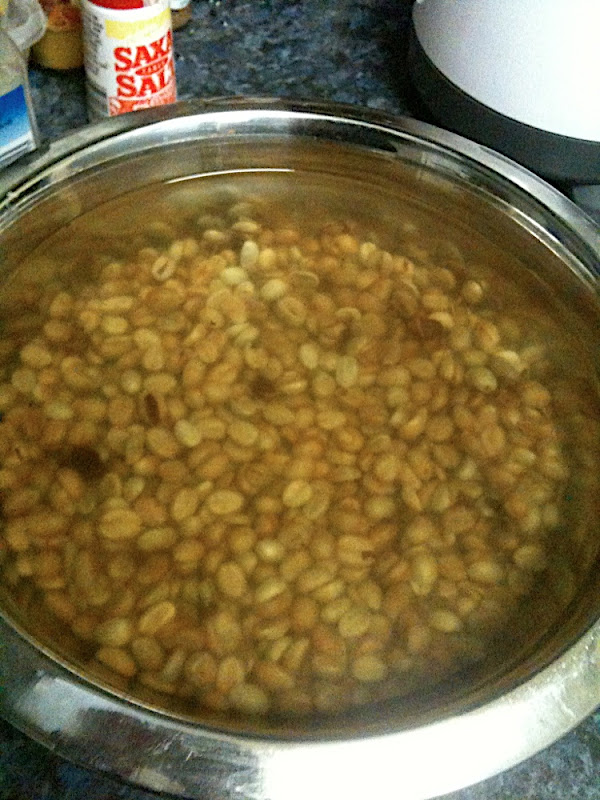
Embracing the “wet process” method I filled the tub with water and started pressing the beans together and mashing them, imagining my hands were the feet of the hired help at a French vineyard.

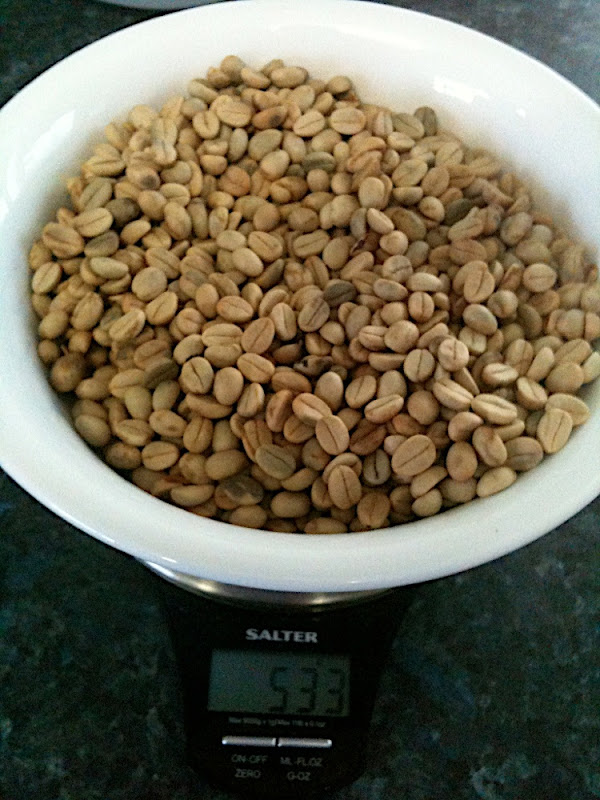
It still took a long time. But, after mashing and bashing my way through the bucket I ended up with:

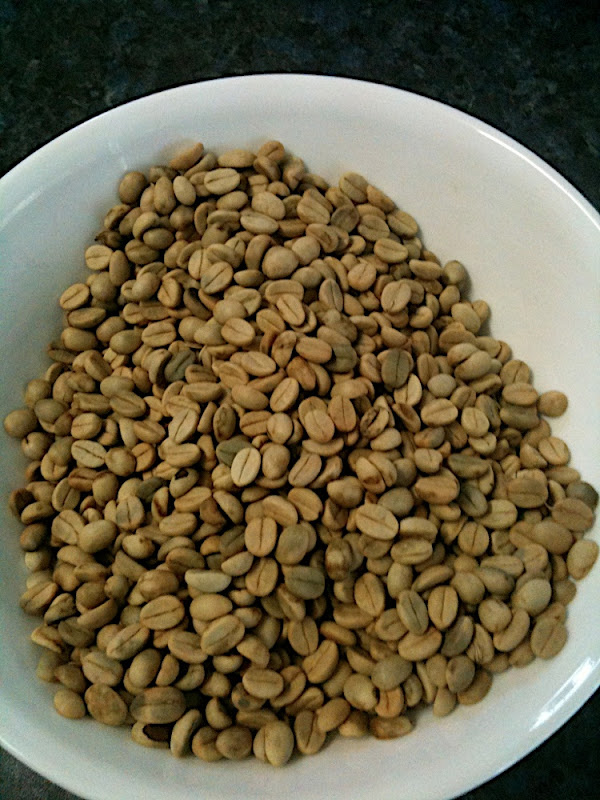
I weighed them. After soaking in water for a while (and they were noticeably waterlogged) they weighed 972 grams. They’ll lose a fair bit before roasting, and a further 20 percent during roasting. It’s not a hugely efficient process.
And now they’re soaking. For 12-48 hours.

What sort of Ikea furniture are you?
Anna, of Goannatree, sent me this link (via an interesting looking blog called Young House Love), it’s one of those “what sort of x are you” things that searches through the database of Ikea products to find the closest, most Swedish, version of you…
I’ve been to Ikea twice since making the move to Brisbane – once with a bona fide Swede. I’m proud to announce that I am a small table.
Forensic coffee
This new Saeco, the Xelsis Digital ID SLX 8870 MS, is a triumph of integrating disparate pieces of technology in a novel, but mostly pointless, way. It takes almost all the effort out of making coffee – which, for a Super Auto machine, is taking things to a whole new height.
This machine has a fingerprint scanner. It saves user profiles, and at the swipe of a finger will produce your “usual”…

Pretty cool.
Shirt of the Day: Avasmurf
I’d never really thought about the parallels between Smurfs and Avatar before – a bunch of blue creatures fighting off an oppressor in their homeland.

AACC Liveblog: Robert Gordon on the Former Prophets
Former Prophets (Joshua to 2 Kings) – Robert P Gordon
Called Former Prophets because they talk a lot about prophets, like Samuel and Elijah etc. In Jewish tradition (the Talmudic period) the idea was that the prophets wrote these books – Josephus thought Samuel wrote 1 and 2 Samuel. The term “former prophets” may owe a lot to assumed authorship.
Turning Points – Judges to Kings: Repentance in the Deuteronomic History
Martin Noth suggested the Deuteronomic history were works produced to explain why/how Judah found trouble. The book of Deuteronomy proceeded this material, it played a part in the formation of these books.
Deuteronomy is the engine pulling the books along – Deuteronomic language and theology imbues the following books.
It’s common to say that in Judges chapter 2:6-12 there’s a scheme at play that operates throughout the rest of the book.
Defection/Defeat/Repentance/Deliverance – a cycle.
Gordon says there’s no repentance in Judges 2.
Subsequently Israel calls out in despair, and they’re delivered, but they don’t “repent.” The verbs that would traditionally be used in a context of repentance are not used in the book of Judges. Except in chapter 2 (v18) where it is used to described God having compassion on Israel, and Israel returning to their corrupt ways. The verbs are used in close juxtaposition – perhaps a deliberate inversion/irony. Israel doesn’t repent, but a case could be made for translating the verb as God repenting.
In Chapter 10 the Israelites confess their sin against the Lord, but they are rebuffed, because God is literally “fed up” with them. This is the best you’ll get in Judges in terms of Israel’s repentance.
The question of Israel’s polytheism isn’t really relevant, or dealt with, within the text of Judges.
1 Samuel
Eli and Samuel continue the judging tradition. The issue of repentance comes up in chapter 7. “If you are returning to the Lord with all your hearts…” (shades of Deuteronomy 30). The Israelites aren’t lamenting about their own circumstances at this point but rather the situation with the Ark of the Covenant being held by the Philistines.
The narrative is portraiture not rather than photography. The text contains generalisations and hyperbole in order to make theological points. We have to be careful to understand what the aim of the text is. We can do this while still maintaining a high view of scripture.
What is the point of the Deuteronomic History?
Depends on your view on dating – is it a Josiaic composition withan exilic editor? Is it early? Is it to paint Israel as abject failures? To present post exilic theological options?
What are Israel to do in the hour of judgment? They are to turn and repent. Even after Josiah’s repentance God’s anger burns against Israel and seems to be a repudiation of the kingship in total.
Repentance is important and unavoidable in the New Testament – both John the Baptist and Jesus preach it first up, Hebrews 6:1 makes it a pretty foundational doctrine. It was also held to be very important in Hebrew theology. Repentance, in Jewish theology, converted unforgivable sins into ritual sins addressable through the law. “Great is repentance, for deliberate sins are accounted as sins of ignorance” – the Talmud. The Targum follows this pattern – repentance leads to forgiveness.
How to punish banks for unwarranted fees
This idea is not my own (I’m not sure I should name the person involved), and it involves something google discourages as “click fraud,” but next time you feel like a bank has charged you unreasonable fees call them and tell them that unless they rescind them you’ll go to google, find one of their ads, and click it enough times to double the price of the fee. It’s a modernised version of the old scheme of sending payments in coins with insufficient postage (where the bank apparently receives a fee to claim their mail).
AACC Liveblog: Who is “you” and who are “we” – Phil Campbell
This is a proud moment for the Campbell family. The first academic paper to be presented by any of our line for eons, possibly the first ever. Dad has had this idea germinating for some time, so I’m really proud to be sitting here listening to its presentation.
A precis of the argument goes a little something like this:
In Pauline epistles, particularly Galatians, Ephesians, Philipians and Colossians, Paul deliberately employs the pronouns “us” and “you” to distinguish between Jewish Christians (us) and Gentile Christians (you). Commentators have suggested this might be a stylistic alternation. Which doesn’t make as much theological sense as reading the letters as addressing Jewish and Gentile Christians in different passages.
He’s following DWB Robinson, who in 1963, suggested that Paul used “the saints” to refer to Jewish Christians.
Paul consistently uses “we” or “us” language to talk about past bondage to the law. Galatians 3 is a key passage where this reading makes sense. There are plenty of corroborative passages where the language switches from you to us when Paul starts talking about the law. This doesn’t go the other way (from us to you).
Paul more often uses “you” to talk about being foreign to God, or not knowing God, being worldly or uncircumcised.
Passages with a we/you parallelism read better read in this light.
Galatians 2:15 provides an interpretive key “we who are Jews by birth,” while Ephesians 2:11 says “you who are gentiles by flesh.” There are a couple more instances of each of these distinctions.
So who are the saints?
All Christians? Spiritual beings?
After surveying the gospels, Revelation and the Epistles, Robinson found that the use of the term refers to Christians, and particularly Jewish Christians, and mostly the Jewish Christians in Jerusalem.
Robinson on Colossians 1:
“This means that we have an inheritance which ‘you‘ have been counted worthy to share. And ‘we‘ are ‘the saints’.
Robinson suggests the flow of Paul’s logic is:
- We, the saints, have enjoyed the blessings of God’s covenant fulfilment in Christ.
- You, the Gentiles, have been invited to join us.
- Now we, together, are united in Christ
Ephesians 1-2 Case Study
Paul spends chapter 1 claiming the privileges of Jewish Christians. The key comes in verse 12 “we who were the first to hope in Christ.” Paul develops a parallel between the Jews and Gentiles in 1:3-12 and 1:13-14. As a result the Gentiles are to have love for the saints (v 15).
The same logic and contrasts continue in chapter 2. You Gentiles were dead in your sins (2:1), we Jews were also dead (2:4).
In Ephesians 2:6 Paul fuses the two together into one category – using the same prefix on the verbs “made alive,” “raised,” and “seated” (the prefix translates as “together”).
Implications
This idea has some implications for some pretty major doctrines.
- Predestination – If Ephesians 1’s “we” refers to the saints of Israel being elected before creation where does that leave us?
- A new approach to Christians and the Law – Our position with regards to the previous efficacy of the law (or lack of position) rarely comes into consideration because we often read the OT as Christian prehistory.
- A fresh insight into the Spirit – Reading 3:14 and 4:6 in parallel suggests that the role of the Spirit post Pentecost is linked to the Gentile mission.
- A need to nuance “every member ministry” – The popular notion of “every member ministry” built on Ephesians 4:11-12 needs to be reconsidered in this light.
- A revised view of the Old Testament as Christian prehistory – we don’t need to see ourselves in terms of the struggle of removing ourselves from the curse of the law (our problem, as slaves to sin, was deeper).
- A revised Old Testament hermeneutic – Our desire to identify with Israel rather than the gentile nations (like the Philistines) might be misplaced.
- Evidence for common authorship of Galatians, Ephesians and Colossians – you may not be aware, but a bunch of academics don’t think Paul wrote these anymore – this theologically consistent use of the pronouns throughout these epistles suggests common authorship.
YouTube Twosday: Beatboxed Mario
I know it’s Wednesday. And months since I posted a YouTube Tuesday video on Tuesday. But check dis out.
Sketchman
There was a time, long ago, when computer games could be sketched on single pages. In pencil. Those were noble times. Simpler.
Here are some of Toru Iwatani’s (the game’s designer) planning drawings for Pacman. In 8-bit glory.