New twist on portable coffee

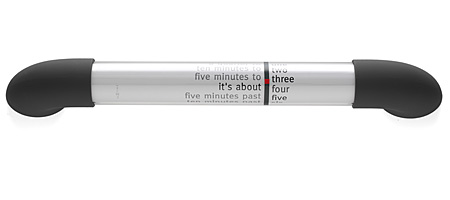
Meet the mypressi TWIST. A completely portable espresso machine that produces pressure courtesy of a cylinder of pressurised air (the same type used for whipped cream guns and soda siphons) in the handle.

It’s probably not the “first” portable coffee maker – I wrote about one a while ago… but it was bike pump powered.


Emoticonally challenged

Back in 2006 I wrote about why I hate emoticons. Basically if you use them incessantly or if your online dialogue is peppered with LOLs and ROFLs then I’ll probably find online discourse with you really annoying.

Emoticons and LOLs are starting to appear in actual verbal conversation. People now indicate laughter by saying LOL LOL LOL. If each of those LOLs is indicative of a bout of real life laughter then basically you’re abbreviating your response to things and packing in added hilarity. People also now feel the need to articulate the expression on their face – by saying “sadface” where they’d traditionally :( in typed text. This is sad. Particularly in the light of research that shows face to face communication is about 58 percent non-verbal, 35 percent “vocal” (tone etc)  and only 7% verbal (the words you use). And it’s annoying. This is a bit ranty, and it’s really just an intro to a story I just read and thought I’d share…

We may never know the degree of sorrow felt by a young Novosibirsk woman over the traffic cop she struck and killed with her car while driving drunk. But a senior traffic safety official said the “cynicism” of the suspect is exemplified by the text message – complete with emoticon – she sent her boyfriend after killing the officer:

“Honey, I killed a cop. I’m sorry :( What should I do?”

Yeah, nice. Her emotions are so beautifully captured by a colon and a parenthesis. That, to pick up another piece of online lingo is a “sympathy fail”.

The boyfriend’s priceless PR advice:

Create a “scandal and don’t say or sign anything.”

That is all.

Stuff you didn’t know about coffee: A gender agenda

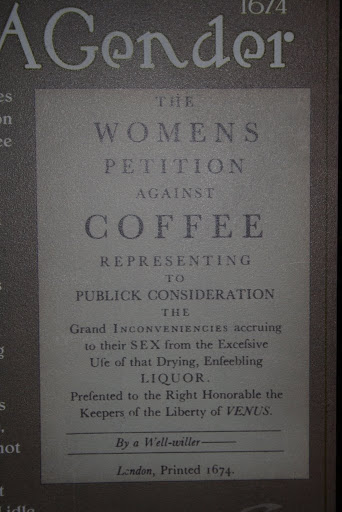
Coffee hasn’t always been the social lubricant it is today – in fact, in the late 1600s there were major protests against its legal status in England. Protests led by women who claimed:

The fineprint claimed that coffee caused impotence, and that cafes kept men away from their family responsibilities. 

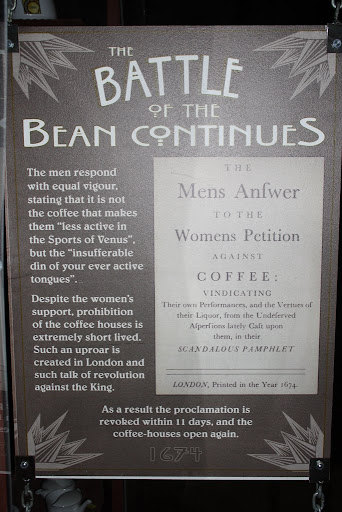
The ladies of the 1670s were pursuing their very own sexual revolution and coffee was in the firing line – and Charles II listened to their petition and shut down all the coffeehouses in England – which at that time refused service to women.

Eventually, 11 days later, the men posted a response, sanity prevailed and Charles II relented. 

Do you dare?

Another day, another lame segway rip off. This one’s for kids. The Dareway.

And according to this YouTube ad (you’ll have to click the post title to get it – they don’t come up in the sidebar) you’ll end up being a junior character from the Matrix – complete with leather trenchcoat.

Found here.

Piercing stare

Glasses would be such a pain, I’d lose them all the time, having to take them off and put them on and take them off all over again would be a recipe for losing those very expensive little visual aids.

So here’s a novel solution – pierced eyeglasses.

Found here

Crime against fashion

If you’re a fashion disaster and you know it then you really ought to show it with this scarf. The public has a right to know.

A bunch of links – May 6, 2009

Wee little invention

So, you’re stuck in the bush, you weren’t prepared enough to bring bottled water with you – but you did have room to pack this new urine to water converter from YankoDesign.

Training Day

I had training today. Theoretically I’m now a nicer person. It was called AussieHost and it’s all about becoming more customer focused. It was an entertainment extravaganza…

YouTube Tuesday: Talkin’ ’bout talkin’ ’bout your generation

I think Micallef is hilarious. He’s my favourite comedian – but I also like Charlie Pickering, Arj Barker and Josh Thomas – so tonight was a recipe for comedic gold. I’m glad Micallef is back in prime time – and I hope Channel Ten persevere longer than Nine did with his ill-fated Tonight with Shaun Micallef. Which featured comedic gold like this:

A bunch of links – May 5, 2009

Conversational ticks

I have a bad habit of paying too much attention to the annoying idiosyncrasies in people’s conversational patterns. Particularly the use of annoying catchphrases. Like “So I’m there going…”, “Can I just say…”, and “… and things like that”…

It gets to the point where hearing those people use those phrases is like nails on a chalkboard.

EDIT: I should point out that this post related more to my bad habit and the problems it causes than to things people say. I was being self reflective not trying to be judgmental.

News Just in: Swine Flu develops Zombie Strain

Don’t say you weren’t warned – turns out all the media hype surrounding Swine Flu has been underdone – rather than over the top… until now.

A new strain of the swine flu virus H1N1 have been reported in London.

After death, this virus is able to restart the heart of it’s victim for up to two hours after the initial demise of the person where the individual behaves in extremely violent ways from what is believe to be a combination of brain damage and a chemical released into blood during “resurrection.”

via BBC NEWS | Europe | EU quarantines London in swine flu panic.

David v Goliath

Malcolm Gladwell – author of renowned books Tipping Point and Outliers – still has his day job at the New Yorker. His most recent piece is an analysis of the underdog and an endorsement of decision making in real time. It makes for interesting reading.  Here’s a bit to whet your appetite – it’s quite long.

David’s victory over Goliath, in the Biblical account, is held to be an anomaly. It was not. Davids win all the time. The political scientist Ivan Arreguín-Toft recently looked at every war fought in the past two hundred years between strong and weak combatants. The Goliaths, he found, won in 71.5 per cent of the cases. That is a remarkable fact. Arreguín-Toft was analyzing conflicts in which one side was at least ten times as powerful—in terms of armed might and population—as its opponent, and even in those lopsided contests the underdog won almost a third of the time.

In the Biblical story of David and Goliath, David initially put on a coat of mail and a brass helmet and girded himself with a sword: he prepared to wage a conventional battle of swords against Goliath. But then he stopped. “I cannot walk in these, for I am unused to it,” he said (in Robert Alter’s translation), and picked up those five smooth stones. What happened, Arreguín-Toft wondered, when the underdogs likewise acknowledged their weakness and chose an unconventional strategy? He went back and re-analyzed his data. In those cases, David’s winning percentage went from 28.5 to 63.6. When underdogs choose not to play by Goliath’s rules, they win, Arreguín-Toft concluded, “even when everything we think we know about power says they shouldn’t.

Reasonable doubt

Terry Eagleton is a former Catholic Marxist philosopher and academic who wrote a great critique of the God Delusion that even had die hard atheists (eg Jack Marx who at the time was blogging for the SMH and is now at News Ltd) pondering their positions.

He’s now got a book out – called Reason, Faith and Revolution – and it has been reviewed by a NY Times blogger.

While his own take on the book suggests he’s by no means sold on Christianity himself:

“I do not invite such readers to believe in these ideas, any more than I myself in the archangel Gabriel, the infallibility of the pope, the idea that Jesus walked on water, or the claim that he rose up into heaven before the eyes of his disciples.”

And he’s not a fan of “institutionalised religion” which comes in for a pretty stinging rebuke (according to the cover note). Instead he’s trying to empower the left by presenting Christianity as a solid option. So, while offering up the standard criticism of Dawkin’s insistence that religion and science are incompatible he tackles the issue from a social perspective too, here’s a passage from the review (which is worth a read):

“The language of enlightenment has been hijacked in the name of corporate greed, the police state, a politically compromised science, and a permanent war economy,” all in the service, Eagleton contends, of an empty suburbanism that produces ever more things without any care as to whether or not the things produced have true value.

And as for the vaunted triumph of liberalism, what about “the misery wreaked by racism and sexism, the sordid history of colonialism and imperialism, the generation of poverty and famine”? Only by ignoring all this and much more can the claim of human progress at the end of history be maintained: “If ever there was a pious myth and a piece of credulous superstition, it is the liberal-rationalist belief that, a few hiccups apart, we are all steadily en route to a finer world.”