Crazy. I love that they feel the need to tell us no to try at home.
Crazy. I love that they feel the need to tell us no to try at home.
This is supremely good (thanks to Peter B who shared it on Facebook).
I love this. A Dutch artist, Berndnaut Smilde, makes clouds inside rooms.


He uses a smoke machine – but he controls the temperature and humidity in the room to get the clouds to form a particular way. Before they dissipate.
Berndnaut Smilde – Making Clouds from The Avant/Garde Diaries on Vimeo.
Via Yatzer.
Remember that time I posted stuff about starting a church in South Bank. Well. That happens tomorrow. If you’re the praying type – could you pray for us?
If you’re not the praying type – and you live in Brisbane – you should come, find out what it means to be the praying type.
Here’s a video with some details.
Creek Road – A new church in South Bank from Creek Road on Vimeo.
Also – that post about starting a church in Brisbane’s inner city led to an interview with the Sunday Mail – you can read the interview and see the story here – turns out South Bank is the most ‘godless’ part of Brisbane.
This is a stunning advert for a foodstuff (an oil based spice range).
The Sound of Taste from Grey London on Vimeo.
Ahh. I love a good timelapse video…
If you want more like this – there are plenty of timelapses in the ol’ archives, and even another one from the International Space Station.
10 minutes of dramatic jump cut entries. You are welcome.
Enough.

Image Credit: Joel Van Houdt, New York Times
Most Australians think asylum seekers who arrive by boat are not genuine refugees and there is strong support for the Abbott government to treat boat arrivals more harshly.
A nationwide opinion poll by UMR Research shows that 59 per cent of people think most boat arrivals are not genuine refugees…
The poll, based on a nationally representative sample of 1000 online interviews, shows only 30 per cent of Australians believe that most asylum seekers are genuine refugees while 12 per cent are unsure.
A strong majority of Australians, 60 per cent, also want the Abbott government to “increase the severity of the treatment of asylum seekers… Only 30 per cent of Australians think asylum seekers should not be treated more severely, while 9 per cent are unsure.
That is staggering. We’re not just talking about maintaining the status quo, which most mental health professionals and human rights advocates already believe is too harsh. We’re talking about people who want this treatment to get worse.
Maybe this is purely malice. Maybe it is ignorance. Maybe it’s something else. I hope it is ignorance. Though 9% of people admitted they weren’t sure what they wanted.
If you’re one of these 59-60% – and statistics suggest there’s a pretty good chance that you are (better than 1 in 2 (without accounting for what lovely people my readers are) – could you please commit to meeting at least three refugees this year and hearing their stories.
Why not make 2014 the year you expand your horizons beyond the lines you’re fed by people with particular “special interests”? I’m not claiming not to be biased. It’s pretty clear I feel strongly about this issue.
But that’s no excuse for you to simply dismiss my opinion without taking steps to make your own opinion better educated, and perhaps, more compassionate. Could I challenge you – even if you stop reading right here – to put human faces on the statistics we’re reading about asylum seekers, and, to avoid hypocrisy – can I offer to help. While I’m asking you, a statistic, to put a face to these statistics, can I ask you to become a face to me as well. Share your story with me. Tell me why I’m wrong. Tell me why we should be treating humans whose crime is not to be born in Australia – something not many of us have much control over for ourselves – as less than less than human (we already treat boat arrivals as less than human, so to make the treatment harsher again would be to dehumanise them further). Convince me.
If you’re one of these 59% of Australians – can you contact me, speak to me, become a face for me – and allow me to introduce you to some refugee friends? I’d be happy to. If you’re not in Brisbane, I’m pretty sure I can put you in touch with someone who lives near you who can help.
More than half of us don’t want to look after people who are so desperate for help they flee their homes, their families, their friends – and get on rickety boats (even if they’re told these boats are going to transfer them to more comfortable ships for the journey) – in the hope that Australia, the country they’re heading to because we have a reputation for promoting freedom and welcoming multiple cultures – will welcome them. More than half of us don’t want to welcome or care for our fellow humans. Not only do we not want to care for them – we want to treat them more harshly. This might be out of ignorance too.
If you want to read a first hand account of the boat journey – just the boat journey, without the underlying personal trauma associated with fleeing your home – two New York Times journalists made the trip, and wrote about it.
Maybe you’re one of the 60%. Maybe you haven’t felt about what it does to a person to be pulled off a sinking ship in the middle of the ocean, ferried into captivity, referred to by number, placed with a bunch of strangers, given no certainty about how long you’ll be held…
Maybe you aren’t aware that a Commonwealth Ombudsman report on suicide and self-harm in migration detention described the conditions, presently, in our detention centres – funded and operated in your name, Australian – as prison-like, featuring: “omnipresent surveillance features, including high wire and razor wire fences, surveillance cameras, body searches, room searches, roll calls, and being constantly watched over by uniformed security personnel.”
Maybe you’re not aware that 62.5% of people held in detention centres have significant mental health issues – exacerbated by detention, and according to that same report: “Australian and international evidence supports the conclusion that immigration detention in a closed environment for a period of longer than six months has a significant, negative impact on a detainee’s mental health.”
Maybe you’re not aware that almost 1 in 5 asylum seekers attempt self harm in detention, and 14% of these self-harm cases involve children.
Maybe you’re not aware that these conditions, and detention itself, scars detainees by causing significant ongoing mental health issues, and not only does it cost about $578,000 per offshore detained Asylum Seeker ($1 billion to keep 1,728 refugees in off-shore detention), the mental health care costs when they are inevitably released into our community are huge – about $25,000 per individual (source: T. Ward, Long-term health costs of extended mandatory detention of asylum seekers, (Melbourne, Yarra Institute for Religion and Social Policy, 2011).
It feels crass to make an economic case not to keep people in detention – or treat asylum seekers who arrive by boat “more harshly” – but that’s a political reality. It seems. Which is sad.
Politicians do whatever they can to stay in power, and we keep the politicians who serve our self interests in power for longer.
Statistically, about 62% of Australians identify as Christians – there has to be some overlap between that 62% and the 59% who want us to be nastier to vulnerable people. Even if the 38% who don’t identify as Christians were hypothetically part of that 59%, there’s another 21% of Australians who are Christians who want us to treat asylum seekers “more harshly” than we already do.
If you are one of these Christians, then let me speak to you for a moment about why your position is fundamentally inconsistent with the Gospel – you know – the foundational truths of Christianity.
Let’s, for a moment, imagine that Christianity is fundamentally the story of people looking for a better future because their ‘present’ is filled with brokenness, and that part of becoming a Christian involves escaping the brokenness. It shouldn’t be too hard to imagine. Because that’s exactly what Christianity involves. But it doesn’t just stop there.
Christianity involves a king, a leader, who doesn’t just show compassion to us, as refugees who are fleeing a future we don’t want, he grants us a future we don’t deserve. He doesn’t just grant us a future we don’t deserve – he dies to buy our ticket to this future, to secure our place.
We don’t get in on merit. We don’t get in on lining up in the right place. We get in by asking for mercy from the king.
If you want to pick a stance on this issue that imitates Jesus and gets you a hearing for the Gospel message, the ability to tell the story of Jesus with consistency – a story that involves self-giving, sacrificial love from a king, not just for strangers from another country, but for his enemies – then I’d urge you to reconsider the stance you are taking on refugees.
Sure. It is possible that by being generous and compassionate people will abuse our generosity. People may come through our gates who we don’t want coming through our gates. There might be “security” risks. But risks come with rewards, and at the moment we are perpetrating a terrible evil by being complicit as our leaders mistreat people in our name, while they give us what we want. It’s time to want something different. To want something better.
We can start by not wanting something worse.
We can start by understanding the plight of the refugee, the complexity of the decision making process involved in fleeing one’s country.
We can start by insisting on treating refugees with dignity, with love, with compassion – even if we feel strongly that they shouldn’t have taken their own lives in their hands on a dangerous journey with some manipulative and unscrupulous people smugglers.
This is an issue that transcends party politics. Don’t read this thinking I’ve got it in for Tony Abbott and the Liberal Party. It’s not about the Liberal Party. It’s not about the Labor Party, and while the Greens are a compassionate voice in this debacle debate, I’m not suggesting we all join the Greens. Politics in our country is far more complex than a neat dichotomy (or trichotomy) allows. There are issues scattered through history where all the obvious and popular positions were wrong, and immoral. And when we see such immorality enshrined in our legislation, or when we realise we’ve vicariously been participating in this sort of immorality, change requires people speaking up in every party, from every ideology.
If we want genuine change the solution to this issue needs to be something that affects every party. We can learn something from how those agitating for changes to the Marriage Act are approaching their advocacy – pushing for conscience votes, and advocating the issue on a person to person basis, through stories, rather than accepting the lock-step conclusions of two party rooms – even if you disagree with their cause, their methods are effective.
Because Australian politics is now, perhaps more than ever, predicated on giving people what they want, not giving people what they need, or what is right (because that’s how you stay in office) – our Prime Minister has amped up the rhetoric on the asylum seeker issue.
“If stopping the boats means being criticised because I’m not giving information that would be of use to people smugglers, so be it. We are in a fierce contest with these people smugglers. If we were at war we would not be giving out information that is of use to the enemy just because we might have an idle curiosity about it ourselves… Let’s remember that everyone in these centres is there because he or she has come illegally to Australia by boat. They have done something that they must have known was wrong.”
Disgusting.
Sorry Mr Prime Minister. With all due respect – we must do better as a nation, and your job is to lead us in doing better in promoting selflessness, not to pander to our self interest.
We live in a democracy, where transparency is essential for our votes to be cast in an informed and invested way, as is our right. You are robbing us of that right by promoting secrecy – it is, I feel, better to inform both the smugglers and the Australian public, rather than informing neither group. This isn’t a war. This isn’t an issue of national security. This isn’t about mere “idle curiosity” – this is about letting the Australians who care about our international obligations, and about other people, you know, our fellow humans, keep you accountable as our elected representative and leader.
Perhaps worse than the lack of transparency is the fundamental abuse of the truth in your pandering to the “will of the people.” Your statements to The Guardian are misleading and make criminals out of the victims of crime.
a) it’s not illegal to seek asylum by boat. It’s wrong to people smuggle.
b) none of the asylum seekers I’ve spoken to had any idea the thousands of dollars they spent to get here, or the boats they got on were the “wrong” way to come here. They certainly weren’t paying thousands for a dangerous trip on a non-seaworthy rust bucket. “Ishmael” tells the story better than I can.
c) comparing the circumstances of people fleeing from the tragedy of war, or violence, by conflating the motivation of asylum seekers and the scourge of people smuggling is abhorrent.
Even if it’s true, what you say, about many of these asylum seekers being “economic refugees” – and it doesn’t appear to be, given that the vast majority are found to be genuine refugees – these individuals have the right to test their refugee status by seeking asylum. And, are allowed to seek asylum in whatever way they are able.
I spoke to a friend, an asylum seeker from the Middle East, a Christian, who had fled religious persecution from his home country – and sure, his reason for specifically seeking refuge in Australia was that it offered new opportunity – both for the freedom to practice his faith without fear, and economically – but the very nature of seeking asylum is to seek new opportunity for life, from a situation where there is no opportunity for life. Every refugee is an economic refugee, it’s a meaningless category.
Here’s another story. From another asylum seeker.
https://www.youtube.com/watch?v=KMpWnc-I9Oo
I think TED talks are to ideas what blog posts are to books. And I clearly don’t have a problem with blog posts… but I would hate to imagine a world without books.
TED is probably a little guilty of taking itself slightly too seriously. So I’m a fan of this video, where a performance comedian snuck into the schedule for a TEDx event.
http://www.youtube.com/watch?feature=player_embedded&v=-yFhR1fKWG0
Here, as something a little meta, is a TED talk about the problem with TED talks.
If you can’t handle that level of metaness – you can read the transcript as an article on The Guardian, which includes this nice little quote…
TED of course stands for Technology, Entertainment, Design, and I’ll talk a bit about all three. I Think TED actually stands for: middlebrow megachurch infotainment.
The key rhetorical device for TED talks is a combination of epiphany and personal testimony (an “epiphimony” if you like ) through which the speaker shares a personal journey of insight and realisation, its triumphs and tribulations.
What is it that the TED audience hopes to get from this? A vicarious insight, a fleeting moment of wonder, an inkling that maybe it’s all going to work out after all? A spiritual buzz?
I’m sorry but this fails to meet the challenges that we are supposedly here to confront. These are complicated and difficult and are not given to tidy just-so solutions. They don’t care about anyone’s experience of optimism. Given the stakes, making our best and brightest waste their time – and the audience’s time – dancing like infomercial hosts is too high a price. It is cynical.
Also, it just doesn’t work.
This article Against TED is also worth a read, it makes many of the same points.
Culturally, we have an incredible tendency to switch deep thinking for pre-packaged intellectual junk food. And TED feeds that addiction.
People doing the communicating have a responsibility to package their information in a way that makes the content clear and engaging – TED is a great reminder that presentation matters… But people receiving the communication have to fit that information together in a coherent framework from a wide range of sources, TED talks only give a very small part of the picture and the medium works against depth and complexity.
Don’t get me wrong. I think the format – a short oral presentation about an interesting, potentially life changing, idea is incredibly compelling. I am embarking on a life doing that. I think TED is essentially secular preaching. But I think the intellectual life of the church would be incredibly anemic if all we did was preaching (which is part of the problem I have with the typical megachurch).
It’s weird. When I think about how I go about preaching in the light of this quote – I feel my training in communication stuff pushes me towards serving up sermons that are something like an epiphimony – because stories grounded in the life of the speaker and audience are absolutely one of the most compelling ways to persuade people of something – while my personal preference is for deep and lengthy content filled with conceptual rabbit holes and stuff to nut out. It’s a paradox. It’s a paradox that only becomes crippling if we do all our communication in one communicative event, with one style.
Here’s a worked example of how TED can work well though, in a multimedia, multi-channel approach to communicating an idea. In 2011, I read an Economist article by an author/journalist, Tom Standage, called How Luther Went Viral. This essay became part of my thinking for my own essay on Luther for my Reformation subject, which in turn partly inspired my Masters project. Then I watched a Tom Standage TED talk about ancient social media. The TED talk wasn’t deep. But it was exciting. Finally, I read Standage’s excellent book – Writing on the Wall: Social Media – The First 2,000 Years
I’m not claiming this example involves the production of high quality material on my part (the TED material, frankly, is gold in this case) – but the process is an example of how TED can work well when it causes people to interact with and develop ideas, producing new stuff in response. An idea was shared, discussed, and new ideas were cultivated. This is TED achieving the goal implied in its own motto – “ideas worth spreading”… but it’s only working well because it’s part of a much bigger picture involving a fair bit of depth, and wider reading. Could you get the gist just by watching the TED video? Sure. Maybe. But that’s a fairly limited way to participate in the spread of ideas, arguably being featured on just one platform, with just one audience – no matter how big that audience is – isn’t really “spreading” – not, ironically, like Luther’s Reformation – which if you think about it kind of started with Luther nailing up a proposal for a 16th century TED talk. Luther didn’t stop there. He used every medium he could to spread his ideas.
Another interesting thing about the popularity of TED, by the by, is that it (along with the rise of YouTube tutorial videos and vlogs) represents a movement back from a predominantly written culture to an oral/visual culture – if you’ve ever checked out the comments on YouTube you could say a pre-literate oral/visual culture. This has interesting implications for people whose job it is to communicate something to such a culture, and its possible this means being a bit more creative in how we present stuff, preferably without wiping out depth and complexity.
Anyway – I really just wanted to post that video. So. Over and out.
This is part 3 in a 5 part series on what social media does to our brains – it uses Facebook as a case study, but sustained use of any communication medium will have a similar effect (though Facebook is extra specially designed to addict you).
The first post showed that the mediums we use do shape our thinking and rewire our brains. The second post was about how one might process this fact drawing on insights from media ecology and neuroscience.
In this post we’ll consider what insights might be gained here for Christians who want to use mediums like Facebook to communicate about Jesus and share their lives authentically with their friends while steering clear of the down side of having your brain changed in ways you don’t want.
This post is less about why a Christian should use Facebook (though it deals with that briefly), and isn’t so much about what steps to take to use Facebook well (which will be dealt with a little in post four) – it is more about what to think about the power our communication mediums have over us.
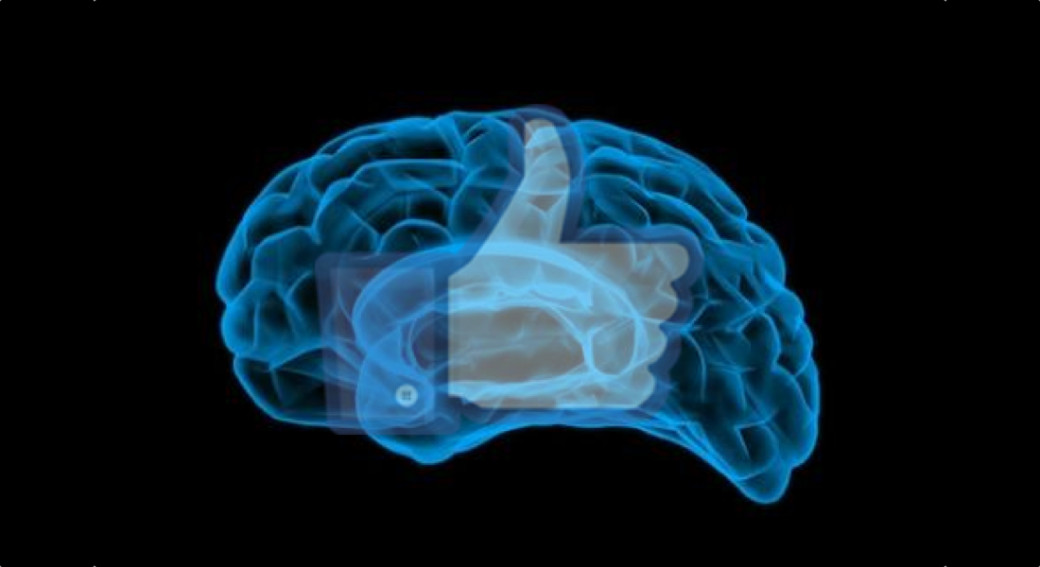
I’m speculating a little here – and it’s possible that you can’t simply equate the Biblical concept of “mind” with the neuroscientific understanding of what the mind is. But I think there are some important Biblical and theological touch points to consider when it comes to social media and our brains. Some of these are also covered in John Dyer’s excellent From the Garden to the City
Briefly – according to the guy who kickstarted a lot of the neuroplasticity stuff, Daniel Siegel, people’s well-being involves a combination of brain, mind, and relationships – the “mind” is the process that regulates the flow of energy and information through the brain, which is the physical “neurocircuitry,” relationships are how energy and information is shared between people via communication. When it comes to the Bible – the mind and heart are closely linked with how people think and act. I’m working on the assumption that these are roughly equivalent and related.
“In the past God spoke to our ancestors through the prophets at many times and in various ways, but in these last days he has spoken to us by his Son…” – Hebrews 1:1-2
In the beginning was the Word, and the Word was with God, and the Word was God. He was with God in the beginning. Through him all things were made; without him nothing was made that has been made… The Word became flesh and made his dwelling among us. We have seen his glory, the glory of the one and only Son, who came from the Father, full of grace and truth…No one has ever seen God, but the one and only Son, who is himself God and is in closest relationship with the Father, has made him known. – John 1:1-3, 14, 18
Theological projects – like this – are best served by starting with who God is. God is the ultimate ‘hive mind’ – one God, in three persons, acting with one mind. There’s a word bandied about in theological tomes – perichoresis (wikipedia) – which describes the interpenetration of the persons of the Trinity. There is no act of God the Father that doesn’t involve unity of purpose and action from God the Son and God the Holy Spirit because each person of the Trinity is so thoroughly ‘networked’ to the other. The Trinity is the ultimate social network – or perhaps, in a less theologically dangerous way – social networks are what we get when humans made in the image of God, for relationship, use our meagre, broken, selves to try to act out that relational aspect of our humanity.
It shouldn’t really surprise us, in this sense, if our attempts at forging communication networks end up with something like a hive mind. Relationships are about connection.
Here are a few paragraphs from my project – you can read the whole thing if you want to see the footnotes.
As ethos, pathos, and logos, are necessary elements of persuasive act, so the “perichoretic” contribution of Father, Word, and Spirit is necessary in divine communicative acts. There is no act of God that is not produced by the three divine persons, acting in concert, so it should be impossible to speak of any work of Father, Son, or Spirit separately, just as it is impossible to produce a spoken communicative act that doesn’t inherently contain the three persuasive proofs: ethos, logos, and pathos.
Moon (2010) suggests the Triune God is a Divine “communicative system” that employs the perfect media – the Word and Spirit, to produce communicative acts both internally (ad intra), and externally (ad extra) through “coupling with creaturely media.” Moon suggests the primary part of “the distinct form of divine operation is communication,” because divine action is consistently depicted as speech, or alongside divine speech, and God is described as “word.” The divine communication system is the “ground of communicative/meaning systems” so that human communication is “grounded in divine communication,” or, as O’Donovan describes it “from God’s true speech flows all possibility of true human speech.”…
…I suggest that divine communicative acts are persuasive acts, containing the three proofs, analogously aligned to the persons of the Trinity. Each divine communicative act involves the inextricably perichoretic contributions of each divine person, yet one might describe those acts in terms of the ethos of the father, being demonstrated in the incarnate logos, with the Spirit moving the hearts and minds of the audience as divine pathos. So, as a communicative act of God, consistent with his character, the incarnation of the logos, and his death on a cross express the ethos of God, who also works in the hearts of the recipients of his communicative act to produce appropriate emotional responses (either hardness or softness of hearts) as divine pathos. In communicating through Scripture, to and through people in particular times and places, using appropriate and common mediums and genres, and through the incarnation itself, God “aptly” accommodates himself to his audience and situation.
Basically, all our communication, true or otherwise, is a reflection or refraction of the way God communicates and uses mediums. This is especially true when one considers the incarnation of Jesus – and what that does with humanity as a medium. Which we’ll get to below. First we’ve got to look a little bit at what humanity, especially the ‘mind,’ is and to do that we’ll do a little run through the Biblical story…
The best way to develop a theological framework for something like what it means to be a person with a changing brain, is to start with Biblical Theology – and see how the idea of personhood develops – I think there are three interesting ‘human’ threads – the heart, mind, and image – that we can pull together to help us understand what the Bible thinks about your mind being rewired into an externalised social hive like thing (I don’t want to use brain and mind completely interchangeably – a lot of the neuroplasticity stuff out there makes a slight distinction between them).
The Bible talks of personhood in a whole heap of ways – but the ones that are particularly pertinent for this little exercise are to do with the state of our hearts and minds (a sort of overlapping mishmash of desires, objects of worship, and the thinking that frames our actions), and the image we present to the world as we live out those desires.
The first thing we learn about humans is that we’re created ‘male and female, in God’s image’ – made in the image of the God who is a plural (he says “let us”), but a singular entity as people who are designed to relate to each other (Genesis 1). Humans were then given a job to do. Adam and Eve were to be God’s images – his representatives (and probably something like his ‘idols’) in his Garden Temple. There’s a really nice thread in the Bible that starts at Eden, weaves through the Temple, and ends in the New Creation – that involves a Garden, flowing water, precious stones, and God’s people. Adam is also meant to “work and take care of” the Garden – and the Hebrew words used in Genesis 1:15 are later used of the priests in the Temple. Part of his job – presumably where he is showing that he’s a chip off the old block – is speaking to name the animals, just like God spoke to make the world and create the animals. Communication is part of what it means to be made in the image of God – and being made in the image of God means we have a function that communicates something about God as people look at us. Images are mediums. People are mediums. We all carry messages about the things we live for – the image that is imprinted on our hearts as we live and relate to other people.
The things we think about and the way we think shape our lives. Contemporary neuroscience is catching up with thousands of years of Christian (and Jewish) theology. We shouldn’t be shocked – as Christians – to learn that we can alter our brains by the way we live, and alter the way we live by altering our brains. We should expect it. It’s foundational – we’ll see in the next post that many of the ways we might go about deliberately changing our brains for the better are also part and parcel of a Christian way of life.
At the heart of humanity’s rejection of God’s rule, in the events of the Fall, is the desire to be like God ourselves – not to bear God’s image, but to bear our own image, to shape our own lives. The serpent’s deception cunningly attacks the very heart of our created being.
“For God knows that when you eat from it your eyes will be opened, and you will be like God…” – Genesis 3:5
Adam and Eve were already created to be like God, the desire the serpent awakens is the desire to set the communication agenda for one’s self. The result is a breaking of the ability to carry God’s image – Adam’s son is made in Adam’s image (Genesis 5:3), and a darkening of the human heart so that it’s “only evil all the time” (Genesis 6:5).
Furthermore, just as they did not think it worthwhile to retain the knowledge of God, so God gave them over to a depraved mind, so that they do what ought not to be done. – Romans 1:28
I think Paul, in Romans 7, is talking about the frustration of being someone made in the image of God who lives with this darkened heart brought about by sin.
“So I find this law at work: Although I want to do good, evil is right there with me. For in my inner being I delight in God’s law; but I see another law at work in me, waging war against the law of my mind and making me a prisoner of the law of sin at work within me. What a wretched man I am! Who will rescue me from this body that is subject to death? Thanks be to God, who delivers me through Jesus Christ our Lord!
So then, I myself in my mind am a slave to God’s law, but in my sinful nature a slave to the law of sin.” – Romans 7:21-25
Our minds – as created – long to break free of the shackles of our broken human nature. When a bunch of people whose humanity is broken like this, get together as broken humans, with darkened hearts, in social networks, using the language they were created to use as people made in God’s image – they no longer work to point people to God, like they were created to, but to their own images and interests. So we get Babel.
“Now the whole world had one language and a common speech. As people moved eastward, they found a plain in Shinar and settled there. They said to each other, “Come, let’s make bricks and bake them thoroughly.” They used brick instead of stone, and tar for mortar.
Then they said, “Come, let us build ourselves a city, with a tower that reaches to the heavens, so that we may make a name for ourselves; otherwise we will be scattered over the face of the whole earth.”
But the Lord came down to see the city and the tower the people were building. The Lord said, “If as one people speaking the same language they have begun to do this, then nothing they plan to do will be impossible for them. Come, let us go down and confuse their language so they will not understand each other.” – Genesis 11:1-7
The people who went to build this tower – using new technology they had created (bricks and mortar), and the language that united them – tried to turn themselves into gods and use their created technologies that were new and mythically permanent to try to make a name for themselves, but their plans were shattered and they were scattered.
“Rather than using their creative powers to honor God as Noah did, the people of Babel wanted to bring glory to themselves. Rather than live in dependence upon God (as Abraham will in the coming chapters), they tried to achieve complete autonomy from him… At Babel, we find humans creating a city as their anti-garden and a tower as an image to themselves.” – John Dyer, From the Garden to the City
We shouldn’t be surprised that as we interact with created things that have the potential to either serve our idols, or become idols themselves, those things rub off on us a bit.
“We are molded and formed into the image of whatever shapes us. Here wisdom warns us that not all technologies are created equal in this regard.”
“The things we create can—and will—try to become idols in our hearts. Though they enable us to survive and thrive in a fallen world, the very aid they provide can deceive us with a false sense of comfort and security, hiding our need for God and his grace.” – Tim Challies, The Next Story
The problem with being conformed into the image of something hollow and empty is that it leaves you hollow and empty, and it never quite lives up to the promise. David Foster Wallace gave a famous speech This Is Water to a bunch of college graduates. In it, though he wasn’t a Christian, Foster Wallace said:
“Everybody worships. The only choice we get is what to worship. And the compelling reason for maybe choosing some sort of god or spiritual-type thing to worship–be it JC or Allah, be it YHWH or the Wiccan Mother Goddess, or the Four Noble Truths, or some inviolable set of ethical principles–is that pretty much anything else you worship will eat you alive. If you worship money and things, if they are where you tap real meaning in life, then you will never have enough, never feel you have enough. It’s the truth. Worship your body and beauty and sexual allure and you will always feel ugly. And when time and age start showing, you will die a million deaths before they finally grieve you. On one level, we all know this stuff already. It’s been codified as myths, proverbs, clichés, epigrams, parables; the skeleton of every great story. The whole trick is keeping the truth up front in daily consciousness.
Worship power, you will end up feeling weak and afraid, and you will need ever more power over others to numb you to your own fear. Worship your intellect, being seen as smart, you will end up feeling stupid, a fraud, always on the verge of being found out. But the insidious thing about these forms of worship is not that they’re evil or sinful, it’s that they’re unconscious. They are default settings.
They’re the kind of worship you just gradually slip into, day after day, getting more and more selective about what you see and how you measure value without ever being fully aware that that’s what you’re doing.” – David Foster Wallace, This Is Water
The connectivity that Facebook offers – the boost to your ego that keeps you coming back – it’s the same hollow and empty shadow of Christian relationships, or the eternal self-giving relationships in the Trinity. The effect it has on your brain is a shadow of the effect that participating in those social networks has. And participating in those social networks – the church, and being connected to Jesus via the Holy Spirit – is possible because of how the Triune God employed communication mediums. It’s this social network that should reshape our brains, and help us to avoid having them reshaped by other stuff as we manage to be in the world but not of it.
Jesus’ prayer in John 17 is pretty useful for thinking about how we share in a deeper social network if we follow Jesus.
“My prayer is not that you take them out of the world but that you protect them from the evil one. They are not of the world, even as I am not of it. Sanctify them by the truth; your word is truth. As you sent me into the world, I have sent them into the world. For them I sanctify myself, that they too may be truly sanctified.
“My prayer is not for them alone. I pray also for those who will believe in me through their message, that all of them may be one, Father, just as you are in me and I am in you. May they also be in us so that the world may believe that you have sent me. I have given them the glory that you gave me, that they may be one as we are one— I in them and you in me—so that they may be brought to complete unity. Then the world will know that you sent me and have loved them even as you have loved me.
“Father, I want those you have given me to be with me where I am, and to see my glory,the glory you have given me because you loved me before the creation of the world.” – John 17:15-24
That’s a nice bookend to John’s prologue, quoted above. Jesus – God’s word made flesh – became a human. Truly human. Sharing all of humanity’s potential pitfalls and foibles. Entering a broken world, and yet he managed not to be broken by sin, while choosing to be broken for us.
For we do not have a high priest who is unable to empathize with our weaknesses, but we have one who has been tempted in every way, just as we are—yet he did not sin. – Hebrews 4:15
Jesus became a communication medium, he used communication mediums, and rather than being conformed into the messy “myth” or narrative of the human condition – he transformed the narrative and rewrote the myth – so that if you want to be human like Jesus was human – through the cross and sharing in his death – you too can be transformed. This has to change the way we use communication mediums – and I’ll suggest that it does. In the next post.
The story of the Old Testament, and the promise anticipated that is fulfilled in the New, revolves around broken humanity’s inability to focus mind and heart on God, as they should.
Israel was called to be a nation of priests – a nation that represented God to their neighbours – and the tool they had for doing that was the Law. God’s word.
Now if you obey me fully and keep my covenant, then out of all nations you will be my treasured possession. Although the whole earth is mine, you will be for me a kingdom of priests and a holy nation.’ These are the words you are to speak to the Israelites.” – Exodus 19:5-6
See, I have taught you decrees and laws as the Lord my God commanded me, so that you may follow them in the land you are entering to take possession of it. Observe them carefully, for this will show your wisdom and understanding to the nations, who will hear about all these decrees and say, “Surely this great nation is a wise and understanding people.” – Deuteronomy 4:5-6
Fix these words of mine in your hearts and minds; tie them as symbols on your hands and bind them on your foreheads. – Deuteronomy 11:18
That didn’t work so well. So God had to intervene… first with a promise…
“The days are coming,” declares the Lord,
“when I will make a new covenant
with the people of Israel
and with the people of Judah.
It will not be like the covenant
I made with their ancestors
when I took them by the hand
to lead them out of Egypt,
because they broke my covenant,
though I was a husband to them,”
declares the Lord.“This is the covenant I will make with the people of Israel
after that time,” declares the Lord.
“I will put my law in their minds
and write it on their hearts.
I will be their God,
and they will be my people. – Jeremiah 31:31-33I will give you a new heart and put a new spirit in you; I will remove from you your heart of stone and give you a heart of flesh. – Ezekiel 36:26
And then he intervened again with the Holy Spirit – which does something profound to the hearts and minds of those who follow Jesus – and works to conform them into his image.
“After they prayed, the place where they were meeting was shaken. And they were all filled with the Holy Spirit and spoke the word of God boldly. All the believers were one in heart and mind. No one claimed that any of their possessions was their own, but they shared everything they had – Acts 4:31-32
Paul shows how the renewing work of the Spirit as a result of Jesus’ work on the Cross, and our union with him – which brings us our justification and sanctification (makes us ok by God, and works to make us like Jesus), brings about a new humanity – a new link between heart, mind and image.
“Those who live according to the flesh have their minds set on what the flesh desires; but those who live in accordance with the Spirit have their minds set on what the Spirit desires. The mind governed by the flesh is death, but the mind governed by the Spirit is life and peace. The mind governed by the flesh is hostile to God; it does not submit to God’s law, nor can it do so. Those who are in the realm of the flesh cannot please God.
You, however, are not in the realm of the flesh but are in the realm of the Spirit, if indeed the Spirit of God lives in you. And if anyone does not have the Spirit of Christ, they do not belong to Christ. But if Christ is in you, then even though your body is subject to death because of sin, the Spirit gives life because of righteousness. And if the Spirit of him who raised Jesus from the dead is living in you, he who raised Christ from the dead will also give life to your mortal bodies because of his Spirit who lives in you… the Spirit helps us in our weakness. We do not know what we ought to pray for, but the Spirit himself intercedes for us through wordless groans. And he who searches our hearts knows the mind of the Spirit, because the Spirit intercedes for God’s people in accordance with the will of God… For those God foreknew he also predestined to be conformed to the image of his Son, that he might be the firstborn among many brothers and sisters.
We become part of the ultimate mind-rewiring social network . Our hearts and minds are rewired to match up with the heart and mind of God. Suddenly we’re able to communicate with God again. This is the ultimate socially networked ‘hive mind.’ The Holy Spirit has incredible power to connect us with other people to make us more like Jesus.
Romans 12 is, I think (along with Philippians 2), an incredibly prescient passage for this whole idea that your brain is altered by the company you keep and the mediums you use to keep it. It, along with the incarnation of Jesus, provides an important framework for responding to competing influences on your head, but it also spells out what the ideal Christian social network looks like… people acting as one. Sacrificially giving of themselves for the sake of others. Just like Jesus does as, a person of the Trinity, at the cross.
Therefore, I urge you, brothers and sisters, in view of God’s mercy, to offer your bodies as a living sacrifice, holy and pleasing to God—this is your true and proper worship. Do not conform to the pattern of this world, but be transformed by the renewing of your mind. Then you will be able to test and approve what God’s will is—his good, pleasing and perfect will. – Romans 12:1-2
Here’s why Christians should be a little wary of the impact Facebook can have – the world we live in isn’t neutral. It has a pattern that we are naturally conformed into – a pattern of behaving and communicating – culture – created by people whose lives are consumed by things that aren’t God. Who bear the image of things that aren’t God. People who are broken. Facebook is part of the “pattern of this world” – it promotes and rewards self-seeking behaviour. Facebook isn’t neutral because the world isn’t neutral. But that doesn’t mean Christians shouldn’t use it – in fact, in the next post I’ll argue that we should, using Jesus becoming human as the framework.
As Christians – we shouldn’t be surprised that groups of people work together to rewire our brains, and that communication mediums play a part in that – but we should be careful about what the communication air we breath in our hyper-connected world is doing to us.
We should be careful about what happens when a bunch of people gather with a common language to share a platform that is designed to bring glory to people, not God. Forewarned is forearmed.
We should be excited about being part of an incredible network of relationships – joined with God, by his Spirit, as his children, being transformed into the image of Jesus, and joined with other Christians, by the Spirit, as brothers and sisters united around the ultimate act of self-sacrifice – and that excitement should be something we seek to spread to others.
Here’s Paul’s solution to avoiding being conformed to the patterns of the world – living sacrificially and chasing humility has always been counter cultural…
“For by the grace given me I say to every one of you: Do not think of yourself more highly than you ought, but rather think of yourself with sober judgment, in accordance with the faith God has distributed to each of you. For just as each of us has one body with many members, and these members do not all have the same function, so in Christ we, though many, form one body, and each member belongs to all the others.” – Romans 12:3-5
Or, restated in Philippians 2…
“Therefore if you have any encouragement from being united with Christ, if any comfort from his love, if any common sharing in the Spirit, if any tenderness and compassion, then make my joy complete by being like-minded, having the same love, being one in spirit and of one mind. Do nothing out of selfish ambition or vain conceit. Rather, in humility value others above yourselves, not looking to your own interests but each of you to the interests of the others.
In your relationships with one another, have the same mindset as Christ Jesus – Philippians 2:1-5
Paul’s hope for the Roman church was that they’d be a social network with a hive mind… changed by God to do what people were created to do – not what the broken world made them do…
“May the God who gives endurance and encouragement give you the same attitude of mind toward each other that Christ Jesus had, so that with one mind and one voice you may glorify the God and Father of our Lord Jesus Christ.” – Romans 15:5-6
Interestingly – this sort of integration between mind and relationships is a pretty highly sought after type of neuroscientific “well-being” – we’re much more likely to be able to make deliberate changes to our brains if we’re part of such a network where people are committed to each other and to a set of values – in this case being sacrificially loving like Jesus. The Spirit has a big role to play in changing our thinking – because naturally we’d never focus on God – but Christianity, as described in the New Testament, works from a neuroscientific framework.
Paul was basically a neuroscientist before neuroscience existed. Probably because neuroscience is simply describing the way God created us to function, and the way we function as image bearers of whatever it is that we focus on bringing glory to with our minds, hearts and lives.
 .
.

Making NFL funn(i)er
British commentary and bad lip reading. Ahh.
January 26, 2014