Pillow talk: The key to sleeping at work

I’ve never really found myself nodding off at the desk but I’m sure it’s a dangerous occupational health and safety issue requiring novel solutions. Like these.

A pillow tie/sleeve combo from designer Maja Ganszyniec

And for those narcoleptic office workers who just can’t type a sentence without nodding off – a pillow with a built in keyboard… From Russia with love (and Google Translate).

Meth related spirits

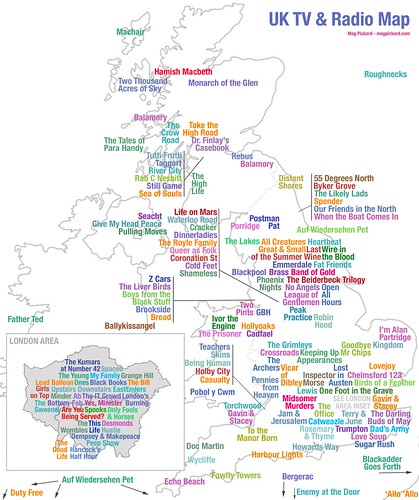
US designer Dan Meth received much kudos for his map of US sitcoms. I posted about it here. It was a nice idea and it’s good to see it replicated for British comedies – because everyone knows that British comedies are superior.

Here’s the intro post from the designer of this most fantastic map.

Egg centric

Lifehacker is often full of useful tips and tricks to make your life better. Their posts can be pretty random and eclectic – today there’s a scientific analysis of the preparation of boiled eggs with a link to a flash application developed by someone at the University of Oslo.

Here is the formula.

Here’s a picture of the flash app which does all your eggciting calculations for you- and a link to a translated version of the original page.

egg

The Beginners Guide to Taking Over the World – Winning Over the Masses

Winning over the masses
The international community is taking you seriously. You have a name. Now it’s time to turn your eye to the local community. If history has taught us anything it’s that if the local community isn’t behind you then you’re not going anywhere fast.

The Roman Emperors of old got the public on side by throwing huge festivals that ran for months. Your empire isn’t that large yet, but that’s something to consider in the future. However, calling public holidays, particularly in Australia, is one way to get the public on side very quickly.

Other, less cost effective options include canceling of debts owed, tax cuts, and other options that are equally likely to leave you in financial trouble down the track. No, you want your solution to cost you as little as possible.

It’s no secret that a smiling population is a happy population. I would suggest that the best way to create a happy population, tighten your grip on your society and further your plot to take over the world in one swoop would be to hire a large army of mercenaries and dress them as clowns. Your clown goons patrolling the streets will bring happiness to the masses, prevent crime and later help you in your bid to expand your empire. This street time is invaluable experience for a soldier. Australia’s involvement in several peacekeeping exercises in the Oceanic region has simply been an opportunity to have other nations provide the training for our troops. That’s why the government doesn’t step in sooner, or preemptively, as the US, who believe that their armed forces are already up to scratch, did in Iraq.*

It may also be a good idea to teach your clowns a few card tricks or jokes to please the kiddies. Happy kids make happy parents. The Clown Goon army’s guns should also be disguised, but not in a way that encourages children to play with them. Broccoli shaped gun covers should be standard issue.
_____________________
*In fact the US army are so well trained, and keen to do battle that they often make the mistake of shooting each other during conflict, unaware that in conflict they are using “live” ammunition as opposed to the “dead” ammunition they use in training exercises, perhaps it is possible to train too much after all.

A bunch of links – April 7, 2009

Egg citing statistics

Research released by John Dickson’s Centre for Public Christianity has been given widespread media attention today.

The ABC radio’s idea of “objective” coverage was to give the Atheists a chance to use this as a platform to call for a secular society.

But it’s a pretty interesting statistic when it comes to reaching the “unwashed masses” – it seems almost half of the country’s non-Christians could be considered “low hanging fruit” – believing that Jesus rose from the dead.

This survey did not include those who define themselves as “born again” which possibly means it did include church going liberals, Catholics and others who tick the “Christian” box on the census.

Here’s the SMH story on the stats.

Rocking grill

Ahh, the magic of stone grilling… one of the best meals we had in New Zealand was a stone grill selection at a pub in Hanmer Springs. It was so good that I’d almost buy this. For 29 GBP.

Protect and serve?

Discussion is ongoing on yesterday’s post about protectionism and misguided “buy local” campaigns. I didn’t mention the “sustainability” side of that debate – which is probably valid. It doesn’t make sense for major grocery stores to ship produce from North Queensland to warehouses in Victoria then back to North Queensland for sale – at that point I will join the brotherhood of sustainability and cry foul (fowl if we’re talking about chickens…). I didn’t mention it because it’s not the problem I have with “buy local” campaigns – which is that they don’t do what they claim to do, namely “protect local jobs”.

Buying local works to protect Australian farmers. There’s no denying that. But the insidious campaigns stretch further than the farm gates But we have plenty of other primary producers whose cause is harmed by drops in demand for our resources overseas (which are in part due to drops in demand for all sorts of product on a global level – particularly from the US).

But that’s just rehashing the point I’d already made yesterday. In a slightly more coherent form.

There were a couple of points raised in the comments that are worth rehashing – particularly if you haven’t read them.

“Buying coffee grown in Australia at a local coffee store, rather than coffee grown in Costa Rica at Starbucks.” – Stuss.

Ahh, a subject close to my heart. The argument I’d make at this point is that Australian made doesn’t necessarily guarantee quality. You might feel nice paying three times the price you’d pay for foreign grown produce for local stuff – but in some cases you’re paying more for an inferior product. Coffee is a great example. If you want premium quality Australian coffee you’ve got to pay a premium price – and it still won’t be as good as stuff grown in the ideal conditions.

Her next point in a subsequent comment touches on the whole fair trade debate.

“There are ethical implications in buying goods made elsewhere. A big reason why companies shift that manufacturing off shore is that it can be done cheaper. Much, much cheaper. Which means the people doing the manufacturing aren’t getting a lot of money for the job. On one hand, it is good that some of these people are getting the employment at all. But on the other hand, sometimes these people are being exploited, and not receiving a fair wage. Or they are coming away from their villages and subsistence farming lifestyle to work in the factories and losing traditional skills. Which one outweighs the other?”

Those sweatshops employing and exploiting workers for the sake of fashion are a different matter, that’s an ethical question not a question of economics – and therefore not within the scope of this rant.

I don’t see how buying local and doing these overseas people out of the jobs they’ve won that are often literally putting food on the table – particularly when following through the argument using coffee farmers as an example – is doing the coffee farmer a service. In the case of agriculture – and particularly for argument sake the case of coffee – we’re not talking about farmers leaving subsistent living, we’re talking about third and fourth generation farmers who have been exporting coffee since coffee exporting began. Aussie Joe who decides to plant his coffee plantation in Atherton – where conditions aren’t as good as conditions elsewhere and thus the coffee flavour isn’t as rich – is doing a disservice both to the palate and to the global coffee market.

The fundamental economic principle of supply and demand means that if there’s an oversupply of a poor quality version of a particular variety of product and a largely uneducated audience the price of the good stuff either has to significantly alter or die out (or become an “exclusive” product for the rich and famous). Throwing in a “buy local” campaign artificially inflates the price of local coffee and punishes the foreign growers. It’s not a level playing field. And it’s an incentive for businesses that should probably fail. Because their product is inferior.

Amy made a similar point about rice but from a sustainability rather than quality standpoint in the comments on the last protectionism post…

“I don’t think it is okay to buy Australian grown rice, because rice is totally unsuited to our environment and therefore needs far more resources than an imported product.”

I wonder what the typical elements in the purchase equation are? You could no doubt express it as a funky Venn diagram – in fact I’m sure it’s already been done somewhere… but I’d say price, sustainability, ethics, and quality are all in the mix. Are there any others?

Humility 2.0

I sometimes wonder why some people I respect in real life, and who show all the hallmarks of humility have such arrogant online profiles or personal webpages.

I won’t link to them – but as a general rule they’re as good as they say they are. It just seems a little arrogant to claim to be as good as you are – though I was accused recently of being a typical Australian with tall poppy tendencies – so maybe that’s it.

I wonder if having an online brand blows the idea of humility out of the water. Certainly social media encourage talking about yourself in the third person – but the fact that you feel compelled to write a bio of yourself on your webpage highlighting your field of expertise does not lend itself to humility.

That is all.

Architecture in Helvetica

See what I did there. There’s a reference to a band – and a font. Neither strictly relevant to the post…

If the Internet was a subway network and the Web 2.0 tubes were mapped out like a subway network it would apparently look something like this (High res).

This picture created by Information Architects can be explored using this little flash version here. It’s pretty cool. I’m not on it.

YouTube Tuesday: White men can’t dunk

Like this one? There are heaps more on this page. Is there something wrong with me? I take great pleasure in watching these people hurt themselves.

Feeding the masses

Wow. Today I have 43 feed subscribers. This number fluctuates pretty dramatically.

If you’re not a subscriber then maybe you should be if you don’t have a feed reader – try Google Reader on for size.

If you are a feed reader then maybe you should stop by the actual page sometime to see what’s happening in the comments.

Anyway, these are largely irrelevant observations tangential to the main purpose of this particular post.

I’m trying out FriendFeed today – it’s a social networking aggregator/platform/rival to Facebook or Twitter. It looks fun so far. It’s like Facebook without the bloat and Twitter with more content.

Is anyone else on it already? If you’re not and you want to see what FriendFeed looks like in action – here’s my page.

If you’re not it’s worth checking out – so far it’s got 57 sites that it appears to integrate with pretty seemlessly – and you can pull any custom RSS data into it too.

The Beginners Guide to Taking Over the World – Sink or Swim

Sink or Swim
Now you’ve got your own little piece of land, the start of your empire, you’re ready to start out on a campaign of conquest that will hopefully eventually take you to the very pinnacle of humanity. The next step is the important one. This is the point at which you need to decide whether you want to continue in your quest for power.
crossroads
So once you’ve weighed up the pros and cons and decided to continue in your quest it’s on to bigger and better things, there’s no pulling out now. The best, quickest and most cost effective way to establish yourself as a power to be taken seriously on the global stage can be summed up in two words – NUCLEAR ARMAMENT. That’s right. Surplus nukes shouldn’t be to hard to purchase with the current political stigma attached to owning them. Nations are being forced to disarm and they’d probably be more than happy to have you take them off their hands. You may have to tell a little white lie at this point and promise to dispose of them “thoughtfully and carefully,” that’s what you needed Tasmania for, obviously.

To be taken seriously at meetings of the United Nations Security Council you need to have demonstrated not only that you have nuclear capacity but also that you’re not afraid to use it. I suggest aiming one of your missiles squarely at somewhere that no one really cares about, and pressing the little red button. A good option might be parliament house in Canberra, Australia, that’ll get you noticed, but not necessarily loathed by those over at the UN. The Australian people will also love you for it. I mean nobody likes Canberra anyway. It’s a hole.

What’s in a name?
So now that the Security Council is ready to discuss you, you need a name that they can bandy about the boardroom table. Studies have shown that of the last group of major global super powers there has been a preference for a reference to some form of unity. Nominal unity is the best kind, you can be united in name and your nature really doesn’t matter. When was the last time the United Nations made a unanimous decision? For your purposes it doesn’t matter if it’s a complete misnomer. The use of the word united as an adjective, or sometimes a noun, or the past tense of a verb, has been over done in naming new countries. You have your United States, United Kingdom, and United Arab Emirates, there’s no real room, or need, for one more. I’d suggest going for the less popular, but equally successful “Union.” Since our example empire is in the south it might be worth including that in the name. Just to help people visualise it during discussions. You don’t want to be to visual as that might lead to the Americans having some notion of where it is, and their next step is to send in the bombers. So let’s just call it the Southern Union of the lesser Australasian states. That should be enough to send the US bombers to Austria and keep our country relatively safe.

A bunch of links – April 6, 2009

Nothing to sneeze at

Much to my wife’s horror I bought one of these Facebanks. It’s probably the worst product I’ve ever linked to – and it’s the only one I’ve bought. He now stares at me on my desk. Looking lonely, tacky and unloved.

He needs a friend. Perhaps a sneezing tissue box is just what the doctor ordered. A bargain at $US14.95.