I’ll admit I haven’t watched this yet. But it hit the airwaves… well, YouTube, yesterday. And I did not want you to be ignorant of these things.
The Bolt Gun
Wow.

Image Credit: Sydney Morning Herald
Robyn and I watched Bolt’s semi final and “that final” this morning. It was just amazing. This truly is the pinnacle of individual sport.
The Olympics media restrictions are pretty tight, so here’s the race in Lego via the Guardian.
Curiouser and Curiouser
This Mars thing is pretty cool. We listened to the landing on the radio today, while driving through a massive tunnel that goes under the Brisbane River, and under a bunch of Brisbane suburbs. These are fun times we live in.
It’s amazing that it worked. Really.
You can follow the Curiosity Rover on Twitter.
Here’s a photo of Mars the rover tweeted an hour ago.

I wrote an eBook: 5 Steps to Better Coffee
Friends, countrymen, lend me your ears, your eyes, your wallets, and then give me $5. And in return, I’ll give you an eBook that I like to call 5 Steps to Better Coffee.
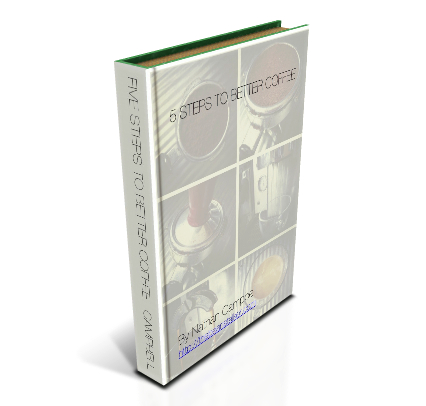
Seriously – at $5 this is a bargain. It contains way more than $5 worth of valuable information that you will find nowhere else except the internet. Buy one. Tell your friends. It’ll change your life.
I learned some fun things about eBooks in the process of putting this together. Here are some of my reflections.
1. Amazon’s self publishing thing doesn’t really like PDFs, especially those with text boxes and pictures.
2. You can make pretty nice (free) 3D covers using 3D Box Maker.
3. There’s a really easy way to sell files if you’ve got a PayPal business account – it’s called UploadnSell.com. I looked for all sorts of ways to deliver files to people automatically when they gave me money. They were all difficult. This was easy.
4. Pricing eBooks is hard. It’s hard figuring out what something intangible is worth. If you go too cheap people will think it’s rubbish, too expensive and people won’t buy it… I went for $5 because that’s $1 a step (as people have now pointed out both on Facebook and Twitter).
I’ve got a few other little eBook ideas up my sleeves. So watch this space.
What do you reckon – is $5 a fair price for a 25 page eBook? What would you charge?
The Dark Lion Rises
I’m very much looking forward to checking out Batman when assessment allows it. In the meantime, there’s this.
Introducing John Daker
John Daker is available for your next church musical event.
Here is a subtitled and animated version.
“This is Now” gives an instagrammed snapshot of life in the city
This is Now pulls current instagram shots from five international cities (including Sydney). It’s pretty cool.
This is a few minutes ago in Sydney.

And in Tokyo.

Excited train guy almost certain to be autotuned
This guy likes his trains.
How churches use Social Media
It shouldn’t surprise you that I think churches should be using social media, and the ones who do use social media should be doing it better. Mostly because I think we should be going to where people are communicating and communicating the gospel to people (because I think that’s what Paul models in Acts 17 in Athens, and because I think it’s part of “always being prepared to give an account” ala Colossians 4).
It doesn’t surprise me that the churches that are using social media think that it helps them reach people, which seems to be the implication of this infographic from an American survey that was featured on Mashable yesterday.

Here are some resources for using Social Media for ministry, or thinking about Social Media.
Being a hero is a rich man’s game
While you can be a real life superhero for the cost of some kevlar body armour and some lycra, being the real deal, ala playboy superheroes (as in the type who are single and wealthy, as in Batman or Iron Man), is apparently a costly exercise. The other day io9 worked out what it would cost to be Iron Man, and moneysupermarket.com pulled together these two infographics.


Bromance rekindled: Anderson Cooper and William Tapley (a.k.a 3rd Eagle of the Apocalypse, a.k.a Co-prophet of the End Times)
So William Tapley’s horrible Romney song earned him a place on Anderson Cooper’s ridiculist.
Here’s Cooper putting him on the list.
Here’s Tapley’s response.
Fun times.
Most manly candles ever (made with bacon fat)
Amazing. I can’t wait to try this.
You can even (allegedly) use them to season your food.
From Squidoo, via Lifehacker
Bug-A-Salt: Add a pinch of salt and preserve a fly in an instant
This is brilliant. This gun, called the BugASalt, kills insects with just a pinch of salt. You can pledge some funds, safe in the knowledge its already hit its target, to grab yours today. Sure beats swatting.
Arthur sent me this on Facebook.
“This is my son, he speaks Greek”: A millionaire father writes to his (not yet) billionaire son
Ted Turner is a billionaire, famous for inventing Captain Planet, and perhaps less notably, CNN.
When he was young he decided to study the Classics at university. His father, Billboard mogul, was less than impressed and wrote him this letter, now featured on Letters of Note.
Here are some highlights.
I am appalled, even horrified, that you have adopted Classics as a major. As a matter of fact, I almost puked on the way home today. I suppose that I am old-fashioned enough to believe that the purpose of an education is to enable one to develop a community of interest with his fellow men, to learn to know them, and to learn how to get along with them. In order to do this, of course, he must learn what motivates them, and how to impel them to be pleased with his objectives and desires.
Ted Sr thinks the Classics are interesting, but largely useless.
I am a practical man, and for the life of me I cannot possibly understand why you should wish to speak Greek. With whom will you communicate in Greek? I have read, in recent years, the deliberations of Plato and Aristotle, and was interested to learn that the old bastards had minds which worked very similarly to the way our minds work today. I was amazed that they had so much time for deliberating and thinking, and was interested in the kind of civilization that would permit such useless deliberation. Then I got to thinking that it wasn’t so amazing—after all they thought like we did because my Hereford cows today are very similar to those ten or twenty generations ago…
…I suppose everybody has to be a snob of some sort, and I suppose you will feel that you are distinguishing yourself from the herd by becoming a Classical snob. I can see you drifting into a bar, belting down a few, turning around to the guy on the stool next to you—a contemporary billboard baron form Podunk, Iowa—and saying, “Well, what do you think about old Leonidas?” Your friend, the billboard baron, will turn to you and say, “Leonidas who?” You will turn to him and say, “Why Leonidas, the prominent Greek of the Twelfth Century.” He will, in turn, say to you, “Well, who in the hell was he?” You will say, “Oh, you don’t know about Leonidas?” and dismiss him, and not discuss anything else with him the rest of the evening. He will feel that he is a clodhopper from Podunk, Iowa. I suppose this will make you both happy, and as a result of it, you will wind up buying his billboard plant…
…”It isn’t really important what I think. It’s important what you wish to do with your life. I just wish I could feel that the influence of those oddball professors and the ivory towers were developing you into the kind of a man we can both be proud of. I am quite sure that we both will be pleased and delighted when I introduce you to some friend of mine and say, “This is my son. He speaks Greek.””
The bold bit pretty much sums up my thinking regarding the study of Greek. Though it turns out that Ted Jr was probably right. History favours the brave.