Author: Nathan Campbell

Nathan runs St Eutychus. He loves Jesus. His wife. His daughter. His son. His other daughter. His dog. Coffee. And the Internet. He is the pastor of City South Presbyterian Church, a church in Brisbane, a graduate of Queensland Theological College (M. Div) and the Queensland University of Technology (B. Journ). He spent a significant portion of his pre-ministry-as-a-full-time-job life working in Public Relations, and now loves promoting Jesus in Brisbane and online. He can't believe how great it is that people pay him to talk and think about Jesus. If you'd like to support his writing financially you can do that by giving to his church.

The West Wing v The Wire

Nothing gets media studies students salivating like The West Wing. Except The Wire. They’re a bit polarising – it’s like the Canon v Nikon, or Mac v PC debate. Two products of similar qualities targetting similar demographics with slightly differently nuanced tastes.

It’s about user experience. Do you want to watch TV to feel smart? Then watch the West Wing, do you want to watch TV to feel superior to the dirty criminals running the streets and the beat-cops paid to curb the uncurbable? Then watch the Wire. Do you want wit or grit? Macroeconomics or microeconomics? Barksdale or Bartlett? McNulty or Ziegler?

A couple of people dialoguing a review of the new Facebook movie The Social Network described the difference nicely, I’ve edited out the swearing for those for whom that sort of thing is an issue:

“SFJ: Let’s compare “The West Wing” and “The Wire.”

NVC: I’d love to!

SFJ: Sorkin talk makes everybody feel smart and makes the s***y world look OK because making money and being an a*****e is fine as long as a deserving nerd wins. This appeals to nerds and anybody who fancies themselves as SMARTS. Further, he goes in hard on lexis—the act of delivering words—and lets the characters walk you through everything that would either be the job of a) acting or b) the audience using their heads. It is a way to load middlebrow content into totally fun speed talk that saves many people some hard work while feeling highbrow, because only smart people can talk that quickly. It’s like associating athletic skill with height, de jure.

SFJ: Think of how many Sorkin characters are sort of Flat Erics who talk, rapidly describing every idea that could have been acted out. The advantage is you can cram a lot of action into one episode. The downside is a weird, Aspergersy sameness to every project. Actors become court stenographers in reverse, spitting out Sorkinese and then stepping aside to let the next block of text barrel through.

NVC: Agreed.

SFJ: “The Wire,” on the other hand, doesn’t mind alienating you. It eliminates spoken exposition (lexis) in favor of mimesis. This is an entire world, it is full, and you had better take notes if you want to keep up. You have to WORK. People who don’t look like you may be in charge for a minute, maybe for a long time, and nobody has the moral high ground.

NVC: THERE IS NO PRESIDENT BARTLET IN BALTIMORE.

SFJ: Sorkin loves the abasement that is a by-product of believing in the high ground. It’s in everything Sorkin does.”

Cool stuff from Google

Google put together this presentation of cool stuff from around the web. I’ll no doubt blog some of it – but if you want an advanced screening and haven’t seen this yet check it out.

EyeQ?

I saw this ad the other day. I think. I can’t be sure, because I’m colourblind. Which apparently makes me dumb.

A cacophony in B Flat

Inbflat collects musical pieces in B Flat from YouTube and allows you to create your own aural arrangements.

Mythbusting in the Kitchen

Kenji Lopez-Alt is an online cooking superstar. He’s the guy who reverse engineered Maccas fries and so owns a special place in all our hearts.

He combines science and cooking and writing like a chef combines ingredients…

So when he says “these are the six biggest myths in food preparation” then I believe him. And I post a link to them.

Some surprises, like the idea that you can flip steaks over and over again during cooking (I’m of the only flip once school).

Common backyard know-how dictates that burgers and steaks should only be flipped once, half way through cooking. But has anyone ever bothered questioning why we do this? Does it actually create a noticeable improvement in the way your meat comes out?

Turns out the answer is an emphatic no! Flipping your meat multiple times produces meat that’s noticeably more evenly cooked (there’s about 40% less overcooked meat in a burger flipped every 15 seconds vs. one flipped once), browns just as well (just don’t expect distinct hash marks), and to top it all off, ends up cooking in about 2/3rds of the time. Faster and better? You betcha!

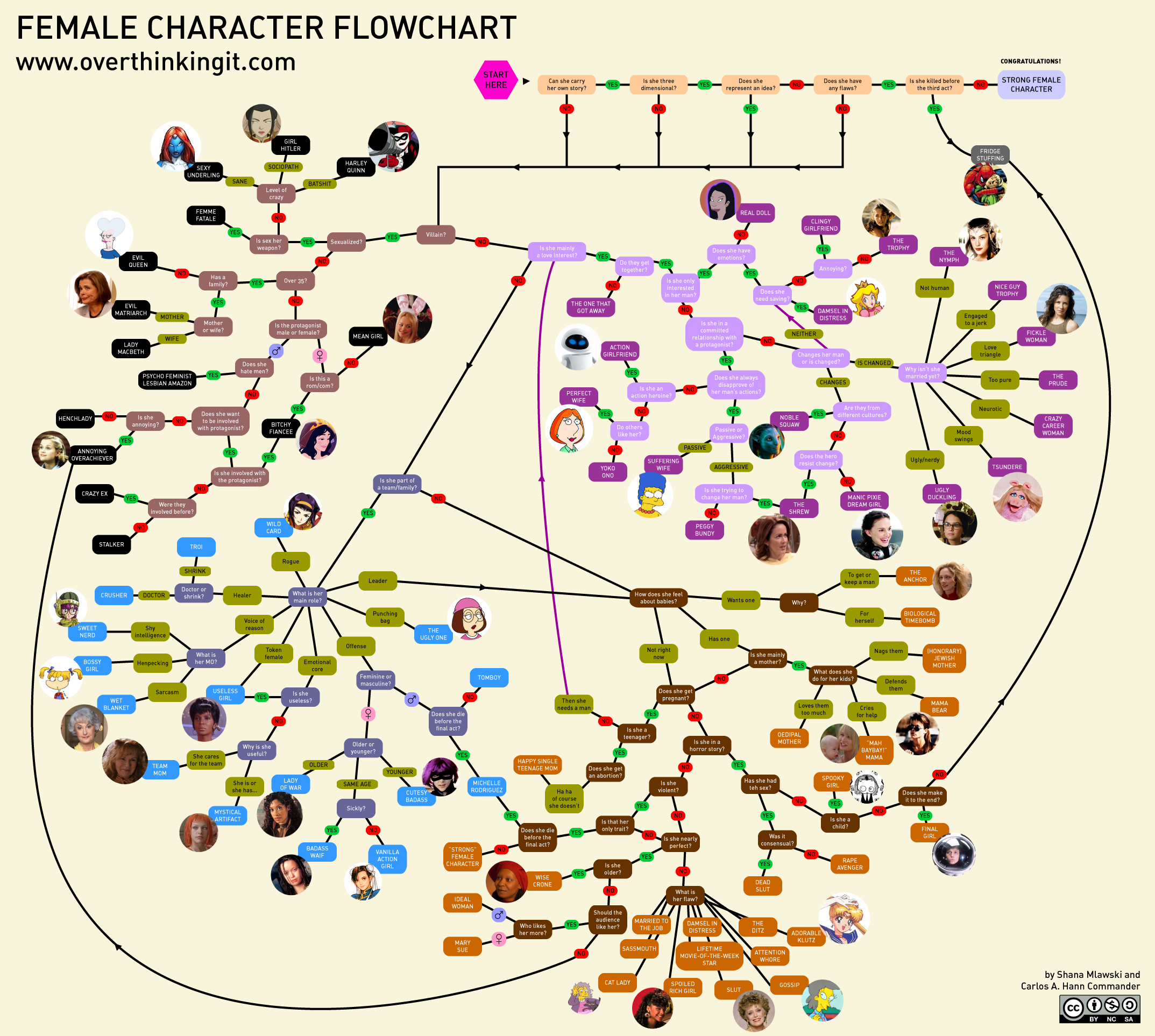
Females of Fiction Flowchart

This Overthinking It flowchart is cool. Maybe slightly PG.

What Greek Teachers Won’t Tell You

When it comes to the Greek Language (at QTC at least) David Allen Black wrote the book. Literally. We use his introduction to Biblical Greek as our textbook. So I enjoyed this post of things your Greek teacher won’t tell you. If you haven’t got a Greek teacher then they’re still interesting. Sort of.

I think there’s some sort of double negative going on here. The list is a mix of Greek fallacies, and truths that you might not have heard. Anyway.

Here’s one of my favourite things from Greek (and Hebrew) this year.

“Greek words do not have one meaning. Yet how many times do we hear in a sermon, “The word in the Greek means…”? Most Greek words are polysemous, that is, they have many possible meanings, only one of which is its semantic contribution to any passage in which it occurs. (In case you were wondering: Reading all of the meanings of a Greek word into any particular passage in which it occurs is called “illegitimate totality transfer” by linguists.)”

Putting Social Media in its place

I love Facebook. I love blogs. I understand Twitter. And for years I grappled with how to use them professionally. I read through a bunch of posts on Facebook’s blog the other day and I’m blown away by how powerful the platform is, and how much potential it has to connect people.

But it can never. ever. replace proper face-to-face relationships. And if the extent of your “online marketing” strategy is “be on Facebook, Twitter and YouTube” (and I’m sick of seeing those logos crop up on ads for obscure things as though I’m more likely to buy a car if it’s got its own Twitter account) then your strategy is dumb. It’s part of your brand. And it’s good to be contactable, and to be getting exposure, but if there’s one thing the stupid breast cancer awareness campaigns of this week, and earlier this year, show – it’s that for many people – Facebook “activism” and “marketing” have supplanted the real thing.

Malcolm Gladwell took a stab at this idea in a recent piece for the New Yorker. Some interesting quotes:

Where activists were once defined by their causes, they are now defined by their tools. Facebook warriors go online to push for change.

This is in many ways a wonderful thing. There is strength in weak ties, as the sociologist Mark Granovetter has observed. Our acquaintances—not our friends—are our greatest source of new ideas and information.

The kind of activism associated with social media isn’t like this at all. The platforms of social media are built around weak ties. Twitter is a way of following (or being followed by) people you may never have met. Facebook is a tool for efficiently managing your acquaintances, for keeping up with the people you would not otherwise be able to stay in touch with. That’s why you can have a thousand “friends” on Facebook, as you never could in real life.

Some of this grandiosity is to be expected. Innovators tend to be solipsists. They often want to cram every stray fact and experience into their new model. As the historian Robert Darnton has written, “The marvels of communication technology in the present have produced a false consciousness about the past—even a sense that communication has no history, or had nothing of importance to consider before the days of television and the Internet.” But there is something else at work here, in the outsized enthusiasm for social media. Fifty years after one of the most extraordinary episodes of social upheaval in American history, we seem to have forgotten what activism is.

Western journalists who couldn’t reach—or didn’t bother reaching?—people on the ground in Iran simply scrolled through the English-language tweets post with tag #iranelection,” she wrote. “Through it all, no one seemed to wonder why people trying to coordinate protests in Iran would be writing in any language other than Farsi.”

He makes this point about social media “activism” and where it works, citing an example of a webtrepreneur, Sameer Bhatia, who found out he had leukemia but knew nobody with the same bone marrow type.

Bhatia needed a bone-marrow transplant, but he could not find a match among his relatives and friends. The odds were best with a donor of his ethnicity, and there were few South Asians in the national bone-marrow database. So Bhatia’s business partner sent out an e-mail explaining Bhatia’s plight to more than four hundred of their acquaintances, who forwarded the e-mail to their personal contacts; Facebook pages and YouTube videos were devoted to the Help Sameer campaign. Eventually, nearly twenty-five thousand new people were registered in the bone-marrow database, and Bhatia found a match.

But how did the campaign get so many people to sign up? By not asking too much of them. That’s the only way you can get someone you don’t really know to do something on your behalf. You can get thousands of people to sign up for a donor registry, because doing so is pretty easy. You have to send in a cheek swab and—in the highly unlikely event that your bone marrow is a good match for someone in need—spend a few hours at the hospital. Donating bone marrow isn’t a trivial matter. But it doesn’t involve financial or personal risk; it doesn’t mean spending a summer being chased by armed men in pickup trucks. It doesn’t require that you confront socially entrenched norms and practices. In fact, it’s the kind of commitment that will bring only social acknowledgment and praise.

The evangelists of social media don’t understand this distinction; they seem to believe that a Facebook friend is the same as a real friend and that signing up for a donor registry in Silicon Valley today is activism in the same sense as sitting at a segregated lunch counter in Greensboro in 1960.

Facebook is all about people salving their consciences by appearing to care – it sets a really low bar for participation – like posting “where you like it”…

“Social networks are effective at increasing participation—by lessening the level of motivation that participation requires. The Facebook page of the Save Darfur Coalition has 1,282,339 members, who have donated an average of nine cents apiece.”

And “Social Media Evangelist” Anil Dash agrees with him. With some reservations. One of them is that there are some things, when it comes to communicating a message and bringing about change, that the virtual world just can’t supplant.

Who are the “they”? It’s not really clear. But even as someone who’s had an “evangelist” title in the past, I don’t come to refute Gladwell’s strawman argument. His point is that today’s social networks are fundamentally unable to drive the sort of social change that fueled upheavals like the civil rights movement. I agree; As I said last year, Facebook often enables politics of the sort that convinces college kids that changing their middle name on a website is a form of activism. And the idea that the uprisings in Iran were driven by Twitter or any other social media is clearly refuted by realities such as Hossein “Hoder” Derakhshan, the father of the Iranian blogosphere, being sentenced to nineteen years in prison. The traditional method sit-in and picket-in-the-streets form of protest is clearly a failure online.

There’s also a world of difference between using social media platforms to coordinate action, and using them to stage action or report on action. Facebook is terrific for organising events – social and political – and it is a wonderful way to disseminate information – but it is not a place to stage a protest or to bring about real change. Participating in “awareness raising” on Facebook can not be the only string in the activism or communication bow. It just won’t work. It doesn’t bring about change in the world – it aids the process.

That is all.

Mad Skillz Round Two

Getting other people to write content for one’s blog is an awesome strategy for blogging regularly, and before Ben’s book review Wednesday there was Mad Skillz week.

I’d urge you to contribute a book review for Ben’s sake (I haven’t told him yet, but I’m going to review something really exciting).

But I’m also wanting to tap into your repository of awesome, but possibly as yet undiscovered, skills that can be of benefit to others. Have a read of some of the old posts – examples included how to take low light photos, how to play roller hockey for Australia, how to argue with me, how to survive in regional ministry, how to write Christian parody songs, how to be poetic, how to supply teach, how to do graphic design, how to appreciate opera, and how to make an animation story board.

So if you’ve got a niche skill, or just something that’s generally awesome, that you’d like to share with a very small segment of the world, and google, and you’d like to write a guest post, just hit me up by email at nm dot campbell at gmail.com.

Calling all blogs

Are you in my blogroll (it’s down the bottom of the page). If you’re not, you should be. And now’s your chance. If you are, then this post is for you too.

I’d like to be more Web 2.0 (which means more “social”) with this little corner of the web. And I’d like to include a little one or two sentence bio/description of your site in my list of links. But I’d like you to write them for me and leave them in the comments on this post.

I’ll also do nice things for you if you’re in it – like posting links to you from time to time and visiting your site. I’ll even comment there.

Apparently (in an article I read today) the one sentence bio (or 140 character bio) was the foundation on which such Web 2.0 luminaries like Facebook and Twitter were built on. So it is an exercise in webness for all of you.

As an incentive – if you don’t participate I’ll probably relegate you to some impossible to find corner of the site (I won’t remove you, because if you’re there already I like what you have to contribute).

iTypewriter

Want an iPad but prefer a tactile experience? Don’t want to pay for a MacBook? These reconditioned USB typewriters from etsy are interesting if not practical.

Did I mention that they’re $US700.

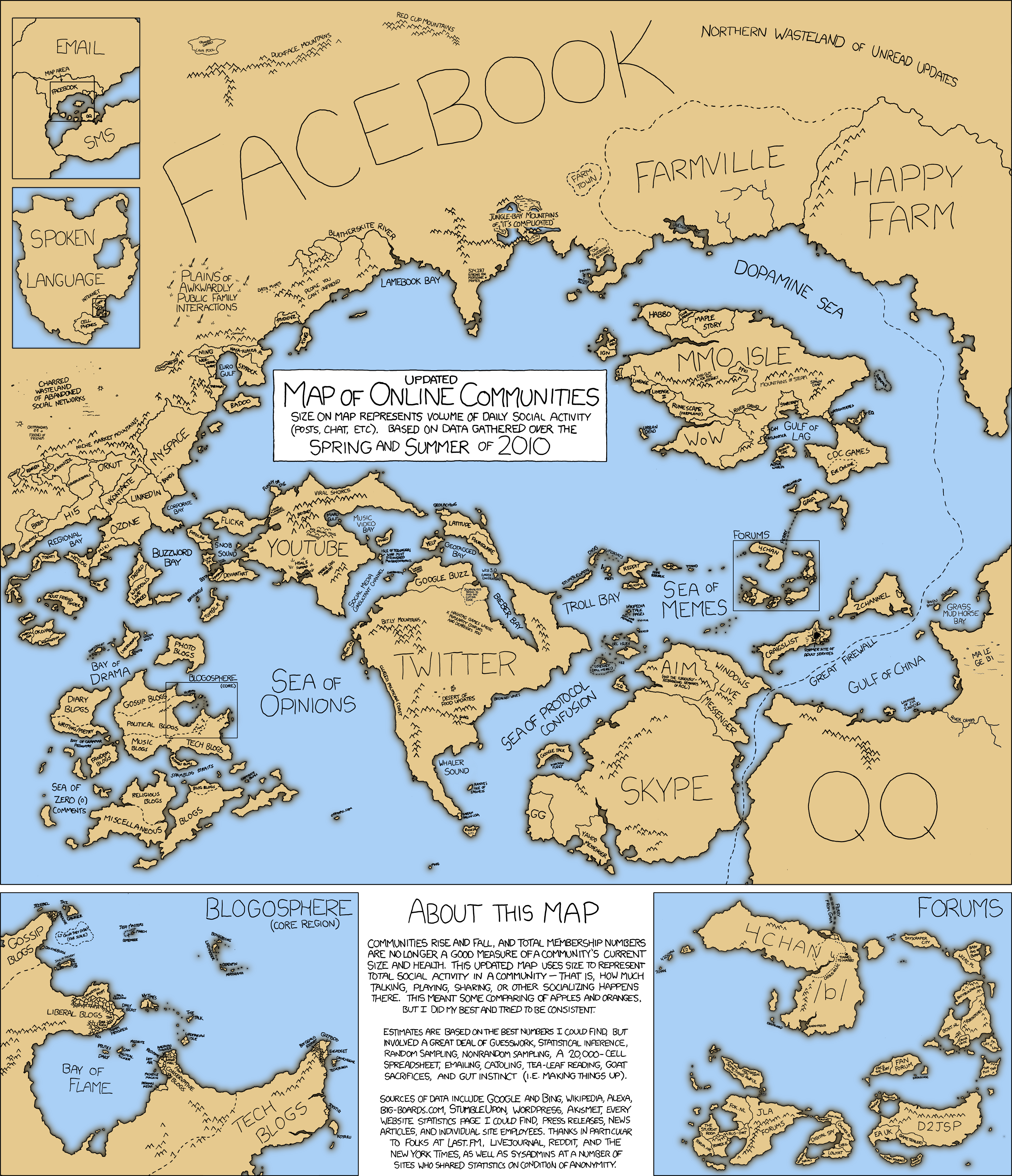
Mapping the Internet

This XKCD map of the internet is cool. Click it to make it bigger.

Ikea recipe book brings Allen key to the kitchen

Good news for those looking to completely assemble their lives IKEA style. Everybody’s favourite Swedish retailer has produced a cookbook. Here are some of the photos of the ingredients for dishes therein.

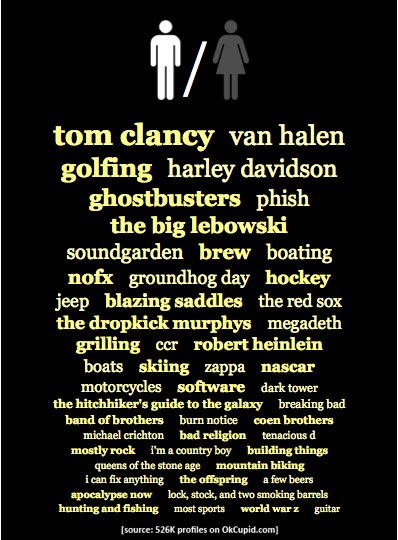
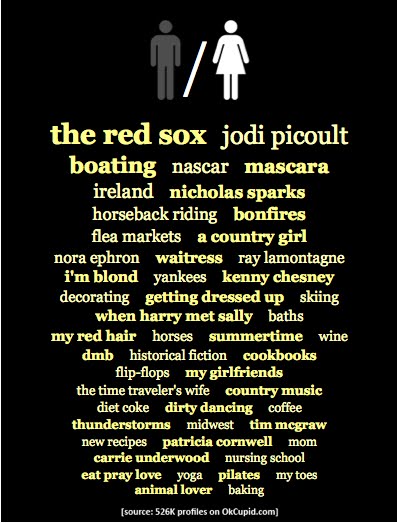
Stuff White People Date

Mario Furniture

If I had this Super Mario theme in my house I’d spend a lot of time running around bashing my head against bricks and trying to jump into drain pipes. So it’s probably a good thing I don’t…

From Neatorama.